

A Single Mother in Pifo
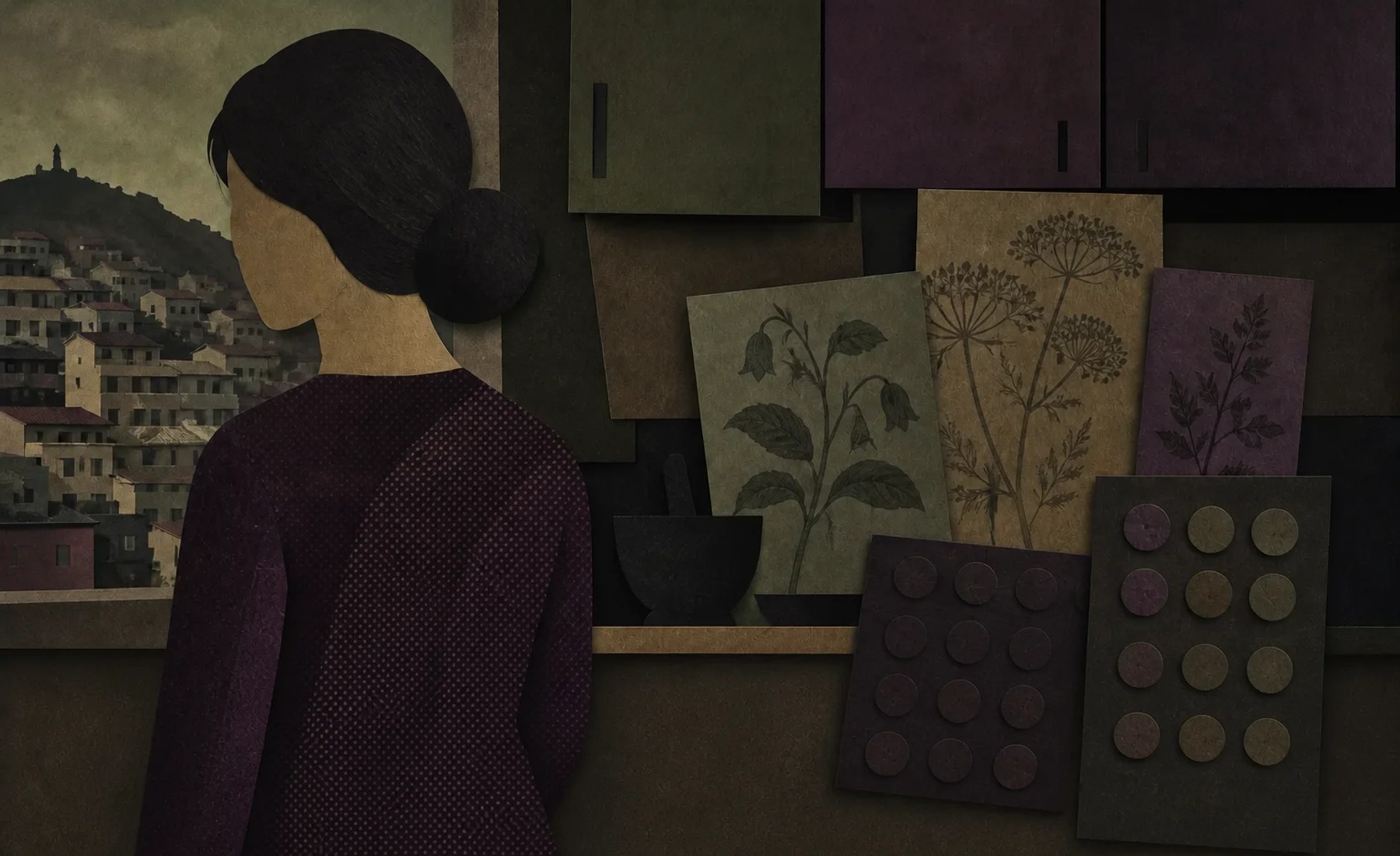
Lissa María Caiza was a young single mother living in Pifo, a quiet semi-rural community where everyone tends to know their neighbors. She had two little ones – a 9-year-old boy and a 5-year-old girl – who were her world.
Those who knew Lissa before all this say she appeared to be a caring mother, even if she had her struggles. She was only a teenager when she had her first child, and by her mid-twenties she was raising the kids largely on her own.
The children's father was living elsewhere; by 2020 Lissa and he were separated. Family and friends later noted that Lissa harbored bitterness toward her ex-partner. She felt he hadn't cared enough about the kids. In fact, in a letter she would later write, she vowed never to let him have them.
Whatever resentments and pain Lissa carried, she mostly kept to herself. Outwardly, she tried to hold her life together – finding work, taking care of the children, and maintaining relationships with a small circle of friends and relatives.
One of those friends was José Luis Erazo, a 42-year-old man who had known Lissa since she was a child. José Luis was a kindhearted soul – a hard-working employee at a biscuit factory in nearby Guayllabamba – and he had a fatherly affection for Lissa. In early 2020, he even helped her look for a steady job, wanting to see her get on her feet. They spent time together; Lissa was friendly and grateful, and José Luis's family welcomed her into their home on occasion. No one could have imagined that this friendship would mark the start of a deadly chain of events.
The Death of José Luis Erazo
In late May 2020, tragedy struck unexpectedly: José Luis was found dead in his rented room in the parish of Checa, not far from Pifo. It was May 28 when a neighbor noticed a horrible smell coming from José Luis's small apartment, similar to how neighbors later detected an odor at Lissa's place.
The neighbor peeked through a window and saw José's body lying on the bed, already in an advanced state of decomposition. The authorities were called. At first, given the condition of the corpse, the death was assumed to be natural – possibly a sudden heart attack, as the initial report indicated.
The Erazo family was devastated. José Luis had been the only son among several daughters; he was his mother Isabel's pride and joy. She could not fathom how her healthy, lively 42-year-old son could just die out of the blue. But without obvious signs of foul play, there was little the police could do. They chalked it up to natural causes. Isabel and her daughters buried José Luis, grieving that God had called him so early. "It felt like half of my life was gone when I lost him," Isabel would later say through tears.
The Poisoned Dog
In the weeks after José's funeral, though, odd things began to bother the Erazo family. First, when they cleaned out his apartment, they noticed some of his belongings were missing – a laptop computer, his bank cards, even the shoes he'd been wearing. That was strange; why would those be gone if he'd died alone of a heart attack? And something else came back to memory: a peculiar incident that had happened shortly before his death.
One of José Luis's sisters, Margarita, recalled a day when her brother had brought Lissa Caiza over to their other sister's house for a meal. They'd all eaten together pleasantly. But after Lissa left, they gave the leftovers from her plate to the family dog – and the dog had died shortly thereafter, apparently from poisoning.
At the time, they hadn't connected the dots. Maybe the dog ate something bad somewhere else, they thought. But now, with José gone under odd circumstances, that memory set off alarm bells. Was it just a coincidence? Or had something sinister been lurking behind Lissa's friendly smile?
Eighty Dollars and a Photograph
Those suspicions only grew when Lissa herself started contacting the Erazo family. Mere weeks after José's death, Lissa reached out to one of José's sisters via text message. She claimed that José Luis had owed her $80, and now that he was gone, she wanted the family to pay that debt. It struck them as brazen and insensitive – why was she so concerned about a small debt so soon after her "friend" had died? The siblings initially brushed her off, but Lissa was astonishingly persistent.
For three months, all through the summer of 2020, she kept messaging and calling, insisting someone in the family reimburse the $80. The Erazo sisters grew annoyed; it almost felt like harassment. Then, in one of these exchanges, Lissa sent them something that truly shocked them: a photograph of items that had been stolen from José Luis's apartment, including his missing shoes.
How on earth did Lissa have that? By now, Margarita and her sisters were convinced that Lissa Caiza knew more about José's death than she let on – perhaps she had even been involved.
It was a terrifying thought. In retrospect, it seemed plausible: Lissa had been around José a lot. If that dog's death had been due to poison, could Lissa have been testing something? Could she have slipped José a toxin later? The family's mind reeled with questions.
A Meeting That Never Happened
By early October 2020, the Erazo family decided to act. Margarita arranged to meet Lissa in person to get answers. Lissa had hinted via text that she "knew how José Luis died" and was willing to explain. Curiously, she insisted that Margarita come alone. They agreed on a date: October 28, 2020, at the park in Pifo, near Lissa's home.
Margarita was nervous but determined – if Lissa was involved in her brother's death, she wanted to hear it from her face to face. Little did she know, that meeting would never take place. Fate intervened in a dramatic way: when October 28 arrived, Lissa Caiza wasn't at the park. She was in police custody, exposed by the grisly discovery in her apartment just hours before.
In fact, Margarita learned through the news that Lissa had been arrested after allegedly killing her own children and a man in her home the night prior. The Erazo family was stunned.
It was now painfully clear that their suspicions were not only valid – they were likely just the tip of the iceberg. Immediately, they went to the authorities with everything they knew, filing a formal complaint accusing Lissa Caiza of murdering José Luis months earlier. The police, now aware of Lissa's possible serial crimes, began investigating the May 2020 death with fresh eyes.
Marco Escanta's Empty Beer Bottles
As investigators dug into Lissa Caiza's background, they discovered that José Luis was not the only acquaintance of hers to die under odd circumstances that year. There was another suspicious death in Pifo that summer. Marco Escanta, a former coworker of Lissa's who was rumored to have been romantically involved with her, had died in June 2020.
Marco was a 30-year-old man who lived in the nearby neighborhood of Florida de Chantag. On June 20, 2020, Marco was found dead in his home. At first glance, his death had raised fewer eyebrows – but now it was being revisited. Evidence from the scene suddenly took on new significance: investigators noted that there had been empty beer bottles and a drinking glass in Marco's house, and that glass had Lissa Caiza's fingerprints on it.
It seemed Lissa had been with Marco, perhaps sharing a drink, at the time he died. The cause of death hadn't been obvious back then (a poisoning can sometimes mimic a sudden illness unless specifically tested for). With Lissa now a prime suspect, prosecutors quietly opened a case to examine Marco's death as a possible murder. If proven, it would mean Lissa had started a deadly spree even earlier than anyone realized.
Doña Veneno
By the fall of 2020, unbeknownst to most, Lissa Caiza was the common thread in multiple investigations – two mysterious deaths (José Luis and Marco) and now the appalling double child homicide that had come to light in her own apartment. The press hadn't yet reported on the earlier cases in detail (that would come later), but internally, law enforcement began connecting the dots.
The National Directorate of Violent Deaths (Dinased) in Quito commented that the unusual clustering of incidents – all involving poison, all in the same general area (Pifo and its surrounds), all people in Lissa's personal circle – strongly suggested a serial pattern. In essence, if these suspicions were confirmed, Lissa would indeed earn the dark distinction of being Ecuador's first female serial killer.
And unlike the country's male serial killers of the past, who mostly targeted strangers or female victims, her victims were her own loved ones, allegedly dispatched with carefully prepared toxic concoctions.
The emerging portrait of Lissa Caiza was deeply unsettling: she was educated enough to procure and handle poisons, cunning enough to lure and betray people who trusted her, and bold enough to attempt covering up her crimes through deception and even extortion.
The Disappearance of Jaime Yanchaguano
Which brings us back to late October 2020 – the time when Lissa's murderous undertakings escalated to their ghastliest climax. Around that time, Lissa had a boyfriend named Jaime Geovanny Yanchaguano, a 27-year-old man who lived in the area. Jaime (sometimes referred to as Geovanny in reports) was by all accounts a gentle, hardworking young man.
He worked as a warehouse keeper at a cookie factory – possibly the same company where José Luis was employed – and he still lived with his family in Checa. It's not clear exactly when or how Lissa and Jaime began dating, but by October they were close.
Jaime's family knew Lissa as his girlfriend. Unfortunately, that connection would put Jaime directly in harm's way. As investigators later reconstructed, around October 18, 2020, Jaime left his home to meet Lissa and was never seen alive by his family again.
A Ransom of Shifting Stories
What happened next with Jaime is like something from a crime thriller – except it was all too real for his loved ones. Roughly four hours after Jaime left to see Lissa on October 18, his relatives received an alarming text message from an unknown number. The message claimed that Jaime had been kidnapped by drug traffickers and that the captors were demanding $8,000 for his release.
The family was stunned and terrified. A kidnapping? Jaime wasn't involved in anything illicit as far as they knew. The message instructed them not to contact police and to gather the money. But something about it felt off. For one, the text oddly mentioned Jaime by name and specific details that a stranger might not know.
Suspicious, Jaime's sister Lucia (name changed in the press) replied asking for proof and even wondered if this was some kind of sick joke. The kidnappers – or whoever was messaging – didn't provide proof of life. Instead, in subsequent communications, the story kept changing.
Over the next few days, Jaime's family received several calls and texts with shifting demands. First it was $8,000 for drug dealers, then suddenly the ransom dropped to $4,000, supposedly needed to pay off some narcos so they'd free him.
Then, on October 25, the narrative changed completely: a woman claiming to be Lissa (indeed it was Lissa) contacted the family and told them that Jaime wasn't kidnapped at all – instead, she said Jaime had borrowed $1,200 from her to do a construction project, and now he had disappeared with her money.
Lissa calmly threatened that she would take legal action if the family didn't repay her, painting herself as the victim of Jaime's supposed debt. Throughout these calls, according to the family, Lissa spoke with unnerving composure, even as Jaime's parents and siblings were distraught not knowing his fate.
The entire situation was bizarre and deeply troubling – they had reported Jaime as missing on October 20 when he failed to return, and here was his girlfriend giving conflicting stories that made little sense. The family began to suspect that Lissa knew exactly where Jaime was, and that her ransom and debt tales were ploys. In fact, they suspected the worst: that Jaime might already be dead.
Under the Kitchen Sink
Tragically, they were right. Jaime Yanchaguano had in fact been killed – and the person behind it was the very one spinning those stories. As Lissa would later confess to a forensic psychologist, she had poisoned Jaime by mixing a white powdery toxin into his food on or around October 18. It appears her original intent was not simply to murder him outright, but to incapacitate him as part of an extortion scheme.
The plan, as far as investigators could deduce, was disorganized and ultimately deadly. After dosing Jaime's meal, Lissa restrained him – the gruesome state of his body told the tale. When found under her kitchen sink days later, Jaime's mouth was bound with wire, and he had been wrapped tightly in layers of sheets and blankets. His chest was crushed and he had clearly been gagged; the official cause of death was asphyxiation (suffocation) together with poisoning.
In other words, she subdued him with poison and likely smothered or strangled him. With Jaime dead, Lissa tried to pull off a one-woman kidnapping hoax to get money from his family – calling and texting them herself with wild ransom demands. But the deception got convoluted, and ultimately, it yielded nothing but suspicion. Jaime's family was not fooled for long. And now Lissa had a corpse on her hands in her small apartment.
A local hardware store owner later testified that Lissa came in and purchased bags of cement and building materials in late October. Lissa actually tried to entomb Jaime's body beneath her kitchen sink, using cement to seal it up. It sounds almost unbelievable – a desperate, grisly DIY burial.
But by October 27, Jaime's remains were still in that apartment, hidden but not gone, and decomposing quickly. The smell was growing intense, and neighbors in the building noticed. Lissa must have realized time was running out. The walls were closing in on her.
Not only was Jaime's family circling with suspicions, but her friend Margarita – José Luis's sister – was pressing to meet her about José's death, and investigators had quietly started looking into Marco's case too. Lissa's life, which she had kept precariously balanced on a web of lies and lethal secrets, was about to collapse. And in her mind, it seems, there was only one way out: a final, horrific act of destruction and self-destruction.
'I'm Taking What Is Mine'
On October 27, 2020, Lissa María Caiza made her last, most terrible decision. She would turn her deadly intentions toward the two people most innocent and closest to her: her children. That Tuesday evening, Lissa fed dinner to her 9-year-old son and 5-year-old daughter in their home in Pifo. But it was no ordinary meal – prosecutors later proved that Lissa had spiked the children's food or drink with a toxic cocktail of substances.
Traces of at least two different insecticides and a cleaning disinfectant were found later in the home, the same kinds of chemicals that would show up in the kids' autopsy results. Lissa also gave the children pills – she had a supply of strong anti-seizure medication in the house, because her eldest suffered from epilepsy.
In fact, the boy's epilepsy medicine would play a tragic role both in his life and death. For weeks prior, Lissa had apparently been mismanaging or even deliberately overdosing his medication, causing the boy to be repeatedly hospitalized in September and early October.
Doctors at the pediatric hospital grew concerned when the 9-year-old kept showing up with severe symptoms (vomiting, seizures) that they couldn't easily explain. They determined that his mother's negligence in administering his epilepsy drugs was making him gravely ill.
On October 5, 2020, the child had been admitted in critical condition – intubated and convulsing – and once stabilized, the medical staff even warned Lissa that if she didn't ensure proper care, child protective services (Dinapen) might intervene.
Lissa appeared uncooperative and annoyed by the doctors' calls, even as they pleaded with her to follow up. It's now feared that this "negligence" was no accident at all – it was likely Lissa testing and slowly poisoning her own son in the lead-up to the final crime.
The Babysitter's Blue Pill
By the night of October 27, Lissa had made sure she and the children were alone in the apartment. But interestingly, not quite completely alone – in a bizarre twist, she had arranged for a babysitter to be there as well. The story of that babysitter, Norma Sinche, is one of both tragedy and miraculous survival. Norma was a 48-year-old woman struggling to find work after the pandemic layoffs.
A devout evangelical Christian, she often spent her days volunteering and preaching in her community of Yaruquí. Through a relative (who happened to be Lissa's cousin), Norma heard that a single mother in Pifo was urgently looking for someone to care for her two kids.
Norma, with her gentle demeanor and experience as a mother and grandmother, seemed like a perfect fit. On Saturday, October 24, 2020, Norma had her first video call interview with Lissa Caiza. Lissa explained the job details matter-of-factly: it would be a part-time nanny position, a few hours a day, and she'd pay $200 a month.
She emphasized that the babysitter wouldn't need to cook (Lissa said she'd always prepare the food) and that the children should be kept indoors with the door locked for safety. Lissa even had an unusual requirement: every day when the babysitter arrived, Lissa would provide a pill – supposedly vitamins to "boost immunity against COVID-19" – that she wanted the sitter to take.
In hindsight, that demand was a huge red flag. But Norma, eager for work and trusting, didn't question it too much. She said she'd prefer a natural supplement over an antibiotic, and Lissa said fine, she had herbal capsules. They agreed that Norma would start on Monday, October 26.
On Monday the 26th, Norma actually went to Lissa's home in Pifo for an in-person meeting in the afternoon. Lissa welcomed her kindly at the door, even spraying her hands with alcohol and giving her slippers to wear inside – pandemic precautions and also perhaps preventing any trace evidence from shoes. In the apartment, Norma met the two children she'd be watching. The kids played happily around the living room as the two women chatted on the couch.
Lissa reiterated the rules and routine. She mentioned again that she'd have a daily pill for Norma for "health" reasons. During this visit, Lissa also offered Norma a cup of coffee. Norma declined because she needed to head home soon and didn't want caffeine that late. That perhaps saved her life that day. Before leaving, Norma noticed one slightly odd thing – a whiff of a bad smell in the apartment.
When she wrinkled her nose, Lissa casually explained that some neighbor's chickens were creating a stink next door. Norma didn't think much of it, but in reality that odor was Jaime's corpse already starting to rot under the sink.
Despite these ominous undercurrents, nothing bad happened to Norma on the 26th, and she agreed to start officially the next morning. Tuesday, October 27, 2020 dawned as her first day on the job. Norma got up early, ate a light breakfast of herbal tea and a little bread – she didn't want to arrive with an upset stomach – and made her way to Lissa's home by 9:00 AM. Lissa greeted her with that same polite smile and immediately handed Norma the promised "vitamin" capsule and a glass of water.
'Jehová, Protect Me'
It was a blue pill. Trusting her new employer, Norma swallowed it without hesitation. The two sat and waited in the living room. Lissa mentioned that her "husband" (this was a lie, as she didn't have one) would be coming by and wanted to meet the babysitter. As they sat, Norma again caught a whiff of something foul.
She commented on it, and Lissa blamed those imaginary chickens once more. In reality, the odor was stronger now – Jaime had been dead under the sink for over a week. Not long after, the pill began to take effect. Norma's stomach cramped and churned. She grew nauseated and asked to use the bathroom, where she vomited violently. Something was very wrong.
Emerging pale and weak, Norma told Lissa she felt awful. Suddenly she found she could barely stand; her legs wobbled and she had to lean against the wall. Panicking, Norma pleaded, "Please take me to a hospital, I think I'm very sick!" But Lissa did not panic.
In fact, she showed almost no emotion at all as the babysitter collapsed onto the sofa in agony. Instead of calling emergency services immediately, Lissa asked if there was someone she should phone for Norma – perhaps a friend from church? In a haze of pain, Norma gave her the number of an evangelical friend, hoping someone would come to rescue her.
By now, poor Norma was fading in and out of consciousness. She recalls silently praying to God: "Jehova, protect me," as her vision blurred. The poison was shutting her body down. Lissa finally did something – but not out of mercy. She reached for her phone, not to call 911, but to ensure she herself was safe.
As later came out, Lissa called one of her cousins who lived nearby and said, in effect, "Come over – I don't want this woman to die in my house".Her concern was not that she had nearly killed an innocent person, but that she didn't want the legal hassle if the babysitter's corpse was found on her property.
Perhaps Lissa hoped to hand off a still-alive Norma to someone and avoid being implicated. In any case, the cousin did arrive, and soon Norma's own relatives showed up too, having been alerted by the church friend on the phone.
With Lissa's cousin's help, they carried the barely breathing Norma out of the apartment. An ambulance was called for her on the street, and she was rushed to a local clinic in Yaruquí. It was only midday on the 27th at this point. Norma was saved – though just barely.
At the clinic, doctors recognized she'd been poisoned, stabilized her as best they could, and then transferred her to a larger hospital in Calderón, northern Quito. She remained unconscious for many hours. That night, Norma finally woke up in a hospital bed, aching all over but alive. Her family was around her, relieved and yet unaware of the horror that had unfolded back in Pifo after they left.
The Night of October 27
While Norma was being treated, back in Pifo, Lissa's deadly plan continued. It was now the late afternoon or early evening of October 27. Lissa Caiza was alone with her two children. The house was quiet, that's when she gave them the fatal dose.
The forensic evidence and Lissa's own later admissions give us a clear picture: she administered a mixture of insecticides and an overdose of the 9-year-old's epilepsy medication to both children.
Lissa's letter and statements suggest she believed she was sparing her children from a cruel world by killing them. "I wanted my children to die too because they had no one else in this world," she reportedly told a psychologist later.
At around 8:00 PM that night, according to what investigators reconstructed, Lissa carried out the final steps of her plan. She had already poisoned the children. Now, she penned a goodbye letter to her ex-partner – the children's father. This letter would later be found and presented in court. Written in Spanish in Lissa's handwriting, it reads like a mix of apology, accusation, and despair.
"I don't know if we'll go to heaven, to hell, or if this will just be a dream," she wrote. "But I know that for me, this moment is hell. I don't expect you to forgive me, I know you hate me… now you will hate me even more." In another line she confessed: "I've reached a limit where I can't go on, and I'm taking what is mine. I'm taking what you never cared about and what is the only thing that has value to me – our children." Those words are chilling beyond belief.
In them, Lissa laid bare her resentment toward the children's father – accusing him of not caring about the kids – and her own feeling of being unloved since childhood.
After writing the letter, Lissa took action to end her own life. She later said that she swallowed "two pills" of some unknown kind and then collapsed on the living room floor. Her goal was to die alongside her kids. But fate, or perhaps poor planning, intervened again – much as it had with Norma.
The dose Lissa took was not sufficient to kill her, only to render her unconscious. And so the night passed in eerie silence in that apartment: a mother unconscious on the floor, her two children lying in bed in their pajamas, slowly succumbing to the poison coursing through their bodies.
The death of the children was not instant. Based on forensic findings, the younger child (the 5-year-old girl) likely died first, in her bed, possibly in her sleep or as she lost consciousness. The older boy, however, did not go so quietly. Evidence suggests the 9-year-old, more resistant or with a larger body mass, awoke in distress after ingesting the toxin.
He may have seen his little sister or sensed something terribly wrong. Investigators believe he got out of bed and tried to move – intending to go to his mother or to get help. Tragically, he only made it a few steps down the hallway before he collapsed.
The poor child then died of asphyxiation, after vomiting and aspirating the poison.
Three people were dead or dying – the two children and the hidden body of Jaime under the sink – and one person, Lissa, was unconscious on the brink of death herself.
A Nightmare Revealed
There is no public record of any call she made for help. Instead, help arrived because of that smell and the vigilance of the community.
First responders – police and firefighters – forced their way in, and the horrific scene was discovered. Lissa herself was found breathing but unresponsive.
The kids were beyond saving. Meanwhile, investigators on scene kept searching the premises and soon uncovered Jaime's makeshift tomb under the sink. One officer later said the body was so decomposed they had to identify Jaime by his fingerprints.
The investigation that followed was intense and swift. By the end of that day, October 28, 2020, Lissa María Caiza, still hospitalized, was officially detained on suspicion of multiple murders. Despite her physical weakness from the poisoning, authorities weren't taking chances – they stationed guards at her hospital bed around the clock. She would live, and she would face justice. As she recovered over the next few days, a storm of revelations unfolded in the media.
The press dubbed the case El caso Pifo, or "the Pifo poisoning case," and Lissa was soon splashed on TV and newspapers as "Doña Veneno", an almost folkloric villain name. The public struggled to comprehend how a young mother could do this. Many pointed to the letter – which by then had been leaked by investigators – as evidence that Lissa was in a profoundly disturbed state of mind.
She wasn't killing for life insurance payouts or to marry a new lover – in fact, her motives across victims seemed inconsistent. The only commonality was that she targeted people she knew well, often family or intimates, and she used toxic substances to do it.
Very quickly, the case against Lissa for the events of October 27 was rock-solid. Physical evidence from the scene was damning: toxicology tests on the children showed they died of "asphyxia by bronchoaspiration, pulmonary edema, and intoxication by an undetermined substance". Investigators found containers of insecticide and disinfectant in the home that matched the toxic agents in the kids' system.
They also found the letter she wrote, which amounted to a virtual confession of intent. On top of that, survivor testimony from Norma – once she realized what she'd narrowly escaped – provided key corroboration.
Lissa had either decided to eliminate any witnesses or had perhaps planned to frame the babysitter for the children's deaths.
Despite suffering lasting stomach pains from the toxin, Norma later told reporters that she forgave Lissa. A devout woman, Norma quoted scripture about leaving vengeance to God, and she chose not to pursue a separate charge for her own attempted murder. "I have left this in the hands of Jehová," she said, believing that earthly justice and divine justice would both find Lissa in time.
Meanwhile, forensic work on Jaime Yanchaguano's murder proceeded. The hidden body itself was proof of foul play, and the autopsy confirmed he'd been poisoned and asphyxiated, exactly matching the M.O. in the other cases. Investigators from Dinased found plenty of evidence tying Lissa to Jaime's death. For one, they recovered text messages and call records showing Lissa's communications with his family – tracing the extortion attempt.
Additionally, crime scene techs found Lissa's fingerprints in suspicious places, like on the tape or plastic used to bind Jaime, and on a glass with residue of whatever she had used to poison him. Lissa initially tried to deny or minimize involvement – her defense lawyers argued, for example, that there was no eyewitness to her killing Jaime.
But circumstantial and forensic evidence was overwhelming. In one psychological evaluation, confronted with evidence, Lissa actually admitted what she did to Jaime: she coldly described how she had given him a meal laced with a mysterious white powder.
Shockingly, she even tried to shift blame, claiming that it was the children's father who had provided her that poison to use – a story investigators flatly rejected as nonsense.
The Trials
By early 2021, the cases began moving through Ecuador's justice system. In Ecuador, the law calls for separate trials for separate incidents, so Lissa would face multiple prosecutions: one for the murder of her children, one for Jaime's murder, and potentially others for Jose Luis, Marco, and any additional victims if charges were brought.
The first trial to reach the courtroom was for the children's murders, since that case was fully straightforward and ready. In late December 2020, while Lissa remained in custody, a judge held a preliminary hearing to officially charge her in the deaths of her son and daughter.
It was at this hearing that portions of Lissa's letter were read aloud and even Lissa herself, appearing via videoconference from prison in an orange jumpsuit, reportedly smirked at times as prosecutors described her actions. Observers noted she only showed emotion – tears – when the discussion turned to her children's lives and how they died, at which point she cried briefly.
For the most part, though, she maintained an eerie calmness. One line of defense her lawyers attempted was truly audacious: they claimed the children had actually died from COVID-19. Remember, this was late 2020, and COVID was raging.
By March 2021, Lissa María Caiza was found guilty of the aggravated murder of her two children by the Pichincha criminal court.
The law she violated, Article 140 of Ecuador's Comprehensive Criminal Code, carries a heavy sentence for murder, especially with aggravating factors like victims being children under custody. The court condemned her to 34 years and 8 months in prison for the double infanticide. This was one of the harshest sentences ever given in Ecuador for a crime of this nature – close to the maximum allowed.
Not long after that, the trial for Jaime Yanchaguano's murder commenced. In April 2022, that case concluded with another guilty verdict. Lissa Caiza was sentenced to an additional 22 years in prison for Jaime's homicide.
The psychological expert who examined Lissa testified about Lissa's own recounting of the crime – how Lissa claimed it was a plan gone wrong, that she hadn't "meant" to kill Jaime but rather to scare his family for money. The expert concluded that Jaime's killing was an "disorganized" crime – reflecting that it was not meticulously planned, but rather improvised in a panicked way when the extortion plot fell apart.
That might explain the haphazard burial attempt and shifting ransom demands.
Forty Years Behind Bars
Ecuador's legal system has its complexities. For instance, while Lissa received a total of about 56 years of prison from those two sentences combined, the country's penal code sets an upper limit on how many years a person can actually serve.
In Ecuador, the maximum time someone can be imprisoned, regardless of multiple sentences, is typically 40 years. This meant that, practically, Lissa would not serve more than four decades behind bars, even if additional cases ended in convictions.
And additional cases were indeed in the pipeline. As of mid-2022, prosecutors had also charged Lissa in the death of Marco Escanta (the June 2020 poisoning with the beer bottles) and were actively investigating the death of José Luis Erazo (the friend from May 2020). The Erazo case, unfortunately, hit some snags.
Because José's death was initially ruled natural, crucial evidence was not preserved at the time – no autopsy for poison was done then. By the time suspicion fell on Lissa, many months had passed, and the forensic trail was cold.
The case "remained stalled" in the system, with hearings delayed and investigative steps pending. José's family grew frustrated as 2021 and 2022 went by without progress. "I only want justice to be done," his mother Isabel said, holding onto hope that Lissa would one day answer for her son's death.
By late 2022, Lissa had been formally indicted for Marco's murder as well, adding to her infamy. With Marco's and José's investigations, the total suspected victims of Lissa Caiza climbed to five (the two children, Jaime, José, and Marco).
Even more astounding were allegations that Lissa had attempted to poison at least 10 other people in her orbit who, by luck or lower dosages, survived.
Among these were said to be her own mother and siblings, and even the father of her children. Indeed, recall that line in her letter: "I was never given much love" – she may have harbored deep resentment toward her family as well.
The Mind of a Poisoner
In Ecuador, the public and experts struggled to categorize Lissa Caiza. Was she a sociopath? A psychopath? A desperate, mentally ill woman? In court, psychological evaluations found that she had no diagnosable mental illness or psychosis; she was legally sane and fully aware of her actions. One police profiler described her crimes as indicative of a "criminal psychopathy" given the cold-blooded nature of targeting her own kin and partners with poison.
Early on, police spokesmen indeed branded her a "serial killer" due to the multiple victims and similar modus operandi. However, an in-depth forensic psychology report offered a more nuanced view. It argued that Lissa didn't neatly fit the traditional serial killer profile. She didn't derive pleasure or sexual gratification from killing, nor did she exhibit a consistent fantasy or ritual in the murders.
Rather, her motives seemed tangled: some killings may have been for financial gain (extorting Jaime's family, stealing Jose's cards), others from personal resentment (her children, possibly to spite their father or to keep them "with her forever"), and others perhaps to remove inconveniences or witnesses.
This expert concluded that Lissa's crimes were situational and disorganized, not the work of a meticulous predator with a grand plan. In other words, while she killed multiple people, she might not have done so out of a compulsion to kill, but rather as means to various ends – money, revenge, self-preservation.
No matter how we label her, the fact remains that Lissa María Caiza will likely spend most, if not all, of her remaining life in prison. In Ecuador, life imprisonment without parole is not a thing, but with a potential 40-year cap, she would be in her mid-60s if she ever got out – and that's only if she doesn't receive additional time or if her sentences aren't further extended.
For now, she sits in the Women's Prison in Latacunga, Cotopaxi.
At the end of the day, Lissa's reasons may never be fully understood. Perhaps even she doesn't fully understand them. Was it primarily greed? Was it revenge and spite? Was it a craving for attention or sympathy?
Maybe it's all of the above – a perfect storm of a broken psyche.
Primary reporting and references
- CAIZA Lissa Maria
Serial Killers Database
- Doña Veneno
Extra
Related episodes
Serial Killer Cop Preys on Her Own Relatives
A police sergeant murders relatives for insurance money to fund her gambling and lifestyle.
The Karlivka Maniac
A serial killer terrorizes rural eastern Ukraine, massacring entire families with whatever weapons are at hand.
The Lusaka Strangler
Young women vanish from Lusaka bus stations as a serial killer drives the city into fear.