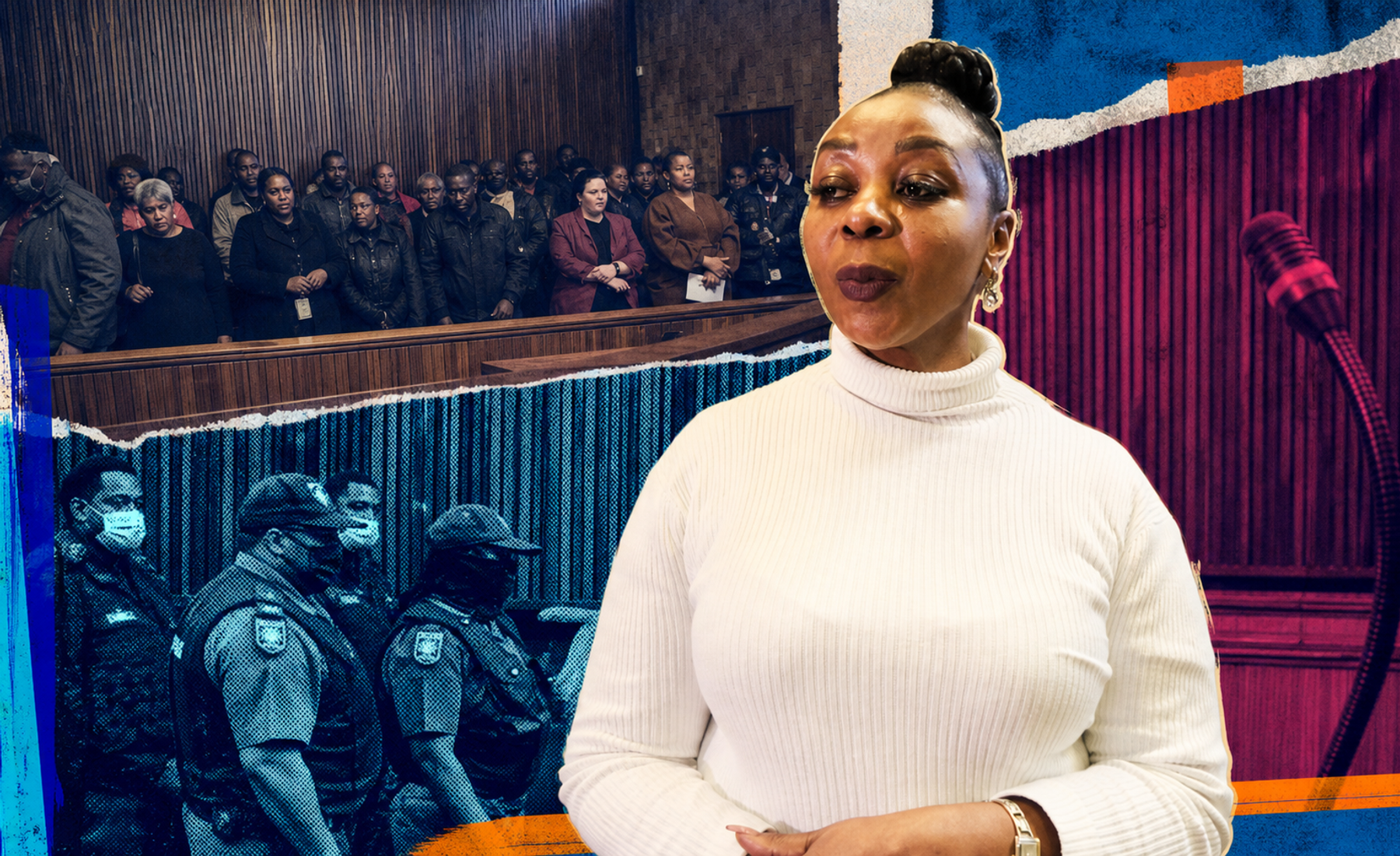


A Policewoman from Bushbuckridge
Our story starts in 2012, in a small village near the border of Kruger National Park. Nomia Rosemary Ndlovu was born and raised here in Bushbuckridge, a poor rural area in the country's northeast. She was one of several siblings, and like many young people with big dreams, she eventually left home to seek opportunity in the city.
In Johannesburg, Rosemary found steady employment in the one field always hiring – law enforcement. By her early 30s, she had become a police officer with the South African Police Service, working as a constable and later a sergeant at the busy Tembisa South police station.
Gambling Debts and a Deadly Idea
Colleagues knew Sergeant Ndlovu as a competent cop. She cut a respectable figure in her crisp blue uniform, patrolling the township streets and taking statements from crime victims. But those closest to her also noticed Rosemary had a weakness: she loved to gamble.
In fact, she was often absent from work, dodging loan sharks to whom she owed money. By 2011, Rosemary's finances were in shambles from her betting habit. Creditors hounded her even at the police station – brazen debt collectors showed up looking for the officer who owed them cash. Under that financial pressure, something seems to have broken inside Rosemary.
She began to see the people around her not as family, but as potential payouts. And as a police officer, she knew exactly how to execute a crime and get away with it – at least for a while.
Policies on the Living
In early 2012, Rosemary quietly started buying insurance policies on the lives of people close to her. In South Africa, it's not uncommon for folks to take out funeral policies on relatives – these are like life insurance, intended to cover burial costs when a family member dies.
Culturally, funerals are a big deal, and having money ready for a proper send-off is important. Insurers allow policies on extended family, sometimes without the insured person even knowing.
Rosemary understood this system well. She also knew how to game it. She filled out forms naming herself as the beneficiary on multiple relatives' policies – in one case, even listing a cousin as her "spouse" to ensure she'd get the payout. It was deceitful, even fraudulent, but the paperwork went through. By the time she was done, Rosemary had essentially placed bets on the lives of those closest to her. And soon, she would start cashing in.
Blood Money: Madala Homu
The first mysterious death struck Rosemary's family in March 2012. The victim was Witness Madala Homu, Rosemary's 26-year-old cousin. Madala was like a younger brother to her – they had grown up together. He worked as a night watchman and lived a modest life. Late one night, after finishing a shift, Madala Homu headed home through the dark streets of Johannesburg.
He never made it. His bludgeoned body was found dumped on the side of a road near Olifantsfontein, a semi-industrial area outside the city. He had severe head injuries consistent with a brutal beating. The crime looked like a mugging or assault, which sadly isn't unusual in South Africa where violent crime rates are high. Local police opened a murder investigation, but there were no immediate leads – just another young man tragically killed on his way home.
Rosemary, as both Madala's kin and a policewoman, took a leading role in the aftermath. She helped identify Madala's body at the morgue, weeping over her cousin's fate. To her colleagues, Sergeant Ndlovu seemed a model of compassion.
She assisted in filing the police reports and consoled grieving relatives at the funeral. Nobody found it odd when Rosemary contributed a bit of money for the burial – after all, she had a steady job, and it's common for family members to pool funds for funeral costs. What only Rosemary knew was that she had just made a tidy profit from this loss of life.
In the weeks after Madala Homu's death, insurance companies paid out 131,000 rand – about $10,000 – on policies Rosemary had secretly taken out on him. She had even convinced one insurer that Madala was her husband on paper, to maximize the payout. Of that money, she gave a token R15,000 (around $1,100) to Madala's mother – their Aunt Lucy – claiming it was to help with expenses.
Lucy Mushwana later said Rosemary showed up with groceries and a bit of cash after the funeral, but kept the rest for herself. At the time, Lucy was too deep in grief to question why her niece had life insurance on her son in the first place. It would only become clear much later. For now, Madala's murder went unsolved and Rosemary Nomia Ndlovu pocketed the balance of the blood money.
If anyone had bothered to check the fine print of those policies, they would have seen Rosemary listed as beneficiary on her cousin's life. But no red flags were raised. Insurers paid out promptly, and the police had no reason to suspect the involvement of one of their own.
From the outside, it just looked like Rosemary was a caring relative – perhaps even a victim herself, for losing a cousin so tragically. Little did anyone know this was only the beginning of her "killing for cash" enterprise.
A Sister's Last Cup of Tea
About a year later, in the summer of 2013, death visited the Ndlovu family again. This time, the victim was Audrey Somisa Ndlovu, Rosemary's own sister. Audrey was 41 and lived in a small rented room in Tembisa, not far from Rosemary's place. She was a security guard by trade – a hard-working, humble woman. In June 2013, Audrey came down to stay with Rosemary for a bit. What unfolded next is disturbing.
According to later court testimony, one evening Rosemary prepared a pot of tea for her older sister. She laced Audrey's cup with a poisonous substance – we may never know exactly what – and made sure Audrey drank it. As the poison took effect, Audrey grew weak and groggy. That's when Rosemary struck. Using her bare hands or a scarf, she strangled her sister to death in that rented back room.
One imagines Audrey's confusion and horror as her younger sibling, a police officer she trusted, squeezed the life out of her. Rosemary was not a large woman, but fueled by greed and desperation, she managed to overpower Audrey in those final moments.
The next morning, neighbors discovered Audrey Ndlovu's lifeless body. Rosemary was on the scene as the distraught sister who had just "found" her sibling dead. She claimed Audrey must have been robbed or attacked; perhaps she even staged the room to look like a crime scene.
In fact, prosecutors later accused Rosemary of tampering with evidence at the scene to cover her tracks. Being a cop, she knew what investigators would look for. And sure enough, local police initially treated Audrey's death as foul play by unknown intruders. No one suspected Rosemary – how absurd would it sound that a policewoman would murder her own kin?
While family members wept and prepared Audrey's funeral, Rosemary quietly got to work filing insurance claims. She had gone to great lengths to set this up. Over the past year, Rosemary had opened numerous policies in Audrey's name, even impersonating her sister on calls to insurance companies to designate herself as the beneficiary. Now all that preparation paid off.
Within weeks, the dutiful sister Rosemary collected a staggering R717,000 in combined life and funeral cover payouts – roughly $50,000 – for Audrey's demise.
It was an enormous sum in South Africa, more than five years of Audrey's salary. With that money, Rosemary paid off some debts and kept up appearances by contributing to Audrey's burial. Indeed, records show she put about R40,000 (nearly $3,000) toward the funeral – a fraction of what she'd gained.
In court later, Rosemary claimed she held onto some of the leftover cash to erect a tombstone and help Audrey's children eventually. But she never did. Once again, she had used a loved one as a human lottery ticket, and nobody around her had a clue.
By now, two of Rosemary's relatives had died in gruesome ways. But they were separated by time and distance – one in a roadside beating, one in a suspected home invasion poisoning – so no connection was seen. To the Ndlovu family, it seemed they were cursed with terrible luck. They had no idea one of their own was behind it.
"We trusted her," said Lucerth Mabasa, the sister of Rosemary's boyfriend, in an interview. "We took her as a sister. She was a policewoman, we thought she was there to protect us". Rosemary's aged mother, Maria Mushwana, was perhaps less enamored – Lucerth recalled that her mother "didn't love [Rosemary] at all. She didn't trust Ndlovu". But even Maria could never have imagined the depth of her daughter's treachery.
A Baby's Unexplained Death
For a while, after Audrey's murder in 2013, things went quiet. Rosemary lay low. She still had her police job, and colleagues noticed nothing amiss beyond her usual absenteeism on gambling binges. She had a young daughter to care for as well – Rosemary was raising a baby girl named Makhanani, fathered by her long-term boyfriend, Maurice.
In fact, not long after Audrey's death, another tragedy struck: Makhanani, Rosemary's infant daughter, died suddenly at a Pretoria hospital. The baby was just one year old. Doctors said it was some kind of pneumonia or unexpected illness. Strangely, Rosemary claimed not to know the cause of her own child's death.
The loss of little Makhanani is a dark footnote in this tale – it's the one death we can't definitively pin on Rosemary, but it raised eyebrows in hindsight. Was it truly natural, or did Rosemary see even her own baby as expendable for insurance? The baby's aunt, Lucerth, was notified of Makhanani's passing by a hospital nurse, not by Rosemary. Lucerth was heartbroken. She later noted that Rosemary didn't even attend her own child's funeral in the family's village.
That is hard to fathom – unless Rosemary's grief was tempered by something else. We don't have proof that Rosemary insured her baby or benefited financially from Makhanani's death, so all we can do is shudder at the possibility. Regardless, by late 2014 Rosemary had endured – or caused – the loss of a cousin, a sister, and her own child. And she wasn't done.
Eighty Stab Wounds
In October 2015, Rosemary's live-in boyfriend Yingwani Maurice Mabasa went missing. Maurice was a 36-year-old security officer, and he was the father of Rosemary's baby girl. He lived with Rosemary in a rented home in Clayville (near Tembisa).
By all accounts, Maurice loved Rosemary and trusted her completely. On the morning of October 13, 2015, he kissed her goodbye and left for work at the U.S. Embassy where he was employed as a guard. He never came home. Rosemary later testified that she tried calling Maurice's cell phone that night, but it was off.
By the next day, worry set in. Rosemary phoned his workplace and was told they, too, were looking for him. So Rosemary dutifully filed a missing person report at the Olifantsfontein police station – the same jurisdiction where her cousin's body had been found three years prior.
That same day, October 14, police made a grim discovery near a remote gate in Olifantsfontein: a man's body, stabbed dozens of times, lying in the dirt. The corpse had over 80 wounds, a frenzy of knife strikes, yet nothing of value was taken – his wallet, watch, and phone were reportedly still on him. It was a ghastly scene. Officers found an ID in the dead man's pocket confirming his identity: Maurice Mabasa, Rosemary's boyfriend. She was now a victim (or so it appeared) of yet another horrific crime.
When they informed Rosemary, she performed the part of the bereaved partner convincingly. At Maurice's funeral, she cried and even collapsed in tears when his name was mentioned in court later. But behind the veil of grief, Rosemary's scheming didn't miss a beat.
Unbeknownst to Maurice's family, she had been busy taking out multiple life insurance policies in his name over the preceding year. In some, she falsely listed herself as Maurice's lawful wife so she'd be eligible for benefits. She even recruited an accomplice to pose as Maurice for one policy, forging his signature on the paperwork.
Such deception might have raised suspicion at the insurance companies – and one Assupol agent did later testify that the signatures didn't match Maurice's true signature. But at the time, the policies were paid out without much fuss.
Rosemary cashed in big after Maurice's murder. By early 2016, she'd received around R416,000 (roughly $30,000) from at least three different insurance policies on him. Maurice's family knew nothing of these. They assumed Rosemary's contribution of R40,000 toward the funeral was out of the kindness of her heart. In reality, it was hush money – a drop in the bucket compared to what she kept.
When Maurice's siblings found out the truth years later, they were livid. "We didn't know she insured our brother's life… She pocketed all that money," his sister Lucerth said bitterly. Indeed, Lucerth only discovered in 2018 – after Rosemary's eventual arrest – that Rosemary had secretly set Maurice up to die. "She did that knowing my brother was going to die," Lucerth told reporters, voice shaking with anger.
The family felt utterly betrayed. They had accepted Rosemary as an in-law, treated her like one of their own. All the while she was plotting Maurice's death for cash.
It's mind boggling to consider: after murdering her cousin and sister with impunity, Rosemary had no qualms about eliminating the father of her child too. And what of that child? Little Makhanani's death about a year after her dad's – was that another part of Rosemary's twisted plan or a tragic coincidence? We may never know for sure, but the pattern of carnage surrounding Rosemary was undeniable.
By 2015, Nomia Rosemary Ndlovu had collected roughly 1 million rand (about $70,000) in insurance payouts from three murders she orchestrated. But she wasn't sitting on a pile of savings – far from it. The money had flowed through her fingers, feeding her gambling addiction and settling old debts. Incredibly, during her trial, Rosemary struggled to account for where all that cash went. It seemed there was never enough to keep her satisfied (or solvent). By 2016 she was on the hunt again – this time eyeing members of the next generation of her family.
A Trap Dressed as Hospitality
In June 2016, Rosemary invited her niece, Zanele Motha, to come stay with her for a couple of weeks in Tembisa. Zanele was 28, a single mother of three young kids. Perhaps she thought Auntie Rosemary was offering a little vacation from the stresses of township life – a chance to relax, maybe find job opportunities in the city.
Tragically, it was a trap. Before Zanele arrived, Rosemary had already signed her up for not one, not two, but three separate funeral insurance policies between January and May of 2016. The ink was barely dry on the last policy when Rosemary brought her niece into the lion's den.
At first, the visit seemed uneventful. But one day, Zanele ended up in Tembisa Hospital with some minor injuries – bruises and scratches. She told doctors she'd been hit by a bicycle while out and about. It was an odd little accident. She was treated and released back into Rosemary's care. Two days later, in the middle of the night on June 14, Zanele's condition suddenly worsened – at least according to Rosemary's account.
Rosemary would later claim that Zanele was complaining of severe pain, struggling to breathe, and that she, Rosemary, tried to help by giving her some painkillers at home. But as Zanele's agony grew, Rosemary finally drove her to a private facility – Arwyp Medical Center in nearby Kempton Park – instead of the closer public hospitals.
By the time they arrived, Zanele was unconscious and gravely injured. Doctors found she had multiple fractured ribs and a damaged liver, consistent with a violent assault – essentially a brutal beating – that had occurred in the time since her last hospital visit. Tragically, Zanele Motha succumbed to her injuries shortly thereafter. She died on June 16, 2016, turning Rosemary into a mourning "aunt" and three small children into orphans.
Once again, Rosemary played the part of the devastated relative with grotesque gusto. She later told the court an elaborate story: that Zanele had felt unwell but never disclosed how she'd gotten hurt, that maybe she fell trying to use the bathroom or something absurd of that nature.
Rosemary insisted she cared deeply for her niece – "If I didn't care about Motha, I would have let her die in my house," she snapped under cross-examination, bizarrely painting herself as a hero for at least attempting to get Zanele to the hospital. The prosecutor, however, tore her explanation to shreds.
The truth was clear: Zanele's fatal injuries were sustained while she was under Rosemary's roof and supervision. No bicycle accident could account for crushed ribs and a lacerated liver. Someone had beaten this young mother to death, slowly and deliberately.
We don't know exactly how Rosemary attacked Zanele – did she hire thugs to do it, or do it herself under some pretense? It might have started with that "bicycle" incident as a first attempt to harm her, then a second, more vicious attack two days later to finish the job. Rosemary, trained in the law, may have calculated that if Zanele died in a hospital, it would raise fewer questions than a corpse found at home.
Indeed, she did drive Zanele to the ER when it was almost too late, perhaps to appear caring. But the doctors and later the mortuary report made it obvious this was foul play. Still, no one suspected Rosemary. After all, she was the one who brought Zanele in for help – and she was a police officer herself. If anything, suspicion might have fallen on some anonymous attacker in the streets of Tembisa.
As with the others, Rosemary swiftly claimed the insurance benefits. She collected roughly R120,000 for Zanele Motha's death from the policies she had opened just months before. Disturbingly, Zanele's three little children never saw a cent of that money.
When pressed in court about whether she considered helping raise her late niece's kids or putting away funds for them, Rosemary coldly stated that the children were with their father and "that was not [her] responsibility". She had pocketed the cash meant for their mother's funeral and walked away, leaving the family to fend for the children's future alone. To Rosemary, those kids were just collateral damage.
The Pattern No One Saw
By this point, Rosemary had murdered four people who trusted her: a cousin, a sister, a lover, and a niece. If anyone in the family had connected the dots, they might have realized an alarming pattern – being related to Rosemary Ndlovu was becoming deadly.
But families don't easily assume one of their own is a serial killer. Plus, the victims were from different branches of the family tree, and the murders happened in different locales. Rosemary was careful not to strike twice in the exact same circle too quickly.
And importantly, she never stuck around at the crime scene. She let others discover the bodies, with her conveniently arriving as either the last to see them alive or the first to "notice" they were missing – a fact the prosecutor later highlighted: "The accused was either the last person to see them alive or the first to notice they were missing," said state advocate Riana Williams. At the time, however, no one saw through Rosemary's charade.
Mayeni and the Killing Fields of Olifantsfontein
Rosemary's next target was Mayeni Mashaba, a 32-year-old man who was actually Zanele's brother – another of Rosemary's nephews. (The family relationships can be a bit convoluted: Audrey was Rosemary's sister; Zanele and Mayeni were children of another sibling, making them Rosemary's niece and nephew from that side.)
Mayeni was a quiet, athletic guy, aspiring to find better work to support his folks. In April 2017, Rosemary arranged to meet up with Mayeni in Daveyton, a township in the East Rand of Johannesburg. Perhaps she dangled the prospect of a job lead or some financial help. Whatever the pretense, Mayeni agreed to meet his Aunt Rosemary on April 14, 2017. He never returned home.
That same day, April 14, pedestrians discovered a man's body dumped in an open field near Olifantsfontein – yes, that notorious area again, where two previous victims had been found. It was Mayeni. He had severe head wounds, consistent with being bludgeoned with a heavy object.
His cellphone records later proved he was with Rosemary at the time of his death – the pings from their phones placed both aunt and nephew in the exact same location on the day Mayeni was killed. Of course, in 2017 this evidence hadn't been connected yet. But it's telling: Rosemary was literally right there when he was murdered.
Following her pattern, Rosemary acted as the concerned aunt when Mayeni's disappearance and death came to light. It was presumably Rosemary who informed his immediate family of the sad news, since she knew before anyone else that he was gone.
And, true to form, she had insured Mayeni too. However, in this case, fate threw a wrench into Rosemary's machinery of fraud. She had taken out policies on Mayeni's life, but due to some "discrepancies on the forms," the insurance companies refused to pay out after his death.
Perhaps Rosemary had made a clerical error, or the insurers flagged something suspicious just in time. Whatever the reason, Rosemary couldn't collect money for Mayeni Mashaba's death – a rare miss for her. One might wonder if this setback irritated her, or even emboldened her to try again quickly to recoup. Because within months, she moved on to her next victim – one even closer to home.
Under Auntie's Wing
In January 2018, Brilliant Mashego, a 20-something young man, became Rosemary's sixth known victim. Brilliant was her sister Audrey's only son – Rosemary's own nephew, whom Audrey had entrusted to her after she died. Yes, remember Audrey, whom Rosemary poisoned back in 2013? Audrey's boy Brilliant had grown up into a polite, quiet young man.
He loved soccer and had been trying to find steady employment to help his grandmother (Rosemary's mom). After Rosemary killed Audrey, she made a show of taking Brilliant "under her wing," promising to help him find a good job in the city. To a motherless kid, that must have sounded like a lifeline. In late 2017, Rosemary indeed invited Brilliant to come stay with her, saying she could get him work. It was a lethal lie.
By this time, Rosemary was getting reckless and perhaps overconfident. Her bank balance was low; she was behind on loan shark payments for a BMW she'd bought. She desperately needed the next insurance infusion. In mid-January 2018, Rosemary and Brilliant traveled together from Johannesburg back to their home village in Bushbuckridge, Mpumalanga, ostensibly to visit family or take care of something. What happened on that trip is murky.
Rosemary later spun an elaborate alibi: she claimed she parted ways with Brilliant upon arrival and immediately caught a ride back to Gauteng with a boyfriend, leaving Brilliant to handle his business in the village. She insisted she wasn't even around when he went missing. But multiple witnesses contradicted her. A friend, Charlotte Maluleke, testified that on January 23, 2018, Rosemary and Brilliant showed up together at her place to borrow R300 for travel expenses.
They left, and Rosemary returned alone later that day, oddly leaving her handbag for a while and coming back for it – behavior that might suggest she was establishing a timeline or hiding evidence. That was the last time Brilliant was seen alive.
On January 24, 2018, villagers found a corpse at a marketplace in Bushbuckridge. It was Brilliant Mashego. He had been beaten and left for dead, much like others on Rosemary's list. When Rosemary's mother, Maria, got word that her grandson was found murdered, she was devastated. She had practically raised Brilliant after Audrey's death, and now he was gone too. Rosemary showed up for the funeral, acting bereaved, but cracks in her façade were starting to show.
She and her mother Maria gave conflicting accounts of Rosemary's whereabouts during the critical days. On the stand, Mama Maria Mushwana unintentionally blew up Rosemary's alibi. Rosemary had claimed to be with Brilliant on January 22 and then leaving him, but Maria testified firmly: "Ndlovu didn't come home on January 22.
Brilliant was at my house that day, saying goodbye before heading to Nelspruit by bus. He never mentioned meeting Rosemary". In other words, Mama Mushwana was telling the court that Rosemary was nowhere around when Brilliant vanished – directly contradicting Rosemary's own story that they traveled together.
This was an extraordinary moment: an elderly mother essentially undercutting her daughter's defense, likely without even realizing it. Maria also dismissed claims that Rosemary had tried to have her (Maria) killed for insurance – she said she never felt threatened by anyone and didn't believe such a plot. The poor woman was in denial that her daughter could contemplate matricide. Little did she know, at the very same time Rosemary was plotting to eliminate her too.
A Hitman's Conscience
As twisted as it sounds, yes – Rosemary had designs on killing her own mother, Maria Mushwana, for a meager insurance benefit. One hitman later revealed Rosemary had offered him R2,600 (around $180) to murder her mom in late 2017.
That hitman was the one who visited Maria's house pretending to ask for water, but lost his nerve upon seeing the kindly old lady and walked away. He just couldn't go through with killing a frail grandmother. When the story came out, Maria was shocked but said she never noticed anyone suspicious coming to the house – perhaps a mercy that she didn't realize how close to death she'd been.
So by early 2018, Rosemary's murder plots were spiraling. She had successfully killed six people (five relatives and her partner) and attempted to arrange at least two more murders (her mother and possibly others) that fell through. But she still hadn't been caught.
There were open investigations for each murder, but in South Africa's overloaded justice system, these cases were likely languishing without connection. Rosemary, as a police officer, might even have seen the case files and known they had no leads. She must have felt invincible – which led to her most brazen plan yet: the mass murder that we saw in the beginning of this story, the plot to kill her sister Joyce and five children in one go.
'No Witnesses Left Behind'
Joyce, Rosemary's surviving sister, was living in Bushbuckridge caring for her kids, who ranged from a teenager to a tiny baby. Rosemary had taken out policies on Joyce's life, of course – by now it was her standard operating procedure. But a single payout from Joyce might not be enough; Rosemary eyed the children too. Perhaps she thought she could also claim funeral coverage for the kids, or maybe she just didn't want any witnesses or lingering obligations.
Whatever the twisted rationale, in early 2018 Rosemary started recruiting help to wipe out Joyce's entire family. In December 2017, she had met Njabulo Kunene, a man with a criminal past, through a mutual acquaintance. Ironically, Rosemary had once arrested Kunene for an illegal firearm and then later befriended him through his cousin.
Talk about strange connections – the cop and the ex-con, forming an alliance. Rosemary begged Kunene to assist in "removing" some of her relatives, offering him payment. Kunene agreed, but quietly, he had a conscience.
The job Rosemary was describing – burning children alive – was more than he bargained for. Kunene made a decision that would finally bring this killer cop down: he went to his former boss at Tembisa police station, Colonel Nthipe Boloka, and spilled the whole plot.
You can imagine Boloka's shock. He was Rosemary's station commander, and here was an informant accusing his sergeant of serial murder. But Boloka trusted the tip – perhaps by then rumors or suspicions had started swirling around Rosemary. Colonel Boloka immediately set a trap in motion.
The Trap Springs
In March 2018, an undercover operation was arranged by Boloka and other senior officers. Njabulo Kunene, the would-be hitman, would approach Rosemary as if moving forward with the plan, but with backup. They fitted an undercover police agent into the scenario to pose as another hitman for hire. On the day of the sting, Rosemary likely felt in control. She got into that car, thinking these two men were her accomplices.
Over the next five hours, as they drove from Jo'burg to Bushbuckridge, Rosemary talked freely – not knowing every sordid detail was being recorded by a hidden device in the vehicle. The tape captured Rosemary explaining how she needed her sister Joyce killed quickly because she was on the verge of losing her BMW to those loan sharks.
She candidly admitted she was "desperate for cash" and would pay the hitmen using the insurance payout after Joyce's death. She directed them to burn the house at a time when all five kids would be home, and instructed them that no one must survive.
At one point, Rosemary's voice lowered as she emphasized the importance of silence: the children, even the baby, should be drugged into unconsciousness so they wouldn't scream when flames engulfed them. It takes a truly chilling mindset to calmly outline the murder of innocents in that way.
The men played along, asking questions as needed to draw out more evidence, while inside likely feeling ill. Indeed, one of the seasoned undercover officers later said even hardened criminals found this plot "too horrific" – they couldn't believe a person, especially a mother herself, would go this far.
When the car neared Bushbuckridge, the trap was sprung. Armed police, likely including Colonel Boloka himself, swooped in and arrested Nomia Rosemary Ndlovu before she could get anywhere near her sister's home. She was caught in the act of commissioning a mass murder. It was over. The killer in their family had finally been unmasked.
Joyce Ndlovu and her children were safe – and stunned to learn how close they came to death. Imagine being told by police that your own sibling had paid hitmen to kill you. Joyce, understandably, was traumatized by this revelation. But she and her kids lived, thanks to the courage of Kunene and the swift action of law enforcement.
Unraveling Six Years of Murder
Rosemary's arrest in 2018 was the beginning of the end of her deadly scheme, but it was also the start of a massive investigation. Now that she was in custody for the attempted hits, detectives started digging into all those prior family deaths that had seemed like tragic coincidences. Sergeant Keshi Mabunda, a detective at Olifantsfontein SAPS, was assigned the daunting task of connecting the dots. Olifantsfontein was the common thread in several murders (Madala, Maurice, Mayeni had all been dumped in that area), so it made sense.
When Sgt. Mabunda and his colleagues looked at Rosemary's history, they uncovered a "chilling litany of evidence," to quote one report. Cellphone records, insurance documents, witness statements – piece by piece, the puzzle came together. The pattern was obvious: multiple relatives dead, each insured by Rosemary, each yielding her a payout. She had turned her family into a source of income, one murder at a time.
Investigating a fellow police officer put Mabunda in a tricky spot. He faced pressure and even death threats as he pursued the case. At one point he was seriously ill during the investigation (reports say he was fighting a terminal illness), but he persevered. "Ndlovu is exactly where she belongs – behind bars," Mabunda said later, expressing relief that he managed to build a watertight case despite the challenges.
The Provincial Police Commissioner commended him for "relentless commitment… without fear or favor" in taking down one of their own. Indeed, it must have been surreal for her colleagues at Tembisa police station to watch this saga unfold.
Many had worked alongside Rosemary daily, never realizing a serial killer lurked in their ranks. Yet some signs were there in hindsight: Colonel Boloka recalled how loan sharks frequented the station looking for Rosemary, and how she often skipped work multiple days a month to dodge them. She had "amazing things" going on, he said dryly – a euphemism for the chaos hidden behind her respectable front.
The Killer Cop on Trial
Rosemary Ndlovu's trial began in mid-2021 in the High Court of South Africa (Gauteng Local Division) sitting at Palm Ridge, Johannesburg. By South African law, there is no jury; a judge hears the case and renders verdict and sentence.
And in a departure from American trials, this case was widely televised. Soon, the nation was transfixed by the spectacle of the so-called "Killer Cop" in the dock. Every day brought new revelations that left viewers in disbelief. How could a 46-year-old mother and police sergeant methodically execute her own kin for money?
Rosemary didn't make it easier to understand – in court, she put on an almost theatrical performance. Some days she was defiant, arching her eyebrows, smirking, and making sassy poses as if the proceedings were a joke. She even flashed peace signs at the cameras at times, as if she were a celebrity, not an accused murderer. Other days, she turned on the waterworks. She broke down sobbing when her late boyfriend Maurice's name was mentioned, causing the judge to briefly adjourn so she could compose herself.
Skeptics felt her tears were crocodile tears – conveniently appearing when sympathy might help her, yet she showed no emotion hearing about the other victims. In fact, she mostly sneered that everyone else was lying. She called almost all 50+ state witnesses liars, from the hitmen who testified to the insurance agents, to her own relatives. Her only defense witness was her mother, Maria, who as we heard only ended up undermining Rosemary's alibi more.
The trial ran for three months, and South Africans watched agog as detail after detail emerged. Prosecutors laid out how Rosemary had systematically arranged life and funeral insurance for each victim, then set about eliminating them.
They produced evidence showing Rosemary was, uncannily, present or nearby at each key moment of the murders – recall that cell data placing her with Mayeni, or how she was last seen with Brilliant, or first "discovering" Audrey. "She nominated herself as the beneficiary… to cash in," the prosecutor emphasized, summarizing the cold-blooded motive. It was almost too outrageous to believe, yet there it was in black and white. One by one, the names of the slain were read in court.
And on top of those six murders, Rosemary was charged with the attempted murder of her mother, Maria (for the 2017 plot), plus incitement to murder Joyce and her five kids (for the foiled 2018 plot), plus multiple counts of fraud related to all the insurance shenanigans. It was a laundry list of evil, frankly. No wonder the case captivated the public.
People couldn't stop talking about the lady in the dock with her blasé expressions and the horrific allegations scrolling under her name on the TV screen. "It's not your typical serial murderer," noted forensic psychologist Gerard Labuschagne. "It's a woman, she's a cop, and (almost) all her victims were family members". Exactly – this case upended many assumptions about who can be a serial killer.
Throughout, Rosemary flatly denied everything. "I am not the person who took out my murdered sister's insurance policies," she insisted in one exchange, even as documents clearly showed her voice on call recordings and her handwriting on forms. She claimed there must be some mistake or conspiracy against her. When cornered with hard evidence, she would get evasive, sometimes even complaining of illness to delay proceedings.
Indeed, twice the trial had to be paused when Rosemary suddenly claimed to feel dizzy or have chest pains. Observers suspected it was a ploy for sympathy or a timeout when testimony got too intense. The judge eventually had enough and even had her shackled in leg irons during testimony after she tried to attack photographers in the courtroom by throwing snacks at them. This was broadcast too – images of a uniformed female officer in leg irons being scolded by a judge. It was surreal.
By September 2021, as the trial neared its conclusion, it was clear the evidence was overwhelming. A criminologist profiler, Lt. Col. Elmarie Myburgh, testified that Rosemary Ndlovu showed absolutely no remorse or empathy for her victims – she was a manipulative personality who saw people only as means to an end.
Indeed, even after being caught, Rosemary allegedly continued her scheming behind bars: prosecutors revealed she had conspired with another inmate (a former policewoman named Nomsa Mudau) to plot yet more murders, including the husband of that inmate and even an attempt on Colonel Boloka and Sgt.
Mabunda who had caught her. Talk about audacity – trying to kill the very cops who stopped your killing spree. It's like she just couldn't stop plotting. Those additional conspiracy charges were separated and scheduled for a later trial, but it underscored how dangerous and unrepentant she was.
Six Life Sentences
On October 22, 2021, Judge Ramarumo Monama delivered the verdict that all of South Africa had been waiting for. In a packed courtroom, with journalists and some of the victims' family members in attendance, the judge declared Rosemary Nomia Ndlovu guilty of all six murders, plus the attempted murder, incitements, and fraud charges. Rosemary reportedly showed little emotion as the judgment was read – the time for theatrics was over.
Seated in the gallery were two men who had lost siblings to her greed, watching her finally face justice. The evidence had proven beyond any reasonable doubt that she orchestrated this trail of bodies for about R1.4 million in total payouts. That's roughly $95,000 – the price she put on six lives. Spread over six years, she'd essentially been willing to murder for an average of around $15,000 a person. The cold utilitarian nature of it is breathtaking.
Two weeks later, on November 5, 2021, the sentencing hearing took place. Under South African law, premeditated murder falls under a mandatory life sentence unless exceptional circumstances suggest otherwise. Rosemary's defense tried to argue for some leniency – they pointed out she was a mother (though her child was deceased) and raised the issue of gambling addiction as a mitigating factor. But the judge found no compelling circumstances to deviate from the prescribed penalties.
In fact, he emphasized that the sheer brazenness and cruelty of her crimes demanded emphatic retribution over any hope of rehabilitation. He noted that violent crime in the country is rampant, and a message had to be sent, especially when the criminal was someone duty-bound to uphold the law. The judge was unsparing: calling her offenses "brazen" and pointing out her utter lack of remorse – she hadn't once apologized or acknowledged wrongdoing.
As Rosemary stood in the dock, the judge ordered her to rise for sentencing. Then he pronounced a string of punishments that ensured she will never walk free again. For each of the six murders, Rosemary Ndlovu received a life imprisonment term, all to run concurrently. Additionally, for defeating the ends of justice by tampering with the crime scene (Audrey's murder), she got 5 years. For the four counts of fraud (all the insurance policy lies), 10 years each.
For the seven counts of incitement to commit murder (hiring hitmen to kill Joyce, the kids, etc.), 10 years each. And for the attempted murder of her mother, another 10 years. On paper it added up to well over a century behind bars plus the life terms.
However, the judge exercised discretion to run almost all those additional years concurrently with the life sentence on the first murder count. In effect, Rosemary's sentence is life in prison – with no set parole date, meaning she will likely spend the rest of her natural life incarcerated. In South Africa, "life" usually means at least 25 years before parole consideration, but given multiple life sentences and the egregious nature of her crimes, it's doubtful she'll ever be deemed fit for release.
When that gavel fell, one could almost feel a collective sigh of relief from the community. Outside court, relatives of the victims expressed a mix of sorrow and vindication. They will never get their loved ones back, but at least the person responsible can't hurt anyone else. "She must tell us why she killed our brother," Lucerth Mabasa had pleaded earlier.
But Rosemary offered no why. To this day, she maintains she's innocent, that this was all some grand conspiracy. No confession, no apology. The likely truth is simple: it was all about greed. She treated her family as "a living pay cheque, ready to be harvested at any time," as one article aptly put it. And ironically, even the money she so greedily sought never really changed her life for the better – it slipped away on bets and loans, leaving her hungry for the next score.
The broader shock of this case also forced some introspection in South Africa. Insurance companies tightened some procedures, though funeral policies remain relatively easy to take out on others. Police authorities vowed to screen their members more rigorously; it was a black eye for SAPS to have a serial killer in uniform.
The Police Minister at the time called Rosemary a "rogue officer" and expressed horror at "such cruelty and disregard for human life by someone sworn to protect the innocent". For the public, the story became a macabre cautionary tale: that sometimes the danger comes not from notorious strangers, but from those closest to us – even a sister, even a cop.
A Monster Among Them
In the aftermath, Joyce Ndlovu and her children had to grapple with the nightmare that their beloved Rosemary – the auntie they laughed with at Christmas, the sister Joyce grew up with – wanted them dead. How do you ever recover from that?
The family reportedly cut off all contact with Rosemary. She's simply a non-entity to them now, except as the monster in their darkest dreams. Rosemary's mother, Maria, survived an attempt on her life she didn't even know was happening, and lived to testify against her daughter. What a painful experience – loving your child but knowing what they did. It's said that when Maria finished her testimony, she fell ill and the court had to adjourn for the day. One can only imagine the heartache.
As for Nomia Rosemary Ndlovu, prisoner number something-or-other, she sits in a cell where she belongs. By all accounts, she has not shown genuine remorse. In 2022, she was hauled back to court on additional charges of conspiracy to murder related to that other ex-cop's case and the alleged plots against the investigators.
She even appeared "glammed up" in one hearing, sporting salon-fresh hair and bright lipstick, smirking as if it were a minor inconvenience. It seems even imprisonment hasn't humbled her. But no amount of posing can erase what she's done.
This case stands as one of the most bizarre and disturbing in South African true crime annals. A female serial killer is rare enough; one who targeted her own family members, one by one, for insurance payouts is virtually unheard of.
It's a story that forces you to question how well you truly know those around you. Rosemary's friends, coworkers, and relatives all thought she was kind, reliable, maybe just a bit too fond of gambling. None suspected a murderer in their midst. "We have not benefited a cent from those monies… She betrayed us," Lucerth said, speaking for a family robbed of sons, daughters, siblings.
In the end, justice caught up with her – fittingly through the work of honest police and the courageous decision of a recruited hitman who could not stomach such evil. The undercover footage of Rosemary in that car, casually ordering the murder of children, was played in court and left everyone numb. It was the final nail in her coffin. Listening to it, even her defense had no answers. How do you defend the indefensible?
As the judge pronounced six life sentences, Rosemary Nomia Ndlovu remained stone-faced. Perhaps she was already thinking of some appeal or another scheme. But any schemes now will unfold only in the prison yard. She'll have decades to reflect – if she's capable of it – on the value of human life and how cheaply she sold it. At 46, she effectively received a whole life tariff, with no realistic prospect of release. In South Africa, that's as serious as it gets, since the death penalty is outlawed.
Primary reporting and references
- Watch exclusive footage of woman ordering hitmen to kill sister, kids
SowetanLIVESep 14, 2021
- S v Ndlovu (ZAGPJHC/2021/899)
SAFLIIJan 01, 2021
- Serial killer cop breaks down over boyfriend's death
- I was emotional as if her death has just been announced again
- Rosemary Ndlovu
Wikipedia
- 5 stories about alleged killer cop Nomia Rosemary Ndlovu you need to read
The HeraldSep 16, 2021
Related episodes
The Black Widower
A woman's death exposes an 18-year insurance murder scheme inside her own family.
Ecuador's First Female Serial Killer
A brutal family attack reveals the story of Ecuador's first known female serial killer.
The Karlivka Maniac
A serial killer terrorizes rural eastern Ukraine, massacring entire families with whatever weapons are at hand.