

A Body on the Football Field
Lusaka in 1980 was a bustling African city with a population nearing half a million. Under the one-party rule of President Kenneth Kaunda, Zambia was generally peaceful, and violent crime – especially the kind of crime about to unfold – was virtually unheard of.
So when the first body was discovered in early January, nobody imagined a serial killer was at work. It all began on the final weekend of the Christmas holiday break, just after New Year's.
On the morning of January 5, 1980, an anonymous caller phoned the Lusaka Central Police Station to report a gruesome find: a woman's body was lying in the grass behind Lusaka Boys Primary School.
When officers arrived at the location – a schoolyard football field – they were met with a ghastly scene. A small crowd of schoolboys had stumbled upon the corpse during their pickup soccer game, and their carefree play had given way to screams and shock.
The police, led by Inspector Gondwe, gently pushed the spectators back and examined the remains. It was a young woman, already in a state of decomposition from the summer heat. She had no obvious injuries due to the decay, but police immediately suspected foul play.
The body looked as if it had been dumped there; little clues around the scene hinted she hadn't died on that spot. Scattered around her were personal items: a travel bag, some clothing, and crucially, a national registration card – Zambia's ID document. From that, they learned her name: Grace Siambilu, age 21.
Investigators managed to piece together some of Grace's last known movements. She was not a Lusaka resident at all, but a traveler. Just a few days earlier, on January 2, Grace had left her hometown of Sinazongwe in the southern province and taken a train up to Lusaka.
She planned to quickly drop off a letter to her brother who worked for the national food company (Namboard) in the capital, and then continue her journey to the Copperbelt town of Kitwe, where she had a job interview at a technical institute.
She never made it. Sometime after stepping off the train in Lusaka, this young woman's promising future was brutally cut short. Now her body was in the morgue, and police had not a single lead as to who killed her or why.
Six Bodies in Six Days
The next day, January 6, any hope that Grace's murder was an isolated incident quickly evaporated. In the quiet, upscale neighborhood of Woodlands, another phone call summoned police to a discovery. Along a dirt footpath near Chitukuko Road, hidden in some bushes, lay the body of another young woman. This one was not decomposed – she had likely been killed just hours earlier. The victim was unidentified, around 20 or 21 years old.
Unlike Grace, the evidence here was unmistakable: this woman had been attacked and killed right where she was found. The ground told the story – broken beads from a traditional waist belt were scattered in a six-meter radius, and a torn pair of underwear lay a few meters from the corpse, suggesting a violent struggle. Bruises marred the woman's neck and even her abdomen, and investigators noticed something disturbing: a frothy, foam-like mucus around her nose and mouth.
She had been strangled to death, and the foam hinted that perhaps some kind of chemical or poison might have been used in the assault. Whoever the killer was, he hadn't bothered to hide her body at all – she was left in the open, as if meant to be found.
The police canvassed the area and checked missing person reports, but they couldn't identify this second victim at the time. She became a Jane Doe, tragically anonymous. And Lusaka's police were left reeling – two murdered women in two days? In a city where such violent crime was rare, this was deeply alarming.
Within a week, more bodies emerged. On January 12, the remains of Florence Mwangelwa Mulima, 21, were discovered behind an office building of the National Institute of Public Administration. She too had been raped and strangled.
Two days after that, on January 14, a 10-year-old girl named Priscilla Ndhlovu failed to return home from a simple errand to buy groceries. She was found lifeless in a maize field between the Olympia Park and Northmead areas – a child victim of what was now clearly a serial murderer. Lusaka had never seen anything like this.
As if to show that no one was safe, the killer even managed to claim a member of law enforcement as a victim: on January 28, the body of Regina Munanga, 25, was found between the University of Zambia campus and the city Showgrounds.
Regina was an off-duty police officer, traveling through Lusaka while on official duty from one town to another. She had been sexually assaulted and strangled just like the others. Chillingly, whoever killed her placed her police identification card on her body, almost as a dare for investigators to find.
Two days later, on January 30, yet another young woman – Clodia Maimbolwa, 21 – was discovered dead near Lusaka's prominent Freedom Statue along Nasser Road. Clodia had been traveling by train from the southern town of Choma, headed to Senanga in the west; her journey, like Grace's, was violently interrupted in Lusaka.
Witnesses later recalled seeing Clodia late that night walking with a man in an army uniform near the railway station, but in the chaos of multiple murders, that clue wasn't immediately chased down. It would come back to haunt the police that they hadn't acted on it sooner.
By the end of that grim January, Lusaka's police had recovered six bodies of murdered females in various parts of the city. Women were being raped and strangled at an almost weekly pace, and panic was starting to set in among the public. At first, investigators weren't sure what they were dealing with – could it be a gang attacking women?
Or a single "homicidal maniac," as some officers began to suspect? The consistency of the attacks hinted at one perpetrator with a singular method: all the victims were female, many were in transit (traveling by bus or train from other towns), most were found in or near open fields or footpaths, and strangulation was the common cause of death.
The killer often left the bodies posed or easily visible, sometimes even with bizarre touches like personal items deliberately strewn around, or circles of coins and bottles placed near the corpses. It was as if the murderer wanted to advertise his gruesome handiwork. This brazenness earned him a nickname in the press: "The Lusaka Strangler." And the Lusaka Strangler's bloody work was only just beginning.
The Strangler's Reign
As the calendar turned to February and March 1980, the killings continued unabated. Nearly every week, another woman's body was found. On February 7, 20-year-old Millian Chipeta was found strangled with her own scarf in a cornfield near the City Airport. She had come in by bus from the Copperbelt. A few days later, an unidentified young woman (perhaps 18-21 years old) was discovered dumped along Washama Road in another suburb; she too had been raped and strangled.
On February 11, the strangler claimed another child victim – Fosta Kaela, just 10 years old, snatched while walking home from primary school. Her little body was left in a field on the edge of town; investigators noted a man's boot prints around her, but little else to go on.
Later that month, 26-year-old Grace Mutondo was killed after leaving a disco at Lusaka's five-star InterContinental Hotel – showing that even the busy city center wasn't off-limits. By the end of February, five more women had been murdered that month alone, bringing the total to eleven known victims.
Each new murder brought a fresh wave of dread over the city. Newspapers blared headlines about the "Strangler" and splashed pleas for public caution. Rumors swirled in taverns and markets about who the killer could be – Was it a madman escaped from some asylum? A witchcraft practitioner collecting body parts for rituals? Or perhaps, as some whispers suggested, someone wearing a uniform to trick his victims?
That last theory gained traction after one particularly bold killing. On March 13, two young women were found dead the same day. One, 18-year-old Jane Malako, had been strangled along a footpath after witnesses saw her earlier that day at the busy Kamwala bus station. Another, Hilda Banda, also 18, was discovered on the playing field of Kamwala Secondary School; she had been strangled with her own belt. Hilda had last been seen alive at the Lusaka Hotel downtown. Two murders in one day was a frightening escalation, and it pressed the police and government to act fast.
Operation Rosemary
The Zambia Police Force, unused to serial murder cases, initially struggled. Investigators interrogated known sex offenders, rounded up any suspicious characters, and even detained dozens of people in hope of a break – but nothing stuck.
The usual methods were failing. Internal frustration mounted, and even the government became impatient. Politicians publicly demanded results. There was talk of asking for help from abroad – perhaps detectives from London's famed Scotland Yard, or West Germany's Bundeskriminalamt, could come assist.
But national pride and limited resources quashed that idea; Zambia was determined to solve this internally if possible. Instead, the police brass redoubled local efforts. They launched "Operation Rosemary," named in honor of one of the victims, 24-year-old Rosemary Chuma, who had been murdered in June. Operation Rosemary was a multi-pronged crackdown: officers blanketed Lusaka with safety warnings, putting up posters and running ads in newspapers urging women to be vigilant of strangers, even those offering help.
The government took the extraordinary step of imposing a dusk-to-dawn curfew on the capital, an emergency measure usually reserved for civil unrest – never before had it been used for an criminal at large. For a period of time, ordinary citizens were not supposed to be out at night unless absolutely necessary, all in hopes of limiting the Strangler's opportunities.
A hefty reward of 10,000 Kwacha (a significant sum in 1980) was announced for information leading to an arrest. And perhaps most importantly, the Police Command formed a special task force to crack the case. All the best detectives from around the country were pulled into Lusaka to create a Special Investigation Team (SIT), led by Superintendent William Mundia, a seasoned investigator known for his tenacity.
A City Gripped by Fear
The formation of SIT in late March came none too soon. By then, the death toll had climbed to nearly 20, and Lusaka was in a state of near hysteria. "The whole city was terrified," one local journalist would recall. Women, especially young women from out of town, were most at risk, and everyone knew it. Many started taking extreme precautions.
Nurses who worked late shifts at University Teaching Hospital chose to sleep overnight in the wards rather than risk going home in the dark. Female college students avoided traveling through Lusaka's transit hubs alone. Bars and nightclubs saw a sharp drop in female patrons – the usual lively social scene dimmed under the shadow of fear.
Even Lusaka's sex workers, who typically were undeterred by danger, were said to have charged higher prices and stuck in groups, wary of any client who seemed remotely suspicious. It felt like no woman was safe unless the Strangler was caught.
Within the police, there was significant pressure and also some infighting. The Lusaka city detectives had been working hard, but their methods were being criticized from above. At one point, Assistant Commissioner Mubuka Sinyinda, one of Zambia's top policemen, formally reprimanded the Lusaka CID for missing crucial leads.
He was particularly upset that back in late January, when Clodia Maimbolwa's body was found near the Freedom Statue, a security guard had reported something extremely important: that very night, he had seen Clodia walking with a man in a military uniform around midnight. The guard worked at Premium House (an office building nearby) and took note of this odd late-night pair. He offered the information to investigators, but in the chaos and volume of tips, it seems to have been overlooked initially.
Hours after the sighting, Clodia turned up murdered in the same vicinity – a glaring clue that a uniformed man might be involved. Sinyinda saw this as a blunder; had the police pursued that soldier lead aggressively in January, perhaps the killer could have been caught after just a handful of murders, sparing many lives. This misstep spurred the higher-ups to tighten oversight and fully empower the new SIT to do whatever was necessary.
Superintendent Mundia's Special Investigation Team began methodically reviewing all the evidence and patterns. They quickly confirmed what some on the ground had suspected: the murders were almost certainly the work of a single person. The consistency was too strong – similar methods, victim profiles, and the very pace of the killings suggested one maniac acting out some dark compulsion week after week.
The SIT detectives sifted through forensic clues: most victims showed clear strangulation marks; some also had those puzzling chemical burns or foam in their airways indicating a toxin might have been used to incapacitate them. (Later, survivors would indeed describe being given spiked drinks or noticing a strange taste – a sign the killer possibly used a drug or poison to weaken his victims before or during the strangling.)
Robbery didn't seem to be the primary motive, though some personal items were stolen. Many victims still had money or luggage on them; in several cases, the murderer had bizarrely arranged the scene by placing the victim's ID card on their chest or scattering their belongings around as if to mock the investigation. It was as if he wanted the police to know exactly who the victim was and that he was in control. All this pointed to a bold, confident predator.
If it was one person, who could it be? The SIT considered profiles: likely a man, physically strong enough to overpower women quickly. Perhaps someone who traveled around the city or had a job that gave him mobility or odd hours – a long-haul driver? A police officer? A soldier?
As SI-T honed in on the idea that the killer might be impersonating a military man or actually be one, they decided to deploy a strategy: undercover female officers. Knowing many victims were Lozi (an ethnic group from Western Province) or Lozi-speaking travelers, the team planted female police officers who spoke Lozi at bus stops and train stations, posing as stranded passengers.
They hoped to lure the killer if he tried to approach them. Meanwhile, uniformed patrols around these transport hubs were increased dramatically – any loitering soldier or suspicious man was to be questioned.
For good measure, the Zambian Army was quietly asked to keep an eye out for any personnel who might be acting odd or who had frequent evening outings, though at that stage, it wasn't publicly announced that a soldier was suspected (the authorities were careful not to cause friction with the military or panic the public further without proof).
Despite these measures, the murders continued through April, May, and June – though SIT's presence might have made the killer shift tactics slightly. In April, three more women were killed, including one dumped conspicuously at the city's Freedom Statue downtown – a brazen taunt seemingly aimed at the government itself. In May, two more victims turned up, one literally left at the entrance gate of Woodlands Stadium.
In June, three were killed, among them Lita Mabango, an 18-year-old waitress who was four months pregnant. Lita's murder was particularly savage: she was not only strangled but also stabbed in the chest multiple times, and her body was found hanging by the neck from the fence of the NIPA campus. This macabre display horrified even veteran officers like Assistant Commissioner Sinyinda. The killer seemed to be growing more audacious and cruel with each passing month.
The Night Nora Fought Back
Yet, in the midst of all this horror, fate was about to tip the scales in the police's favor. The breakthrough that the entire country was praying for finally came on July 16, 1980 – the night Nora Soko fought off her attacker and survived. We met Nora at the beginning of our story, so let's revisit her with the broader context now.
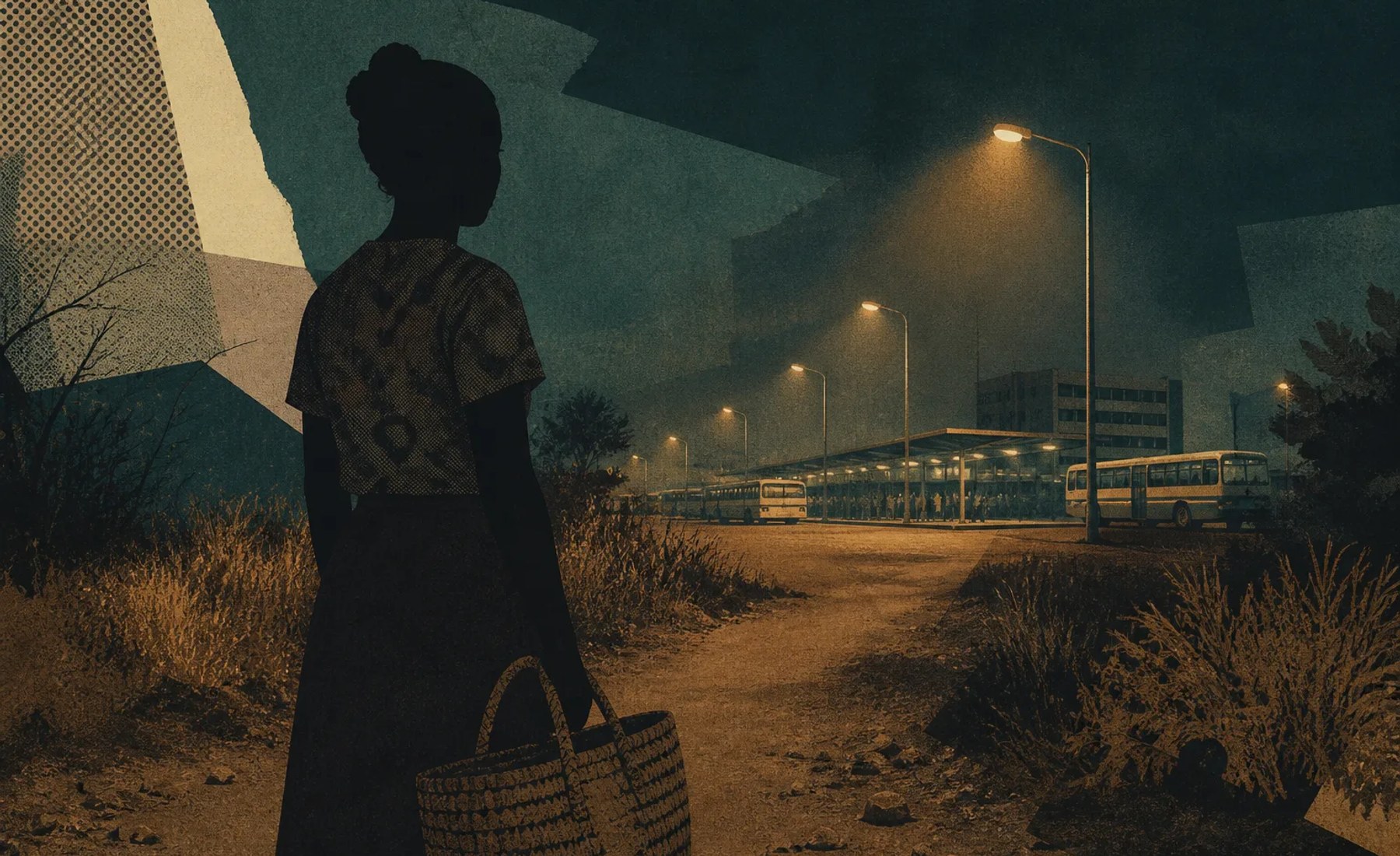
Nora was a teenager from Kitwe who had traveled to Lusaka that day to visit her parents. She arrived at Kamwala, Lusaka's inter-city bus terminus, in the early evening. Normally she'd have caught a local bus or taxi on to Makeni where her folks lived, but fear of the Strangler made her pause.
It was getting dark, and Lusaka's streets were emptying out early because of the unofficial curfew everyone observed out of fear. Nora thought it might be wiser to stay the night with a family friend or even at the station rather than risk a lonely trip to Makeni. Tragically – and ironically – it was this very caution that left her waiting at the bus station long enough to cross paths with a predator.
According to Nora's later testimony, two men in military attire approached her at the station. One eventually wandered off, but the other, a short, stocky soldier in a camouflaged combat uniform, persisted in chatting with her. He offered gallantly to escort her to her destination.
She initially refused, but he essentially forced the situation by taking her basket, as we heard, compelling her to follow. After leading Nora down a dark route and into a secluded area, the man – who had introduced himself with the name "Lt. Nyambe" – brutally attacked her.
Nora's fight and the timely arrival of the security guards saved her life. She was rushed to the University Teaching Hospital where doctors treated her injuries: severe bruising around her neck and abdomen, and even chemical burns on her tongue, consistent with being forced to ingest some kind of toxin.
Nora was traumatized but lucid enough to provide the police with a detailed description of her assailant. She described him as a "short, brown-skinned man with tribal scars on his face, dressed in a combat uniform."
He spoke fluent English and Nyanja (the local Lusaka language) but with a noticeable Lozi accent. This was a jackpot of information for SIT – it corroborated so much of what they had hypothesized. A Lozi-speaking soldier or imposter with scars. It matched the Premium House guard's report from January.
It hinted the killer might even be Lozi himself (tribal facial scarification is more common in certain Zambian ethnic groups, including Lozi). Nora was absolutely confident she could identify the man if she saw him again. She even said memorably, "I could recognize that man anywhere in the world."
"I Could Recognize That Man Anywhere"
Recognizing the importance of their first living witness, the police took great care with Nora. They knew any defense lawyer might later try to question her sanity or memory (should a suspect be caught and brought to trial), so they had Nora spend some time at Lusaka's Chainama Hospital for a psychological evaluation – essentially confirming she was of sound mind and her account was reliable.
Nora Soko instantly became the linchpin of Operation Rosemary. Superintendent Mundia and his team realized they now had the threads to narrow the search: a soldier (or fake soldier) of Lozi background, likely based in Lusaka, who could be short and stout with distinctive facial marks. They quietly started checking military records for anyone who might fit that general description, even as they continued outward surveillance.
Nora's survival had another effect – it emboldened the police and gave the public a glimmer of hope that this killer could indeed be stopped. But the Strangler wasn't done yet, and he would strike again before they caught him. After July, there was an eerie lull in the murders. August 1980 passed with no new bodies discovered. Perhaps the heightened police presence at transit stations was deterring the killer. Some speculated he had left town or been scared off. Others worried he was merely lying low, plotting his next move carefully. The latter proved true.
The Soldier at the Bus Station
In early September, the nightmare resumed, but this time it provided the final clues needed to catch the culprit. On September 7, Josephine Nora Mukatasha, a young mother from the town of Chingola, boarded a bus to Lusaka with her infant baby daughter. Josephine (no relation to Nora Soko, despite the similar name) was traveling with her baby to visit her husband's family in a town called Mumbwa, and to save money she planned to transit through Lusaka and continue onward the next day.
During the bus ride, Josephine befriended another young woman – an outgoing teen girl who was heading to Petauke in Eastern Province. When their bus arrived in Lusaka that evening, it was too late for onward connections; both women were essentially stranded until morning.
Given the recent scares, they actually discussed the Strangler and decided they would stick together for safety. The two women resolved to spend the night at the busy Kamwala bus station, where at least other travelers and night staff were around. They likely felt that in the public eye of a bus terminus, they would be safe until daylight.
But as the night deepened and the crowds thinned, danger found them. According to Josephine's later testimony, at some point past midnight two men in military combat uniforms approached her and her friend right there in the station.
The men projected an air of authority – they asked the women routine questions, like "Where are you coming from? Where are you going? Show us your national registration cards." The women, thinking these might be legitimate security checks (the country was on high alert after all), complied and showed their IDs.
Satisfied, the soldiers then smoothly switched to a more friendly approach: they suggested that the ladies shouldn't spend the night out in the open at the station. "Come with us," they offered. "We'll get you a nice room at a guest house so you and the baby can sleep comfortably."
Josephine and her friend hesitated. Despite the uniforms, something felt off; plus, they didn't have money for a guest house and hadn't asked for one. They politely declined the offer and said they'd just wait where they were. At that, one of the "soldiers" abruptly snatched up the Petauke-bound girl's suitcase and a box she was carrying.
Without another word, he started walking away, carrying off the young woman's luggage. Alarmed, the girl from Petauke instinctively followed after him into the darkness beyond the station, calling for him to give her bags back. Josephine watched her new friend disappear into the night following the soldier – and that was the last time she ever saw her.
Now Josephine was alone at the station with the other soldier, her baby still strapped to her back. An hour passed, and there was no sign of her friend or the other man. Josephine grew increasingly worried. The remaining soldier stayed with her, making small talk, assuring her that her friend was likely already snug and asleep at the guest house and that Josephine was being "difficult for nothing" by refusing their hospitality.
Eventually, wearing down her resolve, the soldier smiled and said, "Your friend is already resting comfortably. I promise, I'll take you to join her. It's not safe here – you have a baby to think of. Let me help." Perhaps it was concern for her infant or the nagging fear of being truly alone in the station that finally swayed her. Josephine agreed to go with him. The soldier picked up her suitcase for her, and together they left the station.
It was the same deadly script all over again. The man led Josephine, with her baby in her arms, on foot through Lusaka's streets. They stopped briefly at a roadside kiosk where he chivalrously bought two orange Fanta sodas – one for Josephine, one for her little girl, a gesture oddly kind, and later quite telling.
Josephine drank the soda gratefully; the night was warm and she was parched from nerves. The soldier then guided her toward the area around Kamwala Secondary School, saying the guest house was nearby.
The roads grew quieter and darker. Roughly half an hour later, as they walked by a particularly unlit stretch near some bushland, Josephine finally asked where they were going – she didn't see any guest house lights or sign. The soldier vaguely pointed ahead, saying it was just beyond those trees. At that moment, Josephine turned her attention to adjusting the baby on her back – a mother's instinct, making sure her child was secure for the last stretch of the walk. That split second was all it took.
The man sprang behind Josephine and lunged, wrapping his powerful hands around her neck. She had no time to scream. Clutching her infant tightly, Josephine was dragged off the path into the bushes. The soldier's grip tightened relentlessly around her throat as she struggled to breathe. She felt herself losing consciousness, the world going black, the sound of her baby's frightened crying dimming in her ears.
A Mother's Survival
When Josephine next opened her eyes, she was in complete darkness and silence. For a confusing moment, she thought she was dead – maybe this was the afterlife? But then the chill of the night and the ache in her throat made it clear: she was alive, miraculously.
She was lying in the dirt among some bushes. Her baby girl was beside her, awake and wailing inconsolably. It was around 3:00 AM. Josephine was disoriented and vomited from the shock and perhaps whatever drug had been slipped into her drink (she'd later recall that the Fanta the soldier gave her tasted a bit bitter).
Summoning strength fueled by terror and a mother's concern, Josephine checked on her child – the baby was unharmed, thank God – and then looked around. The soldier was gone. So was her suitcase, along with her purse, watch, and even her wedding ring. In the faint moonlight, Josephine noticed one eerie detail: her national registration card, which had been inside her suitcase, was now placed neatly on the ground right next to her head. It was like the attacker wanted her identity clearly known. That sight sent a chill down her spine; it was the calling card of the Strangler.
Though still weak, Josephine knew she couldn't stay there. She hoisted her crying baby onto her back, gathered what little courage she had left, and started stumbling through the dark in search of help. She eventually came upon a small house on Malata Road in a nearby residential area known as Madras. It was well past 2:30 in the morning when she banged on the door, pleading in a hoarse voice for help.
The Mwabas didn't hesitate; they brought Josephine inside, gave her water, and listened in horror as she managed to explain what had happened. They let her rest in a bed until dawn while they alerted the authorities. Josephine Mukatasha had survived Zambia's worst serial killer, and now she, like Nora Soko, would become a key to ending his terrifying spree.
The Trap at Kamwala
On the morning of September 8, 1980, the police received the news of Josephine's attack and miraculous survival. The response was immediate and intense. Telephone lines buzzed as SIT officers were roused and briefed. This was it – another survivor, another eyewitness who could identify the perpetrator. Superintendent Mundia and his team rushed to interview Mrs. Mukatasha in detail.
Josephine, despite her harrowing night, provided a coherent account very similar to Nora's: a short man in a military uniform, speaking local languages with what sounded like a Western (Lozi) accent, who had been part of a two-man act initially. She even remembered something she hadn't thought twice about before the attack – the name he casually gave when offering the Fanta: he'd said something like, "By the way, I'm Lieutenant so-and-so," but in her shock she couldn't recall the name clearly (it wasn't his real name in any case, as Nora's attacker had also used the alias "Lt. Nyambe").
Crucially, Josephine was confident she would recognize the man if she saw him again. Her description of his face and build matched Nora Soko's description almost perfectly. Both women, attacked two months apart, had definitely encountered the same person. The net was tightening around the Lusaka Strangler, and he likely didn't even know it yet.
The police now had not one but two living witnesses, each with a detailed description. They also had that earlier tip from a guard, and even one detective's own observation: remember during Nora's incident, a plainclothes detective had actually noticed a soldier chatting with a young woman at the bus station but assumed it was just a romantic couple. After Nora's attack, that detective, Constable Chikoti, realized what he had seen and wrote a report describing the soldier's looks and the woman's green dress – which exactly matched Nora Soko and her assailant.
So by early September, SIT had multiple reports all aligning: a man in an Army combat uniform, short and stocky, tribal facial marks, Lozi accent. They were now certain the killer either was a genuine soldier or someone with access to military gear. They also theorized that the killer often worked in tandem with another man – at least at the approach stage – based on both survivors saying two soldiers were present initially. Could it be a pair of serial killers?
Or an accomplice who helped lure victims? Possibly. However, it was also conceivable that the second "soldier" in some encounters was an unwitting decoy or a casual friend not aware of the deadly plan. The police didn't want to jump to conclusions about multiple culprits without evidence, but they remained open to the idea that at least two men might be involved in some capacity.
With Josephine's testimony, Superintendent Mundia made a decisive call: it was time to set a trap. They would use their survivor as bait to draw out the Strangler. It was a risky proposition – effectively using a civilian woman as lure for a killer – but Josephine was willing, and the police took extensive precautions to ensure her safety.
After giving her a day to recover, on September 16, 1980, Josephine Mukatasha bravely accompanied a group of plainclothes detectives back to the Kamwala bus station, the very place she had been approached by the soldier nine days before. The logic was simple: many serial offenders return to the scenes of their crimes or prowl the same hunting grounds. If the man in uniform was still operating, he might be back at the bus station looking for stranded women to prey upon. Josephine had a sharp eye and a score to settle – she was perfect for the job of spotting him.
That evening, as the busy station began to quiet down with the last buses, Josephine walked around the terminal, pretending to be just another traveler killing time. Detectives lingered nearby in the shadows or mixed in with the crowd, watching her and anyone who approached. They didn't have to wait long. At around 7:30 PM, a man in an army combat uniform strolled up to Josephine. For a split second, her blood ran cold – it was him.
"That's Him"
The same short, scarred face that had smiled at her before turning violent. The man apparently didn't recognize Josephine under the fluorescent station lights (perhaps in the dark bush he hadn't seen her face well, or he simply never expected a victim to resurface). He greeted her casually, as one might greet a stranger at a bus stop, and said with a hint of familiarity, "Hey, I think I've seen you somewhere before… Haven't we met?"
Josephine later recounted that every fiber of her being wanted to lash out or scream right then, but she maintained an incredible calm. In that moment, she was the bait and needed to keep him engaged until police could move in. Forcing a polite smile, she replied that no, he must be mistaken – she had just arrived from Chingola and didn't know anyone in Lusaka. The man tilted his head, perhaps trying to remember, but then shrugged it off.
He offered, just as he had done before, to take her to a nearby "rest house" for the night. "Don't stay out here in the cold," he said kindly, as if he were just a Good Samaritan. Josephine's heart pounded. She glanced down at the man's wrist and felt a jolt of vindication: he was wearing her wristwatch – the very watch he had stolen off her while he thought she was dead.
That was all she needed to see. Maintaining her facade, Josephine told the man she'd go with him, but she needed to retrieve her luggage first from across the road where she'd left it. He said sure, he'd wait. Josephine then calmly walked away, as if heading for her bags – and immediately signaled the undercover officers nearby. "That's him," she whispered. In a flash, the police team closed in.
The suspect was caught completely off guard when a half-dozen men sprang from the shadows and grabbed him. He resisted fiercely, even with handcuffs clapping around his wrists. A brief scuffle ensued in the middle of the bus station, startling the bystanders.
But the man was outnumbered and subdued after a few moments of thrashing. The trap had worked perfectly. The man's eyes darted in panic, surely realizing the jig was up. Meanwhile Josephine stood at a safe distance, trembling but filled with relief. She had faced her nightmare and helped put him in cuffs.
Corporal Milton Sipalo
The suspect was immediately taken into custody and whisked to Lusaka Central Police Station under heavy guard. On the ride there, officers demanded his identity. At first he muttered something about them making a mistake, but he soon gave his name: Milton Mufungulwa Sipalo. It turned out their serial killer was a 27-year-old corporal in the Zambian Army, stationed right there in Lusaka at Arakan Barracks.
Arakan Barracks is a major military residence in the city, housing hundreds of soldiers and their families. Sipalo's arrest sent shockwaves through the Zambian law enforcement community.
An Army corporal – and a former military policeman at that – was the last person they expected to be behind these heinous crimes. It answered some questions (how he got a uniform, why he had discipline and cunning), but raised many others (what drives a man like that to such savagery?). Word of the arrest was tightly controlled at first, trickling out only as needed – they wanted to be sure they had irrefutable evidence before declaring the Strangler case solved.
Trophies of a Monster
Over the next 24 to 48 hours, investigators worked feverishly to build the case around Milton Sipalo. The morning after his capture – September 17, 1980 – police, with Sipalo in tow, conducted a thorough search of his house at Arakan Barracks. What they found removed any remaining doubt that this was their man. Hidden in Sipalo's quarters were numerous personal items belonging to victims of the Lusaka Strangler.
Josephine Mukatasha immediately spotted her missing belongings among the haul, including her suitcase and baby's items. There were also items tied to several dead women: clothing, purses, a blanket, even jewelry like watches and shoes. Investigators laid these objects out and cross-referenced them with lists of stolen or lost items from the murder cases.
In total, property from at least nine different victims was recovered from Sipalo's home, including stuff from Regina Munanga (the slain policewoman), Maggie Mwanza, Mary Chisanga, Rosemary Chuma, Fridah Ncube, Regina Mumba, Millian Chipeta, Agness Mwelwa – plus the belongings of the two survivors, Nora and Josephine, of course. It was a veritable trove of trophies and stolen goods, damning evidence of Sipalo's connection to many of the crimes.
Confronted with this evidence, Milton Sipalo tried to lie his way out. He spun a bizarre story to the police: he claimed that all those women's items in his house belonged to a lover of his – some mysterious woman who had traveled to Lusaka with her child. According to Sipalo, he had fallen in love with this woman and brought her home, but upon discovering she had a surgical scar on her abdomen (implying she'd had some operation, perhaps an C-section or something), he "lost interest" in her romantically.
He said the woman left his house to take her child to the hospital one day and never returned, abandoning her luggage and possessions with him. It was a rambling, senseless explanation – clearly a desperate attempt to explain away the stolen goods with a story of a jilted romance. The detectives weren't buying it for a second. Too many items corresponded to known murder victims for this to be a coincidence.
Sensing that the game was up, Sipalo then tried another tactic: deflection. He claimed he hadn't acted alone. He pointed the finger at another man – a Lance Corporal named Kenneth Kaluwe, also from Arakan Barracks. Sipalo suggested that Kaluwe had been his accomplice in some of the murders.
This allegation prompted the police to quickly detain Lance Corporal Kaluwe as well and investigate him. They were not going to let a possible second killer slip away. Kaluwe was brought in, and an identification lineup was arranged that same day with both Sipalo and Kaluwe present.
It was a dramatic scene: in a courtyard at Lusaka Central Police Station, a lineup of a few soldiers was assembled while three key witnesses observed from behind a screen – Nora Soko, Josephine Mukatasha, and a young woman named Joyce Mwape. Joyce was a bus station vendor who had come forward to report that a soldier had twice approached her at the Kamwala station, flirting and proposing a date, but she had turned him down, pretending to be married.
She had found the encounters odd enough (especially after hearing of the Strangler's arrest) that she told police she thought she could identify the guy if needed. Now all three women studied the lineup carefully. Without hesitation, Nora pointed out Milton Sipalo as the man who attacked her. Josephine did the same – that's the man.
Joyce Mwape also nodded firmly at Sipalo; he was indeed the pushy soldier who had approached her at the station.
None of the women recognized or pointed to the other suspect, Kaluwe. In fact, none of the evidence from searches tied Kaluwe to the crimes either – his home had turned up no stolen items or incriminating signs. It was looking increasingly like Sipalo was the lone main culprit and that if he ever had a companion, it wasn't Kaluwe (or at least there was no proof it was).
When the police informed Sipalo that he had been positively identified by multiple witnesses, he reportedly gave a chillingly frank response. He said quietly, almost resigned: "If they can pick me out from the others, then I am the one who tried to kill them."
The Confession Tour
With that, Milton Sipalo, the former soldier and now accused serial killer, began to cooperate – to a point. On the afternoon of September 18, just two days after his capture, Sipalo agreed to show the police what he had done. Handcuffed and escorted by a contingent of officers (Superintendent Mundia among them), Sipalo was driven around Lusaka to various sites that he calmly identified as dump spots or crime scenes.
In a grim tour of his bloody deeds, Sipalo pointed out a patch of ground between Kafue Road and John Laing compound where he said he and "the other guy" (whom he claimed was Kaluwe) had left the body of Kwaleyela Situmbeko back in May. He then directed them to an area near an Impala filling station and a grocery in Thorn Park – there, an unidentified woman's body had been found on February 10 (one of the unsolved Jane Does).
Sipalo claimed he had killed her with Kaluwe's help as well. He led them to the football field at Kamwala Secondary School and indicated the spot where Hilda Banda's body was dumped in March. Sipalo was basically narrating the murders, though interestingly he kept insisting he had an accomplice. For each location he mentioned, "Kaluwe was with me." Detective notes show that Sipalo seemed eager to talk about what he did except take sole responsibility – possibly trying to share the blame or confuse the narrative.
However, as evidence stood, there was nothing tying Kaluwe to these crimes except Sipalo's words. And indeed, when confronted, Lance Corporal Kaluwe vehemently denied having anything to do with any murders. He provided alibis and expressed shock that Sipalo would implicate him. The thorough searches of Kaluwe's property turned up zero evidence.
After a short detention, Kenneth Kaluwe was released – his only misdeed, it appeared, was being unlucky enough that Sipalo tried to drag his name down too. To this day, it's not clear if Sipalo actually did have a partner-in-crime who was never caught, or if he sometimes enlisted unwitting help from friends (for instance, the unknown soldier who walked off with Josephine's friend likely was real – that girl disappeared and was likely murdered by either Sipalo or an associate).
It remains a murky part of the story. The formal police conclusion later was that Sipalo acted essentially alone; the "second soldier" seen at times might have been a transient helper or even Sipalo switching tactics. But many believe he may have involved one or two others occasionally, even if they never faced justice. It's one of the lingering questions of the case.
Nonetheless, by the third day after arrest, the investigation had enough to declare Milton Sipalo the Lusaka Strangler beyond any reasonable doubt. He had effectively confessed through his statements and by leading police to crime scenes only the killer could know. The physical evidence connecting him to victims was overwhelming. Zambia's first serial killer case appeared to be solved. The nation breathed a sigh of relief – albeit a cautious, horrified relief, since the full extent of his carnage was still being tallied.
The Final Leap
But the story does not end with a tidy trial and conviction. Instead, it takes one final dramatic and tragic twist.
On September 19, 1980, just three days after his capture, Sipalo was at Lusaka Central Police Station, handcuffed and under guard, as detectives prepared to take him for yet another interrogation. As an officer – Assistant Superintendent Fufu – was escorting him through the station, Sipalo made a sudden break.
Despite being in handcuffs, he bolted away with surprising speed. He dashed through a door, up a flight of stairs, and before anyone could tackle him, Sipalo clambered up to the roof of the three-story police building. In seconds, he was standing at the edge of the roof, looking down at the crowds and officers below.
People in the vicinity noticed the commotion and soon a crowd began to gather on the ground, staring up at the forlorn figure of the suspected Strangler teetering on the ledge. Policemen shouted and rushed to the roof access, but kept a distance once up there, afraid that approaching might prompt him to jump. Sipalo was visibly agitated, breathing heavily, looking at the drop below.
A tense standoff ensued. Police negotiators tried to talk him down. They pleaded with him not to do anything rash, to come away from the edge. The Fire Brigade was called in and arrived with emergency nets or cushions, hoping to position something below in case he did jump – but they couldn't get it fully set up in time.
For a long stretch – some witnesses say almost two hours – this drama played out. Onlookers shouted various things; some cursed at him for the misery he'd caused, others oddly were quiet or even sympathetic at seeing a life so close to ending.
One can only imagine what went through Milton Sipalo's mind on that rooftop. Was he seized by guilt, despair, fear of facing the families of those he killed? Was it a final act of defiance, denying society the satisfaction of punishing him? Or was he simply trying to escape and when cornered, preferred death over a probable hanging sentence? We'll never truly know.
Despite the negotiators' efforts, Sipalo remained on the brink. Finally, in one swift motion and to the gasps of the crowd, Milton Sipalo leapt off the roof. He plunged three stories down, right in front of onlookers, and struck the ground with a fatal impact. The Lusaka Strangler died there at the base of the Central Police Station, effectively carrying out his own execution in broad daylight. It was an awful and surreal end – the serial killer who had terrorized the city ended up killing himself before he could ever be tried in a court of law.
People were stunned. In the span of days, Lusaka went from fear, to relief at the arrest, to a mix of anger and confusion at the sudden suicide. There would be no trial now, no public airing of how he did it and why. Milton Sipalo took those answers to his grave. The police quickly announced that the suspect had died in an escape attempt.
The Jerusalem Post headlined, "Suspected Strangler Leaps to His Death," confirming to the world that the reign of the Lusaka Strangler had concluded not with a judge's gavel, but with a rooftop jump. Some citizens whispered that maybe the police had pushed him – a form of extrajudicial justice – but eyewitness accounts and even Zambia's independent press at the time agreed he truly jumped of his own accord while officers begged him not to. It seemed Milton Sipalo was finalizing the narrative on his own terms, denying everyone the opportunity to interrogate him further.
Zambia's Deadliest Killer
And just like that, the nightmare was over – mostly. After Sipalo's death on September 19, 1980, the serial murders in Lusaka stopped immediately. No more women were found strangled in the night. The sense of security, slowly, over months, returned to the city.
Bars and cinemas started seeing women patrons again. The curfew was lifted. The collective panic subsided, replaced by a national catharsis of horror and relief. Zambia had stared into the abyss of one of the worst serial killing sprees in recorded history, and though scarred, it had come out the other side.
The Lusaka Strangler case remains one of the most notorious chapters in Zambian history. Milton Sipalo is officially recorded as having murdered 29 women and girls (and unborn child makes 30) between January and September of 1980, making him the country's deadliest serial killer. In fact, it's often cited as a grim world record – the highest body count in the shortest time for a lone serial killer, roughly one murder per week for over half a year.
Whether or not some might quibble with that record, there's no doubt his rampage was extraordinarily brutal, rapid and above all else, evil.
Primary reporting and references
- Milton Sipalo
WikipediaJan 01, 2024
- SIPALO Milton Mufungulwa
Serial Killer Database WikiJan 01, 2024
- The Lusaka Strangler: Zambia's Most Notorious Serial Killer
Nkwazi MagazineJan 01, 2024
- Unmasking a Nightmare: The True Story of the Lusaka Strangler Takes Center Stage
My Afrika MagazineNov 30, 2024
Related episodes
The Black Widower
A woman's death exposes an 18-year insurance murder scheme inside her own family.
The Serial Killer in Plain Site
Four women are murdered across Antwerp while their suspected serial killer remains hidden.
The Karlivka Maniac
A serial killer terrorizes rural eastern Ukraine, massacring entire families with whatever weapons are at hand.