

Model Families
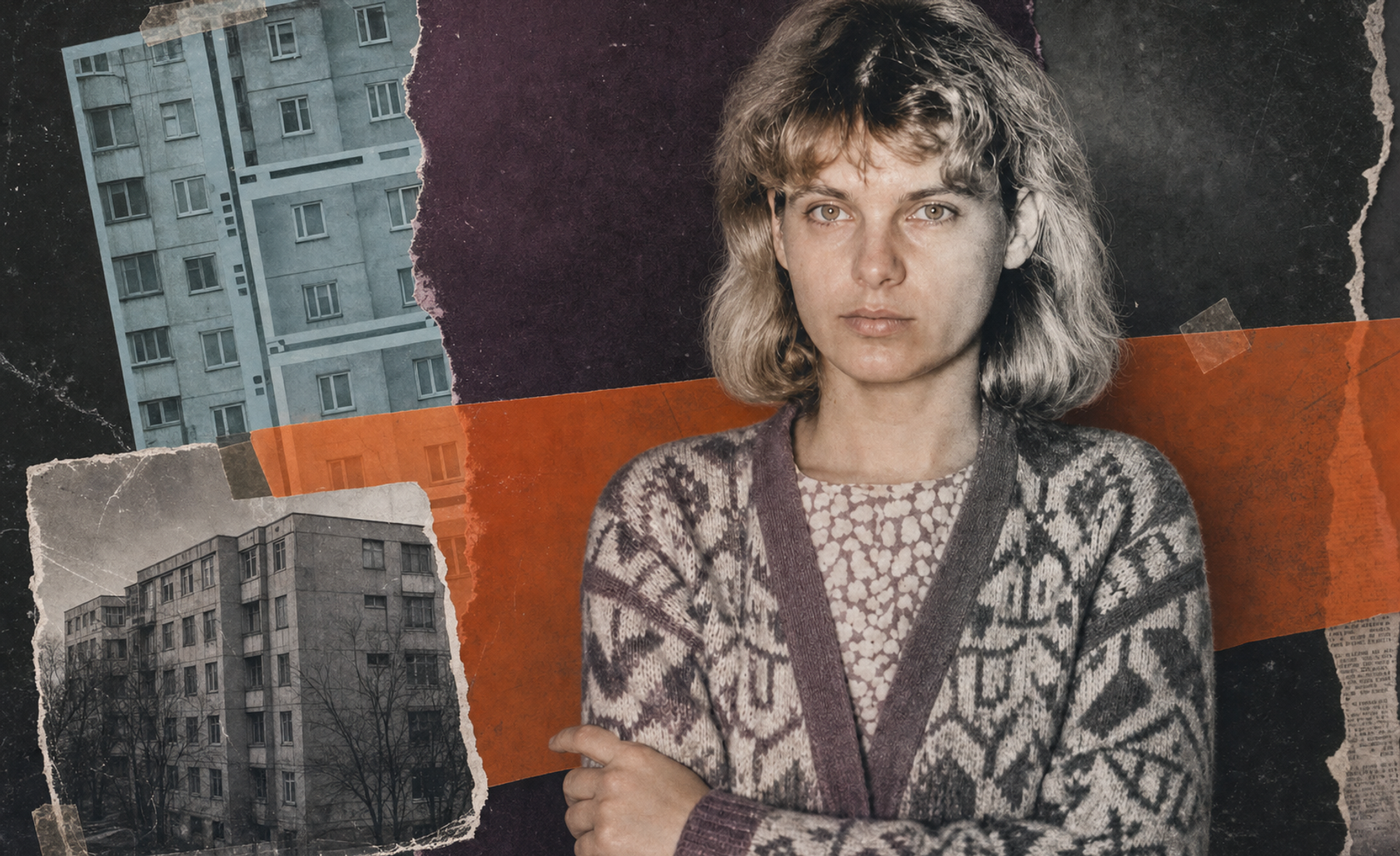
The victim would soon be identified as 37-year-old Iuliana Țînteanu, a wife and mother of two young children known to family and friends as warm, intelligent, and devoted.
Though born in Brăila County, Iuliana had settled in Ploiești with her husband, Bogdan Ținteanu, an accomplished architect.
Together, they moved in educated, upper-middle-class circles in Ploiești, an industrial city of oil refineries and heavy industry located about 35 miles north of Bucharest.
Among their closest friends were Dr. Roxana Călin – a 35-year-old pediatrician – and her husband, Doru, a physician.
The two couples had been part of the same social circle for years, vacationing together, hosting dinner parties, and even playing bridge on weekends. Iuliana and Roxana were especially close; they shopped together, did aerobics together, and by all outward appearances shared a genuine friendship. Ploiești society regarded them as model families – successful professionals with happy homes.
The Secret Affair
But beneath the friendly facade, a storm had been brewing. In May 1993, about a year before the murder, Roxana Călin and Bogdan Țînteanu began an illicit love affair. Roxana, who was unhappy in her own marriage at the time, fell deeply in love with Bogdan.
The two met in secret, stealing hours together whenever they could. For a while, no one suspected a thing – not Roxana's husband, and certainly not Iuliana. "For half a year, no one knew they were lovers," one account later noted. But by early 1994, the secret had started to unravel.
According to one story, Roxana's mother-in-law accidentally overheard a phone conversation between Roxana and Bogdan in January 1994 and immediately informed both her son (Roxana's husband) and Iuliana of what she had heard. Confronted by their spouses, both Roxana and Bogdan initially denied any physical affair.
Bogdan later insisted that his wife "never knew with certainty" that he and Roxana were intimate, though he admitted Iuliana had strong suspicions. Roxana, on the other hand, claimed that Iuliana absolutely knew – even that the three of them had argued about it during a seaside vacation in mid-1993.
Whatever the exact timing, it's clear that Iuliana grew wary of Roxana's intentions. Outwardly, however, Iuliana tried to keep the peace and maintain the friendship, perhaps hoping the affair would fade.
In fact, just weeks before her death, Iuliana had even turned to Roxana for medical help when one of the Țînteanu children fell ill – a gesture suggesting that she was still willing to trust Roxana on some level. It was a situation fraught with tension and denial, the kind of quiet domestic turmoil that rarely makes headlines… until it explodes.
Obsessed with Her Rival
For Roxana Călin, the affair was anything but a passing fling. She became pregnant by Bogdan twice during 1993 – and terminated both pregnancies in secret. Each time, she pressed Bogdan to leave his wife and marry her, and each time he demurred. Bogdan had two young children with Iuliana and was not willing to abandon his family, despite his feelings for Roxana.
"I explained to her it wasn't possible, because we each had two kids and responsibilities that limited us," he later said, recalling those conversations. Roxana grew increasingly frustrated and emotionally volatile. Friends would later testify to her jealousy.
At a party in February 1994, a witness noticed Roxana standing in a corner, glowering as she watched Iuliana and Bogdan share a dance on the floor. Roxana refused to dance with anyone else, and when the song ended she intercepted Bogdan immediately, cutting in to dance with him next – hissing something to him that made his face fall.
The friend who observed this knew about the affair and quietly feared that something was very wrong. It was as if Roxana could not contain her resentment at seeing the married couple together.
By the spring of 1994, Roxana had become, in the words of one prosecutor, obsessed with her rival. According to the prosecution's theory, after Bogdan repeatedly refused to divorce his wife, Roxana decided to eliminate Iuliana Țînteanu. She began to plot the unthinkable: the murder of her friend and romantic rival.
'Can You Come Over Right Now?'
The trap was set on the morning of June 16, 1994. It was a Thursday. Around 9:00 a.m., Iuliana Țînteanu received a phone call from Roxana. "Can you come over right now so we can go get those lab tests done? Quickly – the clinic only works until 10 o'clock," Roxana urged, according to what was later revealed.
This call wasn't entirely out of the blue. Iuliana had recently been worried about her health; one of her children had suffered a bout of acute myocarditis (heart inflammation), and Iuliana wanted some medical tests for herself, just to be safe. Roxana had offered to help facilitate those tests. Thus, under the pretext of arranging blood work, Roxana lured Iuliana to her apartment that day.
In truth, Iuliana already had plans that morning – she was supposed to accompany Bogdan to Bucharest for a business meeting – but she trusted her friend, and this seemed important. So, without hesitation, Iuliana changed her plans and hurried out the door to meet Roxana. It would be the last time she left home.
The Sealed Apartment
Unbeknownst to Iuliana, Roxana Călin had gone to great lengths to ensure they would be entirely alone. Roxana's husband was away at work in Bucharest that day. She had sent her younger child to stay with relatives.
Her older child, a 10-year-old boy, she shooed out of the house that morning with an errand: he was to deliver a bouquet of flowers to a family friend and then spend the rest of the morning playing at a nearby park. Crucially, Roxana took the house key from her son before sending him off – she told him she'd forgotten her own key at the clinic, so she needed his, and that he should not come back until lunchtime.
This was highly unusual, as the boy typically wore the key around his neck; even Roxana's husband later testified that their son always had a key on him, except that day, which struck him as a deliberate maneuver by Roxana. In other words, Roxana had pre-arranged to have the apartment sealed off from any intrusions during the critical hours. She had also acquired what she needed to incapacitate her victim.
A hospital assistant would later admit that, about two months earlier, Roxana had asked him for a vial of Thiopental – a powerful fast-acting barbiturate used for anesthesia – and he had given it to her.
Investigators strongly suspected that this was the drug Roxana planned to use on Iuliana, since Thiopental can induce unconsciousness in seconds. All the pieces were in place.
On that bright summer morning, Iuliana stepped unsuspectingly into her friend's apartment, believing she was going for a routine medical errand. In reality, she was walking into an ambush.
The Injection
Exactly what transpired inside Roxana Călin's apartment on June 16, 1994, can only be reconstructed from Roxana's later statements and the forensic evidence. There were no witnesses besides the two women. According to Roxana's own account, things went wrong almost immediately.
Roxana claimed that after Iuliana arrived, the two of them were briefly delayed from leaving for the clinic – Roxana pretended she couldn't get through to the lab on the phone, stalling for time. At some point, Iuliana became suspicious. Roxana says Iuliana realized that the "analyses" might have just been a ploy to keep her from going to Bucharest with Bogdan that day. An argument erupted. Roxana later alleged that Iuliana exploded in anger, accusing her of deceit.
In Roxana's telling, Iuliana began cursing her – calling her "a filthy cow" and "whore," screaming that Roxana had lured her there under false pretenses. It was during this confrontation, Roxana claims, that she made a fateful decision. By Roxana's account, she offered to give Iuliana a calming injection to help her relax – a sedative.
She even says Iuliana, in her agitated state, agreed to it. Roxana then stepped into another room, fetched the vial of Thiopental and a syringe, and injected her friend with the powerful anesthetic under the guise of administering a sedative or taking a blood sample.
Whether or not there was truly a heated argument, what is certain is that Roxana did inject Iuliana with Thiopental. In both of Roxana's later "versions" of the story, this fact remained constant. The drug took effect almost immediately. Iuliana lost consciousness and collapsed, completely at Roxana's mercy. Now events took an even more sinister turn. Roxana Călin was a trained doctor; she understood exactly what Thiopental did.
'My Intention Was to Clear Her Air Passages'
She later claimed that as soon as Iuliana went limp, she was seized by panic – realizing she might have overdosed her friend. Roxana said she dragged Iuliana's unconscious body into the bathroom, hoping to revive her somehow. What she did next is almost beyond comprehension. Roxana's story was that she noticed Iuliana wasn't breathing and decided to perform an emergency tracheotomy – right then and there, by herself.
She grabbed a hunting knife and made a deep incision in Iuliana's throat, ostensibly to open an airway. "My intention was to clear her air passages," Roxana later testified. The result, however, was catastrophic. Blood gushed everywhere as the blade sliced through the right side of Iuliana's neck.
Roxana had cut the carotid artery and jugular vein in one motion. In seconds, Iuliana began bleeding profusely. Roxana said she was overwhelmed by the sight: "Blood started pouring out. I put a towel over her face so I wouldn't see it, and I collapsed on a chair," she recounted later.
It is hard to overstate the brutality of what happened – and the implausibility of Roxana's "tracheotomy accident" explanation. In court, a prosecutor grilled Roxana on this point: What grade did you get in anatomy during medical school? Roxana admitted she'd received a perfect score – a 10 out of 10. "Well then," the lawyer shot back, "a doctor who got a 10 in anatomy would know when she's cutting the jugular and carotid, wouldn't she?"
. Indeed, forensic experts found no evidence that this neck wound was any kind of life-saving measure; it was a lethal wound, delivered to a living victim. The autopsy later concluded unequivocally that Iuliana Țînteanu died from massive hemorrhaging due to the cutting of her throat, and that the neck injuries were "vital" – inflicted while her heart was still beating. In short, Iuliana was alive when her throat was slashed, and that was the cause of death
. There was no Thiopental "overdose" mishap to save her from; it was the knife that killed her. To investigators and jurors, Roxana's elaborate talk of injections and emergency surgery sounded like a self-serving story – a desperate attempt to recast a premeditated murder as a medical accident.
'It's Just Some Veal Meat'
After the killing, the horror only escalated. Roxana Călin, by her own admission, sat in a daze for a while, staring at her friend's lifeless body bleeding in the bathtub. Then reality set in: her 10-year-old son would be returning home in a couple of hours, expecting his mother and finding… a corpse.
"When I came to my senses, remembering that my boy was in the park and would have to return, I thought about what to do with the body," Roxana later testified. What she did next is almost beyond imagining. Roxana decided to dispose of Iuliana's body in pieces.
In the bathroom, she took up the knife again and began to dismember her friend's corpse. Working methodically, she severed the limbs and sections of the torso, carving up the body into manageable parts. Blood was everywhere.
Roxana later described this with clinical detachment – she "sectioned" the cadaver, a euphemism for one of the most gruesome acts possible. At some point during this process, Roxana actually left the apartment and went outside to gather supplies.
She walked to a nearby kiosk and purchased a stack of old newspapers, plastic bags, and twine. The newspapers would serve to wrap body parts, the bags and twine to bundle them for transport. It's chilling to consider: after butchering her friend, the killer doctor calmly ran errands to facilitate the hiding of the evidence.
Roxana then proceeded with her plan. She wrapped the lower legs – from the knees down – in newspaper and tied them into a parcel. She carried this bloody package out of her building and onto the street, where she hailed a taxi. The driver took her to Ploiești Sud station on the outskirts of town.
Roxana got out, deposited the parcel containing Iuliana's legs in a pedestrian tunnel under the rail lines, and then took the same taxi back home. It was around noon when that package was left at the station. Meanwhile, back at the apartment, the partial remains of Iuliana – including her torso – still lay in the bathtub. Roxana hurried to clean up the bathroom, wiping away blood and gathering any incriminating items. Shortly after 1:00 p.m., her son returned from the park.
To keep him away from the bathroom, she told the boy he mustn't go in because she had "spilled disinfectant" there. She fixed him a quick lunch and got him settled. And then, in a staggering act of cold-blooded composure, Roxana Călin left home to go to work as if nothing had happened.
At about 2:00 p.m. that day – barely two hours after slashing her friend's throat – Dr. Roxana Călin walked into the children's clinic where she was employed. Colleagues later recalled that she arrived looking as she always did, "with a smile on her face", and proceeded to treat pediatric patients for the next few hours
. From 2:00 to 4:30 p.m., Roxana consulted with worried parents and examined sick children, showing no outward sign of distress. It is an almost unfathomable detail: the same woman who spent her morning committing an act of butchery spent her afternoon cheerfully practicing medicine. If not for the later testimony, no one at the clinic would have guessed that anything was amiss.
When her shift ended, Roxana returned home and resumed the grisly task awaiting her in the bathroom. She likely sent her son back outside to play again – anything to keep him away. Piece by piece, she completed the dismemberment of Iuliana's body. She then wrapped the thighs, torso, and remaining organs in more newspaper, tied them up, and placed the bundles into additional bags
. It was now evening on June 16, heading into the early hours of June 17. Under cover of darkness, Roxana systematically distributed these packages around Ploiești.
She drove or carried them to various locations across town – in all cardinal directions, as one report put it – dropping some in garbage dumpsters, others in remote roadside ditches, and even tossing a couple into random backyards. At one point, as she lugged a particularly heavy bag down the staircase of her apartment building, a curious neighbor saw her and asked what she was carrying. Roxana didn't miss a beat; she smiled and said, "Oh, it's just some veal meat".
The neighbor thought nothing more of it. By the end of that night, Roxana claimed, she had managed to dispose of nearly all of Iuliana's remains. Only a few bundles were left, which she stored out on her balcony temporarily until she could get rid of them the next day.
The Organs in the Freezer
In her frenzy to erase all traces of the crime, Roxana overlooked one bundle. Whether by accident or due to the pressure of time, she failed to dispose of a package containing some of Iuliana's vital organs – specifically, the heart, lungs, and liver. Instead, Roxana left this particular bundle in the freezer of her own refrigerator. Later, she would say she simply "forgot" about it in the chaos.
The organs sat hidden in Roxana's freezer as the rest of the drama unfolded. But within hours, the police were already on her trail.
A Missing Wife
On the afternoon of June 16, as Roxana coolly went about her work, the first alarm had already been raised unbeknownst to her. Around 12:00 p.m., those railway workers had found the grisly package in the Ploiești Sud station underpass – the bundle that contained Iuliana's severed legs.
They immediately notified the authorities. Romanian Police knew they were dealing with a homicide, and a particularly gruesome one at that.
An evidence team photographed and collected the remains. All local units were alerted that an apparent female victim of murder and dismemberment had been discovered, identity unknown. Initial forensic examination suggested the victim was a woman around her 30s, given the size and condition of the legs. Investigators began combing missing-persons reports and inquiries, but as of midday on June 16, none fit the profile.
It wouldn't be long, however, before everything fell into place.
That same evening, at 8:30 p.m., a phone call came into the Ploiești police – a missing person report. The caller was Bogdan Țînteanu, frantic that his wife Iuliana had not come home all day. Bogdan told the police officer on duty that his 35-year-old wife had gone out early that morning to visit a friend and never returned. He described Iuliana's appearance and the clothes she'd been wearing, hoping she might be recognized if found
. Most critically, he mentioned who Iuliana had gone to see: her friend, Dr. Roxana Călin. This information set off alarm bells. The police had two simultaneous mysteries on June 16 – an unidentified butchered woman, and a missing woman last seen with a close friend.
By correlating the details, detectives immediately saw the potential connection. The dismembered remains could very well belong to this missing wife. And the last person to see her alive might well be the killer.
Within half an hour of Bogdan's call, officers were dispatched to the Țînteanu residence and to Dr. Roxana Călin's apartment. The investigators who reached Bogdan's home quickly filled him in on the discovery at the train station, bracing him for the worst as delicately as they could. They asked Bogdan to provide any additional information that might help – did Iuliana have any distinguishing marks, what were her relationships like, and could someone have wanted to hurt her?
Bogdan, reeling from shock, mentioned the only conflict he could think of: his affair with Roxana. He admitted to police that he and Roxana had been romantically involved and that Iuliana had only recently become aware of the situation. This immediately cast Roxana in a very suspicious light.
Ploiești investigators wasted no time in contacting Dr. Călin.
The Cheese Lie
According to later accounts, the first "conversation" between police and Roxana actually happened through Bogdan as an intermediary. Around 9:00 p.m., police at Bogdan's home had him call Roxana on the phone, while they listened and prompted him with questions. Bogdan dialed his friend (and lover) and pressed her about Iuliana's whereabouts. "The police are here – Iuliana's missing. You were the last to see her. What happened?" he must have asked.
Roxana stuck to her hastily concocted lie. She told Bogdan that Iuliana had come over only for a very short time that morning. She claimed that their plan to go to the clinic had fallen through – supposedly the lab appointment was postponed until noon – and that Iuliana left her apartment around 10 a.m., saying she had an errand to run in the city.
Specifically, Roxana said Iuliana told her she needed to go buy cașcaval (a type of cheese) at the market, and they agreed to meet later for the rescheduled lab tests. Of course, this was pure fiction. Bogdan immediately found it odd; as he relayed to the police, their household refrigerator had a whole wheel of cheese in it – why on earth would Iuliana need to go buy more that day?
The lie was flimsy, and both Bogdan and the officers knew it. But for the moment Roxana stuck to her story: Iuliana had left on her own and never returned.
The police, suspecting much more, kept pressing. That night, June 16, they brought Bogdan in to the station for formal questioning – standard procedure, given he was the spouse and initially a person of interest too. He gave a detailed statement in the early hours of June 17, recounting everything he knew: the affair, Roxana's phone call that morning, Iuliana's decision to go see her, and his inability to reach either of them throughout the day. Bogdan was released around 2:30 a.m. after hours of interrogation.
He later said that by the time he got home, he felt the police were eyeing him as a possible suspect – a terrifying thought – and he actually called Roxana at 3:00 a.m. to warn her, "I think they suspect me in Iuliana's death". Roxana would later use this phone call in her own machinations, but at the time, it was likely a moment of shared anxiety between two guilty lovers: one who was guilty of murder, and one who was guilty only of adultery and was now terrified of being framed.
The Confession
By the morning of June 17, news of the gruesome train-station discovery had hit local media, and police search teams were out in force combing Ploiești for more remains. They didn't know it, but Roxana had scattered body parts in multiple locations, and tips began to come in from horrified citizens. Bit by bit, the rest of Iuliana's body was found.
Packages were retrieved from trash bins and isolated spots around town, containing arms, thighs, sections of the torso – all wrapped in newspapers and tied with twine, as Roxana had described. By June 18, virtually the entire body had been recovered except for the thighs. (Roxana would later claim she couldn't recall where she dumped the thighs, and indeed those were the one portion never definitively located.)
The forensic lab quickly matched these remains to the legs from the train station, confirming that all were from the same victim. In the span of about 48 hours, the missing-person case of Iuliana Țînteanu and the unidentified body parts case became one and the same. The evidence all pointed to a single horrifying conclusion: Iuliana had been murdered and dismembered by someone she knew intimately.
Investigators zeroed in on Roxana Călin. She was the last person to admit seeing Iuliana alive, her initial statements were full of holes, and now physical evidence in the form of those newspaper-wrapped packages was tying the case together. On June 18, 1994 – just two days after the murder – police brought Roxana in for a formal interrogation.
Confronted with the mounting evidence, the 35-year-old doctor buckled. According to official records, Roxana Călin confessed on June 18, 1994 to killing Iuliana Țînteanu and disposing of her body. It was the first full confession in what would become one of Romania's most infamous crimes. With that confession, Roxana was immediately placed under arrest.
The charge: aggravated murder. Under Romanian law, this indicated a homicide committed with particular cruelty or reprehensible circumstances – a category well suited to the facts at hand. The public would soon learn the shocking identity of the train-station victim and the perpetrator: a respectable pediatrician had butchered her friend in a jealous rage.
Roxana's confession was detailed, but it was also self-serving. Even as she admitted to the killing and the dismemberment, she continued to insist that she "never meant to actually kill" Iuliana – maintaining it was an accident following a quarrel. Investigators, however, were unconvinced by any narrative that softened the crime.
In the following days, they went systematically through Roxana's apartment and possessions, gathering further evidence. What they found painted a picture of premeditation and attempted cover-up. For instance, there was no syringe or vial left from the Thiopental – Roxana had disposed of those items, likely tossing them in some trash bin, and they were never recovered.
Additionally, investigators were puzzled to discover that on Iuliana's right arm, at the usual spot for a blood draw, there was a circular patch of skin missing – as if it had been excised with a blade. Indeed, Roxana had cut out the bit of Iuliana's inner elbow where she had injected the drug, literally removing the needle mark from the corpse.
This chilling detail suggested a calculated attempt to destroy evidence of the injection. The forensic team also went over Roxana's bathroom and home.
Although she had cleaned vigorously, traces of blood were still found in corners and on some towels stuffed in a closet. And then, two weeks later, came one final discovery: on June 30, 1994, Roxana's own husband (who had been completely unaware of her involvement until then) checked their freezer and found a block of frozen human organs wrapped in plastic.
It was the heart, lungs, and liver of Iuliana – the bundle Roxana had failed to discard. The stunned husband immediately called the prosecutor's office, and investigators retrieved the organs from the Călin apartment's freezer. "It was a plastic bag, a frozen block of several kilograms," he later testified.
The fact that police themselves had missed this during their initial search of the apartment caused some embarrassment; the crime scene search had been "flawed," one lawyer would later remark. Nonetheless, with Roxana's confession, the physical remains, and the forensic analysis, the case against Dr. Călin was ironclad. But a bizarre new chapter was about to unfold.
Bogdan's Arrest
At first, Roxana maintained that she had acted alone, and authorities took her at her word. The sheer logistics of the crime, however, gave some investigators pause. Roxana was a petite woman – about 5 feet tall, slim – and the task of dismembering a body and hauling heavy parcels around town is not easy even for a strong man.
Early on, the chief prosecutor of Prahova County (where Ploiești is located) publicly speculated that Roxana might have had help. He noted to the press that two of the body-part packages had initially not been found and that it was suspicious Roxana "couldn't remember" where she put them so soon after the fact.
Perhaps, he hinted, someone else had been involved in those particular disposals, or even in the dismemberment itself. Such comments were likely strategic, aimed at flushing out any accomplice. They did succeed in flushing out something – though whether it was truth or a desperate lie remains debated to this day.
In August 1994, two months into her detention, Roxana Călin suddenly changed her story. She told investigators that she had not acted alone after all. The person she named shocked everyone: Bogdan Țînteanu, the husband of the victim and Roxana's former lover. In a new statement, Roxana now claimed that Bogdan had instigated her to kill Iuliana and had even actively assisted in covering up the crime.
She alleged that after Bogdan was interrogated by police on the night of June 16/17, he secretly came to her apartment in the early morning hours to help her dispose of the body. According to Roxana's revised account, Bogdan helped carry two large bundles – Iuliana's torso and pelvis – from her apartment balcony down to the building's basement storage area (the boxă).
She further claimed that as he left, Bogdan took with him a silver ring that she had removed from Iuliana's finger, and that he accidentally left behind a men's handkerchief on her kitchen sideboard. Roxana insisted that Bogdan had actually encouraged her to commit the murder in the first place, presumably so they could be together without Iuliana in the way.
The police took Roxana's new claims seriously enough to act. On August 10, 1994, Bogdan Țînteanu was arrested on suspicion of being an accomplice – specifically, an instigator and accessory to qualified murder. The story immediately made headlines: could it be that the victim's husband had colluded with the killer? For a brief time, Roxana's accusations cast doubt over Bogdan.
Investigators did find a couple of curious pieces of evidence that lent a bit of credence to her tale. In a search of Roxana's apartment, they had indeed found a man's handkerchief that her husband Doru confirmed was not his. And at Bogdan's parents' house, police recovered a woman's ring that, Roxana alleged, was the one she had taken off Iuliana. To the prosecutors, these were tantalizing clues. However, upon closer examination, they proved very weak.
All of Iuliana's other jewelry – her wristwatch, earrings, etc. – had been disposed of by Roxana along with body parts (several pieces were recovered in the debris). If one ring ended up at Bogdan's, it wasn't clear evidence of his guilt; Roxana could have easily given or planted that ring at some point. And the handkerchief?
Roxana eventually admitted that yes, Bogdan might have left it at her apartment on some prior visit unrelated to the murder. Under questioning, she couldn't provide any solid evidence of Bogdan's supposed late-night visit or that he had prior knowledge of her plan. In fact, within a few weeks Roxana retracted her entire accusation.
She confessed that Bogdan had not instigated her and that she had acted alone after all. Observers speculated that Roxana's attempt to implicate her lover may have been a spiteful revenge (since he had refused to support her after her arrest) or a last-ditch effort to muddy the waters and gain leverage in her own defense. Whatever the motive, the gambit failed.
Bogdan vehemently denied any involvement from the outset and stuck to his story, which checked out with other evidence. By late 1994, the General Prosecutor's Office – which had taken over the high-profile case – cleared Bogdan of wrongdoing.
He was released from custody after a short detainment, and on February 15, 1995, when the indictment was filed, Bogdan Țînteanu was formally exonerated of all charges. Roxana Călin would face justice alone.
The Lady Doctor Killer
The trial of Roxana Călin in 1995 was nothing short of a media circus. The case had every element to captivate (and horrify) the public: sex, betrayal, a respectable lady-doctor turned butcher, and graphic details fit for a horror film. From the moment proceedings began at the Prahova County Courthouse in Ploiești, crowds thronged to get inside.
The courtroom was packed so full that "you couldn't have slipped a needle through" the mass of spectators, one newspaper wrote. People literally lined up outside to grab a seat or even a standing place in the aisles, just to glimpse the infamous "lady doctor killer".
Those who couldn't get in waited for newspaper accounts or watched news clips on TV. (This was before social media and widespread live broadcasts, but Romanian tabloids ensured lurid coverage in print.) It was said that in 1995, the Roxana Călin case mesmerized Romania much like the O.J. Simpson trial did in America.
Practically everyone knew about it; the crime was debated in cafes and office corridors; the notoriety was inescapable. "It had all the ingredients: a murder not fully clarified, lots of blood, a fatal love triangle, and characters who, though not famous themselves, were part of high society," one journalist later observed of the case's popularity.
When Roxana Călin appeared in the dock, many were struck by how dramatically her demeanor had changed. Gone was the elegant, confident pediatrician they remembered from society parties. By 1995, at age 36, Roxana looked almost matronly and subdued – she had cut and dyed her blonde hair to a mousy brown and wore a simple white kerchief covering her head.
She attended each hearing in a plain pink turtleneck sweater under her prison-issue coat, her eyes often cast downward.
Some thought it a calculated attempt to garner sympathy by appearing meek and devout; others saw a woman broken by her own deeds. In any case, Roxana cried often during the trial, especially when the discussion turned to her family or when Iuliana's relatives were present.
But when it came to recounting the crime itself, her testimony could still be disturbingly matter-of-fact.
The prosecution's case was straightforward: they presented Roxana Călin as a cold, calculating murderer who had planned the killing out of jealousy. They laid out the timeline: how she arranged for Iuliana to come, how she sedated and brutally killed her, and then methodically dismembered the body.
They emphasized her actions after the murder – the careful cleanup, the normal afternoon at work, the scattering of body parts – as evidence of an exceptionally composed and premeditating mind. Prosecutors brought in the medical experts who testified to the cause of death (neck hemorrhage) and debunked any notion that a "tracheotomy attempt" was credible.
One particularly chilling moment in court came when the prosecutor read aloud from Roxana's own pre-trial statement describing slashing Iuliana's throat with the hunting knife and then turning her body in the bathtub to drain the blood.
Roxana's defense, in contrast, tried to cast the killing as a momentary aberration – essentially a crime of passion or panic.
The defense attorney leading her case at the final appeal stage was the renowned Paula Iacob, but during the trial Roxana had other lawyers as well. Their argument evolved into a plea for reclassification of the crime: they pushed the idea that Roxana never intended to kill, that it was an "accidental homicide" followed by a frenzy of fear.
They seized on Roxana's own claims that she had been in an unstable emotional state due to the affair and that she just snapped. In legal terms, they hoped to get the charge reduced to something like manslaughter or "homicide by negligence".
To support this narrative, Paula Iacob argued at the Supreme Court that Roxana's act was caused by a "short-circuit reaction" triggered by marital dysfunction. Essentially, the defense painted Roxana as a psychologically overwhelmed woman who lost control – not a scheming murderer. They also leaned heavily on the story that Roxana's intent was to revive Iuliana, not kill her.
A Perfect 10 in Anatomy
Under cross-examination, she conceded many damaging points: for example, she had indeed procured the Thiopental in advance; she did send her son away intentionally; she did cut out the injection site from Iuliana's arm (Roxana lamely said she did that "out of panic," with no further explanation). Bit by bit, the prosecution dismantled the idea that any of this was spontaneous or accidental.
As the trial neared its end in late 1995, the gravity of Roxana's actions was reflected in the charges. The indictment had started as aggravated murder, but the prosecutors now pushed for an even more severe categorization: premeditated murder.
They argued that Roxana's level of preparation – obtaining the drug beforehand, orchestrating the encounter – demonstrated clear intent plotted in advance. The judges agreed. In December 1995, the Prahova County Tribunal reclassified the offense to premeditated murder, and in January 1996 the court delivered its sentence.
Twenty-Two Years
Roxana Călin was convicted of premeditated murder and of profanation of a corpse, for the mutilation and scattering of Iuliana's remains. Her punishment was pronounced: 22 years in prison, followed by a 10-year ban on certain civil rights (including the practice of medicine) after release. At age 35 (her age at the time of the crime), this meant Roxana would be nearly 60 by the time she left prison, if she served the full term. When the verdict was read out, Roxana broke down in tears.
In a final plea for mercy or perhaps genuine remorse, she addressed the court and Iuliana's family directly. Through sobs, Roxana stated: I take full responsibility for committing this murder; Bogdan Ținteanu had no part in it". She begged forgiveness from Iuliana's mother and from her own children for the pain she had caused.
Roxana Călin appealed her conviction, as was her right, but the court of appeals found no reason to overturn the verdict or the sentence – 22 years stood. Roxana then made a final appeal to the High Court of Cassation and Justice, Romania's supreme court for criminal matters, but her 22-year prison sentence was again upheld in full.
Roxana Călin had reached the end of the legal road. She would serve her time for one of the most shocking murders in Romanian memory.
Roxana was transferred to the Târgșor Women's Penitentiary to serve her sentence – a penitentiary not far from Ploiești. In prison, interestingly, Roxana became known as an exemplary inmate.
By all reports, she behaved well and kept a low profile, perhaps recognizing that any trouble could jeopardize her chances of early release. She took on a job in the prison library and even contributed articles to the prison magazine.
With her medical and scholarly background, she educated other inmates, teaching some how to use a computer – a skill that was rare among prisoners in the late 90s and early 2000s. In essence, Dr. Călin tried to make herself useful behind bars, a stark contrast to the notoriety of her crime.
Under Romanian law at the time, an inmate could be considered for parole after serving two-thirds of their sentence (assuming good behavior and other criteria). For a 22-year sentence, two-thirds is roughly 14 years and 8 months. Roxana became eligible for parole in 2008.
That year, having served about 14 years, she began petitioning the courts for conditional release. Her first petition, reviewed by a local judge in Ploiești, was denied in February 2009 – perhaps out of caution, or reluctance to release such a notorious offender early. But Roxana appealed that denial to the higher court, and there her fortunes changed.
On March 17, 2009, the Prahova Tribunal (an appellate court) granted Roxana Călin conditional release from prison. The judicial panel found that she had met all the legal conditions: she had served more than two-thirds of her term, had a spotless disciplinary record in prison, and had shown evidence of reformation.
The release order was signed and took effect immediately. That evening, Roxana Călin – at age 50 – walked out of Târgșor Penitentiary as a free woman.
Fourteen years and nine months behind bars had changed Roxana's appearance. Waiting at the prison gates were her elderly parents, who still lived in Ploiești, ready to take their daughter home.
No friends or other family were there; certainly none of her former social circle would have welcomed her. The media noted her release but, by 2009, the story did not dominate headlines as it once did.
Romania had long since moved on to other scandals and crimes, and Roxana's case had faded somewhat into history, though it remained a reference point in law enforcement circles.
If anything, public sentiment at the time of her release was a kind of dull outrage.
Paris, Venice, Morocco
In the aftermath of her release, Roxana Călin attempted to live quietly and rebuild some semblance of a life. For a time, she resided with her parents in Ploiești. By the terms of her sentence, she was barred from practicing medicine for 10 years after release.
Nevertheless, there was an anecdote that she inquired at a private clinic about possible work – perhaps naively hoping her skills could be used – but nothing came of it.
The medical community certainly wouldn't accept a convicted murderer in their ranks, and legally she couldn't practice anyway. Realizing Ploiești was not a place she could easily shed her infamy, Roxana eventually changed her name and moved out of the city.
By the 2010s, she had largely vanished from the public eye. However, investigative journalists with the newspaper Libertatea managed to track some details of her life decades later.
In a 2024 report, they revealed that Roxana had formed a long-term relationship with a man working in the legal field and that with this partner she had traveled extensively around the world in recent years.
In a bitter twist for those who still remembered Iuliana's fate, Roxana appeared to be enjoying life – visiting Paris, the French Riviera, Venice, Rome, Morocco, and beyond, posting photographs on a private social media account of her globe-trotting adventures.
All while Iuliana Țînteanu lay in a grave, and two now-grown children lived with only faint memories of their mother.
What of those children – and Bogdan Țînteanu, the husband who lost so much? Bogdan, in the immediate aftermath, faced a dual burden: grieving his murdered wife and shaking off the cloud of suspicion that Roxana had attempted to cast on him. Once officially cleared, Bogdan did his best to rebuild a normal life.
He focused on raising his children, who were roughly 6 and 4 years old when their mother died. In time, Bogdan remarried and continued his career in architecture. But the shadow of the case followed him in surprising ways.
Because the murder was so famous, anyone who heard the name "Țînteanu" in Ploiești would make the connection. Even police officers had studied the case during their training. Bogdan recalled awkward, painful moments – like being pulled over for a routine traffic stop, and the officers recognizing his name on the license.
"They'd ask, 'Are you that architect?' and then they'd say, 'We were taught about that case in police school. Have a nice day!'" he recounted years later. The notoriety was such that it outlived the news cycle. Bogdan mostly refused to talk about the murder in public for decades, preferring to keep his privacy and not reopen old wounds.
In a rare interview nearly 30 years later, he said there were many things "that nobody knows" about what really happened, hinting that the full story wasn't entirely captured by the trial's outcome. But he stopped himself from elaborating, indicating he wanted no further part in that tragedy – he had promised himself he would never get involved again, no matter "what people believe or write".
In the end, the story of Roxana Călin and Iuliana Țînteanu is as tragic as it is horrifying. Two families were destroyed: one woman brutally slain, another woman condemned by her own actions, and children on both sides left to grapple with the fallout.
Primary reporting and references
- Cazul Roxana Calin
Scribd
Related episodes
The Karlivka Maniac
A serial killer terrorizes rural eastern Ukraine, massacring entire families with whatever weapons are at hand.

Barrels by the Black Sea
A woman's disappearance in Burgas takes a darker turn when a second person vanishes.

The Footballer's Mistress
The stabbing of a football legend's wife exposes secrets behind a celebrated public life.