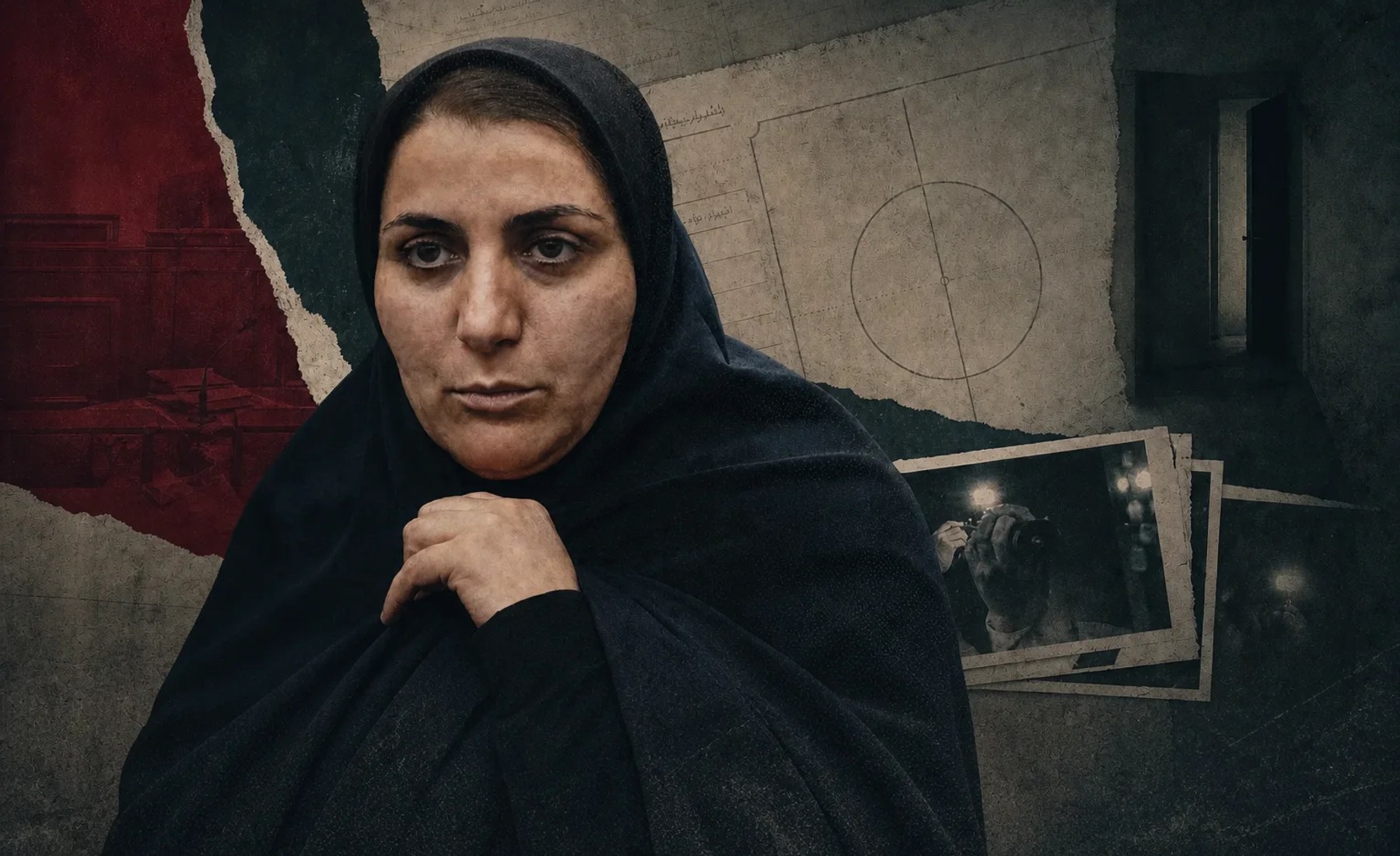


Twenty-Seven Stab Wounds
Police investigators arrived to a chaotic and emotional scene. Paramedics could do nothing; Laleh was clearly beyond help. The children were in shock, comforted by neighbors as authorities secured the area. It was clear from the outset that this was not a robbery gone wrong – the house wasn't ransacked, and aside from some jewelry that appeared missing, nothing obvious was taken. The sheer ferocity of the attack pointed to a personal motive.
Laleh had been stabbed 27 times, a level of rage seldom seen in random crimes. Detectives noted no sign of forced entry, suggesting the killer might have been someone Laleh knew and let into the house. Within hours, they began piecing together the final hours of Laleh's life.
Her friend, who had kept her company overnight, reported that Laleh had seemed anxious lately and was reluctant to be alone. That morning, after the children went to school and the friend departed, Laleh had been at home alone – a narrow window of time during which the murder must have occurred.
As investigators processed the crime scene, more unsettling clues emerged. A blood-soaked shirt was discovered, but oddly it didn't belong to Laleh or anyone in the household. In the bathroom, a damp towel hinted that the killer might have cleaned themselves before fleeing. On the floor, police found a few cigarette butts. Curiously, one butt had lipstick on it, while two others did not. Laleh was not a smoker, and neither was her husband.
These strange details raised immediate questions: Had more than one person been in the house? Was a man and a woman involved? Investigators noted these inconsistencies, but in the urgency to solve the murder of a celebrity's wife, such clues were initially pushed aside. The pressure was on to find a culprit, fast.
The Footballer's Wife
News of Laleh's killing spread quickly, making headlines across Iran. This wasn't just any murder – Laleh Saharkhizan was the wife of Nasser Mohammadkhani, one of Iran's most famous footballers. Nasser had been a star striker in the 1980s, a national hero who later became a coach for Tehran's prestigious Persepolis club. He was as much a household name as any athlete in the country. At the time of the murder, Nasser Mohammadkhani was out of the country on a coaching trip in Germany.
When he received the devastating news that his wife had been killed, he rushed back to Iran, only to find himself entangled in suspicion and scandal. The public, already gripped by the gruesome details of the case, now buzzed with an extra layer of intrigue: a beloved sports icon's family life had been shattered, and some wondered if the famous husband himself might somehow be involved.
Late-Night Calls
From the outset, investigators considered all possibilities. Typically, in a case like this, the spouse is scrutinized – and although Nasser had an alibi, the circumstances were far from typical. It didn't take long for a provocative lead to surface.
Laleh's relatives came forward with disturbing information: in the months leading up to the murder, Laleh had been receiving late-night phone calls from an anonymous woman. The caller would taunt and harass her, saying she didn't deserve her life with Nasser.
Even when Laleh traveled, the calls followed her, suggesting the harassment was deliberate and targeted. Laleh had confided in her mother and sister about these calls, which had left her shaken and fearful. Now, in the wake of the murder, Laleh's family had a strong suspicion about who was behind those menacing phone calls – and possibly the murder itself.
Sigheh: The Temporary Wife
Nasser Mohammadkhani, when questioned by police, made a stunning admission that pushed the investigation in a new direction. Under pressure and amid grief, Nasser revealed that he had been leading a double life. He admitted that he had a lover – a mistress with whom he had been involved for several years. Her name was Shahla Jahed, a 33-year-old former nurse who was known to be an ardent fan of Nasser's during his playing days.
In fact, Nasser disclosed, Shahla wasn't just a secret girlfriend; she was legally, albeit temporarily, his wife. In Iran's Shia Islamic tradition, there is a practice called temporary marriage – "sigheh" in Farsi – which allows a man and a woman to enter into a marriage contract for a fixed duration, ranging from hours to years. This arrangement is intended to sanction relationships that are not permanent, on the condition that any children born are provided for.
To many, especially critics of the practice, sigheh is controversial – some deride it as "legalized prostitution" – but it is nonetheless a culturally accepted norm in Iran. Nasser had used this loophole to carry on a parallel relationship with Shahla while still married to Laleh, thus technically avoiding the religious crime of adultery.
The revelation of Nasser's secret temporary wife exploded like a bombshell. What had been a tragic murder case now also laid bare a scandalous love triangle involving a celebrity athlete. As this detail hit the media, the public's fascination grew even more intense. Behind the closed doors of his marriage, Nasser had been living with Shahla in an apartment in northern Tehran for up to four years, all while maintaining his household with Laleh and their children.
Shahla Jahed was said to be a devoted fan who had pursued the football star relentlessly until he finally gave in to her overtures. By Nasser's own account, he eventually entered into the temporary marriage with Shahla around 1999, making her his sanctioned mistress. For a time, he kept both relationships going – a precarious balancing act that few in his circle knew about.
Laleh's family had not been oblivious to Nasser's infidelity. Those anonymous late-night calls suggested that at least one other person knew and disapproved of Laleh's marriage: presumably, the spurned mistress herself. With the knowledge of Nasser's double life now out in the open, investigators honed in on Khadijeh "Shahla" Jahed as the prime suspect.
'Crazy About Him'
Shahla had motive in spades – jealousy, heartbreak, perhaps even a sense of betrayal if Nasser had reconciled with his wife. Only a year or so earlier, it appeared Nasser had tried to end the relationship with Shahla and refocus on his family. Sources indicate Shahla's involvement with Nasser was between 1999 and 2001.
If Shahla felt cast aside after years of being "the other woman," it could have kindled resentment toward Laleh. There were even suggestions that Laleh had demanded Nasser cut ties with Shahla once she discovered the affair, leaving Shahla isolated and furious. Such a scenario – a jilted lover seeking revenge – fit neatly as a motive for murder in the eyes of police.
On October 19, 2002, just ten days after Laleh's murder, police moved to arrest 33-year-old Shahla Jahed. She was taken into custody quietly, without incident. The arrest sent shockwaves through Iranian society: a high-profile murder suspect who was both a woman and directly tied to a famous sports figure. Paparazzi and press besieged the courthouse at her initial hearings, eager for any glimpse of the woman now infamously dubbed "the footballer's mistress."
Shahla was a striking figure – often appearing in court in the traditional black chador, her face drawn and eyes downcast. Yet those who knew her described Shahla as deeply emotional and passionate. A former cellmate would later say that Shahla had a vibrant energy and an optimistic streak despite the sadness in her eyes.
Eleven Months of Silence
From the moment of her arrest, Shahla declared her innocence. In fact, for a long time, she refused to say much at all. Investigators interrogated her relentlessly, convinced they had the right suspect. But to their frustration, Shahla did not break quickly. She maintained a stubborn silence about what had happened on the morning of Laleh's death. Days turned into weeks, weeks into months. Shahla was held incommunicado – no contact with the outside world – for the first 11 months of her detention. Family visits and access to a lawyer were barred during this crucial period.
Under Iran's criminal procedure at the time, authorities could prevent a detainee from meeting an attorney during the investigative phase if they claimed a lawyer's presence might "cause corruption". Shahla, accused in a sensitive, high-profile murder, was left to fend for herself in brutal interrogations with no legal counsel.
Later, her sister recounted that everyone knew how Shahla's "confessions" were being sought – hinting that severe physical and psychological pressures were used. Indeed, Iran's constitution formally bans torture, but reports of coerced confessions were and are sadly common. Shahla would later allege that during those first months, she was beaten and tortured almost daily in an attempt to make her confess.
Despite the pressure, Shahla Jahed stayed silent about the murder for nearly a year. Investigators grew increasingly desperate. The case was high stakes – the public was watching, the victim's influential family was demanding justice, and a celebrity's reputation hung in the balance.
There were murmurs that perhaps Shahla wasn't acting alone. In fact, early in the investigation, Nasser Mohammadkhani himself had been briefly jailed on suspicion of complicity in his wife's murder.
The police couldn't ignore the possibility that the famous husband and his mistress had plotted the killing together to remove Laleh from the picture. Nasser denied any involvement, but he did remain in custody for several months in late 2002 while Shahla was being interrogated.
This was an extraordinary turn: a national sports hero locked up in Tehran's notorious Evin Prison under suspicion of arranging his own wife's murder. The tabloids had a field day speculating about whether Nasser could have orchestrated the crime from afar. However, without a confession or evidence tying him directly to the violence, the case against Nasser was thin. Everything hinged on what Shahla might reveal.
'He Still Loved Me'
By mid-2003, investigators decided to try a different tactic with Shahla. If threats and abuse wouldn't crack her, maybe another approach would. In a move later harshly criticized, an interrogating judge arranged a face-to-face meeting between Shahla and Nasser Mohammadkhani. It had been about a year since they last saw each other. Shahla was still very much in love with Nasser – everyone knew that. One of her jailers would later remark that she was "crazy about him".
The police capitalized on that. On the day of the meeting, they even showed Shahla a newspaper photo of Nasser in custody, blindfolded and disgraced, to play on her emotions. When Nasser was brought into the interrogation room, Shahla's resolve crumbled.
Years later, she described that fateful encounter in court: "I could not control myself in front of Nasser… When we were left alone in the room, he told me that he still loved me and asked me to confess". According to Shahla, Nasser gently reassured her.
He said if she "accepted the murder" and took the blame, he would be freed in time to attend Laleh's memorial service, and that "otherwise his reputation would be ruined in the sports world". He even promised her that it would only be temporary – that Laleh's family had agreed to forgive her once she confessed, sparing her life in the end.
The Perfect Confession
Whether out of love, desperation, or naive trust, Shahla Jahed finally gave the authorities what they wanted. Not long after that meeting, she broke her silence and confessed to the murder of Laleh Saharkhizan. The transformation was remarkable – from total denial to a detailed confession. Investigators wasted no time securing her statements on tape. Shahla reportedly provided a chilling step-by-step account of how she killed Laleh.
According to her written confession, Shahla said she went to Nasser and Laleh's home that morning armed with a kitchen knife and wearing gloves. She claimed she found Laleh in bed and a quarrel ensued. In Shahla's words: "I picked up a badminton racket and hit her on the head with its handle. Then we grappled, and I stabbed her until she died".
She even added a coda to the story: immediately after killing Laleh, Shahla said she calmly lit a cigarette and smoked, then stole some of Laleh's jewelry to make the scene look like a robbery. She mentioned placing a call to a number in the southern city of Bushehr as if to create an alibi or mislead investigators about her whereabouts.
This confession had everything the prosecution needed – a clear narrative, a motive, and even conscious attempts by the culprit to cover her tracks. It was almost too perfect. Shahla's recounting of the murder included details that only the killer would know. During a police reconstruction at the crime scene, Shahla demonstrated how the events supposedly unfolded.
In a filmed re-enactment (later featured in a documentary), she even pointed out a bloodstain on the underside of the mattress that police had initially overlooked. To the detectives, this was "gotcha" evidence – proof that her confession was genuine because she knew things only the murderer could know.
They triumphantly showed this crime-scene video during her trial as damning evidence of her guilt. For the Iranian public following the case, the image of Shahla calmly walking through Laleh's bedroom, reenacting each stab and blow for the cameras, was both riveting and horrifying.
With Shahla's confession secured, the authorities released Nasser Mohammadkhani from custody. In their view, Shahla had taken full responsibility, stating she acted alone, which cleared Nasser of direct involvement. The famous footballer was no longer a jailed suspect, but rather a key witness – and a somewhat tarnished one at that. He now openly faced public shame for the affair that had led to this tragedy.
Initially, Nasser himself was charged with adultery for having a mistress, but because the sigheh arrangement made the relationship quasi-legal, those charges were eventually dropped. Instead, a different transgression came to light: during the investigation, Nasser admitted that he and Shahla had occasionally smoked opium together.
Drug use is a crime in Iran, and for that lapse, the court sentenced Nasser to 74 lashes. The image of a onetime sports hero being flogged for drug use was splashed across newspapers.
Though it was a side note to the murder, it symbolized how far Nasser had fallen – from scoring goals and lifting trophies, to standing in a courthouse receiving lashings. It was a humiliating punishment, but once it was delivered, Nasser Mohammadkhani walked away a free man. He had lost his wife and nearly lost his freedom, but now all eyes were on Shahla as the sole perpetrator of the crime.
Red Card
Shahla Jahed's trial began in 2004, and it was nothing short of a media spectacle. In a highly unusual move for Iran's judiciary, the trial was open to the public. Major newspapers and even filmmakers were present to document the proceedings. The case had become a cause célèbre, and people were hungry for every sordid detail of the love triangle turned deadly.
They nicknamed the trial "Red Card", as if it were a dramatic match in the courtroom, pitting love and betrayal against truth and justice. In fact, a documentary film aptly titled Red Card was made in 2005, featuring real footage from Shahla's public trial. (The film was later banned in Iran, deemed too sensitive and provocative for local audiences.)
Watching from the gallery, Iranians saw a young woman who had once been vivacious and lively now appearing worn down by prison. Shahla often clutched a tissue, dabbing her eyes. At times, she looked defiantly into the distance; at other moments, she appeared on the verge of collapse. It was easy to project onto her whatever narrative one believed: vengeful murderess or tragic scapegoat.
The prosecution laid out its case methodically. They had Shahla's signed confession, of course, and they played the video of her re-enacting the crime – a powerful visual that left an impression on the judges.
They introduced testimony from Nasser Mohammadkhani himself: he acknowledged that Shahla had a key to his home and had been there many times before. This established that Shahla could access the house without forced entry.
They called Laleh's mother and sister, who recounted the harassing phone calls Laleh received from an unknown woman in the nights leading up to the murder. That unknown caller, they firmly believed, was Shahla – who else would tell Laleh "you don't deserve your life with him" in the middle of the night?. It painted a picture of Shahla as an obsessed lover waging a campaign of terror against the wife she viewed as a rival. Prosecutors further pointed out that in the 24 hours bracketing the murder, something in Shahla's routine changed.
Normally, while Nasser was abroad, Shahla kept in frequent contact with him by phone – she practically couldn't go a day without speaking to the man she loved. But records showed that from 8:30 a.m. the day before the murder until 10:30am on the morning of the crime, Shahla did not call Nasser at all.
This, the prosecution argued, was highly suspicious. It was as if during the critical window when the murder plan was executed, Shahla went radio silent, avoiding contact with Nasser perhaps to create distance or an alibi.
Then there was the matter of Shahla's own writings – her diary. Investigators had seized Shahla's personal journals during the investigation, and they did not cast her in a sympathetic light. Shahla was an avid diarist, known to write daily in neat handwriting. In those pages, she often vented her feelings about Nasser and Laleh. She referred to Laleh with cruel nicknames and derogatory terms – a window into the jealousy and hatred that might have festered within her.
Notably, on the very date of the murder, Shahla's usually tidy diary entry was a mess: she had scribbled out large sections aggressively, to the point of being illegible. To prosecutors, it looked like she had attempted to falsify or remove evidence of what she was doing that day – perhaps crossing out an incriminating entry.
They suggested that this was a clumsy attempt by Shahla to create a fake timeline or alibi in her diary for the day of the killing. All these pieces – the confession, the video, the key, the phone calls, the skipped phone check-ins, the venomous diary entries – coalesced into a narrative of premeditated murder fueled by obsession and envy.
'If You Want to Kill Me, Go Ahead'
When it came time for Shahla's defense, she faced an uphill battle. By Iranian law, serious cases like murder are decided by a panel of judges rather than a jury, and judges have wide discretion in weighing evidence.
One controversial principle in Iran's Islamic Penal Code is the concept of a judge's "knowledge" – essentially, a judge can base a conviction on his own personal conviction or intuition drawn from the case, even if hard evidence is lacking, as long as he can point to something that informed this belief.
The defense knew that once the judges' minds were made up, it would be hard to sway them. Nevertheless, Shahla's attorney, a determined and prominent lawyer named Abdolsamad Khorramshahi, vigorously challenged the prosecution's case. His primary argument was that Shahla's confession was unreliable – it had been obtained under extreme duress and did not match the facts in many key ways.
In the public trial, Shahla Jahed herself boldly retracted her confession. In front of a packed courtroom, she declared that she was innocent and had not killed Laleh. With surprising candor and anger, she addressed the judge: "If you want to kill me, go ahead… if you send me back there [to the interrogators], I'll confess again. I'll confess to killing her, and I'd even confess that I killed those who were killed by others!".
Her outburst stunned those present. Shahla insisted repeatedly, "I am innocent," and implored the court not to take her coerced admissions at face value.
Khorramshahi, her lawyer, backed up Shahla's claims with as much evidence as he could muster. He noted that Shahla had been held in solitary confinement for months on end before confessing. He reminded the court that she was denied a lawyer during that critical period, leaving her vulnerable to coercion.
In Iran at that time, unfortunately, it was "normal" for confessions to be extracted through harsh means – and courts often turned a blind eye, accepting the confessions as long as they were signed on paper.
Beyond attacking the confession's credibility, the defense highlighted many inconsistencies and gaps in the prosecution's story. In fact, once you set aside the confession, the remaining evidence against Shahla was largely circumstantial and, in places, contradictory. For instance, consider the nature of Laleh's wounds. Shahla's confession said she stabbed Laleh "three times". But the autopsy showed a frenzy of 27 stab wounds across Laleh's body.
Moreover, forensic experts noted that the force and depth of many of the wounds suggested they were inflicted by someone physically stronger – possibly a man. This even aligned with the intuition of the very first judge who examined the crime scene back in 2002; that judge had remarked that he believed the attackers were a man and a woman working together, based on the evidence at the scene.
That initial instinct was ignored in the final investigation, but now the defense resurrected it: might it be that Shahla was covering for someone?
Evidence Lost and Ignored
Other forensic mismatches piled up. Shahla said she struck Laleh with a badminton racket handle, but medical reports indicated Laleh had been hit with a sharp, blade-like object on the head, not a blunt racket. Shahla claimed she grappled intensely with Laleh during the attack – a life-and-death struggle – yet when Laleh's body was found, her clothing was not torn at all, which is unusual if a fight occurred.
Shahla's description of the murder weapon was simply "a knife," but the autopsy noted that many wounds, especially on the neck, looked like they could have been made by a thin, nail-like object. It was as if the implements used didn't line up with what Shahla described. And crucially, the actual murder weapon was never found at the scene or in Shahla's possession.
Nor were the supposedly "stolen" jewelry items ever recovered from Shahla or traced elsewhere. If Shahla had really taken jewelry to fake a robbery, where did those valuables go? This raised the possibility of a thief or another party being involved, but it was never resolved.
Then there was the physical evidence from the crime scene that had been oddly neglected. The defense pointed out that investigators failed to properly log or test several items. The bloody shirt found in the house – it didn't match anything belonging to Laleh or Nasser, and there was no attempt to determine whose shirt it was. The wet towel likely used by the killer to wash up – it was left unexamined, no DNA or blood analysis done.
The cigarette butts – one with lipstick, two without – were an especially glaring oversight. Shahla was not a smoker at all. If her confession were true, why would she mention smoking a cigarette after the murder, something out of character for her? And could it be that the cigarette butts indicated the presence of others (perhaps a man and a woman) at the crime scene smoking as they plotted or escaped? Disturbingly, this evidence was quite literally trashed.
The lead judge handling the case at one point went on a pilgrimage to Mecca, and in his absence the substitute judge never ordered forensic tests on the cigarette butts; by the time anyone cared, the evidence had been lost or contaminated. It was a damning lapse in procedure that undercut confidence in the investigation.
The defense also revealed that the crime scene itself had been tampered with by authorities in the immediate aftermath. Blood spatters on the walls and carpets were cleaned shortly after the murder – apparently on the rationale that if Nasser returned home, seeing the blood would be too traumatic for him.
This well-intentioned but misguided act meant potential blood pattern evidence (which could show height and handedness of the attacker, for example) was wiped away.
Interestingly, recall that Shahla's video re-enactment included her pointing out a bloodstain under the mattress that police had missed. The defense suggested an alternate interpretation of that fact: maybe the reason police "missed" it is because they had hastily cleaned the scene and were sloppy – and that they then used Shahla's pointing it out as "proof" of her guilt, when in reality any thorough initial search would have found it. The entire handling of evidence appeared, in Khorramshahi's view, negligent at best and possibly biased at worst.
A Whisper of Conspiracy
As the trial went on, even more bizarre theories and pieces of testimony floated about, hinting that the truth might be far more complex. One of the police detectives who had worked on the case early (and later fled Iran) came forward through opposition media and enumerated numerous irregularities. He noted that a couple of months before the murder, Laleh and her family had been harassed in other ways: unknown individuals had been throwing stones at the windows of Laleh's house at night.
Laleh was so disturbed by these incidents and the threatening calls that she had repeatedly told her husband and family she felt unsafe in Tehran and wanted them to move to Qatar, where some relatives lived. In fact, he suspected there could be an intelligence or political dimension to the murder.
It sounded far-fetched at first, but he backed it up with curious details. Laleh's father was a wealthy contractor in Qatar, and she had an uncle purportedly working in the Qatari intelligence service. Could it be that Laleh was targeted because of something related to those connections? Perhaps an enemy of her family, or some extortion attempt?
He pointed out that one odd thing during the case always bugged him: a representative from Herasat – the intelligence unit of the Tehran water and wastewater organization – was constantly around during the police investigation, hovering in the background. This was highly unusual for a domestic murder case. The detective intimated that it was "very odd" and hinted that it suggested some behind-the-scenes influence or monitoring beyond a normal homicide inquiry.
When this detective tried to explore these angles – looking into Laleh's family background, for instance – he was abruptly removed from the case about two months in. He believed he was taken off the investigation because he pushed to follow leads that higher-ups wanted buried.
An examining magistrate from the Tehran prosecutor's office also flagged a list of ten "ambiguities" and flaws in how the case was investigated. Many of these echoed what the detective had said. For example, Shahla had claimed in her confession that she used Laleh's home phone to call someone after the murder – yet when the phone company records were checked, there was no such call logged at that time.
Shahla had said she had duplicated the key to Nasser's house via a local locksmith, but when police found that locksmith, he did not recognize Shahla as a customer. Moreover, that magistrate noted something shocking from the autopsy: semen was found in Laleh's body, suggesting she might have been sexually assaulted close to the time of her murder.
This raised the specter that rape, not just rage, was part of the crime – a detail that absolutely did not fit the scenario of a lone female perpetrator. In fact, after this came to light, the forensic report's language was oddly watered down to say Laleh "may" have been raped, possibly to avoid complicating the case against Shahla. It was easier to omit a rape than to admit the likelihood that a male assailant was present.
The magistrate's letter, which was communicated up the chain of command (even reaching the head of the judiciary at one point), also pointed to leads that were never chased. For instance, Laleh's family mentioned that a friend had slept over the night before the murder; yet, incredibly, that friend was never formally questioned by police about whether she noticed anything suspicious.
There was mention of a bank clerk who had recently cashed a large check from Nasser to Shahla, and that person also was not interviewed. A local locksmith (different from the one with the key) reported seeing a man and a woman leaving Laleh's house around the time of the murder, but this eyewitness account was apparently ignored by the court.
Neighbors had reported a mysterious car that had been loitering near Laleh's house in the days around the murder. Even Nasser himself later confirmed that both he and Laleh had noticed a suspicious car with a man and woman inside surveilling their home on multiple occasions before the murder.
Yet authorities never tracked down the vehicle or its occupants. Fingerprints lifted at the crime scene were not thoroughly analyzed or matched. Even strands of hair found in Laleh's clutching hands – possibly ripped from the killer during a struggle – were not DNA-tested to see if they belonged to Shahla or someone else. The more one delved into the details, the more it seemed that a wealth of potentially exculpatory evidence was overlooked.
Toward the end of the trial, Shahla's lawyer Khorramshahi made an impassioned plea. He argued that no court should convict someone of murder when so many questions remain unanswered. He criticized the judges for relying on "knowledge" – essentially gut feeling – to render a verdict, rather than solid evidence. If the judge's certainty of Shahla's guilt came primarily from her own confession, Khorramshahi insisted, then it was a certainty built on sand.
What about the multiple judges and investigators who had voiced doubts? What about the detective's claim that evidence in favor of Shahla was intentionally swept under the rug by some officers in the police force? (In fact, an independent committee of human rights lawyers had publicly stated just days before the verdict that they believed evidence supporting Shahla's innocence was deliberately not collected or was even eliminated by certain officials.) It was a scathing indictment of the investigation's integrity.
Qisas
Yet, despite these compelling arguments, the court remained unmoved. In June 2004, after a closed deliberation, the judges found Shahla Jahed guilty of murder.
The court's written verdict did not deeply address each of the inconsistencies highlighted by the defense; instead, it leaned on the notion that Shahla's detailed confession aligned with insider knowledge and that her motive and prior harassment of the victim made it credible. In Iran's Islamic legal framework, a premeditated murder verdict like this meant the punishment of death by hanging, under the principle of qisas (retributive justice).
The concept of qisas – "an eye for an eye" – grants the victim's family the right to demand the execution of the murderer as retribution, or alternatively to pardon the offender (often in exchange for financial compensation known as diyeh, or blood money). In this case, Laleh's family made it immediately clear that they sought no pardon. They wanted qisas – they wanted Shahla's life in return for Laleh's.
The courtroom was tense and somber as the verdict was read. Shahla, upon hearing the word "death," reportedly trembled but did not collapse. She absorbed the blow in silence, a single figure against whom the whole system had arrayed itself. Some observers later said they saw a faint, sad smile on her lips, as if she had expected no different outcome. Laleh's mother and siblings were present; they wept tears of grief and perhaps a kind of bitter satisfaction.
As for Nasser Mohammadkhani, he was not in court when the verdict was delivered. In the preceding months, he had kept a relatively low profile, deeply shamed by the revelations of his affair and the role it had played in this catastrophe.
Once Shahla was convicted, Nasser publicly stated that he accepted the court's decision. In an interview, he emphasized Laleh's virtue and said, "Laleh was a mother of two who was murdered in all innocence. Her murderer must be punished.". Those words, echoed by Laleh's sister in the press, underscored that the family was resolute – forgiveness was off the table.
Eight Years on Death Row
With the trial over, one might think the story was nearing its end. But in truth, it was just entering a new, protracted chapter – the death row saga. What followed over the next several years was an extraordinary legal and emotional rollercoaster for Shahla Jahed and all involved. Initially, in 2004, it seemed that execution was imminent.
However, Iran's justice system allowed for appeals and higher court reviews, especially in capital cases. Shahla's lawyer filed appeals, and the case wound its way up to the Supreme Court of Iran. Surprisingly, there were judges in the higher echelons who saw merit in Shahla's claims of innocence. In fact, over the years, no fewer than seven different judges who reviewed parts of her case expressed serious doubts about her guilt – some reportedly even believed she was innocent. This was highly unusual; once a person is convicted, it's rare for so many judicial authorities to voice such concerns in Iran.
In late 2005 and again in 2007, Shahla's execution was stayed – essentially put on hold – as courts took a closer look at the case. The most significant intervention came in early 2008, when the head of Iran's judiciary at the time, Ayatollah Mahmoud Hashemi Shahroudi, directly ordered a re-investigation of the case. Shahroudi, a high-ranking cleric and jurist, had apparently been influenced by the numerous procedural flaws flagged in Shahla's trial.
He quashed the conviction in 2008, citing that the original investigation was riddled with errors and gaps. This move effectively voided the death sentence, offering Shahla a glimmer of hope. For a brief period, it looked like she might even get a retrial where new evidence could be considered. Human rights activists and Shahla's supporters were overjoyed; it seemed that the system might correct itself and perhaps acknowledge that the case wasn't solid.
Indeed, in the wake of that decision, fresh inquiries were made. The press reported that a new judge was assigned and told to address the "form and content shortcomings" in the case. Shahla remained in prison, but at least the noose was not looming immediately over her neck. This was the most hopeful time for her since the ordeal began.
Around this time, a groundswell of support formed outside the court system. Activists, artists, and women's rights advocates in Iran began speaking out about Shahla's case, calling it a miscarriage of justice. They pointed out how unusual it was for a woman to commit such a violent murder, and how many indications there were of a broader plot or, at minimum, reasonable doubt.
International organizations like Amnesty International had already taken notice back in 2005, when they launched campaigns urging Iran to ensure Shahla got a fair trial. Now, with the case reopened, Amnesty and others renewed their efforts, many explicitly asking for clemency or commutation of her sentence in light of the dubious confession and trial.
However, the victory for Shahla was short-lived. The re-investigation and appeals progressed behind closed doors, and by late 2008, things took a turn against her again. The Iranian Supreme Court reviewed the case once more after Shahroudi's intervention. In early 2009, a new decision came down: the Supreme Court upheld Shahla's guilt after all, and a lower court re-sentenced her to death in February 2009. Essentially, the brief nullification of the verdict was overturned.
The exact reasoning wasn't fully public, but it appears that whatever procedural flaws were acknowledged did not ultimately exonerate Shahla. The judicial system, perhaps feeling pressure to bring closure to a high-profile case, doubled down on the original outcome. Shahla was thrust back onto death row, her hopes dashed.
For Shahla, the years in prison were agonizing. She spent a total of eight years incarcerated in Tehran's Evin Prison, a facility notorious for holding political prisoners and others whom the state subjects to harsh treatment. Fellow inmates recall that Shahla managed to maintain a shred of that energetic spirit despite everything.
One former cellmate, Fereshteh, who shared a ward with Shahla in 2004, remembered how Shahla would help new prisoners adjust, offering them comfort and advice. "She was always very energetic and happy, and at the same time she was very sad," Fereshteh said, noting the optimistic outlook Shahla clung to despite the sadness in her eyes. But as the years wore on, optimism must have been hard to sustain. Shahla never wavered in claiming innocence whenever she had a platform.
In letters, she pleaded for justice. At one point, she wrote a personal letter to the new head of judiciary (Ayatollah Sadegh Larijani, who succeeded Shahroudi in 2009) reminding him that she had already served far longer than many convicts and asking him to "end my state of limbo".
She noted poignantly that, technically, she had once been given a sentence of three years in prison (perhaps referring to an old ancillary charge), yet here she was having served nine years with her fate undecided. By then, truly, her life was in limbo – neither freed by exoneration nor given the finality (however grim) of execution.
The World Watches
Outside the prison walls, the debate over Shahla's case intensified in 2010 due to an unrelated case that nevertheless bore similarities in the public's mind. That year, an Iranian woman named Sakineh Mohammadi Ashtiani made international headlines.
Ashtiani had been convicted of adultery and complicity in her husband's murder, and was initially sentenced to death by stoning – a punishment that provoked global outrage. The world's media spotlight turned to Iran's treatment of women in its justice system.
Protests and campaigns erupted worldwide to save Ashtiani from stoning or hanging. Iranian authorities, feeling the pressure, put Ashtiani's execution on hold. This global scrutiny had a ripple effect: around the same time in mid-2010, Shahla Jahed's scheduled execution was postponed as well.
It was widely believed that Iran's judiciary did not want another controversial execution of a woman to fuel the flames of criticism while the Ashtiani case was burning up the headlines. Human rights observers noted this pattern – it seemed Shahla inadvertently got a temporary reprieve thanks to the outcry over Ashtiani.
Still, the respite was temporary. By November 2010, with the Ashtiani case somewhat cooling (her stoning sentence was suspended, though she remained in prison), Iranian authorities turned back to unfinished matters – and one of those was carrying out Shahla Jahed's sentence.
On November 30, 2010, Shahla's lawyer Abdolsamad Khorramshahi received an ominous phone call from the judiciary. They informed him that Shahla's execution, long delayed, was now scheduled for the very next day, at dawn on December 1, 2010. Khorramshahi was stunned. He had been tirelessly filing motions and gathering support to try to get clemency or a new trial for Shahla. He later said he "just couldn't believe it" when he got the news – after so many years, it seemed unreal that they were truly going to hang her now.
A frenzy of last-minute appeals ensued. Amnesty International and other human rights groups issued urgent statements on November 30, begging Iran to halt the execution. They stressed that there were "serious concerns over the fairness of the trial, and the evidence used against the defendant". Kate Allen, Amnesty's UK director, reminded the world that Shahla had retracted her confession and that her claims of coercion were never properly investigated.
The Foreign Office of the UK also publicly condemned Iran's decision to go forward. It was rare to see such international unity over a single prisoner, but Shahla's case had come to symbolize, for many, the plight of women in Iran's justice system – especially women entangled in crimes with a whiff of sexual or marital scandal.
Karim Lahidji, the president of the Iranian League for Human Rights, voiced his outrage: "Shahla Jahed has never had a fair trial in Iran and has always insisted that she is innocent. Unfortunately, she's a victim of a misogynous society… both [Shahla and Sakineh Ashtiani] are victims of the flaws of the Iranian judicial system.".
Despite the chorus of objections, inside Iran the final authority lay not with international opinion but with Laleh's family. Under qisas, the power to grant pardon or insist on execution belonged to Laleh's immediate kin – her parents and, in practice, her siblings acting in concert with them. By this point, Laleh's children were still minors, so they could not make the decision; typically, a grandfather or guardian would represent the children's interest. In this case, all indications were that the family stood firm on seeing Shahla punished.
Even so, up until the very final moment, hope lingered that perhaps mercy could prevail. Shahla's own family made a heartfelt public plea. Her sister appeared on BBC Persian in a last-ditch appeal to Laleh's relatives. Through tears, Shahla's sister said, "Firstly, we apologize to Laleh's family for Shahla intruding into her married life in the first place. Secondly, we are still shocked by what Shahla has done – we're in disbelief.".
It was a remarkable statement, effectively acknowledging Shahla's wrongdoing (likely a strategic move to placate the victims). She begged them to spare Shahla's life, but gently. The plea fell on deaf ears. Laleh's family was unmoved, having steeled themselves for this day for eight long years. As Shahla's lawyer later observed, "All the people who were there asked [the family] to forgive her, but unfortunately they didn't accept.".
Dawn at Evin Prison
And so, in the pre-dawn darkness of December 1, 2010, the final act of this tragedy played out. Within the forbidding walls of Evin Prison, a gallows was prepared in the courtyard. Shahla Jahed, now 40 years old, was brought out of her cell before sunrise.
It's said that she was trembling and pale. She knew the protocol – under Islamic practice, an execution often takes place just before the morning call to prayer, at first light. An official from the court was present to supervise, and members of Laleh's family were in attendance, as was their right.
Nasser Mohammadkhani himself arrived as well, standing quietly off to the side among the witnesses. Shahla's lawyer, Khorramshahi, was there too, heartbreak etched on his face. A small crowd gathered within the prison grounds under the dull gray sky. Some were law enforcement, some were there out of morbid duty, and some – like prison staff and other inmates – simply watched from a distance, unable to look away.
Shahla was allowed to say a final prayer. She whispered her last entreaties to God, her hands shaking as she invoked mercy. When the guards went to place the noose around her neck, she burst into tears, sobbing uncontrollably. In a cracking voice she cried out one last time for her life to be spared. Those gathered could hear her desperate wails in the cold morning air.
Khorramshahi, her attorney, called out to her to speak – perhaps hoping she'd use her last moment to proclaim her innocence or send a message – but Shahla was too overcome to form words. She just kept crying, her shoulders shaking under the black chador she wore as a shroud. It was a deeply human, haunting scene.
Under Iran's qisas law, it was Laleh's kin who had the right to carry out the execution. Laleh's brother stepped forward. He was the same brother who had spent years publicly insisting on qisas, saying nothing short of hanging Shahla would satisfy justice.
Now, face to face with the woman who (in his eyes) butchered his sister, he had to literally do the deed. Shahla, weeping and blindfolded, stood on a stool with the rope tight around her neck. At approximately 5:00 a.m., just as the first glow of dawn crept into the sky, Laleh's brother placed his foot against the stool's edge.
With a swift kick, he sent it flying out from under her. Shahla's body dropped, the rope snapping taut. Those present say she didn't struggle long – within moments her limp form dangled from the gallows, swaying slightly. Shahla Jahed was dead.
A collective held breath exhaled among the onlookers. Some murmured prayers. Others just stood in silence. "Shahla is no more. Everything has ended and the case is closed," her lawyer Khorramshahi said bitterly to a reporter shortly after, his voice heavy with grief. Indeed, for the Iranian authorities and Laleh's family, the case was now officially closed.
Nasser Mohammadkhani, the man at the center of it all, maintained a public silence at the execution. He watched his former lover's death without comment, then slipped away quietly. In the years after, Nasser occasionally spoke about the case, but mostly to defend himself or express sorrow for his slain wife. In one interview months later, he acknowledged that at one point he had believed the victim's family would pardon Shahla if she confessed, implying perhaps he too felt misled or helpless by the end.
Yet notably, when it came down to it, Nasser did not oppose the execution. In fact, as the father of Laleh's children, he formally requested that the qisas sentence be carried out, aligning himself with Laleh's relatives' wishes. If there had been any promise of clemency to induce Shahla's confession, it evaporated, and Nasser ultimately stood with those demanding her death.
The documentary film Red Card – smuggled out despite the ban – allowed many to watch Shahla's trial and draw their own conclusions.
In one striking clip from that film, after a Persepolis football match victory in 2002, a camera captures a smiling Nasser coming home to the apartment, greeted by a beaming Shahla. They look, in that moment, like any happy couple celebrating good news. It's a haunting snippet of normalcy and joy, a world away from the bloody tragedy that soon followed.
Primary reporting and references
- Iran halts mistress death verdict
Iran FocusFeb 14, 2008
- Khadijeh Shahla Jahed Memorial
Abdorrahman Boroumand Center
- Shahla Jahed executed in Iran
The GuardianDec 01, 2010
- Iran to execute woman for murder of lover's wife
- Shahla Jahed
Wikipedia
- Iran executes footballer's lover Shahla Jahed
BBC NewsDec 01, 2010
- The victim's family did not forgive Shahla Jahed until the last moment, says lawyer
Center for Human Rights in IranDec 01, 2010
- Shahla Jahed: An Iranian Love Triangle
Capital Punishment UK
Related episodes
The Karlivka Maniac
A serial killer terrorizes rural eastern Ukraine, massacring entire families with whatever weapons are at hand.
The Girl on the Bike
A 12-year-old girl's disappearance begins a decades-long pursuit of justice in Norway.

The Trail of Breadcrumbs
Dismembered remains found across a Romanian city lead police toward a notorious killer.