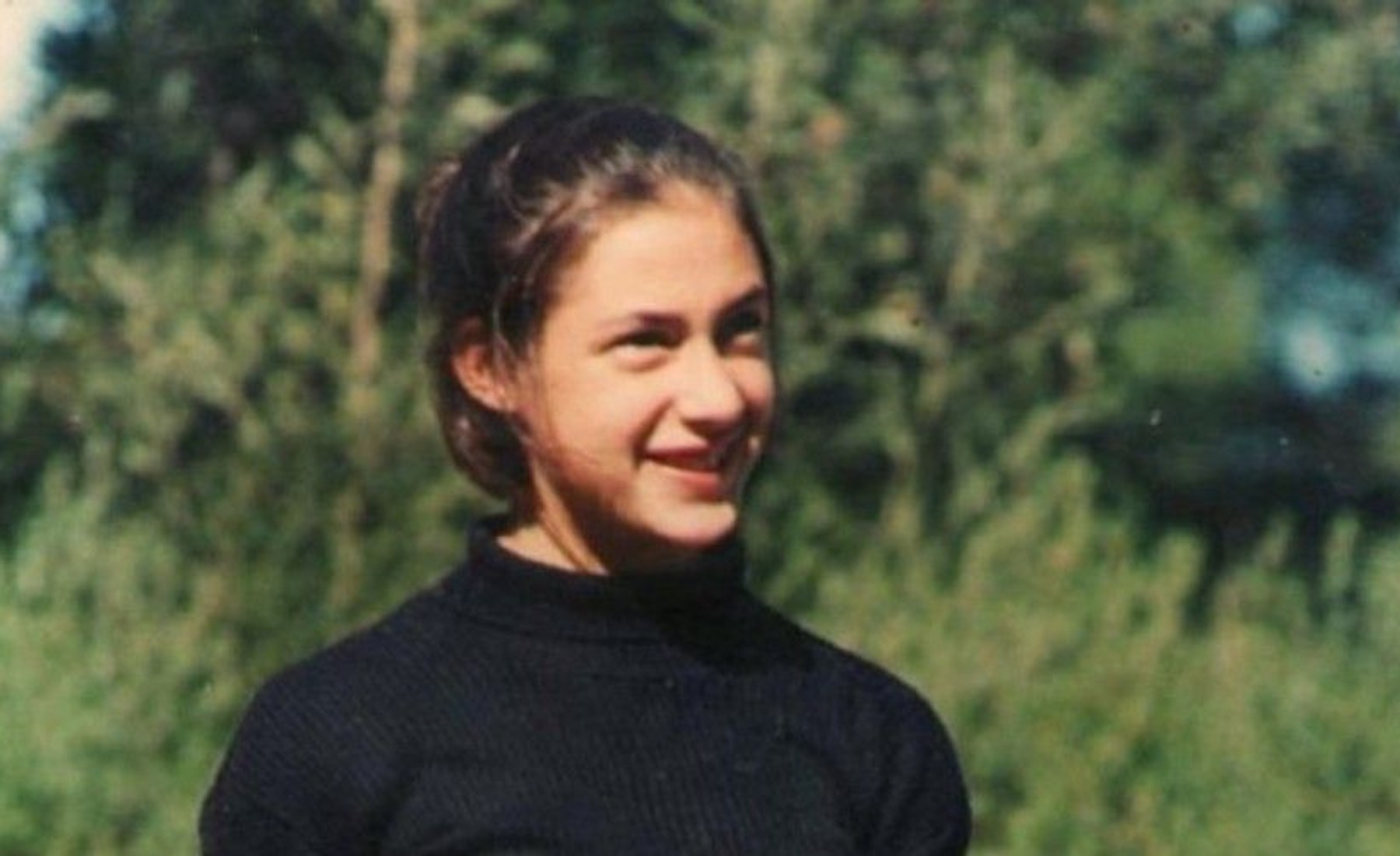


A Body in the Vivero
Her blouse is bunched up around her neck. Her jeans and underwear are pulled down to her knees. One of her arms is sticking stiffly upward, her hand curled tightly into a fist as if grasping at nothing. The boy stands frozen for a moment, unable to comprehend the grim scene before him. Then, panic rising in his chest, he turns and runs to get help, his dogs trailing behind.
Within the hour, police sirens and ambulance lights converge on the patch of forest known as the Vivero Dunícola Florentino Ameghino. The news spreads quickly: the search for the missing 15-year-old Natalia Melmann has come to a tragic end. Four days earlier, Natalia had vanished without a trace. Now she has been found in the woods, and it's immediately clear that something terrible was done to her.
As investigators carefully cordon off the area, a small crowd of locals gathers at a distance, hushed and horrified. Many had been out searching for Natalia over the past few days, hoping to find her safe. Instead, this quiet coastal town is confronted with a nightmare.
Detectives and forensics personnel move through the scene methodically. There are signs of a struggle. Broken twigs, disturbed undergrowth. Natalia's long brown hair is matted with leaves. Her body, already in the early stages of decomposition from the summer heat, suggests she's been here for a while – likely since the day she disappeared.
The smell of the forest mingles with a harsher odor that makes even the seasoned officers wince. One investigator finds a single sneaker lying a short distance away in the brush. Oddly, its shoelace is missing. A forensic doctor quietly notes ligature marks on Natalia's neck – as if something thin, like a cord or lace, was pulled tight around it.
Strangled with Her Own Shoelace
The initial examination confirms everyone's worst fears. Natalia Melmann was assaulted and murdered. Later, an autopsy will reveal bruises and cuts on her body, evidence that she had been beaten. There are small circular burn marks on her skin, possibly from cigarettes – chilling signs of torture. And there is evidence of sexual violence. Natalia was raped. Ultimately, the coroner determines, she died of strangulation: she had been choked to death, likely with her own shoelace.
To the people of Miramar, this news is devastating. Natalia was just a girl – fifteen years old, a high school student who loved dancing and dreamed of becoming a doctor one day. She came from a loving family that had moved to this town seeking a tranquil life by the sea. In a place like Miramar, known for its beaches and quiet resort atmosphere, violent crime is not something familiar. Parents here warn their kids about rip tides in the ocean or crossing busy streets in tourist season – not about predators lurking in the shadows. Natalia's death shatters that sense of safety.
A Father's Vow
For Natalia's family, the confirmation of her fate is indescribable. Her father, Gustavo Melmann, and mother, Laura Calampuca, are at the site that morning, having joined the search every day since she went missing. When authorities quietly show them a piece of Natalia's clothing for identification – a piece of her blouse – they break down. Laura clings to that scrap of fabric, sobbing. Gustavo's face hardens with grief and resolve. Even in that moment, as tears stream down his face, he vows to himself that whoever did this to his daughter will be brought to justice.
But in those first hours after Natalia's body is found, justice seems frustratingly far away. Questions swirl in the air along with the coastal breeze: Who could have done something so cruel to this young girl? And how did Natalia end up here, alone in the woods?
To answer that, investigators must piece together the timeline of Natalia's final hours. They begin retracing her steps from four nights earlier.
Dancing at Amadeus
On Sunday, February 4, 2001, Natalia Melmann was just like any other teenager enjoying the Argentine summer break. Miramar was buzzing with holidaymakers that weekend, and Natalia had plans to go out dancing with her friends. She was a tall, striking girl – nearly 1.8 meters, or about 5-foot-11 – with long brown hair and an easy smile. Despite being only 15, she sometimes got into local clubs, especially during the busy summer season when IDs weren't checked too closely.
She had recently been through a rough patch emotionally: she'd broken up with her boyfriend, Juan, and found out he already had a new girlfriend. It was a painful first heartbreak. That night, Natalia's friends noticed her mood swinging between trying to have fun and moments of sadness. Still, she was determined to enjoy the night.
Natalia and her girlfriends started their evening at a popular nightclub called Amadeus, on the south side of town. The music pounded and lights flashed as they danced under the strobe glow. For a while, Natalia seemed to be enjoying herself – she laughed, she danced with a close friend (a boy she casually called her "amigovio," something like a friend with a crush).
She even wandered across the street to a bar called La Cantina at one point, where she chatted freely with people around her. Two older men – later identified as long-haul truck drivers passing through – struck up a conversation with her. Those men pretended to be undercover narcotics officers, apparently as a joke to impress people and maybe score free drinks. Natalia, perhaps a bit naive and looking for distraction from her heartache, didn't immediately see through the lie.
She talked with them, even as one of her girlfriends scolded her for hanging around "those creepy older guys." Natalia just shrugged it off and told her friend she might "go for a walk" with one of them. In reality, she didn't stray too far – the bartenders later recalled those men were just goofing off to get free beer, and Natalia eventually drifted back to join her own peers.
"Pretty as a Model"
As the night wore on into early morning, Natalia moved between venues. She stopped by another dance spot called Chihuahua briefly and then returned to the main club, Amadeus. There, sometime around 6:30 or 7:00 AM, witnesses saw Natalia outside on the sidewalk. The dawn light was breaking. The party was ending. On the sidewalk, unexpectedly, Natalia bumped into her ex-boyfriend Juan and his new girlfriend.
Not exactly a comfortable encounter. Words were exchanged – perhaps an argument or an emotional conversation. A friend would later testify that Natalia was in tears at one point, upset by seeing Juan with someone else. It was in these tense moments that another figure stepped into the scene: Gustavo "El Gallo" Fernández.
"El Gallo" (which means "The Rooster") was a local man around 30 years old, someone known on the streets of Miramar. He had a bit of a reputation – a petty criminal who'd spent time in prison for minor offenses. Some people described him as a small-time thief, nothing more, certainly not someone they imagined capable of a gruesome murder.
Oddly, Gustavo Fernández also had friendly ties with some of the local police; he was known to act as a sort of police informant or at least to hang around them. That night, Gustavo Fernández was lingering near the club, and he joined the conversation outside. Perhaps he was drawn by the commotion of Natalia arguing with her ex, or maybe he had been watching her for a while. We may never know his exact thoughts in that moment.
According to one young woman who was there, Fernández did something peculiar: he gently took Natalia by the arm and spun her around playfully, showing off her looks to those present. "Look at her – isn't she as pretty as a model?" he said, or something very close to that, while Natalia stood there, tears still in her eyes. It was an oddly lighthearted gesture in the midst of an otherwise emotional scene.
The witness found it strange – why was this older guy showing off Natalia like a prize, especially if moments later he might intend to harm her? Perhaps Gustavo "El Gallo" Fernández was trying to seem harmless, to deflect any suspicion, or perhaps in that instant he hadn't yet made up his mind about what he was going to do.
7:30 AM
Shortly after this, Natalia decided to head home. It was well past 7:00 AM on Sunday, the sun fully up over the Atlantic. She set off on foot, alone, walking down the street away from the club. She likely planned to walk the few kilometers back to her house or maybe catch a taxi if one passed. Gustavo Fernández left as well, just behind her. Several witnesses later remembered seeing Natalia walking toward the outskirts of town, and a man trailing after her – a dark-haired, solidly built man. Some thought that man might have been "El Gallo" Fernández; a couple of them were sure it was him. Natalia, by all accounts, did not make it home that morning.
After that point – roughly 7:30 AM on February 4 – Natalia Melmann vanished from public view.
Four Days Missing
When Natalia didn't arrive home on Sunday morning, her parents immediately sensed something was wrong. Natalia was a responsible girl. Even if she had been out all night, she would always come home or at least call. By midday Sunday, Gustavo and Laura were frantically calling Natalia's friends, asking if anyone had seen her. No one had. The last any friend recalled was her leaving Amadeus alone.
The family went to the local police station in Miramar to report Natalia missing. Initially, there was perhaps a typical response: the suggestion that "maybe she ran off with a boyfriend" or "she'll show up, maybe she's with friends recovering from a long night." But Natalia's parents knew better – she wouldn't just disappear without contacting them. As Sunday turned to Monday with still no word from their daughter, their fear deepened. They pushed the police to take action.
By Monday evening, under pressure from the family and the growing concern in the community, an extensive search operation was underway. Nearly a hundred police officers were assigned to comb the area in and around Miramar. They were joined by volunteer firefighters, municipal workers, neighbors, friends, even local volunteers on horseback.
Search dogs were brought in, and a helicopter scanned from above. The search efforts were concentrated and intense; Miramar's dunes, wooded areas, beach nooks, abandoned buildings – all were scoured late into the nights.
A Child's Discovery
Ironically, it was not the official search parties that would find Natalia. For four days, despite all those personnel, she remained missing. It wasn't until that little boy took his greyhounds on a walk through a patch of woods on Thursday morning that Natalia's body was discovered – in an area that, notably, had supposedly been searched already. This fact did not escape the locals' attention. How did dozens of officers with dogs and even a helicopter miss a body in a relatively small forest reserve… only for a child to stumble upon it? It raised uncomfortable questions. Was it just incompetence, or something worse?
¡Justicia para Natalia!
When Natalia's body was found, Miramar's citizens went from anxious hope to grief-stricken anger. The same day, even before any suspect was publicly identified, a spontaneous march formed in town. Hundreds of residents took to the streets in a "marcha de silencio" – a silent march – to mourn Natalia and demand answers. But as the hours passed, that silence turned into fury.
By nightfall on February 8, a large crowd gathered in front of the Miramar police station. In their eyes, the police had failed utterly: they hadn't protected Natalia, they hadn't found her in time, and many felt the police weren't being honest about what they knew.
Shouts began to ring out from the crowd: "¡Justicia para Natalia!" – Justice for Natalia. Some people hurled rocks, smashing windows of the station. What started as a peaceful vigil escalated into a full-blown riot. Anger that had been simmering in Miramar – not just over Natalia's case, but over long-standing frustrations with police behavior in town – boiled over. Dozens of enraged young people threw stones and even small homemade firebombs. Officers inside the station hurried to evacuate, as the mob dented patrol cars and tried to force their way in. In the chaos, someone scrawled graffiti on a wall accusing the police of being "asesinos" – murderers.
"The Police Did It"
It was clear that the community's trust in their police force was badly damaged. And indeed, even Natalia's own father publicly voiced a dire suspicion within days of her body being found: Gustavo Melmann feared that members of the police themselves were involved in his daughter's death. It was a shocking accusation to make so early, but Gustavo had reasons. During the search for Natalia, and in the immediate aftermath of finding her, he had observed what he felt were irregularities – half-hearted efforts, contradictions, and a defensive attitude from some officers. And then there were the whispers around town: several people quietly told him they'd seen a police vehicle near Natalia that morning she disappeared.
As the dust settled from the unrest, provincial authorities took quick action, at least to address the public outrage. The entire Miramar police station staff – every officer – was transferred out of town and replaced, an extraordinary measure aimed at calming the community and ensuring a clean investigation. The case was reassigned to a special investigative team from the larger city of Mar del Plata, led by a no-nonsense prosecutor named Marcos Pagella. From now on, the probe into Natalia's murder would be in the hands of outsiders, hopefully free of whatever local collusion or incompetence might have plagued it initially.
The Scratch on His Face
Even before this changeover, however, one suspect had already emerged from the first phase of the investigation. On the very day Natalia's body was found, Prosecutor Pagella had zeroed in on Gustavo "El Gallo" Fernández – the man who was reportedly last seen with her. In fact, Fernández himself had come to the police earlier that week, while Natalia was still missing, to provide a witness statement.
Perhaps thinking he could talk his way clear, he admitted he'd talked to Natalia outside the club on Sunday morning. He claimed he walked with her for a short while as she headed home, but that he parted ways and left her alone, alive and well. Investigators noticed a deep scratch running across Fernández's cheek. It looked fresh. When asked about it, he fumbled with an explanation – something about a fight unrelated to Natalia. But a scratch like that could very well have come from a desperate victim's fingernails.
With Natalia's body recovered, forensic examiners indeed found crucial evidence that told a story of struggle: tiny bits of skin were under her fingernails. She had fought back, scratching her assailant. If that skin could be tested for DNA, it might match her attacker – if the lab work was done properly. In 2001, DNA testing in Argentina was available, though not as fast or advanced as today, but certainly enough to compare samples.
The Rooster Runs
The morning after Natalia was found, news broke that Gustavo "El Gallo" Fernández had fled town. Perhaps he heard that the police were now looking at him very seriously. Or perhaps he feared that the real killers – if they were more powerful than him – would make him the scapegoat. Either way, he ran. But he didn't get far.
On February 9, just one day into his flight, police tracked Fernández down to a rural house on the outskirts of Miramar, in a semi-rural area called Paraje Santa Irene. They found him hiding out at a small farmhouse, reportedly crouching in a shed. He was arrested without incident in the pre-dawn hours.
When Gustavo Fernández was brought into custody, many assumed the case was essentially solved. The prevailing theory, initially, was that this 30-year-old ex-convict had crossed paths with Natalia as she walked home, assaulted and killed her, and left her body in the woods. It was a tidy narrative: lone, known criminal preys on young girl. But as investigators from Mar del Plata's team started digging deeper, that narrative started to unravel.
"It Wasn't Just Me"
Fernández was interrogated at length. At first, he likely tried to minimize his involvement, but confronted with evidence – that glaring scratch on his face, and possibly hints that forensic tests were forthcoming – he changed tack. In a dramatic turn, Gustavo "El Gallo" Fernández did something few expected: he implicated others. And not just any others – he pointed the finger at members of the Buenos Aires Provincial Police, the very people who should have been investigating the case.
In his formal declaración indagatoria – his initial statement under questioning – Fernández claimed that he had not acted alone. He said that after he followed Natalia that morning, two police officers in a patrol car intercepted them. According to him, these officers were the ones who forced Natalia into their vehicle. He even provided names, or at least descriptions, of two cops, and mentioned a third person he believed was involved but whom he didn't know by name.
One of the officers he named had, in fact, already given a witness statement in the case – apparently positioning himself as just another searcher or bystander, not a perpetrator. Fernández's story was explosive: if true, it meant that sworn officers of the law had abducted, raped, and murdered a 15-year-old girl.
Seven Witnesses, One Story
At first glance, such accusations might have been dismissed as a desperate ploy by a guilty man to shift blame. But the Mar del Plata investigative team, unlike some of the local Miramar police, did not dismiss it out of hand. They had already heard the rumblings from Miramar's townsfolk. They knew about the witnesses who swore they saw a police patrol car approach Natalia that morning.
In fact, as many as seven independent witnesses eventually told investigators a remarkably consistent story: somewhere on Natalia's route, a police vehicle – described as a pickup-style patrol – pulled up to the walking girl. They say an officer briefly spoke with Natalia, as if offering her a ride or checking on her. At the time, she was seen accompanied by a man who matched Gustavo Fernández's description (stocky build, dark hair).
According to some of those witnesses, the police vehicle then drove off towards the area of the forest, and Natalia was no longer seen.
If Fernández was telling the truth, this was a horrifying betrayal of duty by those officers. If he was lying, it was an elaborate lie that strangely coincided with many eyewitness accounts.
Lead prosecutor Marcos Pagella and his special team realized they had to tread carefully. If police officers were involved in Natalia's murder, it meant evidence might have been tampered with or hidden. It also meant some current officers still on duty in Miramar could actively be undermining the investigation or even threatening witnesses.
Undercover in Miramar
The special investigative team decided to operate with a level of secrecy and creativity. An undercover investigator – an attorney working for the prosecutor's office – was assigned to go to Miramar incognito and gather information that formal interrogations might not yield. This young investigator blended into the town quietly. One day he was posing as a traveling clothing salesman, striking up casual chats in bars and cafes.
Another day he was a tourist with a camera, exploring the seaside sights and listening for local gossip. In truth, he and a small group of trusted aides and honest police from outside Miramar spent weeks circulating through the town's social circles, slowly coaxing out stories. The atmosphere in Miramar was tense; many residents were afraid to speak out, fearful that the very police who patrolled their streets could retaliate. But behind closed doors, over cups of maté or a glass of beer at a bar, some people began to open up.
The Copacabana Cabin
Piece by piece, the secret investigation started confirming much of Gustavo Fernández's account. The undercover officer, while pretending to be an interested stranger, ended up obtaining a crucial tip about a certain abandoned cabin in the woods at the edge of town – in a sparsely populated zone known as the Copacabana neighborhood of Miramar. Locals whispered that some members of the Miramar police would use that cabin as a private hangout at night.
They'd bring young women there – sometimes sex workers, sometimes girls they picked up off the street – along with alcohol and drugs, to party away from prying eyes. It was known in hushed tones as an aguantadero – a hideout or lair – effectively a secret club for misbehaving cops.
The investigator knew at once that this cabin could be directly connected to Natalia's case. If police officers had indeed abducted her, they wouldn't likely risk assaulting her at the station or any place where colleagues could walk in. A remote cabin with no electricity or water, used to hosting illicit activity, fit the bill too well.
So one afternoon, posing as a curious tourist out for a hike, the undercover agent and an assistant made their way to that modest white-walled cabin with its peeling paint and overgrown yard. It stood isolated at the edge of a thicket, an old brick oven out back and no one in sight.
Hair on the Pillow
They pushed open the creaky door and stepped inside. Dust motes danced in the sunlight that speared through gaps in the old roof. The place smelled of mildew, stale beer, and something harder to define – maybe the ghosts of many wild nights. Inside, empty bottles littered a corner, and old tattered furniture lay strewn about.
The investigator's eyes swept the one-room interior, and almost immediately, something caught his attention: on a dirty, disarrayed foam cushion lying on the floor – perhaps a makeshift pillow – there was a tangle of hair. Long, brown strands, some slightly wavy, stuck in the porous foam of the pillow.
They carefully collected a clump of these hairs, taking care to not handle them more than necessary. In a crime lab later, a forensic expert would note these hairs were about 27 centimeters long, brown and with a bit of a wave – exactly like Natalia's hair. It looked like someone's head had been pressed down hard on that pillow, leaving behind a "maraña" of hairs. And likely, that someone was Natalia.
That wasn't all. As they searched, they found a small metal drain or grille in the floor, perhaps for an old shower corner. In it were more hair and fiber strands. They gathered those too, for testing. In one corner of the cabin, an old stained pillowcase or piece of cloth also drew attention; it had dark spots that could be blood. All of this potential evidence was bagged and later sent off for forensic analysis.
The discovery of that cabin – essentially a crime scene separate from where Natalia's body was dumped – was a breakthrough. It suggested that Natalia had been held somewhere after being kidnapped and before being killed. Likely, she endured hours of terror in that shack: tied up, assaulted repeatedly by multiple attackers, her mouth probably muffled by that foam pillow as she screamed and cried. It's a haunting image, and the investigators who realized this must have felt a mix of anger and vindication: anger at the heinous acts, vindication that they were on the right track.
Alibis That Don't Hold
Back in town, the undercover team continued gathering evidence. They quietly checked the official police logs for the morning of Natalia's disappearance. If specific officers were involved, perhaps their time sheets or patrol car assignments had anomalies. Indeed, there were anomalies – glaring ones:
Officer Óscar Alberto Echenique, a first sergeant, was assigned to work that Sunday morning at a small substation in a nearby neighborhood. According to the station's logbook, Echenique didn't sign in until 9:30 AM, even though his shift was supposed to start at 8:00. That alone might be shrugged off, but witnesses later said that on that same morning – hours before Natalia's body was found or even reported missing – Echenique was oddly talking about a "missing girl" and seemed agitated.
How would he know a girl was missing so early, when Natalia's family only officially reported her missing late that night? It raised suspicion that he knew, because he was involved in making her "missing."
Then there was Sergeant Ricardo Alfredo Suárez, known by the nickname "El Mono" (The Monkey) Suárez. He was the duty officer in charge of the main Miramar station's night shift (the "tercio" or shift leader) as Saturday night turned into Sunday morning. He too had a start time of 8:00 AM Sunday – a time by which he should have been back at the station from the night's rounds.
But records show Suárez didn't clock in until 11:30 AM, and when he did, it was because he arrived with a couple of detainees (seemingly unrelated arrests to explain his tardiness). Where was Suárez during those crucial early morning hours? Furthermore, as shift supervisor, his absence would have left the station in disarray unless he had a very pressing engagement.
Suárez provided an alibi: he claimed he'd gone home after the night shift and overslept, stating that he and his personal car – a red Volkswagen Gol – were at his house all morning. But several witnesses later contradicted that: they saw Suárez's distinctive red car parked in front of the police station at 5:00 AM that Sunday morning, when by his account it should have been at his home across town. Another inconsistency: if Suárez had truly been home in bed, why did multiple people recall seeing him out on the streets in those hours?
Luminol Doesn't Lie
The deeper the investigators dug, the worse it looked for these officers. Next came the matter of the patrol vehicles. Fernández had spoken of a police patrol car, and town rumors specifically pointed to one of the Miramar police's pickup trucks as being involved in taking Natalia. The team did an audit of every police vehicle's whereabouts that night. One vehicle, call sign number 35 – a pickup truck – was notably unaccounted for during the critical window of 6:00 to 8:00 AM.
What's more, the very existence of vehicle #35 was being downplayed. When investigators asked to see all patrol cars, #35 was curiously missing from the lineup. They eventually found it hidden in the police impound garage, and someone had hastily painted over its identifying numbers. The truck, originally painted with the standard police markings and "35," was now covered in fresh white paint in those areas – a crude attempt at disguise. It had no record of what duty it served that night, and no official could (or would) clearly state who had been using it.
This was no mere negligence; it reeked of a cover-up. The special team seized that truck for forensic examination. Even though someone had obviously tried to clean it thoroughly – scrubbing it down and even repainting the interior bed – modern forensics had a tool: Luminol. When the forensic technicians sprayed Luminol inside the cargo bed and cabin of the "ex-35" pickup and dimmed the lights, the chemical reaction revealed glowing traces in several spots.
Those eerie blue-green fluorescents were the unmistakable signatures of blood – blood that had seeped into crevices, beyond the reach of the cleanup, now lighting up like a constellation of incriminating evidence.
They performed the same Luminol tests on Sergeant Echenique's personal car, a grey Peugeot 404, and Sergeant Suárez's red Volkswagen. In both vehicles, Luminol indicated areas with traces of what appeared to be blood – faint, perhaps wiped away, but not gone entirely. And at the home of another officer, Corporal Ricardo Anselmini – who had also been quietly identified as part of this alleged "party crew" of officers – investigators found small specks of bloodlike material between the tiles on his floor. How would Natalia's blood end up in these places if the officers had nothing to do with her?
Sabotage in the Lab
Each new finding sent a jolt through the investigative team. It was one thing to suspect police involvement; it was another to see chemical evidence literally illuminate their guilt. But the team also knew they had to be meticulous. The case had to be built solidly, because prosecuting police officers – often a tight-knit group – would be perilous. Mistakes or weak evidence could mean justice denied.
And already, signs of interference were apparent. At one point, when hair samples from the cabin and blood samples from the vehicles were sent to the regional forensic lab (the Police Scientific Department named after pioneering criminologist Juan Vucetich), an alarming incident occurred. The Melmann family's lawyers were present to observe the analysis of the hairs. A lab technician began carelessly handling the evidence, saying things like, "Oh, this hair is from a cat or dog, we won't bother with that one," and "This one is too fragile, it'll break, let's skip it," essentially cherry-picking what to test and what to discard.
The lawyers immediately cried foul. To them, it looked like someone in the lab might be trying to sabotage the evidence, perhaps to protect the accused officers. A formal complaint was filed, and those particular forensic experts were replaced. After that, the evidence was sent to a different lab. The message was clear: the corruption and cover-up might extend even into the forensic process, so vigilance was required at every step.
Three Badges, Three Arrests
By late June 2001, nearly five months after Natalia's murder, Prosecutor Pagella felt confident that he had enough to start making arrests beyond Gustavo Fernández. The evidence – both physical and testimonial – pointed squarely to at least three policemen. On June 28, 2001, arrest warrants were issued for Sergeant Oscar Echenique and Sergeant "El Mono" Ricardo Suárez.
These were two of Miramar's own officers, now accused of the most heinous crimes against one of their community's children. They were taken into custody and charged with abduction, sexual assault, and homicide. Not long after, Corporal Ricardo Anselmini, who had been implicated through the forensic findings (like those traces of blood in his home's tiles) and the judge's analysis of a "police clique" involved, was also charged.
However, Anselmini was not immediately jailed like the others; he managed to remain free during some of the pre-trial process, possibly through a combination of legal maneuvering and a lack of direct evidence as strong as what they had on the other two at that exact time.
When the news of these arrests hit Miramar, it was both validating and chilling for the townspeople. Many had suspected the worst – that some of their police were behind Natalia's death. Now it appeared true. The idea that the very individuals tasked with protecting them were responsible for such brutality shook the community deeply. But there was also a collective sense of vindication: the people's protests and the Melmann family's unwavering pressure had forced the truth into the light.
A Campaign of Fear
For Gustavo and Laura Melmann, seeing Echenique, Suárez, and the others finally named as suspects was a step toward justice for their daughter. But the fight was far from over. The legal battle was just beginning, and it would stretch on for more than a year. During that time, the Melmann family and key witnesses would endure a campaign of intimidation that tested their resolve.
Incredibly, in September 2001, just a few months after their arrest, Officers Echenique and Suárez were temporarily released from jail by an appellate court. A panel of judges in a higher court decided there wasn't sufficient cause to keep them locked up pre-trial, so they were let out on bail. This decision outraged the Melmann family and many observers: here were two men widely believed in the community to be rapists and murderers, walking free in the same town whose trust they had betrayed.
Gustavo Melmann, especially, was furious and afraid. He publicly decried the decision, worried that witnesses would now be in even greater danger and that these men might flee or interfere with evidence. And indeed, the intimidation escalated around that time.
"We're Going to Kill You"
One key eyewitness, a young woman who had seen Natalia being confronted by a police car that morning, was harassed mercilessly. After she gave testimony to the police in late 2001, unidentified thugs accosted her on the street, hurling vile insults and death threats: "You should have kept your mouth shut, you little bitch… We're going to kill you."
Her family was threatened too – they were told that anyone who testified would "end up dead in a ditch." Another witness reported being followed constantly by relatives of the accused officers. One woman, who had been vocal about what she saw, was deliberately struck by a motorcycle driven by someone connected to the officers' families – she survived, but with serious injuries. It was a climate of fear.
The Melmann family themselves were not spared. Gustavo Melmann received anonymous phone calls warning him to stop pressing the case. In one chilling message delivered to his mother-in-law's house, a voice snarled: "Tell your son-in-law to shut up, unless he wants more deaths in the family." Gustavo and Laura had to take precautions for their other children, worried that vengeance could reach them.
Yet, despite every threat, the family refused to back down. Gustavo would later say that the thought of what Natalia endured in her final hours – the torture, the terror – was what gave him strength to face down those trying to scare them into silence. He could not bear the idea of these men escaping accountability.
Back Behind Bars
Under public pressure and after further legal appeals, the earlier decision to free the officers was overturned by a higher authority. In August 2002, just weeks before the trial was to commence, the Bonaerense provincial court of cassation ordered that Echenique and Suárez be re-arrested and held in custody.
This time, there would be no release. (Anselmini, for technical reasons, had not been included in that re-arrest order and remained free up until the trial, though he still faced the charges.) It was an unusual situation: as the trial date approached, three policemen and one civilian would be in the dock for a young girl's murder – three of them colleagues who, up until recently, wore the same uniform as the officers guarding the courthouse.
207 Witnesses
September 2002 – over a year and a half since Natalia's death – the trial began in Mar del Plata's criminal courthouse. By now, the case had drawn national attention in Argentina. It wasn't daily headline news in Buenos Aires or anything, but whenever an update came, people paid attention: it was emblematic of both femicide (gender-based murder) and the scourge of police corruption.
Even the President of Argentina at the time, Fernando de la Rúa, had visited the Melmann family in Miramar during the early investigation, as had the provincial governor. Natalia's name had become a rallying cry for justice.
Still, the trial itself was not a top story internationally or even across all Argentina compared to higher-profile crimes; it remained mostly a local and regional sensation. In that sense, it was a "lesser-known" case outside of certain circles, overshadowed perhaps by other events. But in the halls of the courthouse, it was the only thing that mattered.
The courtroom was packed. On one side sat the accused: Gustavo "El Gallo" Fernández, looking nervous and pale; Oscar Echenique, stone-faced; Ricardo "Mono" Suárez, fidgeting occasionally; and Ricardo Anselmini, arms crossed, gazing downward. They were flanked by defense lawyers who were prepared to fight vigorously – especially the lawyers for the police officers, who argued their clients were being framed or that the evidence was circumstantial.
On the other side of the room sat Natalia's family – her father Gustavo, mother Laura, her siblings – along with friends and supporters. They held photos of Natalia, a beautiful girl with a radiant smile, in happier times.
Many wore white ribbons or badges that read "Justicia para Natalia." Also present were dozens of witnesses, some of whom had identity protection due to fear of retaliation. In fact, 207 witnesses were listed to testify – an enormous number – indicating just how extensive the investigation had been. Eleven of those witnesses had their identities withheld from public record for safety.
"I Owed It to My Daughter"
The trial opened with the reading of the charges: the defendants were accused of abduction, aggravated sexual assault, and triple-aggravated homicide (aggravated due to cruelty, premeditation, and multiple perpetrators). Each defendant pleaded not guilty. The panel of three male judges then invited the prosecution to begin presenting its case.
First to testify was Gustavo Melmann, Natalia's father. He took the stand and, voice trembling but resolute, recounted the agony of his daughter's disappearance and the subsequent battle to uncover the truth. He spoke of how joyful and kind Natalia was, how she dreamed of becoming a doctor and had her whole life ahead of her.
As he described identifying Natalia's body, many in the room fought back tears. Gustavo also did not shy away from describing the suspicions that plagued him early on – that certain police were not doing their duty, that they seemed to be hiding something. He recalled in detail the threats his family received for pursuing the case. When asked why he persisted despite the danger, Gustavo looked toward where Echenique and the others sat and said firmly, "Because I owed it to my daughter. Because Natalia could not defend herself, and I had to do it for her."
Next, Natalia's mother Laura gave her testimony, painting a picture of who Natalia was – a loving daughter who liked to help neighbors, who was planning to celebrate her 15th birthday that year, and whose loss left an unfillable void. Laura's grief in her voice moved even some of the court staff to tears.
She spoke directly, at one point, to the accused, saying "Look at what you did", while holding up a photo of Natalia as a little girl. The defense attorneys objected to the emotional display, but the damage to the defendants' image was done – these were not faceless accusers; these were devastated parents speaking from the heart.
"I Have Nightmares"
Friends of Natalia took the stand, describing the events of that night out: how Natalia had been dancing, how she was upset about her ex-boyfriend, how "El Gallo" Fernández had been hovering around. They corroborated seeing Natalia leave and Fernández follow. One friend repeated the "pretty as a model" comment incident, which sounded as bizarre to the courtroom as it did to her at the time.
Then came the witnesses who connected the police. Multiple townspeople, now emboldened by the formal setting and security, recounted seeing a police truck stop Natalia. One such witness, identity protected as Witness "J" for safety, said through a partition that she saw a green and white police camioneta (pickup) pull alongside a girl matching Natalia's description on the road that leads toward the vivero (the forest).
She couldn't hear what was said, but she saw an officer in the driver's seat lean out and talk to the girl. Another witness described noticing two men – one in a police uniform, one in plain clothes – forcing a struggling girl into the back of a vehicle near the edge of the woods. This witness had been so terrified by what she saw (and by later threats) that she moved out of Miramar entirely, only returning under police protection to testify at this trial.
As she described the scene, she broke down, saying "I have nightmares that I didn't scream or intervene, but I was too afraid." Her testimony placed a police vehicle and at least one uniformed officer with Natalia in those fateful moments of abduction.
Five DNA Profiles
Possibly the most anticipated testimonies were the forensic experts. One biochemical expert testified about the DNA evidence. She explained that semen and genetic material collected from Natalia's body indicated contributions from multiple males – in fact, tests ultimately found evidence of five distinct male DNA profiles. That stunned the courtroom: five.
This aligned with the theory that a group crime had occurred. The expert went on to say that three of those profiles were a match (with practically scientific certainty) to the three policemen on trial. In other words, samples matching Echenique, Suárez, and Anselmini were recovered from the victim. Hearing that, a ripple of emotion went through Natalia's family and supporters – hard scientific proof tying those men to the crime. The defendants shifted uneasily; even behind their composed expressions, one could sense their discomfort as the evidence mounted.
Another forensic technician discussed the hair found on the foam pillow from the cabin. A DNA test of some of those hairs confirmed they were Natalia's. Additionally, some other hairs recovered from that cabin were analyzed and found to potentially come from one of the accused, though the results on those were less conclusive than the ones linking the victim. Still, the physical evidence placed Natalia and at least one of the accused together in that specific location.
Yet another specialist described the Luminol tests that lit up the police truck and the cars of the accused. He narrated how the interior of Patrol Vehicle 35 glowed under Luminol in ways consistent with blood splatter or transfer. He told the court, "It was as if the truck's interior was a canvas and someone had quickly tried to wash the paint away – but the traces remained."
This poetic description hammered home the visual he and others had witnessed in the lab: proof that someone bled in those vehicles, presumably Natalia. Additionally, the expert mentioned that the blood traces from those vehicles were tested and one sample was a match to Natalia's blood type and DNA. It was a damning detail.
Pointing Fingers
The defense attorneys tried to counter this barrage of evidence as best they could. They pointed out that some forensic tests had been contested (like the initially botched hair analysis) and tried to cast doubt on the chain of custody – implying evidence might have been planted to frame the officers.
They hammered on any inconsistencies: for instance, one defense lawyer noted that one eyewitness described the police vehicle occupants as wearing civilian clothes, whereas the officers claimed if they were on duty they'd be in uniform.
Was it possible, the lawyer argued, that someone else, maybe those phony "Federal agents" (the truck drivers) or others, could have impersonated police that night? Could Gustavo Fernández's story be a self-serving fabrication, knowing the town's distrust of police would make it easy to believe cops did it?
Indeed, the defense of the officers largely rested on asserting their innocence and blaming everything on Gustavo "El Gallo" Fernández as the sole culprit, possibly with unknown accomplices. Fernández's defense, conversely, was to maintain that he was only guilty of perhaps helping to kidnap Natalia (if that), but that he never laid a hand on her beyond that, and that the police were the primary aggressors.
It was a strange dynamic in court: essentially the defendants' lawyers pointing fingers at one another. Fernández's attorneys emphasized that he even volunteered for DNA testing of the skin under Natalia's nails; and indeed, it had come back NOT matching him (the skin scrapings ended up matching one of the officers, which the prosecution highlighted). Why would he volunteer that if he were guilty?
They portrayed Fernández as a convenient fall guy who foolishly got involved with bad cops but didn't personally commit the rape or murder.
What Happened in That Cabin
After weeks of testimony, cross-examinations, and emotional rollercoasters, the trial reached closing arguments. The prosecution reiterated the horrifying scenario supported by evidence: In the early morning of February 4, 2001, Gustavo Fernández, likely acting in concert with a group of police officers he knew, stalked Natalia as she left the club.
Perhaps seeing a vulnerable girl alone, they decided she would be their prey. The police, using their authority or a ruse, intercepted her. She was forced into the trunk of a car or the back of the police pickup – against her will (there were likely bruises on her arms consistent with being grabbed). She was then taken to the remote cabin in Copacabana, which these officers had control over.
There, over some hours, she was subjected to a horrifying ordeal: multiple men raped her, beat her, and tortured her (the cigarette burns proving the sadistic abuse). One can imagine the desperate fight she put up – evidenced by that scratch she left on Fernández's face, the skin under her nails from clawing at her attackers.
Ultimately, when they were done with their "fiesta" – their depraved "party" – they decided to eliminate the victim to silence her. Using the shoelace from one of her own sneakers, they strangled Natalia to death. Perhaps one man pulled the ligature while others held her down. She was a tall, athletic girl, but even she could not overcome four or five grown men attacking at once.
Once she was dead, these men needed to cover their crime. In the pre-dawn, they transported Natalia's body to the nearby forest – the vivero – and concealed it under brush, hoping it might never be found or at least not immediately. They left one of her sneakers on the scene (accidentally or because the lace was used and they didn't bother retrieving the shoe). Then, brazenly, some of them reported for work as if nothing happened – albeit late, as records show – while one, Fernández, pretended to be a helpful witness.
The subsequent cover-up involved cleaning vehicles, hiding the patrol car, intimidating colleagues into silence (note: there were likely other cops aware of something but too scared to speak out, as suggested by how the entire station clammed up initially). But thanks to thorough investigation and community outrage, the truth surfaced.
The defense, in their closing, implored the judges to consider that much of the evidence was circumstantial or indirect. One defense lawyer theatrically argued, "We have five DNA profiles – but only three policemen here. Who are the other two? Why are they not identified? Because perhaps there were others entirely, and my client is innocent."
The defense suggested alternate theories: that the two truck drivers or someone else from the club could have harmed Natalia, or that Fernández himself had a wider criminal gang. They tried to cast the accused officers as victims of a public witch hunt – after all, as they pointed out, the local community was enraged and wanted to see police punished; might that fervor have influenced witnesses or officials to pin it on these men without 100% proof?
Ten Hours
After both sides made their case, the three-judge panel adjourned to deliberate. They deliberated for more than ten hours, going late into the evening. It was an agonizing wait. Natalia's parents held hands in the front row, silent prayers on their lips. The accused waited in holding rooms, except Anselmini who, still technically free, paced in the hallway with a tense expression.
Life for the Killers
Finally, late on the night of September 30, 2002, the judges returned to deliver their verdict. The atmosphere was electric with anticipation and dread. In Argentina's system, there was no jury – it was up to these judges alone.
The lead judge methodically read the decision: Oscar Alberto Echenique – guilty. Ricardo Alfredo El Mono Suárez – guilty. Ricardo Anselmini – guilty. Gustavo "El Gallo" Fernández – guilty (with a caveat). The courtroom erupted.
Gasps, sobs of relief from Natalia's family, cheers quickly hushed by security. The judge continued, imposing sentences: Echenique, Suárez, and Anselmini were each sentenced to reclusión perpetua, life imprisonment, for the crimes of kidnapping, sexual assault, and aggravated homicide of Natalia Melmann. Gustavo Fernández, as the court recognized his somewhat different role, was sentenced to 25 years in prison.
He was essentially found guilty of being part of the kidnapping and perhaps an accessory to the assault, but the judges acquitted him of the charge of homicide – implying they believed he did not participate in the actual killing or perhaps any rape (it may be that evidence of him raping her was not conclusive, hence he got a lesser sentence). Still, 25 years was a hefty sentence for his involvement.
Chaos in the Courtroom
The courtroom scene was intense. The families of the convicted policemen, who had been attending the trial in support of the accused, reacted with outrage and despair at the verdict. As officers moved to handcuff Echenique and Suárez (Anselmini too, now that he was convicted he was immediately taken into custody), some of their relatives lunged forward.
Angry shouts echoed: relatives of the officers yelled at the judges, "¡No tienen vergüenza!" ("You have no shame!") and screamed insults at the Melmann family. One shouted, "Melmann, you know who really killed your daughter!" – a final attempt to cast doubt, perhaps implying that Gustavo Melmann himself or someone else was responsible, an accusation with no basis except their denial of the officers' guilt.
Court security had to restrain some of the out-of-control family members of the accused, who struck and kicked at the doors, even pounding on the police vehicles as the convicted were led away to prison. It was chaotic.
"The Death Sentence Was Given to My Daughter"
Meanwhile, Gustavo and Laura Melmann clutched each other in the courtroom, tears streaming. They had waited 20 months for this moment. Outside, a crowd that had gathered (supporters and concerned citizens) erupted in applause and chants of "Justicia" when they heard the outcome. Some cried in relief. Others expressed that it was bittersweet – justice was done, but it would never bring Natalia back.
Reporters asked Gustavo Melmann for his thoughts as he left the courthouse. He was physically and emotionally exhausted, but he spoke clearly: "Today justice was done for Nati, but the death sentence was given to my daughter, not to these guys." His point was evident: true justice would be his daughter alive and well; no prison term for the killers can ever equal what was taken.
Laura, Natalia's mother, when asked what she felt, said softly: "There's no joy here, only relief. No one will give me back my daughter, but at least they will pay for what they did to her." She expressed gratitude to the community for standing with them and to the honest officers and investigators who helped solve the case.
For the people of Miramar, the verdict was a watershed. It exposed an ugly underbelly – a "camarilla" or clique of corrupt police who had terrorized the night with impunity – and it showed that even they could be held accountable. Many hoped it would mark a turning point for police reform, at least locally.
The Fifth DNA Profile
In the aftermath, the convicted officers and Fernández were sent to prison to begin their sentences. But the story doesn't end entirely there. There remained whispers about a "fifth man." The forensic evidence had indicated five male DNA profiles.
Who was the fifth? Some speculated it was another officer who had been at the cabin but managed not to leave as much evidence or whose identity wasn't sufficiently proven. In fact, Natalia's parents strongly believed one more Buenos Aires provincial police sergeant – a man named Ricardo Panadero – was that missing piece.
Panadero had indeed been a suspect early on. He was one of the officers Gustavo Fernández had allegedly named in his secret statement (though those names were sealed at first). Panadero had an alibi that got him off the hook initially, and he was not part of the 2002 trial. However, the Melmann family never forgot him.
They continued to press for Panadero to face justice, convinced he was the "fourth cop" who, along with Echenique, Suárez, and Anselmini, raped Natalia that night (with Fernández present as the outside accomplice). Years later, advances in DNA analysis allowed experts to more firmly say that a particular pubic hair found on Natalia's body was highly likely to belong to Ricardo Panadero – so much so that it was 33 times more likely to be his than anyone else's, effectively a 97% match to his genetic profile.
22 Years Later
Armed with this, prosecutors finally brought Ricardo Panadero to trial in 2018. By then, Panadero was in his 60s. Astonishingly, that first trial ended in an acquittal – the judges interpreted the DNA probability in a very conservative way, saying "33 times more likely" wasn't beyond reasonable doubt in their view. The Melmann family was crushed by that outcome, but they persisted and appealed. After a legal battle, a retrial was granted.
In Argentina, appeals courts can overturn an acquittal if significant legal errors are found, allowing someone to be tried twice for the same crime.
In May 2023, in a courtroom two decades removed from the original trial, Ricardo Panadero was found guilty of the kidnapping, rape, and murder of Natalia Melmann. He received the same sentence as his former colleagues – life in prison.
As the verdict was read, Natalia's parents were present once more, now with greyer hair and lined faces, but the same determination in their eyes. Laura, her mother, told supporters outside, "My daughter won't be resurrected by this, but we have to go after the fifth because five DNA profiles were found on her. I don't want there to be even one murderer still free in Miramar."
Even after Panadero's conviction, she spoke of a potential fifth perpetrator unidentified – perhaps one of the other names like those "Abraham" or "Caravallo" mentioned back in the investigation, or some other man who hasn't been brought to light. The case, as solved as it is, still has that lingering mystery of whether absolutely everyone responsible has answered for it.
An Emblem of the Struggle
Today, the name Natalia Melmann stands as more than just the victim of a heinous crime. In Argentina, she has become a symbol – an emblem of the fight against femicide and against institutional corruption. Her parents, Gustavo and Laura, turned their grief into activism.
They have attended countless marches and events raising awareness about violence against women and the need for police accountability. "Natalia is an emblem of the feminist struggle," Gustavo has said. Her story is a cautionary tale that even those entrusted to protect the public can become predators, and that justice can only prevail when communities demand the truth without fear.
Life Should Mean Life
It took 22 years, but now four of the men who assaulted and killed Natalia are behind bars for the rest of their lives. One of them – Ricardo Anselmini – recently tried to obtain parole benefits, after serving 20-odd years, citing good behavior. When news of that reached Gustavo Melmann in 2024, he voiced his pain to the media: "Every day I am tormented by thinking of what Nati suffered in the hours before her death, at the mercy of her murderers.
They raped her, they tortured her – I can't stand it. And I can't believe that one of them is being allowed out of prison even for a day. It hurts me so much." His words resonate with any parent's agony; time doesn't heal such a wound completely. To him and Laura, those life sentences should truly mean life, no exceptions.
The Girl with the Bright Smile
In Miramar, a small memorial stands near the spot in the woods where Natalia's body was found – a makeshift shrine with flowers, her photos, and messages. It's a reminder of a young life brutally cut short. Locals still visit it, some to pray, some to reflect. Some say the place has a somber peace now, as if Natalia's spirit watches over the town that fought so hard for her.
Empathy for the victim remains at the heart of this story. Yes, this is a tale of a long, complex investigation with many twists, but above all it is about a 15-year-old girl who should never have had such a fate. It's about her family's love and an entire community's conscience that refused to be silenced.
Natalia Melmann would be in her late 30s today, perhaps with a medical career as she dreamed, maybe a family of her own. We can only imagine. Instead, her legacy is one of justice hard-won – a legacy written in court transcripts, in protest banners, and in the memories of all who knew her or have heard her story.
As a final reflection: True crime stories often focus on the perpetrators – their cunning, their cruelty – but here, the focus rightly shifts to those who brought the truth to light and to the young woman whose life was stolen. Natalia's story is recounted in her hometown not just with sadness, but with a measure of pride for the unity and perseverance that followed. Her parents, friends, honest law enforcement officers, journalists, and everyday citizens all banded together to solve a murder that some forces wanted to leave in darkness.
It took time – endless nights of sorrow, days of investigation, and years of courtroom battles – but they did it. They solved the case. The murderers were unmasked, even when they wore badges to hide behind.
In telling this story, we honor Natalia's memory. We also remind ourselves that justice, no matter how delayed, can prevail when good people refuse to give up. Miramar will never forget Natalia Melmann – the girl with dreams of being a doctor, the girl with the bright smile dancing on a summer night – and neither will we.
Image gallery
Primary reporting and references
- Asesinato de Natalia Melmann
Wikipedia (Spanish)
- Dos juicios emblemáticos por crímenes de violencia institucional
Argentina.gob.ar
- Pena de reclusión perpetua para los autores del crimen de Natalia Melmann
Supreme Court of Buenos Aires Province
- Natalia Melmann debería cumplir 39 años: 23 de impunidad
Huella del SurMar 15, 2024
- Novedades: Natalia Melmann
Nota al Pie
- Academic Study: Femicide and Institutional Violence in Argentina
Universidad Nacional de La Plata
- CELS Annual Report 2002 - Chapter 4
Centro de Estudios Legales y Sociales
- Argentina Families Demand Justice For Femicide Victims
NPRJun 30, 2022
- OMCT Interdisciplinary Study on Argentina
World Organisation Against Torture
- Inter-American Court of Human Rights Document 29846
Inter-American Court of Human Rights
- Si No Vuelvo - Photo Project
PHmuseum
- National Library Publication Archive
Biblioteca Nacional de Argentina
- Agencia Telam Tweet on Case
Agencia Télam
Related episodes
The Morning Cristina Disappeared
Cristina Siekavizza vanishes from an affluent enclave as the investigation turns toward home.
The OnlyFans Girl Next Door
An adult creator's custom video request leads to a bondage scene that turns deadly.

The Psychiatrist's Couch
A student's death and personal blog expose a far larger nightmare hidden in Caracas.