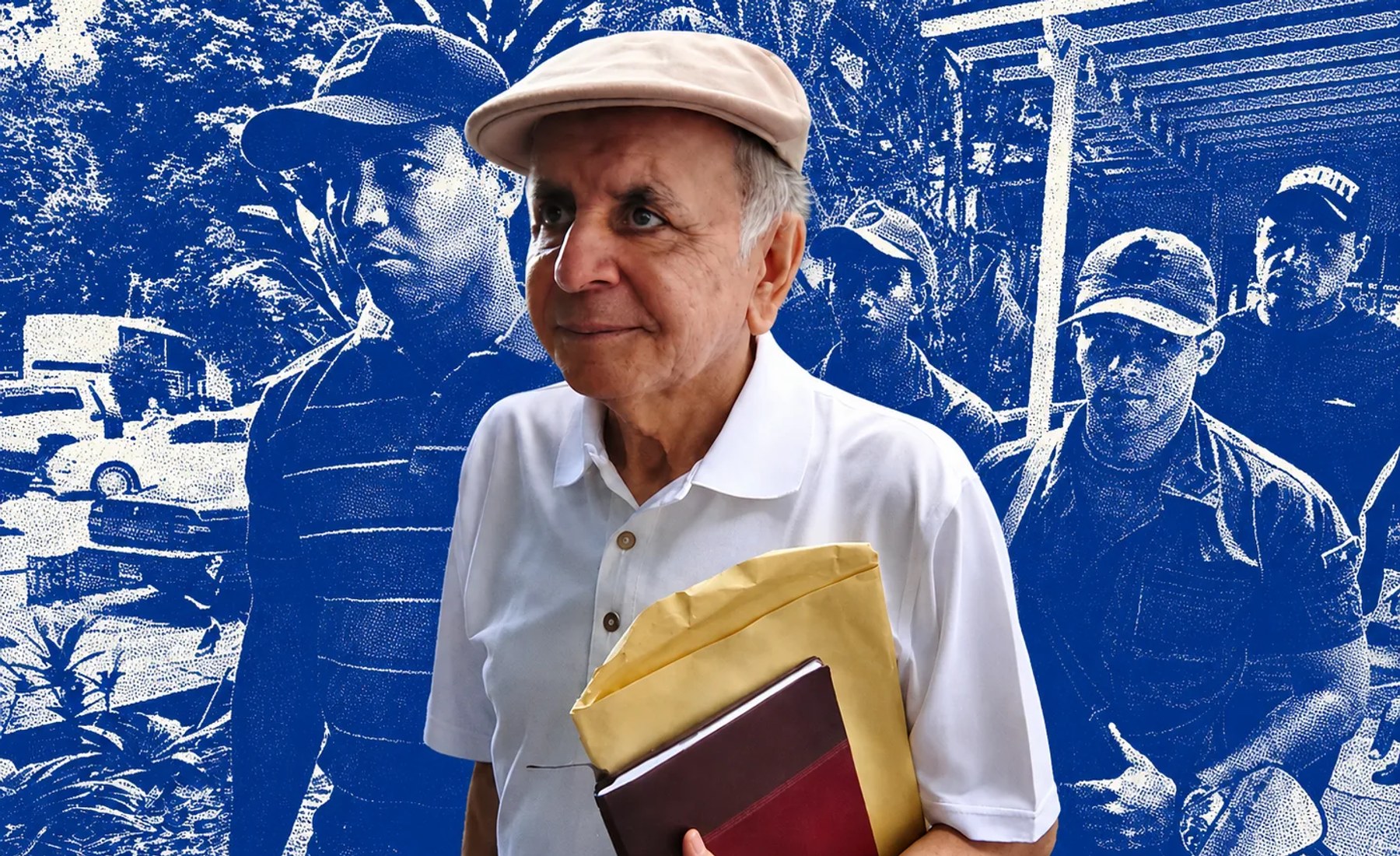


The Girl From the Plains
In Caracas, Roxana threw herself into her studies in social communication (journalism) at the Universidad Católica Santa Rosa and proudly landed an internship at the television station RCTV.
By all accounts she was bright, sociable, and hardworking – a young woman with big dreams. During her first months in the city, she lived with her grandmother while adjusting to city life. Later, she and her younger sister (who also came to Caracas for college) shared a tiny apartment, supporting each other as they pursued their educations.
Roxana juggled her classes and internship adeptly, with clear goals of becoming a successful journalist. But behind her optimism, Roxana struggled with personal demons.
A Quiet Unraveling
In the months before her death, Roxana struggled increasingly with her mental health.
She developed an eating disorder and fell into bouts of deep depression. A naturally pretty teenager, she became fixated on her weight gain and felt ugly and unlovable – a drastic shift from her earlier confidence. Friends noticed alarming changes: Roxana often withdrew from social activities and lost interest in things she once enjoyed.
Her moods swung dramatically; some days she wouldn't get out of bed at all. On one particularly scary occasion, after a series of personal setbacks, Roxana hinted at not wanting to live. There were whispers that she may have even attempted to harm herself and that her younger sister luckily intervened in time.
This was a breaking point for the family. Desperate to save her daughter, Ana Teresa decided to seek professional psychiatric help.
The Distinguished Doctor
In October 2007, Ana Teresa brought her daughter to see a prominent psychiatrist in Caracas. This doctor came highly recommended – in fact, Roxana's mother herself had been his patient years earlier for postpartum depression. The psychiatrist was an elderly man in his seventies with an impeccable reputation.
He wasn't just any therapist: he was a former rector of the Central University of Venezuela, a distinguished academic with specialist degrees from Cambridge and Oxford, and even a one-time presidential candidate (back in 1988). Over the decades, this doctor had been the personal therapist of at least three Venezuelan presidents and was often invited on TV to comment on social issues. He carried himself with authority and confidence, always dressed in a crisp shirt and tie, projecting an air of intellectual gravitas.
To Ana Teresa, entrusting her vulnerable 19-year-old daughter to this man's care felt like the right decision. If anyone could guide Roxana out of her depression, it was this celebrated psychiatrist.
Sleep Therapy
From the moment Roxana first stepped into the psychiatrist's office, she seemed to find a refuge. His consultation room was serene – softly lit with lamplight, classical music playing faintly, and shelves lined with books and medical tomes. In the center of the room sat the typical psychiatric couch, or divan, upholstered in dark leather, facing a high-backed chair where the doctor would sit.
Potted plants and framed certificates adorned the office, giving it a calming, scholarly atmosphere. At first, the sessions seemed to help. Roxana felt like someone was finally listening to her fears and insecurities.
The doctor diagnosed her with depression and also something more serious – possibly a borderline personality disorder or early signs of schizophrenia. He proposed an aggressive treatment plan to help stabilize her mood. This included medication and an old-school technique known as sleep therapy.
Sleep therapy involved heavily sedating the patient with strong tranquilizers for extended periods, ostensibly to allow the mind to reset and heal. It was a controversial approach, but coming from such a renowned psychiatrist, the recommendation carried weight. Roxana and her mother trusted his judgment.
Over the next weeks and months, Roxana underwent multiple "sleep therapy" sessions in the doctor's care. She would be given injections or pills that knocked her out for hours at a time while lying on that therapy couch. The idea was that through repeated deep sedation, her depressive and anxious symptoms might diminish.
Roxana dutifully followed the treatment, believing it was for her own good.
Violations in the Dark
But what happened during those unconscious hours would later be revealed as truly sinister. Unknown to Roxana, while she was sedated and defenseless, the doctor began violating the bounds of therapy in the worst way imaginable. Under the guise of medical treatment, he molested his teenage patient.
He understood that in her drugged state she couldn't fight back and would likely have little recollection afterward – it was the perfect opportunity, or so he thought. It started with him taking advantage of her passivity during the induced sleep – touching her intimately without her consent or knowledge. Roxana would wake up groggy and disoriented, with gaps in her memory about what had happened in those sessions.
At first, she might have dismissed it as a side effect of the drugs. But over time, she began to suspect something was very wrong. She felt strange aches and noticed her clothing occasionally felt misadjusted when she regained consciousness.
There were subtle signs that lines had been crossed. Soon, the therapy sessions blurred into something else entirely: a secret sexual relationship initiated by the psychiatrist under deeply unethical circumstances.
Enamorada
As the months went by, the dynamic between doctor and patient shifted drastically. The psychiatrist's demeanor toward Roxana changed from clinical detachment to overt affection. When she was awake, he flattered her and showed unusual personal interest.
Here was a girl barely out of high school, emotionally fragile and inexperienced, being groomed by a man over fifty years her senior. And not just any man – someone she saw as an authority figure and healer. For Roxana, who craved acceptance and guidance, the doctor's attention was both confusing and intoxicating.
She began to develop romantic feelings toward him. In her private blog and diary, she wrote that she was enamorada – in love – with her psychiatrist. She described a mix of gratitude and adoration, feeling special that such an important, intellectual man was showering her with attention beyond what any normal therapist would.
Seduced by his manipulations, Roxana became increasingly emotionally dependent on the doctor. He, in turn, encouraged this dependence. During sessions he reportedly told her how unique she was, how she understood him in ways other people did not.
He blurred professional boundaries – complimenting her appearance, giving her light touches on the shoulder, perhaps even sharing personal confidences. What had started as medical treatment turned into a secret affair. The psychiatrist would arrange appointments with Roxana more frequently, even outside normal office hours.
At some point, their relationship became sexual in a conscious way – not just during sedation. For Roxana, this was her first intimate relationship with any man. The power imbalance could not have been greater: a 19-year-old patient and a 71-year-old doctor who controlled her medication and therapy.
Ana y Mía, Mis Reinas
In her blog – which she kept under the username "RoxBrujita" – Roxana tried to process what was happening. (The blog bore the title "Ana y Mía, mis reinas y nosotras sus princesas," a nod to anorexia and bulimia, the "queens" that she and other struggling girls served as "princesses.") Initially, she had used the blog to vent about her weight and self-esteem issues, but now the posts increasingly pivoted to the secret relationship consuming her life. She wrote about the thrill and the pain of it: how she felt loved and desired when they were together, but also the guilt and confusion that plagued her.
She knew the relationship was ethically wrong and had to be kept secret. He was a man in a position of trust – and decades older – but he had convinced her that what they shared was special. At times, Roxana seemed aware that she was being used, yet she couldn't break away.
Her entries oscillated between euphoria and deep despair. She nicknamed herself "Roxbrujita" on the blog and often alluded to battles with anorexia, depression, and now this illicit love that had taken over her life.
Those who knew Roxana in Caracas had inklings that something unusual was happening. She grew distant from friends her own age. Instead of spending time socializing at the university, she would often mention going to see her psychiatrist.
She scheduled sessions more frequently than normal, and sometimes at odd hours. Her classmates from the Santa Rosa University recall that Roxana would abruptly leave a study group, saying "I have to meet my therapist." She spoke of him with admiration, perhaps dropping hints that blurred the line between doctor and friend. At one point, Roxana confided to a close friend that she was in a relationship – but she kept the man's identity vague.
She may have felt too ashamed or fearful to admit outright that it was her doctor. However, her friend sensed Roxana was talking about the psychiatrist: the way she described his wisdom and maturity gave it away. Her friend advised her to be careful, but Roxana was in too deep emotionally.
A Mother's Doubts
Meanwhile, Roxana's family noticed changes too. While initially it seemed the therapy had helped her depression a bit, soon Roxana's emotional state became more turbulent. She would come home from sessions with wild mood swings: sometimes elated and glowing, other times crying and inconsolable.
Her mother, Ana Teresa, grew concerned. She suspected that boundaries in the therapy might be crossing into inappropriate territory. After all, many years before, Ana Teresa had been a patient of the same psychiatrist and underwent similar sleep therapy.
Now, watching her daughter's ordeal, Ana began to recall her own uneasy experiences. She remembered that during her postpartum depression treatment, the doctor had administered "cures de sueño" (deep sleep therapies) on her as well – four times, in fact. At the time, she thought nothing of it, but now a chilling question arose in her mind: had she also been violated under sedation without knowing?
The mere thought made her shudder. Ana's trust in the esteemed psychiatrist began to erode, replaced by a gnawing fear that he was taking advantage of Roxana.
Trapped and Confused
By early 2008, what had once been a secret "romance" between doctor and patient had descended into a toxic, tumultuous relationship. The psychiatrist's behavior towards Roxana became unpredictable. At times he was controlling and manipulative, at other times cold and dismissive.
He reminded her to keep quiet about their intimate encounters, emphasizing how scandalous it would be if anyone found out. He instilled fear in her: he could lose his medical license, his prestigious standing – and perhaps implied that she would be ruined too, or even institutionalized, if their affair came to light. Feeling trapped, Roxana oscillated between devotion and resentment.
In her personal diary, she described feeling "atrapada y confundida" – trapped and confused. What should have been a source of help had become a private nightmare that she couldn't escape.
At some point, the doctor attempted to distance himself from Roxana. Perhaps the reality of what he was doing – or the risk of exposure – started to weigh on him. He was a man with a public persona to protect.
Maybe he realized that the young woman in his thrall was growing more emotionally unstable and harder to control. Or maybe he simply tired of her now that his perverse desires were momentarily satisfied. Whatever the cause, he began to push Roxana away.
He reduced the frequency of their meetings and grew impatient with her. For Roxana, this was devastating. She couldn't bear being cast aside so callously after everything that had happened.
Not only did she feel heartbroken, she felt betrayed. This man had entangled her in an unethical, abusive relationship and now wanted to drop her as if nothing ever occurred.
"Today Is the Day"
In one heartbreaking entry on her blog, Roxana bared her pain and anger. On that post, she finally mentioned the doctor by name, breaking the secrecy.
"Today is the day that the relationship between Dr. Edmundo Chirinos and I ended", she typed.
She went on to describe how he had used her and cast her aside: "He didn't show me any proof of love; he just slept with me and then felt it was too much for him and didn't want to see me anymore."
The hurt in her words is palpable – she sounded both deeply wounded and bitter. This entry was essentially Roxana's public acknowledgment of the affair, albeit on an obscure personal blog that only a few might stumble upon.
It was a diary-like confession, but it was out there on the internet for anyone to read.
After being rejected by the doctor, Roxana's mental state deteriorated further. She withdrew even more from family and friends. The depression that she originally sought treatment for had only worsened, compounded now by trauma and emotional abuse.
She must have felt like she was unraveling. And amid her heartache, Roxana made a fateful decision – she decided she could not keep this man's secrets any longer. Perhaps it was out of a sense of justice, or perhaps out of desperation to make him pay attention, but she resolved to expose what he had done to her.
She knew the risks of going against someone so powerful, but by now she had little left to lose.
Sometime in mid-2008, Roxana drafted a scathing message on her blog that would spell doom for the man who had victimized her. In this message, she openly warned other women not to visit Dr. Edmundo Chirinos, alleging that he was a sexual predator.
She described how he abused female patients under the guise of therapy. It was a bold and dangerous accusation to fling at a celebrity psychiatrist. Roxana clicked "publish," effectively lighting the fuse.
In that moment, she transformed from silent victim to whistleblower, determined to prevent others from suffering as she had. It's likely that she sent or shared this message with some acquaintances as well – essentially telling the world, "Stay away from this psychiatrist; he abuses female patients."
One Final Session
When the psychiatrist learned of Roxana's public accusations, he was absolutely furious. Here was a young woman threatening to shatter his lifelong reputation and career. If her claims gained traction, Dr.
Chirinos knew that everything he had – his license, his accolades, even his freedom – could be in jeopardy. At first, he may have tried to reason with her or intimidate her into deleting the post. Indeed, according to later court testimony, he even threatened Roxana with harm if she went ahead with "materializing the publication" of her story.
But Roxana did not back down; the betrayal and abuse she had suffered gave her a steely resolve. She would not be silenced this time.
Backed into a corner and fearing exposure, the psychiatrist devised a plan to permanently silence Roxana. Under the pretense of reconciliation or a routine session, he arranged one more meeting with her. Phone records later showed that he called Roxana several times that morning – hoping to ensure she would come see him.
It was Monday, July 14, 2008. That morning, Roxana went about what would be her final day, unaware of the danger that lay ahead. She attended her internship or classes earlier in the day and told her classmates and friends that she was going to see her therapist after lunch.
Given their strained relations recently, perhaps she was hoping for some closure – maybe an apology, or at least an end to the psychological war between them.
Roxana left to meet the doctor at his private office as planned. She never returned. Sometime during that encounter behind closed doors, events took a deadly turn.
We can only piece together what happened based on the evidence later found.
It appears an argument erupted between the two. The doctor likely angrily confronted Roxana about her blog post, while Roxana, equally emotional, probably stood her ground, recounting the abuse and threatening that she would go to the authorities or the press.
She was no longer the pliant, starstruck patient – she was angry, hurt, and ready to expose him. The confrontation grew heated and out of control.
Enraged and desperate, Dr. Chirinos attacked his former patient. In a flash, he grabbed a heavy object – perhaps a blunt instrument like a paperweight, a vase, or even a metal bar he had prepared – and struck Roxana violently on the head.
The blow was ferocious, crushing her skull with sudden force. Roxana crumpled almost instantly, collapsing onto that very therapy couch where she had once sought solace. The man who had promised to heal her had become her killer.
A Panicked Criminal
Blood spattered onto the furniture and floor of the consultation room. The forensic examiner would later conclude that a single massive blow to the right side of her skull had caused her death – likely delivered by a heavy blunt object. It all happened swiftly; there was likely no opportunity for Roxana to even cry out for help.
The doctor checked her pulse. Roxana Vargas was dead. The gravity of what he had done must have set in immediately – he had murdered a 19-year-old girl in cold blood inside his office.
This was no longer about silencing a blog scandal; it was a homicide he now had to cover up. The distinguished psychiatrist was now also a panicked criminal, standing over the body of his victim in the middle of his clinic.
Thinking quickly, Dr. Chirinos knew he had to get rid of the body and any evidence linking her death to him. He locked his office door and dragged Roxana's limp body off the couch.
At his age and with her being a grown young woman, it would have been a struggle, but adrenaline and fear gave him strength. Perhaps he wrapped her in something – a sheet or tarp – to contain the blood. He stripped off her outer clothing, leaving only her underwear.
He may have done this to reduce the mess or to stage the scene as a sexual assault by a stranger, hoping to mislead investigators later. He gathered up her clothes, her purse, phone, and any personal belongings. He then mopped up as much blood from the floor and couch as he could, perhaps using towels or rags, which he would dispose of later.
Still, tiny traces of blood remained embedded in the fibers of the carpet and in hard-to-see crevices – traces he would overlook.
Dr. Chirinos then hurried to get Roxana's body out of the building without arousing suspicion. It's possible that by luck or design, no one else was around the office at that lunch hour.
Perhaps his secretary was out to lunch or he had scheduled this meeting when no other patients were due. The doctor parked his car as close as possible to a back entrance. Straining, he loaded Roxana's body into the trunk of his car.
In the process, some of her blood smeared onto the trunk lining or the car's threshold. With the evidence of his crime concealed in the trunk, he got behind the wheel and drove out of the city.
Parque Caiza
The drive from Caracas toward Parque Caiza takes you eastward, winding up into the green hills that overlook the capital. It's an area where the city's concrete gradually gives way to patches of forest and undeveloped land. The park itself – officially known by a longer name but commonly just called Parque Caiza – is a recreational area spanning a large hillside, filled with trees, trails, and picnic spots.
On a weekday midday, it would be quiet, with few visitors around. The doctor knew this area; he probably figured it was remote enough to dump the body without immediate detection, yet accessible enough for him to quickly return to the city.
At some lonely bend near the park, Dr. Chirinos pulled over. He chose a vacant, overgrown lot just off the road, partially hidden by brush and trees.
Checking that no one was in sight, he hauled Roxana's body out from the trunk. He may have removed any identifying jewelry or items – indeed, he took one of her earrings, perhaps worrying it could be traced or maybe it had fallen off earlier. Unbeknownst to him, her other matching earring was still with her body.
With a final effort, he dragged her a short distance into the brush and left her there on the ground. It was a stark and heartbreaking scene: the lifeless body of a teenage girl abandoned in the dirt, clad only in underwear, bruised and bloodied from a savage blow.
He had disposed of Roxana, but his work was not done. He still had to eliminate any incriminating evidence back at his clinic and in his home.
Later, he would destroy or hide her clothing and belongings – perhaps burning them or dumping them in multiple locations. He scrubbed down his office as thoroughly as he could, using cleaning agents to wipe surfaces clean of blood. He likely thought he had cleaned up everything.
He must have believed that if her body was found, the police would assume it was just another random act of violence – maybe a sexual assault by some unknown predator – and not trace it back to him.
Dr. Chirinos had been confident and careful for so long while committing his secret abuses; he likely felt he could outsmart any investigation.
However, despite his attempts at a perfect cover-up, the doctor's meticulous facade was about to crack. The truth was already starting to surface elsewhere.
Around 1:30 PM on July 14, 2008, not long after the body was dumped, a group of local residents in the Parque Caiza area stumbled upon what they thought was a discarded mannequin – an object that had no business being out there.
When they realized it was a young woman's corpse, they immediately contacted the authorities. Officers from the local police and Venezuela's scientific, criminal and forensic police arrived at the scene.
The area was cordoned off as a crime scene under the glaring early afternoon sun.
Investigators examined the body and the surroundings. Roxana's corpse was face-up on the ground. There were obvious signs of violence.
Her face was swollen and disfigured from the blunt force impact. Her lack of clothing immediately led detectives to suspect a sexual motive, but the coroner did not find any evidence of recent sexual assault on Roxana's body.
This made the scene all the more puzzling: why would a random attacker strip her and kill her without signs of assault? These inconsistencies gave investigators pause. The lack of additional wounds or defensive injuries also suggested this wasn't a prolonged attack by multiple assailants, but rather a quick, targeted killing.
Word of the discovery traveled quickly. In Caracas, news outlets learned that the body of a young woman – initially unidentified – had been found in Parque Caiza. Given that Roxana's family and friends had already realized she was missing that day (she hadn't returned home and wasn't answering calls), there was immediate concern that the victim could be her.
Not long after, the Vargas family received the dreaded confirmation: the body was indeed Roxana. In an instant, their beloved Roxana went from a missing person to a homicide victim.
From Beyond the Grave
For the police, the case was now a top priority – the murder of a promising young student. Investigators considered several theories as they began their work. Venezuela in 2008 had a high rate of violent crime, especially in and around Caracas.
Street assaults, kidnappings, and murders were tragically common. One angle was that Roxana might have been snatched off the street in an "secuestro exprés" (express kidnapping), a short-term abduction for theft or ransom, which sometimes ended with the victim being killed by the criminals.
Her internship at RCTV – a media outlet known for opposing the government – led to another more far-fetched hypothesis: could this have been a politically motivated killing, perhaps some form of intimidation or revenge?
(Roxana's internship at RCTV, a television network critical of the government, made some wonder if she could have been targeted in the politically charged climate of the time, although there was no immediate evidence of that.) The idea that someone would target a nineteen-year-old intern for political reasons was hard to believe, but the polarized atmosphere made even wild speculations possible.
Initially, nothing obvious pointed to the real perpetrator. When questioned, Roxana's family and friends described her daily routines and acquaintances. They mentioned no enemies or recent threats.
However, there was one name that kept resurfacing: her psychiatrist. Her mother recounted to detectives that Roxana had an appointment with Dr. Chirinos on the very day she disappeared.
Classmates confirmed that Roxana had bid them goodbye saying she was off to see her therapist. Acting on this lead, detectives paid a visit to the doctor as part of the routine inquiry. Dr.
Chirinos greeted the officers politely at his office and acknowledged that Roxana had been there. He claimed she'd had a regular session and departed in the late morning, appearing perfectly fine. He expressed shock at hearing of her death and offered a theory of his own – perhaps she had fallen victim to street criminals after leaving.
His demeanor was calm and cooperative, and initially, there was no clear evidence to contradict his account. For the moment, the esteemed doctor didn't raise any obvious red flags for the investigators. They thanked him for his time, not realizing that the man standing before them was in fact speaking to the police in the very room where he had killed Roxana just hours earlier.
Ana Teresa, Roxana's mother, did not hesitate to voice her suspicions. In her gut, she felt that the famous psychiatrist was responsible. She told the police about the inappropriate relationship she believed had been going on between her daughter and the doctor.
She explained how Roxana's behavior had changed under his care and even mentioned her own uncomfortable experiences with him years prior. This was a bold accusation – essentially pointing the finger at a nationally respected figure – but Ana was adamant. "Revisen al doctor Chirinos," she urged them.
"Check Dr. Chirinos." The detectives took note. They had to follow the evidence, but the mother's uneasy claims made them consider: could this esteemed 71-year-old professional really be behind the brutal murder of his teenage patient?
Over the next days, investigators began gathering any and all evidence related to Roxana's life. They obtained her phone records, which showed something interesting: on the day she died, she had multiple communications with her psychiatrist. It appeared that he and Roxana had spoken by phone several times that day, perhaps to confirm their meeting time or in the midst of their confrontation.
This corroborated that she indeed met him that day. Meanwhile, with permission, police searched Roxana's bedroom at her family home. There, they found her personal diary and notes.
In those pages, they uncovered a trove of disturbing revelations: Roxana had written about being in a relationship with her psychiatrist and hinted at being sexually involved with him. The diary entries were emotional and detailed, describing how their relationship developed and how it had recently ended badly.
More explosively, investigators discovered Roxana's blog on the internet. Since Roxana wrote under a pseudonym but included her real name in the profile, they were able to trace it easily. On her blog, the evidence was laid out almost like a trail of breadcrumbs.
Post after post documented her mental turmoil and her entanglement with the doctor. And then came the bombshell entry – the one where Roxana explicitly named Dr. Edmundo Chirinos and warned that he was abusing patients.
Reading that, the police essentially had a statement from the victim herself pointing to her alleged killer. It's not often in a murder case that the victim's own voice guides investigators from beyond the grave. In this case, Roxana's courage in documenting her abuse became a guiding light for the police.
Blood on the Couch
Armed with the blogs, the diary, and the statements of Roxana's mother and friends, authorities wasted no time zeroing in on the psychiatrist. All evidence and testimony was triangulating towards him. The earlier theories about random street crime or political motives were rapidly discarded.
This was looking like a classic case of femicide – a murder committed by someone the victim knew intimately. It was time to speak to the doctor himself.
When Edmundo Chirinos was first contacted by police for questioning, he likely put on a calm, cooperative front. After all, he had spent decades cultivating a persona of rationality and respectability. In public statements around that time, Dr.
Chirinos vehemently denied any wrongdoing. He admitted he had treated Roxana but claimed that was the extent of their relationship. As suspicions mounted, he went on the offensive, telling reporters that he was the target of a "confabulación" – a conspiracy.
He insisted that he was "absolutamente inocente" and that all accusations against him were lies concocted to destroy him. To some of his colleagues and patients who heard this, it was unthinkable that such a distinguished doctor could be involved in something so sordid. Initially, a number of people gave him the benefit of the doubt.
Perhaps, they thought, this was a case of a mentally unstable girl harming herself or being killed by someone else, and now a witch hunt was targeting an innocent doctor simply because he had been her therapist.
But the police did not take Chirinos at his word. By late July 2008, they had gathered enough probable cause to conduct searches on properties connected to him. Investigators carried out a meticulous search of Dr.
Chirinos's psychiatric office in Caracas. Forensic specialists treated the consultation room with luminol – a chemical that glows blue in the dark when it comes into contact with blood. Sure enough, when they turned off the lights and surveyed the office, telltale luminescent patches materialized on the carpet and even on the leg of a piece of furniture.
The pattern of these traces suggested someone had tried to clean up blood, but hadn't succeeded completely. Their suspicions were confirmed: faint traces of Roxana's blood had soaked into the carpet and furniture. Further analysis matched this blood to Roxana Vargas.
Incredibly, they also found a small but damning piece of physical evidence: a lone earring tucked in a corner of the office, perhaps under a piece of furniture. It was a delicate stud earring that had belonged to Roxana – and its matching pair had been recovered beside Roxana's body where it was dumped. The significance of this could not be overstated.
One of Roxana's earrings had fallen off during the violent struggle in the psychiatrist's office, and the other remained with her body when he dumped her. The matching set bridged the crime scene and Dr. Chirinos's consultation room, directly tying him to the murder.
The search of his office also turned up other telling clues. There were signs that someone had recently attempted to clean the area; a strong smell of bleach still lingered, and certain sections of the rug appeared scrubbed. This only raised more suspicions.
Outside the office, investigators examined Dr. Chirinos's car – a sedan he often drove. In the trunk and on some upholstery, forensic technicians detected traces of blood that further testing confirmed as Roxana's.
The presence of the victim's blood in his vehicle was nearly impossible for the doctor to explain away innocently. At this point, what had been mounting circumstantial evidence became hard evidence of a crime.
1,200 Photographs
Perhaps the most horrifying discovery, however, came when authorities searched Dr. Chirinos's private residence. During a raid on his home, investigators uncovered a secret that would redefine the case entirely.
Hidden away in boxes, albums, and locked drawers were photographs – hundreds upon hundreds of photographs – of female patients in various stages of undress. Some were faded Polaroids from the 1970s and '80s, others were more recent prints or even digital image files. Investigators even found a handful of video recordings on old cassettes.
These were not artistic portraits or consensual snapshots; they were disturbing images of women who appeared to be unconscious or in groggy states, lying on what looked like the same psychiatric couch in his office. In total, roughly 1,200 photographs were seized. The women in them spanned various ages and years – some of the photos seemed quite old, with hairstyles and clothing from decades past, while others were more recent.
Shockingly, among the images were pictures of Roxana herself, nude and seemingly passed out. It became clear that Dr. Edmundo Chirinos had been systematically drugging and sexually abusing female patients for perhaps as long as forty years, using his practice as a hunting ground.
The sheer scale of this trove of evidence left even veteran detectives reeling. It was as though the carefully constructed facade of a kindly therapist had cracked open to reveal a decades-long career as a sexual predator. Each photograph was a silent testimony of betrayal and victimization.
Many of these women had likely never known they were violated – coming in for therapy, only to be rendered unconscious and assaulted, then sent on their way with no memory of the vile acts committed against them. Dr. Chirinos had kept trophies of his crimes, preserving these images as a personal collection of conquests.
There were even videos, presumably filmed by him, of some sessions – further proof of his egregious behavior. It was truly the stuff of nightmares – and it was all hidden in plain sight by one of Venezuela's most well-known doctors.
News of this gruesome discovery spread quickly through legal and media circles. What started as an investigation into the murder of one young woman now promised to expose a much larger pattern of abuse. The public was about to learn that the celebrated Dr.
Edmundo Chirinos – once a trusted figure on TV and a man associated with the country's highest leaders – was allegedly a serial sexual offender.
Unsurprisingly, once these revelations surfaced, other victims began to come forward. Women started contacting the police and prosecutors with their own stories about Dr. Chirinos.
Many had remained silent for years, either unsure of what had happened to them or too intimidated to accuse such a powerful person. But Roxana's case emboldened them. In total, prosecutors identified 14 women who formally accused the psychiatrist of violating them under sedation – and they suspected that many more never came forward.
One by one, these women stood in court and recounted eerily similar stories: blacking out during appointments and later suspecting they'd been violated. For instance, one middle-aged schoolteacher testified that she had gone to Dr. Chirinos in the mid-1990s for help with anxiety.
He recommended sleep therapy and administered an injection. The next thing she remembered was waking up on his clinic couch feeling groggy and disheveled – her blouse had been unbuttoned and her bra misaligned. At the time, she was confused and deeply embarrassed; she left in a hurry and tried to convince herself it was just a weird side effect of the sedatives.
Only years later, when the Roxana Vargas scandal broke, did she fully understand that she had likely been sexually assaulted during that session. Another woman, a former university student, described a nearly identical experience from 2002. She awoke from a supposed sleep therapy with her jeans unzipped and the doctor standing over her, insisting she had suffered a mild seizure – an explanation she didn't believe even then, but she felt too intimidated to protest.
These accounts, spanning different decades, gave a clear sense of the doctor's brazen pattern. Edmundo Chirinos had been operating with impunity for so long, perhaps believing no one would ever catch him.
"Absolutely Innocent"
The legal case against Edmundo Chirinos was now overwhelming. In August 2008, the authorities arrested him and formally charged him with intentional homicide for the murder of Roxana Vargas. The once-respected psychiatrist was photographed in handcuffs, escorted by police – images that stunned the nation.
It was hard to overstate the shock: imagine a beloved doctor to presidents being paraded as an accused killer. Many Venezuelans were in disbelief, but the evidence was laid out for all to see. As he was led into the courthouse for his initial hearing, journalists shouted questions.
Chirinos maintained his innocence fiercely. With cameras flashing, he declared, "Vengo aquí a demostrar que todo esto es una gran mentira, ha sido una confabulación contra mí. Soy absolutamente inocente y así va a quedar demostrado," – "I've come here to prove that this is all a big lie, it has been a conspiracy against me.
I am absolutely innocent and that will be demonstrated." The audacity of his denial, given the mountain of incriminating evidence, was breathtaking. But it was perfectly in line with his narcissistic personality – he likely believed he could talk his way out of anything.
The case proceeded to trial over the next two years, and the courtroom was packed at every hearing. Dozens of journalists and spectators crowded in to witness the dramatic downfall of a once-renowned public figure. It became one of the most high-profile trials in Venezuela's modern history, with intense media coverage and public fascination.
Prosecutors painted a harrowing picture of how Chirinos had lured and exploited the young Roxana, and how he eventually killed her to silence her. In court, the now 74-year-old Chirinos sat at the defense table looking markedly aged. His hair, once neatly combed gray, was thinning; he wore thick glasses and often pursed his lips as if in irritation when witnesses spoke.
Despite the circumstances, he maintained a haughty posture, occasionally whispering corrections to his attorneys and rolling his eyes at accusations. But no amount of dismissive demeanor could counter the evidence the state presented. During the trial, a procession of witnesses took the stand.
The atmosphere in the courtroom was charged with emotion. Many noted that Chirinos avoided meeting the eyes of Roxana's family seated in the front row – especially her mother, whose gaze burned with quiet fury. As testimony after testimony piled on, the once-confident doctor sometimes shook his head or scribbled notes, but largely remained impassive.
Roxana's mother testified, her voice trembling with grief and anger, about how she had entrusted her daughter to Dr. Chirinos's care and how he betrayed that trust in the most horrific way. Some of Roxana's friends and classmates spoke about the hints of the relationship and how Roxana had been acting in the lead-up to her death.
Then came the testimonies of other victims of Chirinos's abuse. Many of these women, who had suffered in silence for years, stood up in court and finally told their stories to the world. It was a powerful moment each time one of them said, essentially, "He did it to me too."
Chirinos's defense team tried every tactic to counter the prosecution. They attempted every angle to sow doubt. They painted Roxana as emotionally unstable and unreliable, suggesting that she had imagined or fabricated the alleged affair due to her mental health struggles.
They hinted that perhaps Roxana's death was unrelated to the doctor – maybe a result of her own dangerous behaviors or another assailant entirely – anything to deflect blame from Chirinos. The defense even tried to smear Roxana's character, implying in questioning that she might have been promiscuous or attention-seeking (a tactic that drew outrage, given she was the victim). At one dramatic point, Dr.
Chirinos himself addressed the court. The old psychiatrist's once-authoritative voice now carried a desperate edge as he repeated his claims of innocence. He dismissed Roxana's blog writings as "fantasías" – fantasies of a troubled young woman.
He insinuated that political enemies were leveraging this case to tarnish him (since he had been an advisor to presidents and an ally of the government at one time). He cast himself as the victim of a vendetta or a media witch hunt.
But these arguments rang hollow given the mountain of evidence and the sheer number of accusers. As the trial unfolded, public opinion largely turned against Chirinos. Those few initial defenders fell silent.
It was painfully clear that this man had lived a double life: outwardly a healer and intellectual, but privately a predator who drugged women on the very couch where they sought help.
Twenty Years
After many months of proceedings, the trial culminated in September 2010 with everyone awaiting the verdict. As the three-judge panel (in Venezuela's system) prepared to announce their decision, a tense hush fell over the courtroom. Edmundo Chirinos rose to his feet, flanked by guards, looking pale but still defiant.
The lead judge declared the finding: the court found Dr. Edmundo Chirinos guilty of the intentional homicide of Roxana Vargas. Given the gravity of the crime and the evidence, he was sentenced to 20 years in prison – the maximum penalty the law allowed under those charges.
At his age, mid-70s by then, a 20-year term was essentially a life sentence. The judge also barred him from practicing medicine ever again, not that he would have the opportunity. When the decision was announced, Chirinos displayed no remorse.
He stood there in the courtroom as impassive as ever, still insisting he had been wronged. There was no apology, no admission of guilt.
For Roxana's family, the verdict was a bittersweet conclusion. On one hand, justice had been served: the man who destroyed their daughter's life had been publicly unmasked and punished. On the other hand, nothing could bring Roxana back.
Outside the courthouse, Ana Teresa Quintero – Roxana's mother – spoke to the press with a blend of sorrow and strength. She expressed relief that the truth had come out, but she also voiced frustration.
Justice Incomplete
A particular point of contention arose some time after sentencing: despite the tribunal initially denying the privilege, within a couple of years Chirinos petitioned for house arrest due to his advanced age and supposedly poor health.
In December 2011, Chirinos even wrote a personal letter to President Hugo Chávez, pleading for an indulto (pardon) on the grounds that he was gravely ill. He portrayed himself as an old, sick man who deserved mercy. While he did not receive an outright presidential pardon, a court did agree a few months later to relax his sentence.
In March 2012, about a year and a half into his term, he was granted a humanitarian measure of casa por cárcel (house arrest) due to his advanced age and purported health issues. The aging doctor was allowed to leave the Yare III prison and serve the remainder of his sentence confined to his home in Caracas.
When news of Chirinos's house arrest came, the public was outraged alongside Roxana's family. Many saw it as a slap in the face after such a heinous crime. Women's rights activists and former victims of Chirinos spoke out angrily, and Ana Teresa did not mince words.
"It's an injustice that they give house arrest to my daughter's killer. He had no mercy when killing her and abusing his patients," she said angrily when interviewed. She pointed out that Chirinos showed no pity for her daughter or any of his victims, and thus did not deserve a compassionate reprieve.
To her, and many others, the leniency felt like yet another privilege for a man who had always used his stature to avoid consequences. Nonetheless, the legal system had made its decision on that matter.
As it turned out, Edmundo Chirinos did not have long to enjoy the relative comfort of detention at home. On August 24, 2013, just over a year after being moved to house arrest, the former doctor was found dead in his house at age 78. He had passed away quietly in his sleep from what appeared to be natural causes – some reports suggested a stroke.
Thus ended the life of a man who had once been the pride of Venezuela's psychiatric field and later became one of its most notorious criminals.
For the many women who had silently suffered at Chirinos's hands, seeing him exposed and punished offered a measure of vindication – though the scars he left may never fully heal.
Roxana's mother, despite her heartbreak, found a sense of purpose in what happened.
"I understood that my daughter came into the world to bring about justice, Ana Teresa said at one point. "If she hadn't died, none of the crimes that psychopath committed would have been known."
Indeed, as Roxana published her blog posts, she may have sensed the danger she was putting herself in – yet she did it anyway. In doing so, she ensured that Edmundo Chirinos would never hurt another patient again.
Primary reporting and references
- Aporrea - Actualidad
Aporrea
- Casos más sonados: Edmundo Chirinos y Roxana Vargas
Dossier Interactivo
- Sangre en el diván
El PaísNov 27, 2018
- Sangre en el diván
SlideShare
- Sangre en el diván
- Sangre en el diván
- Caso Edmundo Chirinos
Scribd
- Falleció el psiquiatra Edmundo Chirinos
La PatillaAug 24, 2013
- Edmundo Chirinos: La típica historia del
No es NoOct 01, 2013
- Discovery Channel: Furia en Caracas
Reportero24Mar 09, 2012
- Caso Chirinos: Es una injusticia que le den casa por cárcel al asesino de mi hija
- Sala de Casación Penal anula de oficio
Francisco SantanaDec 01, 2012
- Caso Edmundo Chirinos: Sobreseimiento
Related episodes
The Morning Cristina Disappeared
Cristina Siekavizza vanishes from an affluent enclave as the investigation turns toward home.
The Wrong Car
A pregnant teenager enters the wrong car at a bus stop and disappears into the night.
Deadly Holiday Abroad
A woman's murder abroad unites two countries and creates a groundbreaking legal precedent.