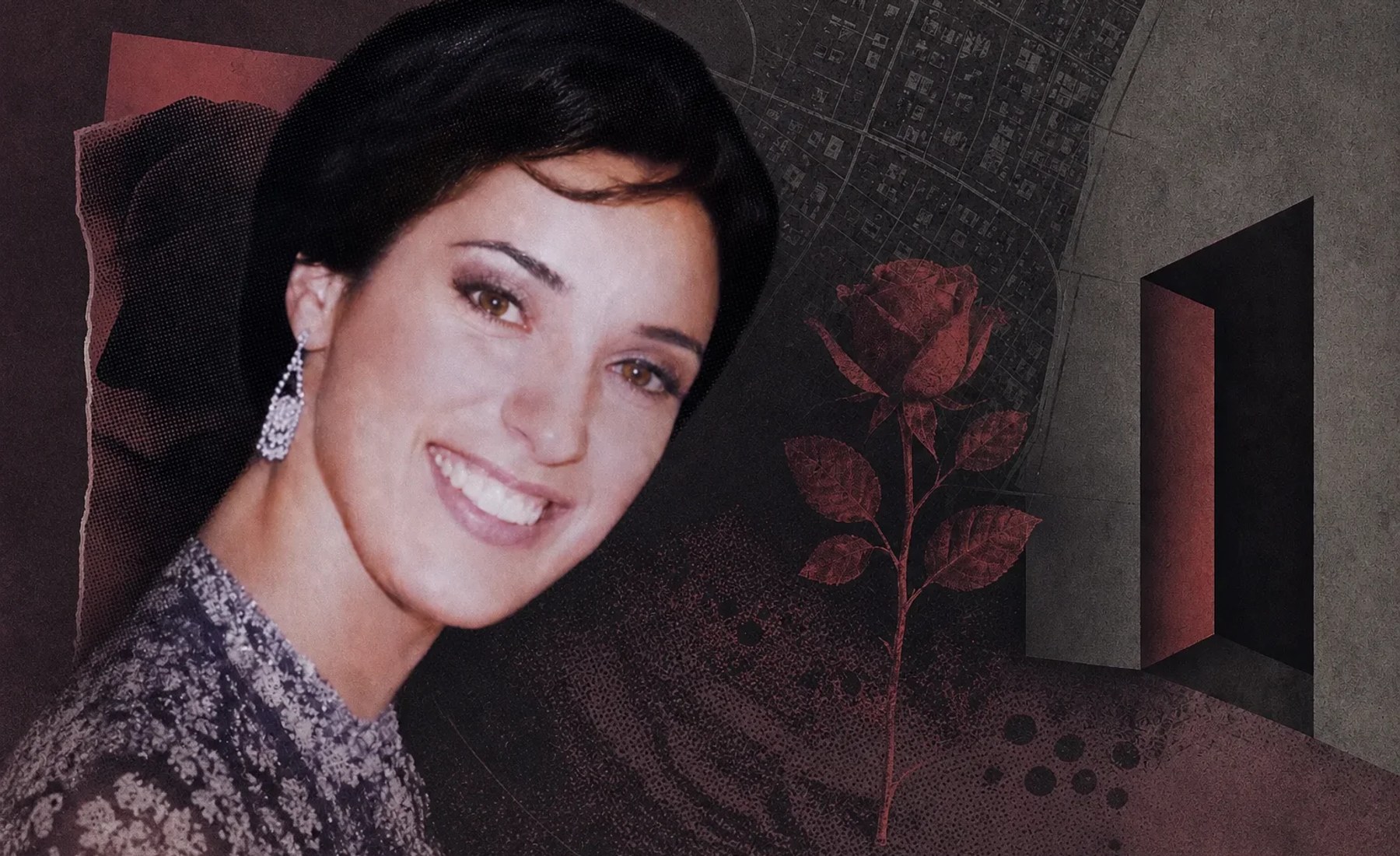


"She Didn't Get Mixed Up in Anything"
In the initial scramble to find Cristina, all possibilities were on the table. The Siekavizza family – well-to-do and tight-knit – mobilized immediately. They notified the National Civil Police and began organizing search efforts. At first, even the authorities treated it like a likely kidnapping, the kind that tragically isn't uncommon in Guatemala.
Within a day of her disappearance, Cristina's father, Doctor Juan Carlos Siekavizza, filed a formal missing-person report. Friends and relatives plastered missing posters and pleaded for information. Meanwhile, Roberto Barreda, Cristina's husband of 11 years, appeared just as distraught as anyone.
The Son of a Magistrate
Roberto hailed from an influential family; he was the son of Beatriz Ofelia de León, a former President of Guatemala's Supreme Court. That connection put a spotlight on the case from the outset.
But to those who knew the couple, Roberto was simply Cristina's spouse and the father of her two little kids, a 7-year-old boy and 4-year-old girl. He joined in the early search efforts and even helped hire private investigators to chase down leads, desperate to bring his wife home safely. For a couple of weeks, the working theory – or perhaps hope – was that Cristina had been abducted but might still be alive.
No Ransom, No Call
By late July 2011, however, ominous signs had emerged. No kidnappers ever contacted the family to demand a ransom, which was the first red flag. If this were a for-profit abduction, the perpetrators were taking an unusually long time to make their move.
Investigators began to quietly suspect that something else might be going on. Around July 13, the case was escalated from the local police to a specialized Criminal Investigation unit. Rumors swirled that perhaps Cristina had discovered something or run off, but those who knew her found that implausible – she adored her children and had no reason to abandon her life. As more days passed with no word from kidnappers, the family's anxiety turned into a gnawing dread.
"Justice for Cristina"
A massive search effort was organized for July 24, 2011: a public march in Guatemala City's Avenida Las Américas. Hundreds of supporters and concerned citizens joined, holding up banners with Cristina's photo, demanding answers. Roberto, the worried husband, walked shoulder-to-shoulder with Cristina's parents, Angela and Juan Luis, calling for an end to violence and pleading for his wife's safe return.
Under the slogan "Justice for Cristina," they prayed this show of public solidarity would spur someone to come forward with information. Yet behind the scenes, investigators were uncovering unsettling evidence that Cristina's fate might have been sealed before that march even took place.
Luminol's Blue Glow
Only after the case drew national attention did the true investigative breakthrough occur. In the weeks following Cristina's disappearance, detectives from the Ministerio Público (Public Prosecutor's office) started taking a hard look at the one place everyone assumed Cristina had been safe – her own home. On the surface, the house in Los Manantiales showed no signs of forced entry or struggle.
But forensic teams decided to run a luminol test, a chemical that reveals traces of blood even if someone has tried to clean them. Under the eerie blue glow of luminol, stains appeared in the master bedroom – faint but unmistakable blotches indicating blood had been spilled and wiped up. Technicians also applied luminol inside the family's vehicles, checking for any incriminating traces. The results came back positive: there were residues of blood in the home and possibly in a car, too.
At that moment, the narrative of Cristina's disappearance flipped on its head. Investigators now believed they were dealing with a murder that had been staged to look like a vanishing. And the evidence pointed not to a random kidnapper, but squarely inside the household – at Cristina's 34-year-old husband, Roberto.
When authorities quietly confronted Roberto about the blood evidence, his behavior raised even more alarms. By early August, the investigation was closing in on him as the prime suspect, though he had not yet been formally charged. Unbeknownst to the public, a domestic employee from the household – the family's longtime housekeeper, 44-year-old Petrona "Olga" Say Velásquez – had privately begun to open up to prosecutors.
Olga had been in the Siekavizza home the night of July 6, and what she eventually revealed broke the case wide open.
What Olga Saw
On the evening before Cristina vanished, Olga heard a ferocious argument erupt between Cristina and Roberto. It wasn't the first time she'd heard tension in that marriage, but this fight was worse than anything before. As Olga would later testify, the couple's heated voices echoed through the house until suddenly, there was a terrible thud and then silence.
Concerned, Olga cautiously went to check on her employers – and found a scene that made her blood run cold. Cristina's lifeless body was sprawled on the bed in the master bedroom. Roberto stood nearby, panicked or in shock. In that awful moment, Olga realized her boss – the man who had been outwardly frantic in searching for his wife – had likely killed Cristina in a violent rage.
Fearful for her own life, Olga didn't scream or run. According to her testimony, Roberto and members of his family quickly threatened her into silence. They warned Olga not to "comment on what happened" – implying dire consequences if she did. Terrified and heartbroken, Olga stayed quiet initially.
A House Scrubbed Clean
In the hours that followed the killing, it appears Roberto sprang into cover-up mode. Phone records and subsequent investigations suggest he called in help to dispose of Cristina's body and sanitize the crime scene.
Sometime late that night or in the early hours of July 7, two other individuals arrived at the Barreda home to assist. Exactly who they were was not immediately clear, but prosecutors later identified them as people close to Roberto. Together, they carried Cristina's body out of the house under cover of darkness, before any outsiders knew she was missing. They likely removed the corpse in one of the family vehicles, which could explain why blood traces were found in a car trunk.
The accomplices then went about scrubbing and cleaning the bedroom and other areas to erase signs of violence. It was a calculated attempt to turn a murder into a "mystery disappearance." By the time morning came, the house was unnervingly tidy. Cristina's cell phone and personal effects were left behind, making it look like she had stepped out briefly and vanished. And Roberto played his role to the hilt – calmly telling relatives that his wife had gone out early and never returned.
For a short while, that ruse held. But once Olga Petrona found the courage to speak to authorities, the façade crumbled.
Gone Before Dawn
On August 7, 2011 – one month after Cristina's disappearance – police quietly detained Olga for questioning. Realizing the game was up, Roberto Barreda made a desperate move: he fled Guatemala with his children.
In the early dawn hours of August 3, before Olga's damning eyewitness account could become public, Roberto packed a few belongings, grabbed 7-year-old "Robertito" and 4-year-old María Mercedes, and disappeared into the wind. When investigators went to find him for a scheduled interview, they discovered the house empty – the suspect and the kids were gone. It was a stunning twist: the very man who had marched in rallies demanding his wife's return was now a fugitive. An international arrest warrant was issued on August 16 for Roberto on charges of violence against women and obstruction of justice (the initial legal steps towards a femicide case).
Guatemalan authorities alerted Interpol, fearing Roberto might try to leverage his family's resources and influence to hide abroad. Overnight, public sympathy swung; the missing-person case had become a manhunt for an accused wife-killer and kidnapper of his own children.
The Ugly Reality of Femicide
The flight of Roberto Barreda was a shocking development. Here was the son of a prominent ex-judge, now the prime suspect in one of the most high-profile domestic violence cases the country had ever seen. In those tense days of August 2011, outrage and worry gripped the nation. Not only was Cristina presumably dead – still no one knew where her body was – but two innocent children were in the wind with a man now believed capable of killing their mother.
The case had exposed the ugly reality of femicide, a term enshrined in Guatemalan law since 2008 to describe the murder of a woman by reason of her gender or in the context of domestic abuse. As news of the evidence came out – the blood in the house, the housekeeper's testimony that Cristina had been beaten to death at home – public opinion swung from hopeful to horrified. Women's rights groups and everyday citizens alike took to the streets demanding justice not only for Cristina but for all victims of domestic violence. Under mounting pressure, Guatemalan authorities doubled down on their efforts to solve the case despite the main suspect's escape.
A Web of Accomplices
Investigators began unraveling the conspiracy of silence that followed Cristina's murder. Within weeks, they made several key arrests. Among the first detained were two men who had allegedly helped Roberto cover up the crime. One was Óscar Rolando Celada Cuevas, a private investigator by trade. Astonishingly, Oscar Celada was the very "detective" originally hired (ostensibly by the Siekavizza family) to help find Cristina.
In reality, prosecutors say Celada's role was far more sinister – he had "usurped" the role of investigator to mislead the search and had personally helped clean the bloodstains from the house in those early hours.
Another man arrested was Javier Armando Mendizábal Ruiz, a close friend of Roberto's. Evidence suggested Javier aided in physically removing Cristina's body from the home and disposing of it somewhere far away. Both Celada and Mendizábal were charged with obstruction of justice and concealment of a crime.
Investigators also caught wind of a family member's involvement: Joaquín Flores, who is Roberto's brother-in-law, was accused of hiring a professional cleaning crew to sanitize the crime scene shortly after the murder.
Joaquín was indicted for being an accessory and interfering with the investigation. By October 2011, arrest warrants had been issued for at least seven people tied to the cover-up, including these associates and even members of Roberto's own family.
The Magistrate's Fall
The most notable of those warrants was for Beatriz Ofelia de León, Roberto's mother. On October 20, 2011, authorities arrested Ofelia de León – a former magistrate and ex-President of the Supreme Court – on charges of obstructing justice and witness tampering in the Siekavizza case. It was a jaw-dropping development: a pillar of the Guatemalan judiciary accused of helping cover up her daughter-in-law's murder.
Prosecutors alleged that Ofelia had used her influence and resources to derail the investigation from the start. Bank records later showed that while Roberto was on the run, his parents had been funneling him financial support, enabling his life as a fugitive. More brazenly, Ofelia was specifically charged with threatening the housekeeper, Olga Petrona Say, to ensure Olga kept quiet about what she had witnessed. Indeed, it appears to be fear of Roberto's powerful mother that initially kept Olga from telling the whole story sooner.
Seeing Ofelia de León marched into a jail holding cell was vindicating to some – a sign that even the elite could be held accountable – but to others it was shocking that it had come to this at all. The ex-judge steadfastly proclaimed her innocence.
"I'm not here to assume any guilt" she told reporters defiantly, insisting the accusations were part of a vendetta or a "fabricated case" by women's advocacy groups. Nevertheless, the evidence of her interference was compelling enough that a judge ordered her held in preventive detention. It was a symbolic victory for justice when an alleged femicide victim's family managed to get the mother of the suspect – a once untouchable figure – arrested.
Twenty-Seven Months
Despite those arrests and the wealth of evidence collected, the prime suspect Roberto Barreda remained at large, along with little Robertito and María Mercedes. For over two years, Guatemalan authorities, Interpol, and even private investigators (this time honest ones) hunted for traces of them across Central America. Tips trickled in – a sighting here, a rumor there – but Roberto was cunning.
He had likely altered his appearance and was living under an alias. Frustratingly, each passing month felt like time slipping away from the possibility of finding Cristina's remains or holding her killer accountable. Cristina's grieving parents dedicated themselves to the search. They had not only lost their daughter under the most horrifying circumstances, but their grandchildren had been whisked away into the fugitive life.
They worked closely with Claudia Paz y Paz – Guatemala's attorney general at the time – who even set up a special high-profile unit in 2012 to focus on the case. This team dug into every lead, and at one point identified what they called a "criminal structure" that helped disappear Cristina's body – confirming that multiple people were involved beyond just Roberto. In a grim effort to find Cristina, investigators began scouring the country for unidentified female remains.
Over the years, forensic teams exhumed dozens of bodies of murdered women from clandestine graves, public cemeteries, riverbanks – hoping one might be Cristina. They performed 51 DNA analyses on recovered bones of female victims from various regions (El Progreso, Quetzaltenango, Villa Canales, even the banks of the Motagua River), but every single test came back negative. The sheer number of exhumations underscored a disturbing truth: there were so many victims of femicide in Guatemala that finding one specific woman was like searching for a needle in a haystack of tragedy.
A House in Mérida
Then, in late 2013, a breakthrough: an anonymous email tip reached the authorities, pointing them to the Yucatán peninsula in Mexico. The message claimed that a Guatemalan man living under a false name in the city of Mérida might actually be the wanted fugitive. Investigators sprang into action, coordinating with Mexican law enforcement.
On November 8, 2013, in a quiet neighborhood of Mérida, Mexican federal agents descended on a house – and there they found him: Roberto Barreda, living with his two children under assumed identities. He had slightly altered his surname, going by "Roberto Barreida Villarreal," and managed to blend in for over two years. But the charade was over. The children, thankfully, were found safe with him – likely unaware of the true magnitude of what had happened. Roberto was arrested on the spot, and his kids were placed in protective custody. When news of the capture hit Guatemala, a wave of relief swept through Cristina's family and supporters.
After 27 months of uncertainty, the alleged murderer was finally in handcuffs.
Coming Home
Just as importantly, little Robertito and María Mercedes – who were now about 9 and 6 years old – were coming home. The children were soon flown back to Guatemala, where an emotional custody battle awaited. The paternal family (the Barredas) initially fought to claim the kids, but given the circumstances, the courts awarded custody to Cristina's parents, their maternal grandparents.
The sight of Angela and Juan Luis Siekavizza embracing their grandchildren after such an ordeal was equal parts heartwarming and heartbreaking. These kids had lost one parent to violence and effectively lost the other to prison. Now they would be raised by their mom's family, who vowed to protect them and preserve Cristina's memory.
The Case Without a Body
With Roberto back in Guatemala in late 2013, one chapter of the saga closed and another began: the fight for legal justice. Roberto was promptly charged and indicted. In February 2014, the Public Ministry formally accused him of femicidio (femicide), obstruction of justice, and maltrato contra menores (child maltreatment) – the latter for the psychological and physical harm caused to his own children. Under Guatemalan law, femicide is a grave offense often carrying up to 50 years in prison, reflecting the country's effort to crack down on gender-based killings.
The inclusion of child maltreatment charges suggested prosecutors believed the kids had witnessed or been affected by the violence that night, a detail later confirmed when the eldest child began to talk to therapists and investigators. Indeed, in a heart-wrenching revelation, little Roberto José eventually told authorities what he remembered. During a carefully handled interview, the boy recalled hearing his parents have a "strong argument" on the night of July 6, 2011, while he was in his room. He heard crashing sounds and his mother's cries – then nothing.
His account eerily matched Olga Petrona Say's testimony: a domestic fight that tragically escalated into violence and ended with his mother dead. Forensic evidence and witness testimonies were aligning like pieces of a dark puzzle. By late 2014, it seemed the case against Roberto was ironclad, even without a body.
No body, no crime is a cliché we hear, but here the combination of blood evidence, eyewitness accounts, phone records of calls to accomplices, and even the child's recollection painted a devastating picture.
A Maze of Delays
Yet, as often happens in high-profile cases, the wheels of justice turned agonizingly slowly. Guatemala's legal process, especially for a case involving a powerful family, became a maze of delays. Roberto Barreda's defense team employed every trick in the book – filing motions, recusals to remove judges, appeals to higher courts – to stall the proceedings. In 2015, Judge Miguel Ángel Gálvez of the High-Risk Court "B" reviewed the evidence and ruled that Roberto and his mother must stand trial: Roberto for femicide and related charges, and Ofelia de León for the threats and obstruction charge.
It was a major step forward; Judge Gálvez found the proof sufficient to pen the case to oral trial. But the defense immediately appealed. In 2017, Guatemala's Constitutional Court shockingly granted one of Roberto's petitions and ordered the pre-trial phase to essentially start over. They cited a procedural technicality – a decision that set the case back by about 15 months.
It was a demoralizing setback for Cristina's family, who by then had already spent six years in limbo. Still, the prosecutors – including a steadfast special prosecutor named Héctor Canastuj – persisted. They re-presented the case in hearings, and in April 2019, as the new intermediate phase was wrapping up, the accused finally had to speak.
"I Have Always Told the Truth"
In a packed courtroom in April 2019, Roberto Barreda took the stand in his own defense. It had been almost eight years since Cristina's disappearance, and this was the first time the public truly heard Roberto's side of the story. Dressed in prison garb, looking more gaunt than before, Roberto wept as he addressed Judge Gálvez. "I have always told the truth, Your Honor", he blubbered
For over two hours, he spun a narrative aimed at sowing doubt. He referred to Cristina in the present tense – "mi esposa está desaparecida," ("my wife is missing") – steadfastly refusing to acknowledge her death. Voice quivering, Roberto claimed that their marriage was loving and that he never laid a hand on Cristina. "Cristina… is an intelligent woman with a strong character. If I had ever even raised my voice to her, she would have grabbed her things and left," he insisted to the judge. It was a calculated portrayal of Cristina as too headstrong to be victimized – indirectly suggesting that if she were abused, she'd have walked out long ago.
In fact, Roberto floated the idea that she had left him: he brought up an incident of Cristina's past depression after a miscarriage, implying that she might have been unstable and voluntarily gone away. These insinuations outraged those in the courtroom who knew the evidence. At one point, Judge Gálvez interjected, pressing Roberto on the core issue: When and why did you flee Guatemala? Roberto admitted he left on August 3, 2011 and was caught in Mexico in November 2013.
But he tried to rationalize it: "The idea was to be away for a while until my wife appeared," he said, as if he'd gone on some kind of sabbatical with the kids. He claimed he traveled on legal passports and that an immigration mistake left his entry to Mexico undocumented – painting himself as a law-abiding man who just happened to disappear across borders with false names. Many in the audience – including journalists and women's rights advocates – exchanged looks of disbelief. Roberto's tears and protestations of innocence rang hollow in the face of so much evidence to the contrary.
A Child's Memory
Perhaps the most powerful rebuttal to Roberto's tale had already been given, quietly, by his own son. In a closed-door session sometime during those pre-trial proceedings, the couple's son Roberto José had provided testimony (through child psychologists) about what he remembered from that fateful night.
When he went looking for his mamá the next day, she was gone, and his dad said she had left early. The child's account lined up point for point with Olga's eyewitness testimony of a violent confrontation and its deadly aftermath.
In a way, that was the truest voice in this entire saga – cutting through the lies and denials. By mid-2019, any unbiased observer could see where the truth lay - Judge Gálvez certainly saw it.
He ordered that Roberto remain jailed awaiting the full trial (no chance of bail) and that the trial date be set as soon as possible. A three-judge High-Risk Tribunal was assigned to hear the case in 2020, and at long last, nearly nine years after Cristina's death, it looked like a public reckoning was on the horizon.
Death in the Time of COVID
Then came an act of fate that no one could have predicted. 2020 brought the COVID-19 pandemic, and with it, chaos and tragedy across the globe – including inside Guatemala's prison system. As the world went into lockdown, the Siekavizza case's April 2020 trial date was postponed for public health reasons. Months passed with courts barely functioning. In July 2020, behind bars in a military-prison hospital, Forty-year-old Roberto Barreda fell ill with the coronavirus.
At first, his condition wasn't thought to be life-threatening; in fact, reports indicated he was recovering. His ever-dedicated mother, Ofelia, even managed to send him an expensive antibiotic treatment and had his hair and beard trimmed, apparently preparing him to look presentable for whenever court resumed. That's why it was a shock on August 6, 2020, when news broke that Roberto Barreda had died of COVID complications. He had been transferred to Guatemala City's San Juan de Dios Hospital as his breathing worsened, and there, despite doctors' efforts, he succumbed to respiratory failure.
The prime suspect in Cristina's murder was gone, taking with him whatever secrets he still harbored about the location of her remains. Some observers couldn't help but raise an eyebrow – was his death really due to COVID, or was this an elaborate ruse to escape justice yet again? Given Roberto's history of trickery, even the victim's family initially had doubts.
The survivor's foundation that worked with Cristina's family demanded that forensic authorities confirm the identity of the body. Only after the National Forensics Institute fingerprinted and certified the corpse did skeptics accept that Roberto truly died in that hospital bed.
For Cristina's loved ones, Roberto's death was a bitter end to a long chapter of frustration. it's half-justice, said Claudia Hernández of Fundación Sobrevivientes, which had supported the Siekavizza family throughout. Indeed, there would be no trial, no verdict, no opportunity to hear a judge formally declare Roberto guilty of femicide. "From a legal point of view, we can't say he's innocent or guilty now – the case against him is simply closed due to death," his lawyer blandly noted. The law does not allow a dead man to be convicted.
And so, nine years of legal battles ended not with a bang of a gavel, but with a death certificate. If there was any solace, it was that the two children were safe and being raised by people who loved them, far away from the lies and violence of their father. By 2020, Roberto José was a teenager and María Mercedes not far behind; reports say they continued living with their maternal grandparents and even appeared in public memorials honoring their mom's memory. The family shielded them as best as possible from the media, giving them a chance at a normal life.
Fourteen Thousand Quetzales
Even after Roberto's demise, the case wasn't completely over. The Guatemalan authorities turned their attention to the remaining defendants – namely, his mother Ofelia de León and the fixer Óscar Celada. In September 2020, the High-Risk Tribunal C was preparing to finally start the trial against Ofelia and Celada for their roles in the cover-up. But in a rather anticlimactic twist, both struck deals to avoid a full trial. After maintaining her innocence for years, Beatriz Ofelia de León agreed to an outcome that allowed her to walk free in exchange for a token penalty.
The court granted Ofelia and Óscar Celada "criterio de oportunidad," a form of plea bargain: they would each pay a modest sum (around Q14,000, roughly USD $1,800) as reparations and the charges against them would be dropped. Essentially, the ex-magistrate and the private investigator admitted no guilt; they simply paid to close the case. On September 30, 2020, news outlets reported that Beatriz Ofelia de León will not face trial for the Siekavizza case. For many in the public, this was a hard pill to swallow. It looked like the influential mother – who had spent time under house arrest but never in a cell after posting bail back in 2013 – managed to evade any real punishment.
"Justice, Guatemalan style," some muttered, noting that if not for her connections, she might have faced a harsher fate. However, others pointed out that by then, nearly a decade had passed, and the main villain was already gone. Ofelia, in her seventies, and Celada were arguably lesser characters in this tragedy. The judge likely calculated that the public interest was better served by focusing resources on finding Cristina's body and preventing future murders, rather than dragging out the dwindling remnants of this case.
And so, with a wire transfer of 14,000 quetzales and a signed agreement, the legal case of Cristina Siekavizza officially closed in late 2020.
Still Searching
But the story doesn't truly end there. Not for Cristina's family, and not for Guatemala. As of 2025, Cristina's remains have never been found. Her parents, now raising her children, hold out hope that one day they can bring their daughter's body home and lay her to rest properly.
The Special Prosecutor's Office continued searching in the years after, conducting new excavations as recently as 2021 in various sites based on tips or bits of intel. Tragically, those searches have yet to yield answers. Each time skeletal remains of an unidentified woman turn up somewhere in the country, a part of the Siekavizza family braces, wondering if this time it might be her. The uncertainty is its own kind of torture – ten-plus years of not knowing where Cristina's body is or what exactly her final moments were like. Her mother has said in interviews that while they no longer expect to find her alive, they pray to at least recover her remains, to have a gravesite where her children can go put flowers and feel their mother's presence.
Cristina's family, especially her sister and mother, have since become outspoken advocates for women's rights. They've worked with organizations to push for better protection measures for women in abusive relationships and for more robust enforcement of restraining orders and preventive detention for abusers.
In interviews, Cristina's father – a physician who had delivered so many babies and saved lives – speaks about how he never imagined his own daughter would become a statistic in the plague of femicide. But he channels that grief into activism, urging other fathers and brothers to take violence against women seriously, to not dismiss bruises or cries for help as "private family matters."
Cristina's case did not have the tidy ending of a courtroom conviction, but it brought about a certain kind of justice. It mobilized a nation to confront domestic violence in ways that hadn't happened before. And because of her, the next powerful man who thinks he can get away with harming his wife... might think twice.
Primary reporting and references
- Ley contra el Femicidio y otras Formas de Violencia Contra la Mujer
Cornell Law School
Related episodes
Murder on the Yacht
A woman is killed aboard a yacht in Tonga, and her accused husband makes a brazen bid for freedom.

Two Bodies in the Trunk
A report of masked intruders unravels after two bodies are discovered in a car trunk.
Deadly Holiday Abroad
A woman's murder abroad unites two countries and creates a groundbreaking legal precedent.