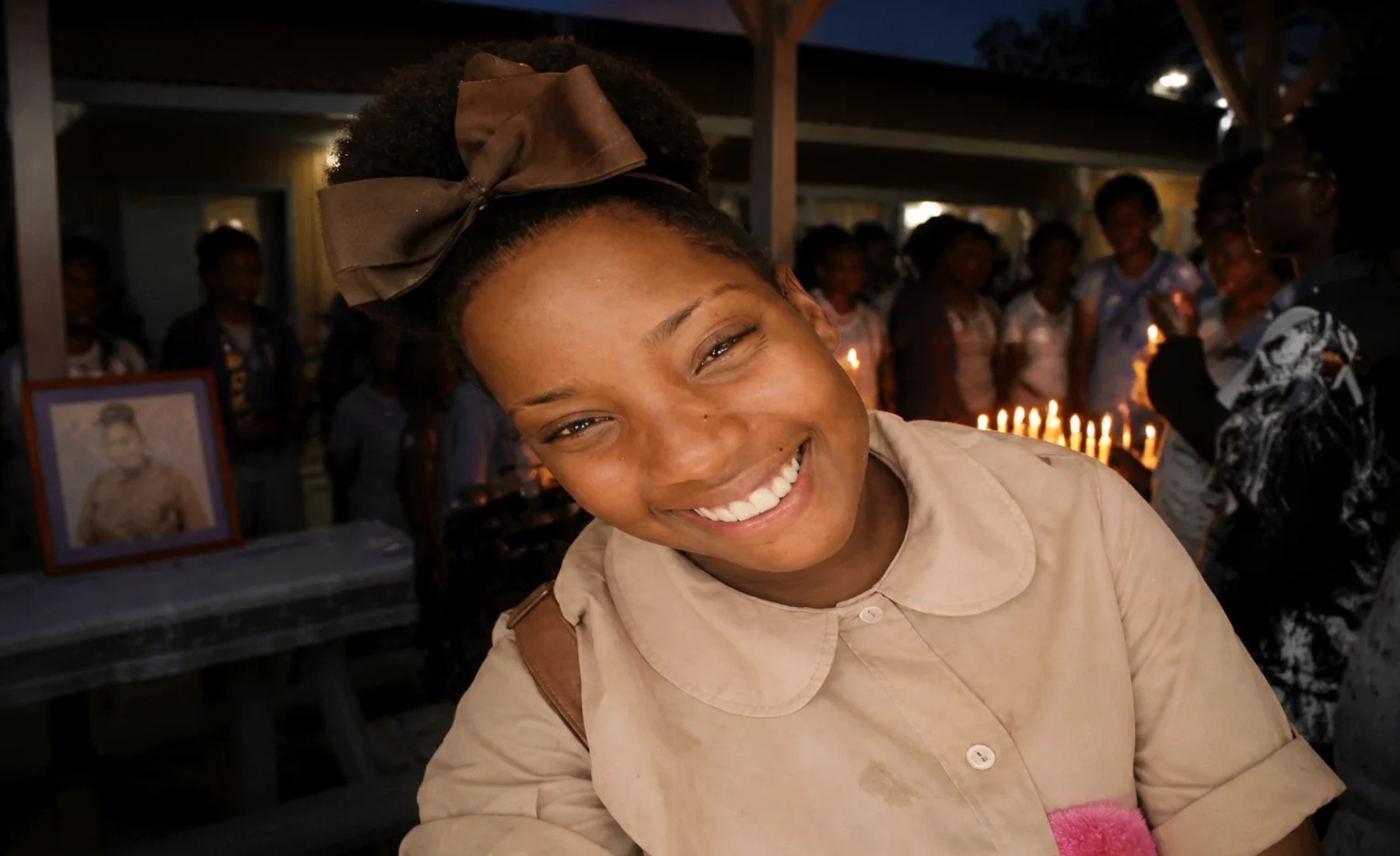


The Girl from Keys Village
Leanna Mary Antoinette "Tiney" Napoleon was known by friends as a bright and hardworking 17-year-old high school student. In the spring of 2017, Leanna was in fifth form (her senior year) at Basseterre High School on the island of St. Kitts. She was preparing for her CXC exams – crucial school-leaving tests that May. Despite recently losing her mother in 2015, Leanna had remained focused on her studies and showed no signs of distress or depression. In fact, friends and teachers described her as a normal, upbeat teenager.
She lived in Keys Village with an adoptive guardian, a family friend who took her in after her mother's death. Though separated by living arrangements, Leanna still kept in touch with her maternal half-brother, Brandon Lee Wells, who was a couple of years older.
Brandon, 19, continued to reside alone at their late mother's house in Buckley's Estate on the outskirts of Basseterre. Tensions had brewed in that household over the past year – sibling disagreements over the family home and belongings – but nothing that gave any open indication of what was to come.
The Day of Exams
Monday, May 8, 2017 was the first day of CXC exams, and Leanna arrived at Clarence Fitzroy Bryant College in the capital city to sit her Electronic Document Preparation & Management exam.
By early afternoon, having finished her test, Leanna headed into downtown Basseterre. She had some personal errands to run that day. According to later reports, she planned to meet up with a relative – her uncle – to collect an envelope of money related to the recent sale of a family vehicle.
Around midday, Leanna was indeed spotted in the Buckley's area, presumably seeking out this uncle at his workplace. When he wasn't available, arrangements were made to meet later in town. By the afternoon, Leanna met her uncle on busy Fort Street, where he handed her an envelope containing the proceeds meant for her. It was a routine family transaction – nothing out of the ordinary for a teenager handling family business after a parent's passing.
Envelope in hand, Leanna still had one more stop that day. She had mentioned needing to swing by her brother Brandon's house in Buckley's Estate to pick up something important. Some friends later said it was a cell phone she needed to retrieve. Others heard it was to drop off part of the car-sale money. Either way, Brandon's house was along her way home.
Knocking on Brandon's Door
A schoolmate and close friend, Nabylla Huggins, accompanied Leanna on the walk to Brandon's place that afternoon. They took the short trek from the busier town area to Buckley's Estate, arriving at the modest family house where Brandon lived. It was likely sometime after 1:00 p.m.
When the two girls knocked on the door, Brandon wasn't there. Instead, another young man, Travien "Trigga" Liddie, was inside the house and answered. Travien was a 18-year-old friend of Brandon's who hung around often. He told them Brandon wasn't home at the moment. Finding the door locked and no brother in sight, Leanna and Nabylla left, a bit annoyed, and walked back out to the street. But Leanna was determined to get her phone (or complete her errand) that day.
The pair returned to the house a second time a little later, hoping to catch Brandon at home then. Once again, Brandon was nowhere to be found, and only Travien Liddie was seen around the property. After this second failed attempt, Nabylla had to leave for her own home. She last saw Leanna around 2:00 p.m. near the house, where they parted ways. Leanna was presumably intending to stick around until her brother showed up. That was the last time any of Leanna's friends would see her alive.
A Teenager Vanishes
That evening, Leanna never returned home to Keys Village. By 6:00 p.m., her guardian (sometimes described as her adoptive mother), Ms. Yvette Greaux, grew worried when the usually responsible teen hadn't checked in. Calls to Leanna's cell phone went unanswered – straight to voicemail. As night fell with still no word from Leanna, her family's fear swelled.
This was entirely out of character. Leanna was a minor with important exams the next day; an unexplained absence was alarming. Ms. Greaux and other relatives reached out to Leanna's friends, but no one had seen her since that afternoon. Frantic calls were made. By midnight, a nightmare was beginning: Leanna Napoleon was missing.
Early on Tuesday, May 9, 2017, the Royal St. Christopher and Nevis Police Force was notified that Leanna Napoleon had disappeared. Brandon Wells, Leanna's half-brother, personally went to the Basseterre Police Station to report his sister missing. He spoke with officers and gave what information he could: Leanna had been last seen the previous day in town and around Buckley's, and she hadn't come home.
Over the next few days, Brandon repeatedly contacted the police, calling for updates on the search for Leanna. At first glance, the 19-year-old brother appeared to be a concerned sibling desperately trying to find his little sister. In fact, one policewoman, WPC Maisha Liburd, later noted that Brandon was unusually persistent – checking in with investigators frequently, as if nervously monitoring their progress. It was enough to raise a red flag in her mind. But in those early days, everyone's focus was on finding Leanna safe and alive.
Word spread quickly through the small island nation that a teenage girl was missing. St. Kitts and Nevis is a tight-knit federation of roughly 55,000 people – a place where news travels fast and community ties run deep. The idea that a 17-year-old could vanish into thin air in broad daylight unsettled many. Search parties were organized almost immediately.
Police and Defense Force soldiers teamed up with family members, friends, and volunteers to comb through the areas where Leanna might have gone. They scoured the dense brush and cane fields around Buckley's Estate, retraced paths to Keys Village, and searched every nook they could think of. Day after day, no trace of Leanna turned up. Not a single item of her clothing or her school backpack; nothing. It was as if she had evaporated after 2 p.m. on May 8.
"Please, For God's Sake Go Home"
As the days turned into a week and then two, concern grew into dread. The community refused to give up, though. Candlelight vigils were planned. At Basseterre High School, where Leanna should have been sitting her remaining exams alongside her classmates, an atmosphere of anxiety hung over the campus. The Ministry of Education dispatched guidance counselors to help Leanna's classmates cope with the stress and fear during their CXC tests.
The school's principal, Mr. Maurice Benjamin, spoke publicly about how troubling the situation was for students and teachers alike. "We prayed for her and have asked all students to keep Leanna in their prayers," he said at an emotional press conference, urging anyone who knew something to come forward. Leanna's best friend was reportedly distraught, and many teens struggled to concentrate on exams while their friend's fate was unknown.
The principal also lamented that the old adage "it takes a village to raise a child" seemed to be fading – implying that if people had been more watchful or willing to intervene, a tragedy might have been averted. It was a poignant reflection of the community soul-searching that was happening as the mystery dragged on.
Local media kept Leanna's story in the headlines. Appeals for information were broadcast on radio and printed in newspapers. Even the political leaders joined the call. On May 16, former Prime Minister Dr. Denzil Douglas used his weekly radio program to deliver a heartfelt plea directly addressing Leanna, as if hoping she might hear it somehow. "Please, for God's sake go home," Douglas implored, "your family members are deeply troubled and the citizens of St. Kitts and Nevis are concerned about your safety".
He also spoke to any who might be responsible for her disappearance: "If she is no longer of this world… please bring some information to the family or the police, so there can be some closure". It was a rare public appeal that acknowledged, aloud, the worst fear – that Leanna might have met a violent end. Yet, even as he voiced it, everyone was clinging to hope that the teen could still be found alive.
By late May, there were rumors swirling around the case. On such a small island, speculation was inevitable. One persistent rumor claimed Leanna had last been seen with an uncle on the day she vanished. To clear the air, a press conference was convened by the police and Ministry of Education on May 22. There, Education Minister Shawn Richards emphasized the government's deep concern and warned the public against spreading unverified gossip.
Investigators clarified certain facts: yes, Leanna had met an uncle on May 8 in Basseterre – but that was earlier in the day, and police had confirmed that the uncle was not involved in her disappearance. In truth, according to Sergeant Lyndita Powell of the Special Victims Unit, the last confirmed person to see Leanna that afternoon was her own half-brother, Brandon.
Sergeant Powell revealed that Leanna was last seen in the company of her brother, when she went to him to collect an envelope of cash from the sale of a vehicle. This disclosure was chilling for those listening – it subtly shifted suspicion close to home. Still, at that point Brandon had not been formally accused of anything. He continued to present himself as a worried brother cooperating with the search.
Eyes on Brandon
Behind the scenes, however, police were indeed casting an uneasy eye on Brandon Wells. WPC Liburd's suspicions about his behavior led investigators to bring Brandon in for questioning on May 12, just four days after Leanna went missing. In fact, they held him in custody for about three days that week. During that time, they seized his iPhone 6 for forensic analysis, hoping it might contain clues – like suspicious texts or location data. The young man was grilled about his sister's activities and his own whereabouts on May 8.
But with no body, no crime scene, and only circumstantial hints, the police had to release Brandon on May 15 pending further inquiries. They simply had nothing concrete to tie him to a crime – not yet. Likewise, other individuals who were close to Leanna were interviewed. This likely included Travien Liddie and others in the Buckley's neighborhood. All were let go as the case stalled. One detective later remarked that "a number of individuals" were taken into custody early on but ultimately released for lack of evidence. Leanna was still missing, and the trail was agonizingly cold.
In a bid to shake loose any information, the police and Leanna's family turned to the public for help. On May 17, the government announced a reward of $25,000 East Caribbean Dollars (about $9,300 USD) for any tip that could lead to Leanna's safe return.
That was a substantial sum in St. Kitts and Nevis – a sign of just how desperate the situation had become. "If you have heard something, please call the police," implored Assistant Commissioner of Police Andre Mitchell, underscoring that concerned citizens had pooled funds to bring Leanna home. Flyers with Leanna's photo and description were posted everywhere: 5'5" tall, brown complexion, medium build, long black hair. The community held its breath as days turned into weeks.
37 Days
Yet, no credible leads emerged. It was as if the earth had swallowed this girl whole. By early June 2017, more than four weeks had passed without a trace. The frantic energy of the initial search began giving way to a gnawing grief. Officials and family members were by now privately bracing for the worst. Still, they persevered.
On June 8, nearly one month on, the Ministry of Education convened another press briefing – this one described by the Permanent Secretary as an "emotional appeal" for the teen's safe return. Principal Benjamin spoke again, voice cracking, urging "please, anyone knowing anything about Leanna, inform the police". At the Basseterre High School graduation and prize-giving ceremonies, an empty chair or a moment of silence was likely kept for Leanna. Her peers finished their exams not knowing why one of their own had vanished at the starting line.
Then, in mid-June, just when hope was nearly lost, a breakthrough came from a most unexpected source. A young man stepped forward – someone who had been keeping a terrible secret. His name was Judanja "Junior" Edmeade. Junior Edmeade was a friend of Brandon's who had actually been living at the Wells family house as a paying roommate since December 2016.
This meant he was around Brandon frequently and knew Leanna as well. In fact, Edmeade had been present at the house on May 8, the day Leanna disappeared – but he had not told police the full story of what he knew. For five weeks, Edmeade had stayed silent, likely out of fear for his own safety or conflicted loyalty. But by June 14, with the search intensifying and his conscience burdened, Junior Edmeade decided to talk.
A Shallow Grave on Olivees Mountain
That day, Edmeade led a team of police officers to a secluded, overgrown area in the Buckley's region known as Olivees Mountain. It's a remote hillside south of Basseterre, lush with tropical shrubbery and far from any main roads – the kind of place one would choose if trying to hide something heinous. Edmeade guided officers to a spot where the ground looked disturbed.
When investigators began to dig, it didn't take long to find what Edmeade had promised was there: human remains. About four feet down, they uncovered the partially decomposed body of a young female, still clad in a blue Basseterre High School uniform and wrapped in a striped bedsheet. The scene was documented with photographs as officers carefully extracted the remains. The body was then transported under police escort to a local funeral home.
Later that night, Leanna's guardian, Ms. Greaux, was brought in to identify the body. One can hardly imagine the anguish of that moment. At the funeral home, she was shown the remains and the clothing. Despite the decomposition, the guardian positively identified the body as Leanna Napoleon. The five-week nightmare had ended in the worst possible way – not with Leanna coming home safe, but with confirmation of her brutal murder.
Blunt Force and Suffocation
A post-mortem examination by forensic pathologist Dr. Valery Alexandrov soon revealed just how vicious Leanna's killing had been. The autopsy concluded that Leanna died from a combination of severe blunt force trauma to the head and suffocation. Her skull had been crushed by multiple blows – struck repeatedly on both sides of her head and forehead, with such force that bone fragments penetrated her brain.
The injuries caused massive bleeding inside her skull. In addition, the examiner found a chilling detail: a pair of men's boxer shorts had been shoved deep into Leanna's throat, blocking her airway. She had essentially been stuffed and smothered after being bludgeoned. The level of violence was shocking, especially against a 17-year-old girl. It spoke of rage – a personal motive – rather than any random attack.
With Leanna's body recovered, the missing-person case now transformed into a homicide investigation. And in a macabre sense, at least now the truth could begin to emerge. Investigators turned immediately to Junior Edmeade, the man who led them to the grave. On June 15, the day after the discovery, Edmeade provided police with a detailed statement – effectively a witness confession – laying out everything he had seen and heard on May 8. What he described was almost unbelievable: a cold-blooded murder plot carried out in broad daylight by people close to Leanna.
"I Will Kill Her Today"
According to Edmeade's statement (which would later be read in court), Leanna's own brother Brandon Wells had been planning to kill her for months. The siblings had a long-standing acrimonious relationship from childhood, which worsened after their mother died. They were fighting over the family house – Brandon resented Leanna's "frequent visits" to the home and believed she was "stirring up confusion" about who would own or control it.
In Brandon's mind, Leanna (possibly influenced by her guardian) wanted to take the house away from him, and he wasn't going to let that happen. At some point, twisted by paranoia and greed, Brandon decided his half-sister had to die. He reportedly voiced this intention multiple times to his roommate Edmeade in the months leading up to May 2017. Edmeade recalled that on numerous occasions between December 2016 and May 2017, Brandon said he wanted to "get rid of" Leanna for good. Edmeade always brushed it off or tried to dissuade him, but Brandon's hatred only festered.
The day of murder, May 8, began with a chilling declaration. Edmeade recounted that on that Monday morning, as Leanna headed off for her exam, Brandon told him flat-out: "I will kill her today." Edmeade thought (or hoped) it was bluster and tried to talk him out of such madness, but Brandon was resolute.
Leanna, unaware of any danger, went about her exam and errands as we described earlier. She eventually arrived at Brandon's house that afternoon. Edmeade's timeline dovetails with Nabylla's account: Edmeade wasn't home when Leanna first came by, but by around 3:00 p.m., Edmeade returned to the house from his day's work.
The Sounds Upstairs
Strangely, he found the place locked up tight – windows shuttered, doors bolted – as if nobody wanted him to enter. When he tried to go inside, Brandon intercepted him at the door and barked at him "do not come inside."
This was highly unusual. Brandon essentially blocked his roommate from entering his own home. Sensing something was off, Edmeade retreated downstairs, joining another mutual friend nicknamed "Chineyman" who had just shown up. (This friend was Ivan "Chineyman" Phillip, a 19-year-old acquaintance of Brandon's from the neighborhood.)
As Edmeade and "Chineyman" sat downstairs, a disturbing commotion erupted on the locked upper floor. They heard thumping, pounding noises, scuffling footsteps – the sounds of a violent struggle taking place. This alarming cacophony continued for nearly an hour, coming mostly from the direction of the bathroom upstairs. At one point, Edmeade could distinctly make out the sound of a female voice gasping and choking, which sent a chill through him. He crept closer to the base of the stairway, trying to discern what was happening.
It was then that Brandon suddenly emerged from the upper floor, closing the door behind him, and hurried down to Edmeade. His clothes may have been disheveled or stained – one can imagine Edmeade's eyes widening at Brandon's appearance. Brandon was in a rush and on a mission. He told Edmeade to go buy cleaning supplies and a mop, immediately. There was an intensity in his voice that brooked no argument. Edmeade understood in that moment what must have transpired: Brandon had done the unthinkable upstairs.
Bleach and a Borrowed Car
Following instructions, Edmeade grabbed the keys to a vehicle that Brandon had earlier borrowed from a friend and drove to a nearby ValuMart grocery store. He purchased bleach, cleaning agents, and a mop – items that ominously signaled a crime scene cleanup in progress.
When Edmeade returned to the house with these supplies, he found Brandon and Travien Liddie still inside. Through the open door, Edmeade glimpsed a shocking sight: he saw Travien in the house, and in the bathroom area there was blood. Lying on the bathroom floor, he later recounted, was Leanna's limp body – apparently lifeless.
It's unclear if Edmeade stepped inside at all, but he handed over the cleaning items at the doorway. At that point, Brandon and Travien took charge. They had murdered Leanna and now needed to dispose of evidence – and the body.
With dusk approaching on May 8, Brandon told his two companions they needed to find a place to hide Leanna's remains. He decided on going "to the mountain" – the remote Olivees Mountain area – to bury "Tiny" (using Leanna's nickname). Edmeade and "Chineyman" Ivan Phillip helped as directed. The gruesome task unfolded methodically: Brandon and Travien wrapped Leanna's body in large white garbage bags and then in a bedsheet.
Brandon fetched a length of rope to tie the sheet securely around her. They also gathered a shovel. Brandon then ordered Edmeade to bring the car around. Under cover of darkness, the four young men – Brandon, Travien, Ivan, and reluctant witness Edmeade – carried Leanna's wrapped body out of the house and placed it in the trunk of the borrowed car. They drove in convoy up into the secluded hills. One can imagine the silence in that car – the terror and disbelief Edmeade must have felt as he gripped the steering wheel, following Brandon's directions to a lonely spot on Olivees Mountain.
Under the night sky, by the beams of headlights, they dug a grave as best they could in the rocky soil. They made it about four feet deep. There, they laid Leanna to rest in a hastily dug pit, covering her with earth and vegetation. Secrecy was paramount; they chose a spot far from any trail. When it was done, the group returned to the house on Buckley's Estate to finish cleaning up the bloodstained crime scene. They wiped surfaces, likely scrubbed the bathroom, and removed any obvious evidence. But some clues would remain – some bloodstains and items that investigators would later seize, tying Brandon's home to the murder.
Before that night ended, Brandon Wells pulled Edmeade aside. Looking him dead in the eye, Brandon issued a stern directive: if police ask, give me an alibi. He instructed Edmeade to tell authorities that Brandon had been with him at Edmeade's workplace on the afternoon of May 8.
In other words, lie to the cops to cover Brandon's absence during the time of Leanna's disappearance. Edmeade, terrified and complicit, agreed. Brandon also mentioned he would be reporting Leanna missing to police the next morning (which he did on May 9). He was already crafting their cover story even as his sister's body lay buried in the hills.
The horrifying truth, as detailed by Edmeade and corroborated by other evidence, was that Leanna Napoleon was murdered by her own brother and his friend on the afternoon of May 8, 2017. The motive: a poisonous mix of resentment and greed over a piece of family property. Brandon's plan had been premeditated – he lured Leanna to the house under the pretext of giving her something (a phone or money), and with Travien Liddie's help, ambushed her.
According to Brandon's later confession, Travien grabbed Leanna in a chokehold from behind while Brandon struck her head multiple times with a hammer. Leanna never stood a chance. After the brutal blows, perhaps to stop her from screaming or ensure she was silenced, they crammed the boxer shorts down her throat, causing her to suffocate. The sheer cruelty inflicted on this defenseless girl – by the brother she trusted enough to visit alone – is difficult to fathom.
Arrests
Now, thanks to Edmeade's information, the carefully staged cover-up unraveled in an instant. Within hours of finding Leanna's body, police moved to arrest the culprits. The very same night of June 14, 2017, Brandon Wells was taken back into custody. This time, it was no mere questioning; he was now the prime murder suspect.
On Saturday, June 17, 2017, police formally charged the 19-year-old Wells with the murder of his sister. The public learned of this with shock. The idea that Leanna's own brother had been behind her disappearance all along was almost too much to bear. Many recalled seeing Brandon on the news, seemingly worried, asking for help – all the while knowing he had killed her. It was a gut-punch to the community. "To the shock and horror of the public," news outlets reported, her brother Brandon was arrested for the crime.
Two days later, on June 19, police also arrested Travien Liddie, age 18, as Brandon's accomplice. Liddie was charged with murder and with attempting to pervert the course of justice (for his role in the cover-up). Meanwhile, investigators had identified Ivan "Chineyman" Phillip – the fourth person involved – who had helped bury the body. Phillip, 19, evidently caught wind that his name was out and promptly went into hiding. An arrest warrant was issued for him soon after. Weeks turned to months without Phillip in custody. There were rumors he'd fled the island.
It wasn't until two years later, in June 2019, that Ivan Phillip surrendered to authorities and was promptly charged – not with murder, but with being an accessory after the fact to murder. He eventually pleaded guilty to that lesser charge, admitting he helped dispose of Leanna's body.
In September 2019, Phillip was sentenced to five years and nine months in prison for his role. The judge took into account his young age, remorse, lack of prior convictions, and the fact that he wasn't involved in the killing itself. With time served deducted, Phillip would likely serve only a few years – a relatively light punishment, reflecting his peripheral (though still reprehensible) involvement.
Back in 2017, with Wells and Liddie behind bars awaiting trial, the community began grieving and trying to heal. Leanna's school organized a candlelight vigil on June 21, 2017 – hundreds gathered on the Basseterre High grounds, holding candles in tearful tribute to a young life cut short. Friends and teachers shared memories of "Tiney" – a bright smile, a hardworking student who had hoped to graduate and pursue her dreams.
On June 26, 2017, Leanna was laid to rest in a funeral at the Zion Moravian Church. Mourners packed the church, including government officials, classmates in uniform, and even the investigators who had worked her case. There was an outpouring of heartbreak and outrage: heartbreak for Leanna's senseless death, and outrage that those responsible were her own flesh and blood. As one resident put it, "This one really shook the nation… How could a brother do this?"
The Trial
Legal proceedings took time, as they often do. In St. Kitts and Nevis, serious crimes are tried in the High Court before a judge and jury. Brandon Wells and Travien Liddie both pled not guilty to the charges of murder and attempting to pervert justice, forcing the case to trial. It would be more than two years before they had their day in court.
Finally, in the fall of 2019, the trial "The Director of Public Prosecutions v. Brandon Lee Wells and Travien Liddie" commenced. Justice Trevor Ward, QC presided over the case, and a 12-member jury was empaneled. The prosecution was led by Valston Graham, the Director of Public Prosecutions, with Teshaun Vasquez assisting.
The defendants had their own attorneys: veteran lawyer Chesley Hamilton for Wells, and Natasha Grey (with Mikhail Charles) for Liddie. It was poised to be one of the most high-profile trials in recent memory on the island, given the sensational family dynamics and brutality involved.
The trial opened on September 30, 2019, and lasted about two weeks. During that time, the jury was presented with a range of evidence that painstakingly reconstructed the events surrounding Leanna's death. Key witnesses took the stand.
Among them was WPC Maisha Liburd, who recounted Brandon's odd behavior during the missing-person investigation, including his repeated check-ins that raised her suspicions. Friends of Leanna likely testified about seeing her on May 8 – such as Nabylla Huggins describing how she accompanied Leanna to Brandon's house and last saw her at 2:00 p.m..
Crucially, the jury heard from forensic officers who searched Brandon's house after the arrests. They testified that they found telling items: for example, pillowcases that matched the patterned sheet in which Leanna's body was found, and a box of large garbage bags identical to the ones wrapping her body.
Even without DNA or blood evidence (five weeks in the elements likely degraded most forensic traces), these matching items were damning – they directly linked the burial wrappings to materials in Brandon's home.
The pathologist, Dr. Alexandrov, likely presented the autopsy findings, detailing the hammer blows and suffocation that caused Leanna's death. Though gruesome, this testimony highlighted the ferocity of the attack and helped establish intent to kill (critical for a murder conviction).
Confessions in Court
Perhaps the most compelling evidence, however, came from the defendants' own words – their confessions and statements given under caution. Police officers testified that after Leanna's body was found in June 2017, a remorseful Brandon Wells broke down and confessed while in custody.
They had brought in Major Roxroy Campbell – a Salvation Army minister and volunteer probation officer – to witness the interrogation, hoping his presence might encourage honesty. In that session, Brandon verbally admitted (though he refused to sign a written statement) that he had indeed harbored hatred toward his half-sister for years.
He told officers that after their mother died, the feud over the house drove him to plan Leanna's murder. According to the officers, Brandon calmly described how he executed the plan: he said Leanna had come to his home to get an iPhone, and while she was there, Travien Liddie suddenly grabbed her from behind in a chokehold, and Brandon then struck her head with a hammer five times.
He admitted they wrapped up her body and buried her in the mountains with help from the others. The motive, he conceded, was that he felt Leanna "wanted to take control of the house" and he had to stop her. This oral confession, though unsigned, was recounted in court by the police witnesses.
The jury also learned of Travien Liddie's statement. Unlike Brandon, Travien actually wrote out a statement himself on June 19, 2017, in the presence of Major Campbell and police. In it, Travien admitted being present during the killing and helping after, but he downplayed his role. He claimed that when he arrived at the house, he found Leanna already dead on the floor. He said he left briefly to buy cigarettes (an odd choice amidst chaos) and returned to assist Brandon with cleaning and disposing of the body.
Travien asserted he only participated because Brandon threatened to kill him if he didn't. Essentially, he painted himself as a reluctant accomplice acting under duress and not an active murderer. This self-serving account conflicted with Brandon's version (where Travien was the one restraining Leanna during the murder), but it still placed Travien squarely at the scene and involved in the cover-up.
But what about the man who wasn't in the courtroom? Junior Edmeade, the star witness, was nowhere to be found when the trial rolled around. In a startling twist, Edmeade had left the country in July 2017, just a month after leading police to the body. By 2019, he was not available to testify in person – perhaps he fled out of fear of retribution, or simply chose to start anew elsewhere after revealing the truth.
As a result, the prosecution had to rely on Edmeade's deposition – the sworn statement he gave to police – as evidence. In court, Edmeade's statement was read aloud to the jury in lieu of live testimony. This was a delicate matter, since the defense couldn't cross-examine Edmeade to probe for inconsistencies. The judge instructed the jury to approach such unchallenged evidence with caution. Nevertheless, Edmeade's statement was detailed and devastating.
He confirmed everything: Brandon's months of threats, the choking and hammer blows he overheard, the errand for cleaning supplies, the burial trip, the planned alibi – all of it. Edmeade's account aligned perfectly with the physical evidence and the defendants' own admissions, lending it great credibility.
The defense teams did what they could in face of this mountain of evidence. Brandon's lawyer, Chesley Hamilton, vigorously challenged the alleged confession, arguing that it was a false concoction by police. Hamilton suggested that investigators already had the story from Edmeade and essentially fed Brandon a narrative to sign, which he didn't. He emphasized that the confession wasn't signed by Brandon – only by the witnessing officers – insinuating it could have been fabricated.
The defense also pointed out the lack of "scientific" forensic evidence directly tying Brandon to the crime (for instance, no DNA, no fingerprints on a murder weapon). It's true the case was largely circumstantial, albeit very powerfully so. Hamilton tried to instill doubt: Could it be that Brandon was being framed or scapegoated by others? Could Edmeade and Travien have plotted something? These theories were not very convincing in light of the facts, but it was his job to raise alternative scenarios.
Travien Liddie's lawyer took a slightly different tack: her goal was to distance Travien from intent to murder. Since Travien had admitted involvement but claimed coercion, Natasha Grey likely argued that Travien never wanted Leanna dead. She might have stressed that Travien was young (only 18) and under the sway of the older, domineering Brandon. The defense highlighted Travien's written statement in which he denied actively killing Leanna, admitting only to helping under threat.
If the jury believed Travien's account, they might acquit him of murder and see him as at most an accessory under duress. However, the prosecution countered that Travien's presence and assistance were no accident – he had been part of the plan from the start. They pointed to evidence like Nabylla seeing Travien at the house when Leanna arrived (implying he was lying in wait with Brandon) and Edmeade hearing the struggle (which suggested two attackers). In essence, they argued Travien was a full participant, not a bystander.
Neither defendant took the stand in his own defense – a common choice in criminal trials, as they have the right to remain silent. Nor did they call any witnesses to rebut the prosecution's case. So the jury was left with the prosecution's evidence mostly unchallenged, aside from lawyers' arguments. As the trial concluded, Justice Trevor Ward, QC carefully summed up the case for the jurors. He reminded them that much of the Crown's case hinged on the admissions by the accused and Edmeade's statement.
He instructed the jury to scrutinize those admissions: were they truly made, and were they truthful? He also likely explained the law: that to convict of murder, they must find intent to kill or cause grievous harm, and that each accused's guilt must be considered separately. The judge cautioned them, especially regarding Edmeade's second-hand evidence, to consider whether it was reliable and supported by other facts.
Guilty
The jury didn't need long. On October 11, 2019, after less than three hours of deliberation, they returned with their verdicts. The courtroom held its breath as the clerk read them out. Brandon Lee Wells: Guilty of Murder. Guilty of Attempting to Pervert the Course of Justice. The verdicts were unanimous on both counts.
Then for Travien: Travien Liddie: Guilty of Attempting to Pervert the Course of Justice (Unanimous). Guilty of Murder (by an 11-1 majority). One juror had a lingering doubt on the murder charge for Travien, but at least eleven were convinced, which under St. Kitts law is sufficient for conviction. Both young men, now around 21 years old, stood quietly as the reality set in – they were now convicted murderers, and their fate was in the hands of the judge.
Outside the courthouse, there was a sense of vindication and relief among Leanna's family and the public. Justice had been a long time coming – two and a half years since Leanna went missing – but it had arrived. Assistant Commissioner of Police Andre Mitchell applauded the collaborative work of the police and the DPP's office in cracking the case.
He specifically praised the detectives for going "beyond the call of duty" in pursuing justice for Leanna. Indeed, their dogged persistence had paid off. The ACP also made a statement urging the community to look out for one another, to protect especially the vulnerable among us from harm. His words echoed the earlier sentiment that everyone has a role in preventing such tragedies.
Life Behind Bars
After the trial, attention turned to sentencing. In St. Kitts and Nevis, murder is a capital offence – by law it carries a possible death sentence (hanging) under the Offences Against the Person Act. However, Caribbean jurisprudence and the Constitution have, in practice, made the death penalty discretionary and reserved for the "worst of the worst" cases. It is not mandatory, as courts must consider mitigating factors to avoid inhuman punishment.
The Eastern Caribbean Supreme Court's guidelines say that only the rarest of rare murders merit death. Still, given the horrific nature of Leanna's killing, the Director of Public Prosecutions announced his intention to seek the death penalty for both Wells and Liddie after their conviction. This news made headlines, as executions are extremely rare in the Federation (the last execution occurred years earlier).
Justice Trevor Ward, before passing sentence, ordered Social Inquiry Reports and psychiatric evaluations for both convicts. These reports would delve into their backgrounds, mental health, and prospects for reform – all factors to weigh for sentencing.
The process took time, partly because Travien Liddie was reportedly uncooperative with the psychiatrists, causing delays in completing the assessments. Finally, on November 6, 2020, the court reconvened for sentencing – more than a year after the verdict. By then, both men had sat in prison, contemplating their actions (Brandon would have turned 22, Travien 21).
In the end, Justice Ward decided that the death penalty was not appropriate for this case. Instead, he handed down life imprisonment to the mastermind, Brandon Wells. For Travien Liddie, the judge showed a measure of leniency, acknowledging that Travien was younger and possibly less culpable in initiating the crime. Travien received a sentence of 30 years imprisonment for the murder.
The judge essentially staggered the punishment to fit the roles: Brandon, the half-brother who betrayed his sister and led the plot, would likely spend the rest of his natural life behind bars; Travien, the friend who went along with the evil plan, would have a chance at freedom in his late forties, after serving three decades (depending on parole provisions).
Additionally, both men received 5-year prison sentences for the charge of attempting to pervert the course of justice (for hiding the body and lying to police).
Leanna's Legacy
Leanna's name is remembered in her community. Her classmates graduated and went on with life, but they have not forgotten their friend "Tiney." Each year around the anniversary of her death, many recall the bright girl who should have been celebrating her 20s along with them.
In a commentary on the first anniversary of her body's discovery, a local media house grimly noted that five other women and girls in the country had been murdered in the year after Leanna's death, underscoring a worrying trend of violence. Leanna's case thus became part of a broader conversation about protecting women and children in the Federation.
In the end, the legacy of the Leanna Napoleon case is a cautionary tale writ large. It's a story of how unchecked hatred can destroy a family, how silence and fear can enable evil, and how a community's love can rally to demand justice even in the face of horror.
Leanna Napoleon's life was short, but in death she touched an entire nation's conscience. Through the diligent work of investigators and the courage of a key witness who finally spoke up, her killers were unmasked and punished. The island of St. Kitts will not soon forget the high school girl who went missing one May afternoon, and whose own brother's dark secret took nearly 37 days to finally come to light.
Primary reporting and references
- Director of Public Prosecutions v Wells and Liddie
vLexOct 11, 2019
- Leanna Napoleon's Murder: Life Sentence, 30 Years Imprisonment Handed Down
The Labour SpokesmanNov 09, 2020
- Principal of the Basseterre High School Speaks on Missing Student
SKNVibesMay 10, 2017
- Two Men Charged with Murder of 17-Year-Old Leanna Napoleon
- Wells and Liddie Convicted in Leanna Napoleon Case
- CXC Students Worried About Missing Teen Get Counselling
- Brandon Wells, Travien Liddie Guilty of Leanna Napoleon's Murder
Buckie Got ItOct 11, 2019
- Reward of $25,000.00 Offered for Information in Missing Person Case
Freedom SKNMay 12, 2017
- One Sentenced in Leanna Napoleon Murder Case
- Wells and Liddie Convicted in Leanna Napoleon Case
SKNISOct 14, 2019
Related episodes
The Doting Father
An ordinary father hides an unimaginable crime behind the door of his Singapore home.
The Emilie Meng Murder Solved
A teenager vanishes after leaving a train, and a second abduction cracks the case seven years later.
What Happened to Jasmina
A missing woman's family claims she moved abroad until her body is found much closer to home.