


A Future Cut Short
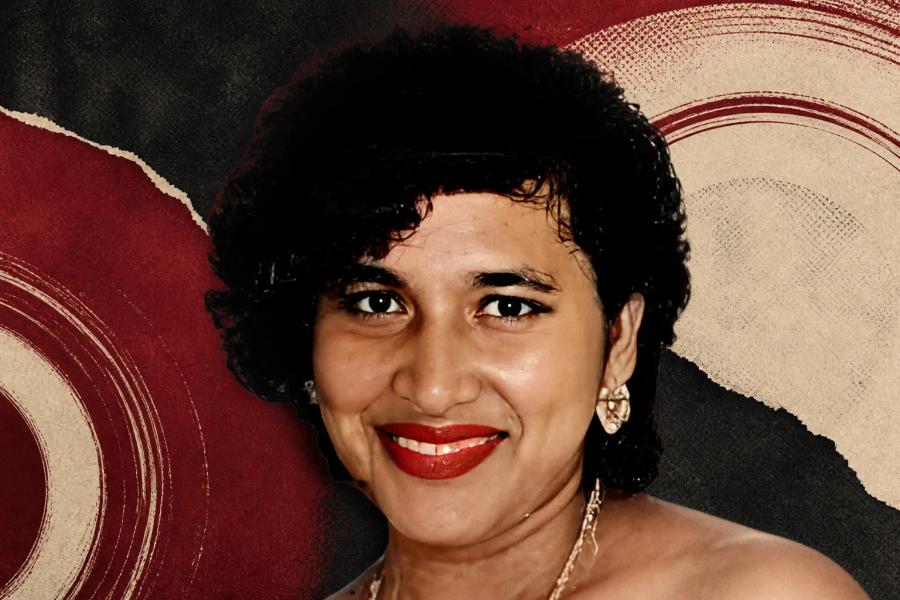
Namgay Dolkar was a bright, ambitious 24-year-old woman living with her family in Thimphu, Bhutan's serene mountain capital. She had an easy smile and big plans on the horizon – a trip to Nepal with a close friend scheduled for September, and even long-term dreams of going to Australia to study or work.
The Number You Have Dialed
By all accounts, Namgay was full of life and looking toward the future, not someone anybody would ever suspect of suicidal intent. So when she didn't come home on the night of Sunday, August 13, 2023, her father knew something was wrong. That Sunday evening, around 5:30 PM, Singye Wangchuk had watched his daughter leave their house in the NPPF Colony neighborhood of Thimphu.
She said she was going out, but, unusually, she hadn't specified where or with whom. As night fell and Namgay still hadn't returned, Singye's concern turned to alarm. He stayed up all night trying to call her cellphone over and over, but each time he was met with the same dread-inducing message: "The number you have dialed cannot be reached." Hour after sleepless hour, the phone went unanswered. By dawn, Namgay's family was living every parent's nightmare.
The Married Boyfriend
First thing the next morning – Monday, August 14 – Singye rushed to the Royal Bhutan Police to file a missing person report. Thimphu is not a large city, and Bhutan is a tight-knit society; it's the kind of place where disappearances are taken very seriously.
The police immediately began piecing together Namgay's last known movements. They obtained her phone records, hoping for clues. Sure enough, the last outgoing calls from Namgay's phone had all been to one number, belonging to a 39-year-old businessman named Sonam Norbu. This detail stood out starkly. Sonam was not a family member or known close friend – he was, as it turned out, a married man with children who was allegedly involved in a secret romantic relationship with Namgay.
Hotel Football
In other words, he was Namgay's lover, and perhaps a forbidden one at that. With this revelation, what had simply been a missing person case took a darker turn in the minds of the investigators. Could this older, married boyfriend know more about her disappearance than he was letting on?
Police lost no time in contacting Sonam Norbu. That same day, August 14, they summoned him for questioning. At first, Sonam appeared cooperative and struck a sorrowful tone, portraying himself as a concerned friend. He admitted to officers that he knew Namgay – in fact, he eventually confessed that he and Namgay had been having an affair, despite him being married with a family.
But when asked about the previous night – the night Namgay went missing – Sonam was adamant that he hadn't actually seen her. He told the police that Namgay had wanted to meet him on Sunday evening, so he'd dutifully booked a room at a local hotel (a place called Hotel Football, of all names) for a private rendezvous, expecting to see her.
The Toyota Prado
But, according to Sonam, Namgay never showed up. He claimed he waited around, and when she stood him up, he canceled the reservation and went about his evening elsewhere. To hear him tell it, he was disappointed and a bit confused at being stood up, but certainly had no idea what happened to her.
It was a neat little story, and for a brief moment it might have given the police pause – could it be true? Had Namgay arranged to meet Sonam and then changed her mind, possibly going somewhere else? Sonam even had proof of the hotel reservation: records showed he booked a room at 12:08 PM on Sunday and canceled it at 5:12 PM that evening.
Perhaps he offered that as evidence of his honest intentions. If he was telling the truth, it would mean Namgay went missing after failing to meet him, implying something could have happened to her on her own. Perhaps, as Sonam hinted to the police, Namgay had other plans. In fact, Sonam floated an odd suggestion during his initial questioning – he speculated that maybe Namgay had gone off to Nepal.
It was a strange and seemingly baseless claim, almost a non-sequitur. Why Nepal? To investigators, it sounded like a feeble attempt to deflect attention: Maybe she's not missing in Bhutan at all, officer. Maybe she took off on a trip. It wasn't convincing.
What Sonam didn't know was that the Royal Bhutan Police were already verifying his alibi. Singye Wangchuk and the rest of Namgay's family had given police every detail they could remember, including that Namgay left home around 5:30 PM Sunday.
If Sonam was telling the truth that he never met her, then where did Namgay go at that hour? Investigators fanned out to retrace her steps. They found a promising lead quickly: CCTV cameras near the NPPF Colony captured footage that evening which the police meticulously reviewed. Remember, Thimphu is a modernizing city, and many streets have surveillance.
Sure enough, on the grainy footage timestamped around 5:08 PM on August 13, a familiar vehicle appeared: Sonam Norbu's dark-colored Toyota Prado SUV was seen driving toward Namgay's neighborhood. At 5:15 PM, that same vehicle was recorded parked near the entrance of the colony, and a figure resembling Namgay was caught on camera crossing the road toward it. Moments later, the SUV drove off.
Stories Unravel
This was a bombshell. Contrary to Sonam's claim that he never found her, the evidence showed he had picked Namgay up outside her home that evening. The footage and timeline were crystal clear. Investigators could now place Sonam and Namgay together in his car shortly after she left her house. And that car was then seen on CCTV leaving Thimphu city limits through the main Thimphu Gate checkpoint a short time later, at around 5:30-6:00 PM, and returning around 9:20 PM that night.
When confronted with this damning CCTV evidence, Sonam's polite cooperation began to crumble. He had been caught in a lie. Faced with the video proof that he did meet Namgay that night, Sonam's story suddenly "evolved." In a second round of questioning, he admitted that he had driven towards her area – but he still insisted he never actually met her.
Beneath the Khariphu Bridge
Instead, Sonam now concocted a tale that he had been "looking for her" at some of their usual hangouts because she didn't show up at the hotel. He claimed he drove near Yusipang, a wooded area outside Thimphu that he and Namgay allegedly used as a dating spot, but she wasn't there. Then he drove to another location – by a certain Rochogpel Hotel – searching for her, to no avail. Finally, Sonam said, he gave up and headed home around 9 PM, disappointed and mystified.
It was a clumsy attempt at damage control: he acknowledged driving out of Thimphu that evening (which he could no longer deny, thanks to CCTV) but still maintained he never found Namgay. According to this version, wherever Namgay went after leaving home was as much a mystery to him as to everyone else.
The police weren't buying it. Sonam's story had already shifted dramatically under pressure, and each new version only raised more suspicions. By the time the sun set on August 14, what had begun as a search for a missing person was now looking more and more like a criminal investigation focusing on Sonam Norbu. Yet, even with the CCTV footage placing them together, detectives still needed to find Namgay herself – dead or alive. The next day would bring the heartbreaking answer.
On August 15, 2023, the search for Namgay Dolkar came to a tragic end. About half a kilometer downstream from the Khariphu Bridge – a small Bailey bridge in a remote area outside Thimphu – searchers discovered Namgay's lifeless body caught on debris in the river.
The Wangchu River had been swollen by summer rains and might have carried her further, but by a twist of fate her remains snagged on a log, preventing her from being washed away entirely. It was a devastating scene. Namgay's body was retrieved from the water and sent for post-mortem examination, while her family was informed of the grim discovery.
Singye Wangchuk, who had spent two torturous days clinging to hope, was now faced with the unimaginable task of identifying his daughter's body and grappling with the reality that she was gone.
Almost immediately, questions arose about what had happened on that bridge. The location itself was puzzling to those who knew the area. The Khariphu Bridge is not a casual hangout spot – in fact, it's quite far from the city and remarkably secluded.
Later, a local journalist even drove the route from Namgay's neighborhood to that bridge to gauge its remoteness. It took nearly 40 minutes of driving, including a rough, 4-minute descent off the main road to reach the riverside parking area before the bridge. There are many quiet spots for couples much closer to Thimphu, so why would anyone drive nearly 38 kilometers out into the middle of nowhere, as evening fell, just to talk or spend time together?
When that journalist visited around 4:30 PM (roughly the same time of day Sonam and Namgay would have arrived), the area was practically deserted – no nearby houses, no passersby, just the roar of the river drowning out every other sound. In broad daylight it was isolated; by nightfall it would be pitch dark and eerie.
This was not a place people went unless they had a very specific reason. That observation planted an unsettling thought: perhaps the reason Sonam drove Namgay to this lonely bridge was because he intended all along to do something terrible, out of sight of any witnesses. It seemed increasingly unlikely that whatever happened there was an accident or an impulsive detour.
'She Jumped'
With Namgay's body recovered, the case swiftly transitioned to a homicide investigation. Suspicion had already been circling Sonam Norbu, and now the evidence was about to catch up with him. On August 15, the same day her body was found, police took Sonam into custody for further interrogation (and effectively, his arrest).
This time, confronted with the undeniable reality of Namgay's death, Sonam finally abandoned the pretense that he hadn't met her. He admitted to officers that he was indeed with Namgay on the night of August 13 and that they had driven to the Khariphu Bridge area together. But what he described next was not a cold-blooded murder – according to him, it was a tragic, bizarre accident.
In Sonam's new story – his third revision now – the drive to Khariphu was supposed to be a romantic outing, or perhaps a serious private talk. He claimed that once they parked near the bridge, an argument broke out between them (that much, at least, was believable given their relationship issues). The fight escalated: Sonam would later say that **Namgay became very upset, even violent – he alleged that she struck him in anger.
In response, he said, he tried to physically restrain her. He admitted he grabbed Namgay by the neck, holding her from behind in what he described as an attempt to stop her from hurting him or herself. Sonam claimed that in the heat of the moment he did squeeze her neck, but only until she "calmed down". Then, he insisted, he let go.
What happened next, according to Sonam, is the most unbelievable part of his story: Namgay, distraught and hysterical, allegedly jumped out of the car, climbed over the side of the bridge, and threw herself into the raging river below.
Sonam told the police he was utterly shocked – one moment they were arguing and he was holding her back, and the next, she had broken free and committed suicide right in front of his eyes. He claimed he panicked. In a state of fear and confusion, he said, he did the worst possible thing: nothing. He did not try to stop her in that split second, and once she went into the water, he neither attempted a rescue nor called for help.
Instead, by his own admission, he simply got back into his vehicle and fled the scene, driving back to Thimphu as if trying to outrun what had just happened. He kept quiet and told no one. In fact, he said he didn't breathe a word of this to authorities initially because he "thought he would get into trouble".
It was a staggering tale – one that tried to recast Sonam not as a killer, but as a hapless man who lost his lover to suicide during a chaotic lover's quarrel. If true, it would mean Namgay's death, while horribly tragic, was not murder. But from the very start, investigators had serious doubts about this version of events. And it wasn't hard to see why. Sonam's story was full of glaring inconsistencies and convenient excuses, and soon the forensic evidence would thoroughly demolish it.
The Autopsy Speaks
The first red flag was Sonam's own admission that he had forcefully "squeezed her neck in anger" during their fight. Even if one were to believe that he let go of her alive, this was already an acknowledgment of violent conduct. More importantly, the autopsy results now spoke louder than any of Sonam's words.
The post-mortem examination revealed that Namgay Dolkar's cause of death was asphyxia – specifically, strong, sustained pressure to her neck and mouth. In simpler terms, she had been strangled and possibly smothered, and critically, she was already dead before her body ever hit the water below. There was water in the river, but not in her lungs. The medical examiner found telltale signs of a violent, sustained assault: multiple bruises all over Namgay's body, including on her neck, jaw, upper chest, shoulder, and even her left arm and thighs (including the inner thigh).
There were marks consistent with strangulation and smothering – the kind of injuries that don't happen from a brief scuffle or a single moment of rage. They indicated a prolonged and forceful attack, one in which Namgay fought desperately for her life. If she had simply jumped off the bridge as Sonam claimed, none of these specific injuries would make sense.
In fact, the extensive bruising on Namgay's inner thighs suggested she might have been forcefully held down; the marks on her face and neck showed someone pressed a hand over her nose and mouth while compressing her throat. This was not an interrupted suicide attempt – this was killing by suffocation. As one local newspaper starkly put it, Namgay's injuries pointed to a "violent and forced death," wholly inconsistent with Sonam's tale of a spur-of-the-moment suicide.
A Life Worth Living
Investigators also considered Namgay's state of mind and recent behavior, to see if there was any credence to the idea she might have been suicidal. They found nothing of the sort. On the contrary, interviews with her family and friends painted a picture of a young woman who, while possibly stressed by relationship turmoil, was fundamentally optimistic and future-focused.
Friends testified that Namgay had been actively planning exciting travels and opportunities just weeks before her death – hardly the actions of someone about to end her life. There were no reports of prior suicide attempts, no notes left behind, no evidence of any mental health crisis that could drive her to such an act.
In Bhutan's close community, that kind of personal struggle would not likely go entirely unnoticed. Namgay's loved ones vehemently rejected the notion that she would ever kill herself. Hearing Sonam now paint her as suicidal felt like an insult to her memory – and perhaps a last-ditch bid to save himself.
The Defense Fights Back
As the weight of evidence mounted, the Royal Bhutan Police and the prosecutors from the Office of the Attorney General (OAG) became convinced of what had happened: Sonam Norbu had deliberately murdered Namgay Dolkar, likely strangling her to death during that car ride to the secluded bridge, and then dumped her body into the river in an attempt to make it look like a suicide or accident. Everything else – the lies, the evolving stories – was just him trying to cover his tracks. On paper, the case against Sonam looked compelling.
He had motive (a secret lover who might expose their affair), he had been the last person seen with her, he lied to police repeatedly, and the forensic and circumstantial evidence aligned with a scenario of murder and cover-up.
There were no other suspects. So, in early December 2023, the OAG formally charged Sonam Norbu with murder, a felony of the first degree in Bhutan's Penal Code (premeditated homicide). Sonam was set to stand trial in the Thimphu District Court, and one might assume a conviction for murder would be straightforward given the evidence. But the wheels of justice can turn in unexpected ways. What followed was a courtroom battle that would leave Namgay's family stunned and a nation outraged.
From the very beginning of the trial in Thimphu's District Court, it was clear that Sonam Norbu was no ordinary accused murderer. He had money and influence – enough to hire one of the best defense lawyers in Bhutan, a senior attorney from a top firm in Thimphu called Garuda Legal Services. This defense team came prepared to fight tooth and nail.
Their strategy was bold: they claimed that Namgay's death was a suicide, just as Sonam had described, and that at most, Sonam was guilty of a lesser crime like attempting to restrain her improperly. Essentially, they sought to sow enough doubt that the judge might believe Sonam acted in a moment of passion or confusion, not with premeditated intent to kill. Over the course of the trial in 2024, Sonam's lawyer worked meticulously to chip away at the prosecution's narrative.
He attacked the forensic evidence, suggesting that maybe the injuries could have occurred in a panicked struggle or from the fall into the river. He pointed out that there were no eyewitnesses to what happened in the car. He noted that the forensic analysis, while strongly indicative of homicide, did not capture the exact moment or mechanism of death with absolute certainty.
On cross-examination, the defense tried to highlight any tiny ambiguity: for example, could the pressure on Namgay's neck have been applied in an attempt to prevent her from jumping, rather than to kill her? Could some bruises have come from her hitting the water or rocks (despite the autopsy saying she was dead beforehand)? The defense even went so far as to question Namgay's mental state, implying that she had been emotionally unstable.
They hinted that she might have had a history of threatening self-harm during fights with Sonam. In short, they tried to put Namgay – the victim – on trial as much as Sonam. It was a tactic aimed at planting the seed of doubt: if the judge believed there was a real chance Namgay might have leapt to her death, then murder would not be the appropriate verdict.
A Father's Testimony
The prosecution, led by the OAG, countered forcefully. They laid out a comprehensive timeline of that fateful day: the Telegram messages on August 12 where Sonam asked, "When shall we meet tomorrow?", indicating he set up the rendezvous.
The cancellation of the hotel booking at the exact time Sonam was seen picking Namgay up, showing that the hotel plan was likely a ruse. The CCTV footage that contradicted Sonam's initial lies and proved he picked her up and drove out of Thimphu with her. The fact that Namgay's phone was never found – suggestive that someone (likely Sonam) disposed of it to destroy evidence of their communications. Investigators had recovered some of their chat history through telecom records and witnesses: they revealed that Namgay had often threatened to expose the affair to Sonam's wife and colleagues when they argued.
There were texts that hinted at jealousy and insecurity on both sides, and frequent fights in the weeks leading up to the incident. This affair was anything but stable; it was a ticking time bomb.
The prosecution argued that by August 13, Sonam had a clear motive to silence Namgay – he was desperate to keep his double life from blowing up. He had told Namgay repeatedly that her insistence on being with him was "torturing" him and causing trouble at home. The pressure on him was immense: a wife, children, and a reputation to protect versus a young lover who was unwilling to quietly disappear from his life. It was the classic recipe for a "if I can't placate her, I must eliminate her" decision, the prosecutors implied.
As the trial progressed, Namgay's family sat through excruciating testimony. For Singye Wangchuk, hearing the defense paint his daughter as an unstable woman who jumped to her death was almost too much to bear. He knew his daughter; the idea of her committing suicide, especially in front of someone she cared about, rang completely false.
There were emotional moments when family friends testified about Namgay's upbeat personality and future plans, directly refuting any notion that she was suicidal. A close friend recounted how excited Namgay was about their planned trip to Nepal the next month, and how she had even been talking about pursuing opportunities in Australia. The friend's voice quivered as she essentially spoke for the dead: Namgay wanted to live, she had so much to live for.
Singye himself could only shake his head in the courtroom when Sonam's lawyer insinuated that Namgay had perhaps threatened to kill herself during fights. It was an offensive claim, but the defense was grasping at anything.
Meanwhile, the forensic pathologist took the stand to deliver the scientific findings. He methodically described the bruises and marks on Namgay's body: the patterned abrasions on her neck and jaw that indicated fingers and a palm pressed hard against her throat and mouth. The hemorrhages in her eyes – classic signs of asphyxiation.
This was not a tentative grab or a momentary chokehold; it was a sustained throttling. The expert testified that, in his professional opinion, the cause of death was manual strangulation (possibly combined with smothering), and that Namgay was most likely dead before any fall from the bridge could have occurred. This directly contradicted Sonam's account that she was alive and chose to jump.
The prosecution also highlighted how Sonam's behavior after that night was not that of an innocent man overwhelmed by a lover's sudden suicide – it was the behavior of a guilty man covering his tracks. He had deleted all his chat history with Namgay from his phone (later telling police it was because the messages contained "foul language").
He lied about where he was that evening, even dragging in an alibi about visiting his sick mother-in-law earlier (which was true) and then implying he was home the rest of the night. And most damning, after supposedly witnessing the woman he loved jump to her death, he did nothing – no calls to emergency services, no alert to villagers, not even an anonymous tip. Instead, he went home and pretended none of it happened. What kind of person does that, the prosecution asked rhetorically, unless he had something to hide?
Heat of Passion
Despite the strong case, Sonam's defense managed to score points by harping on one theme: premeditation – or the supposed lack of it. In Bhutan's legal system, the distinction between murder and voluntary manslaughter hinges on "premeditated malice."
Murder (a first-degree felony) means the killer had a prior intention to kill, whereas voluntary manslaughter (a second-degree felony) is when someone kills in the "heat of passion" without prior intent. In essence, was this killing planned in advance, or was it an impulsive act provoked by emotions? The defense argued passionately that Sonam never planned to hurt Namgay that day.
Yes, he met her and yes, a fight happened – but they claimed it was Namgay who grew violent and irrational. They portrayed Sonam as a man who, at worst, lost control for one terrible moment when provoked, but did not set out with a murderous plan. They pointed out that no one could prove what was in Sonam's mind when he drove to that bridge.
There was no direct evidence like a text message saying "I'm going to kill you" or a weapon prepared in advance. All the evidence was circumstantial, they emphasized, meaning the court had to infer intent from the situation. And in the face of a skilled attorney's persistent doubt-casting, the judge found himself hesitating on that key question of premeditation.
Finally, after many weeks of testimony, arguments, and gut-wrenching moments, the trial reached its end in late 2024. The judge withdrew to deliberate, and Namgay's family prayed for justice. When the verdict was announced on December 13, 2024, the courtroom was filled with an electric mix of anticipation and dread.
Sonam Norbu stood in the dock, flanked by police, looking pale but composed. The judge found that the prosecution had proven that Sonam was responsible for Namgay's death, rejecting the far-fetched suicide story. However, in a move that stunned many, the court downgraded the charge from murder to voluntary manslaughter, citing insufficient proof of premeditated intent.
'Anyone Can Kill Anyone'
The judge concluded that while Sonam did kill Namgay, it likely happened during a sudden, violent altercation "under the heat of passion" and not as a pre-planned act. Therefore, Sonam was convicted of voluntary manslaughter – a second-degree felony in Bhutan – instead of first-degree murder.
He was sentenced to 14 years, 11 months, and 29 days in prison, just one day shy of 15 years. This oddly specific term was essentially the maximum penalty for manslaughter (Bhutanese law sets the range from 9 years up to less than 15 for this crime). In other words, the judge gave Sonam the harshest sentence possible under that lesser charge, but it was cold comfort to Namgay's family.
For a moment, the courtroom fell silent – many were processing the outcome. Then an audible ripple of reactions spread: gasps of disbelief, murmurs of disappointment. Namgay's father was in a state of shock. 14 years? For the brutal killing of his daughter, 14 years felt like nothing. Singye Wangchuk's face went ashen.
Outside the courthouse, he expressed his fury and despair to waiting reporters. "If this is the legal standard in Bhutan, then tomorrow anyone can kill anyone, claim they did it in a fit of anger, and get away with minimal sentencing," he said bitterly, condemning the verdict. To Singye, calling what happened to his daughter a mere "crime of passion" was an outrage. In his eyes, this was a cold-blooded murder, and the killer deserved life in prison.
Singye publicly urged the prosecutors to appeal immediately: "I am not satisfied with the verdict, and I want the Office of the Attorney General to appeal the case for a murder charge and life imprisonment, as there are multiple strong evidences for the murder of my daughter," he insisted. He was even prepared to go to the OAG office himself to make this plea in person. As he spoke, his grief and anger were palpable – a father seeking justice in a system that he feared had just failed his child.
He wasn't alone in his reaction. The Bhutanese public, too, erupted in outrage when news of the verdict spread. On social media and in conversations across the country, people vented that a sentence of just over 14 years did not fit the crime.
Many Bhutanese saw the case as a disturbing example of violence against women – a man killing his young lover – and they felt the court's decision sent a dangerous message. It looked like someone had literally gotten away with murder by convincing the court it was an "act of passion."
Voluntary manslaughter – to many, that sounded like the court was sympathizing with the killer's anger rather than the victim's suffering. The phrase "fit of passion" was met with scorn and disbelief. Prominent voices pointed out the meticulous lengths Sonam went to cover up the act; how could that not be viewed as evidence of a plan?
As one commentator noted, the judge seemed to have "examined the trees in detail but missed the forest" – focusing on what wasn't 100% proven (the exact pre-planning) while overlooking the overwhelming big picture that screamed murder.
It didn't help perception that Sonam Norbu had been able to afford a top-tier defense attorney. Some wondered if an average person without connections would have gotten the same benefit of the doubt. Sonam's family, for their part, painted him as an upstanding man – a good husband, a doting father, a responsible businessman – who made a tragic mistake.
They pleaded that he was not a cold-hearted murderer, just someone who lost control in a fraught situation. But Namgay's family could not disagree more vehemently. To them, this was not a momentary lapse – it was the ultimate betrayal by a man their daughter had trusted. Namgay had cared for Sonam, perhaps even loved him, and he had repaid that trust by silencing her forever. The "Bridge of Khariphu" became a symbol in the public discourse – of a place where justice seemed to have slipped through the gaps just like Namgay's body slipped through the gaps of that bailey bridge railing.
The High Court's Reversal
Under mounting public pressure and driven by the bereaved family's appeal, the Office of the Attorney General did indeed take action. The OAG formally filed an appeal to the High Court, challenging the District Court's manslaughter verdict and seeking a conviction for murder, which carries a much stiffer penalty. Interestingly, Sonam Norbu himself also appealed the judgment, albeit for very different reasons.
Through his lawyers, Sonam filed a counter-appeal seeking to overturn his conviction altogether (or to get an even lighter outcome). He still maintained his innocence of murder, clinging to the narrative that Namgay's death was effectively a suicide and that he never intended to kill her. So as 2025 began, both sides were headed to the High Court of Bhutan for a fresh review: the prosecution arguing the crime was premeditated murder, and the defense arguing it was not murder at all.
The High Court appeal was heard by a panel of judges (in what Bhutan calls the Reldri Bench of the High Court) in early 2025. Over several sessions, the High Court judges poured over the evidence anew – the same evidence the lower court had seen, but with a fresh lens and the benefit of written arguments from both the OAG and Sonam's high-powered attorneys. By this point, the case had gained significant national attention.
True crime cases are relatively rare in Bhutan, and this one had all the elements of a lurid saga that had captured public interest: a secret affair, a gruesome murder, twists in court, and an outcry for justice. The High Court was well aware of the public scrutiny, but ultimately they had to go by the law and evidence presented.
On March 27, 2025, the High Court delivered its verdict – and it was a dramatic reversal of the earlier decision. Sonam Norbu was found guilty of premeditated murder and sentenced to life imprisonment. In the courtroom that day, there was an audible collective sigh of relief from Namgay's family and supporters.
Singye Wangchuk, who had attended every hearing despite battling depression, quietly clutched a pendant with his daughter's photo as the judgment was read. Outside, he told a reporter that justice had been done by the High Court and that he hoped Bhutan's Supreme Court (where Sonam could appeal next) would uphold this outcome as well.
He added gravely that if such a punishment is not given, then more of such crimes will occur – reflecting his belief that a strong message needed to be sent to potential perpetrators of domestic violence or similar crimes.
So what changed? Why did the High Court see this as murder when the lower court did not? In a detailed judgment, the High Court judges explained their reasoning, and it essentially came down to putting all the circumstantial pieces together into a coherent whole.
They emphasized that under Bhutan's Evidence Act, even without a direct eyewitness or confession, a collection of corroborative circumstantial evidence can overwhelmingly point to guilt. The High Court agreed that there was no single "smoking gun" piece of evidence – but they argued that you didn't need one in this case, because the entire mosaic of Sonam's actions proved his intent beyond a reasonable doubt.
They reinstated the murder charge, classifying it as a first-degree felony with a punishment of life imprisonment. Life imprisonment in Bhutan means exactly that – spending the rest of one's natural life behind bars (barring any royal pardon or extraordinary circumstance). For Sonam, now 39 years old, this was effectively a death-in-prison sentence.
Additionally, the High Court addressed something that the trial court could not during the manslaughter phase: compensation to the victim's family. Under Bhutanese law, when someone is convicted of killing another person, they are often ordered to pay a financial restitution to the victim's next of kin, often to cover funeral expenses and acknowledge the harm caused.
The High Court ordered Sonam Norbu to pay Nu. 492,875 (nearly Nu. 493,000) – roughly equivalent to about $6,000 – to Namgay Dolkar's family to cover the costs of her funeral and related rites. This amount had to be paid within one month of the verdict. It's a custom in Bhutan meant to provide some tangible support to grieving families, although of course no amount of money can truly compensate for the loss of a child.
For Singye Wangchuk, the money was the last thing on his mind; what mattered to him was that the court had finally called his daughter's death what it was – murder – and had punished the man responsible accordingly.
As for Sonam Norbu, he now faced the rest of his life in a prison cell – a drastic turn from the 14-year term he had briefly been given. However, his fight to avoid that fate wasn't quite over. True to Bhutan's legal process, Sonam appealed once more – this time to the country's Supreme Court. In April 2025, within the 10-day window allowed for appeals, Sonam's lawyers filed the papers to challenge the High Court's judgment.
The appeal would be heard by the Supreme Court, Bhutan's highest judicial authority. As of this story, that appeal is still pending, and it remains to be seen if the Supreme Court will uphold the High Court's ruling or modify it.
A River's Witness
Singye Wangchuk has expressed his hope that the top court will affirm the life sentence so that his daughter's soul can truly be at peace. He has been frank about his own condition – he suffers from deep depression ever since losing Namgay.
He says there is "not a moment I do not think about my daughter," and that he is "barely functional" without her. For him and his family, the legal battle has been draining, but they feel a measure of vindication after the High Court's decision.
For now, though, what's left are the personal echoes of this tragedy. A father who will forever mourn a daughter who should have been embarking on the best years of her life. A family that must find a way to heal from a wound that will never fully close.
And a 39-year-old businessman who, through his own selfish and evil choices, lost everything – his lover, his freedom, and the life he once knew – as he sits in a prison cell presumably contemplating the chain of lies and violence that led him there. In a final act of closure, a Buddhist puja (ritual) was conducted by Namgay's family after the High Court verdict, to pray for her soul's peace and to mark the deliverance of justice.
They scattered ritual offerings into the Wangchu River, not far from where she was found, as monks chanted prayers. The river flows on, a silent witness to the secrets it carried that night. But now, at least, those secrets have been laid bare for all to see.
Primary reporting and references
- Sonam Norbu Convicted for Voluntary Manslaughter of Namgay Dolkar
The BhutaneseAug 14, 2023
- Namgay Dolkar's Father Not Happy with Voluntary Manslaughter Verdict
- Why the High Court Sentenced Sonam Norbu to Life Imprisonment for Murder of Namgay Dolkar
- Sonam Norbu Appeals to Supreme Court
- High Court Sentences Sonam Norbu to Life Imprisonment
Bhutan Broadcasting ServiceMar 27, 2025
Related episodes
The OnlyFans Girl Next Door
An adult creator's custom video request leads to a bondage scene that turns deadly.
Whole Family Slaughtered
Two mothers and four children are found dead on Jamaica's Prospect Beach.
The Lusaka Strangler
Young women vanish from Lusaka bus stations as a serial killer drives the city into fear.