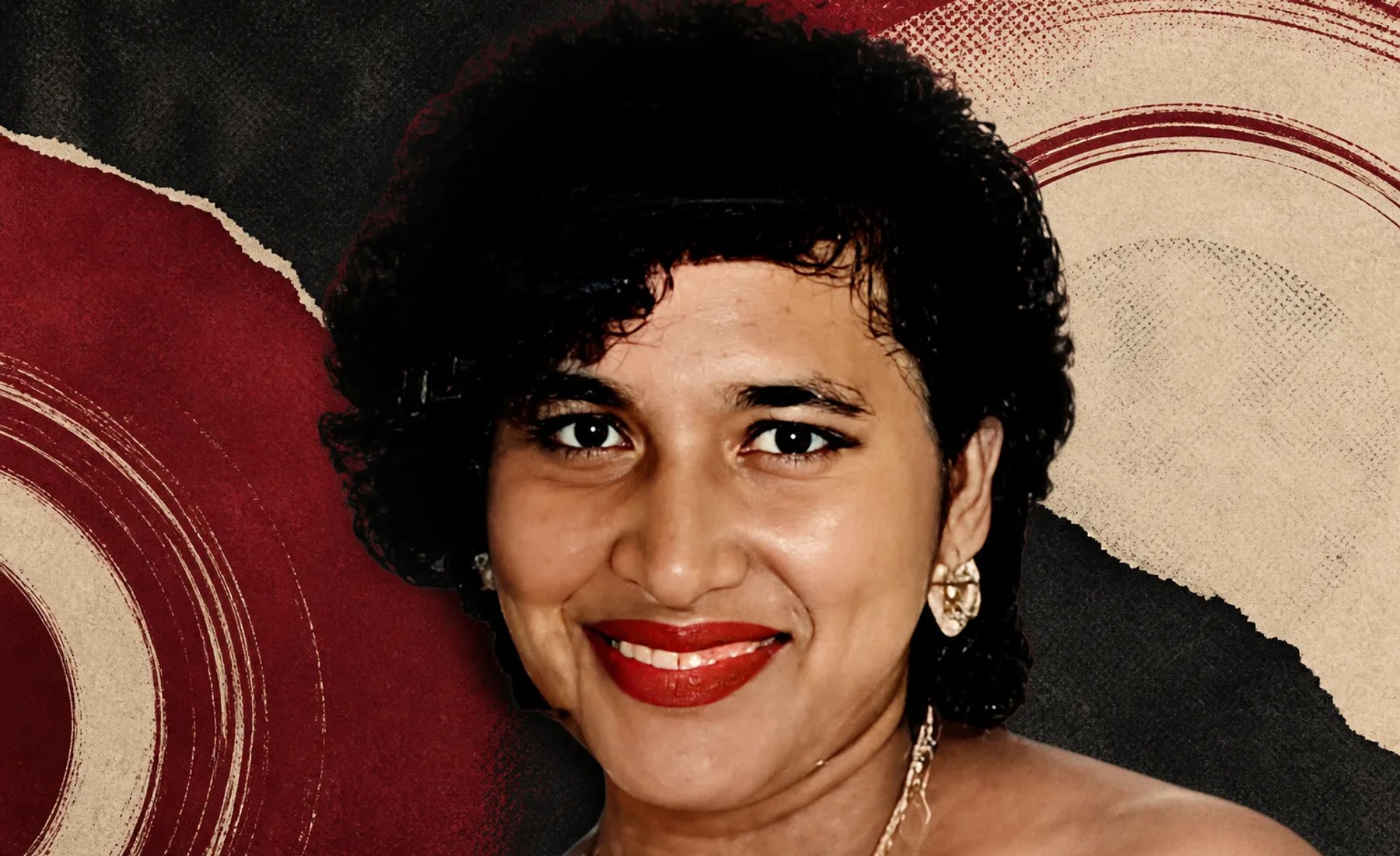


The Mohammed-McCool Household
St. Thomas is a rural parish in eastern Jamaica, a place of banana groves, fishing villages, and tight-knit communities. It was here that the Mohammed-McCool family made their home.
These were ordinary Jamaican folks striving for a better life. At the center was Terry-Ann "Teeny" Mohammed, 30 years old in early 2006. Teeny was known for her warm personality and her devotion to her young son, Jesse O'Gilvie, who was just eight years old at the time.
They lived in the Duhaney Pen area of St. Thomas, surrounded by extended family. One of Teeny's closest relatives was her 30-year-old niece (some sources say aunt) Patrice Martin-McCool. Patrice was like a sister to Teeny despite the technical family relation.
A loving mother herself, Patrice had three children of her own: Sean Chin, 9; Jihad McCool, 6; and Lloyd McCool, only 3 years old. This was a household full of little ones – playful, boisterous, and adored by their mothers and other relatives in the community.
'Daddy' Mikey
Into their lives came Michael "Mikey" McLean.
McLean was well-known in St. Thomas, even respected by some. He was a businessman and chef by training, running a small restaurant and produce trade in nearby Morant Bay.
Having returned to Jamaica after a stint in the United States (from which he was reportedly deported for a weapons offense), McLean had built a life for himself in his hometown.
He lived in Red Hills, Morant Bay, in a five-bedroom family house that stood empty after his parents migrated abroad. Neighbors remembered his industrious side – a hard worker who sold fruits and vegetables and opened a local cook shop.
Behind Closed Doors
But there was another side to Michael McLean. Residents later recalled that he had a frightening temper and a need for control, especially towards the women in his life. He could be charming and generous – known to flash money and attract multiple girlfriends – yet behind closed doors he was abusive. Several former partners would eventually share harrowing stories of McLean's domestic violence: beatings, intimidation, even locking women inside his house for hours or days.
In one chilling anecdote, a neighbor recounted how McLean's car was once scratched by a stray goat; in a rage, he rounded up a group of goats and slit all of their throats as "punishment" since he couldn't identify the culprit. This propensity for cruelty and domination was largely hidden from casual acquaintances, but it hinted at the darkness within.
Michael McLean's connection to the Mohammed-McCool family began with a romance. He started dating Terry-Ann "Teeny" Mohammed, the single mother with the bright smile. By 2006, Teeny and Mikey had been together for some time, and Teeny's young son Jesse even knew McLean fondly as a father figure. In fact, all the children in the extended family called him "Daddy" or "Uncle Mikey".
McLean employed both Terry-Ann and Patrice at his businesses – one ran a bar he owned, and the other helped at his restaurant. He was woven into the fabric of their daily lives, a trusted provider and companion. According to the prosecution, the victims "had total trust and confidence in him" right up until the end.
Nothing about Michael McLean's outward demeanor foreshadowed the horror that was to come. He interacted normally with neighbors and employees in the days leading up to the murders.
Residents saw him going about business as usual on Saturday, February 25, 2006 – the day that would prove to be the family's last. If McLean harbored any sinister intentions or simmering rage, he kept it behind his habitual polite smile.
Perhaps only those closest to him, like his live-in girlfriend in Red Hills (a different woman, with whom he had a young daughter), glimpsed the warning signs. That girlfriend later revealed that McLean could be controlling and aggressive, often speaking to her in an angry tone and forbidding her from socializing freely. Even so, no one imagined he was capable of mass murder.
The Ohbeah Curse
By late February 2006, however, Michael McLean was a man under pressure – much of it self-inflicted and rooted in paranoia. He had recently begun complaining of mysterious health issues: back pain, numbness in his legs, and a troubling loss of sexual function, what Jamaicans colloquially refer to as losing one's "nature".
In McLean's mind, these ailments were no medical coincidence. He reportedly became fixated on the notion that Terry-Ann was causing his impotence and illness through Ohbeah, a form of folk witchcraft or dark magic feared by many in Jamaica. McLean would later claim that Terry-Ann had been feeding him tainted meals given to her by an Ohbeah practitioner, slowly poisoning him and stripping away his manhood.
This delusion – that his girlfriend was supernaturally "fixing" him – festered in McLean's thoughts. His ego could not handle the idea of losing virility or being bested by anyone, certainly not by a woman he thought he controlled. Pride, superstition, and rage formed an explosive mixture.
The Last Saturday
The weekend of February 25, 2006 began ordinarily for the family. It was the tail end of the Jamaican school term and the children were likely looking forward to Easter break. On Saturday, Terry-Ann Mohammed spent part of the day with Michael McLean. She prepared him a home-cooked meal that evening.
According to what McLean later told people, "the meal did not agree with him". In his paranoid view, this was no case of simple indigestion: he interpreted his upset stomach as proof that Terry-Ann had laced the food with something evil. It appears that after this meal, McLean's simmering suspicions boiled over.
As night fell on February 25, Michael McLean took on the role of chauffeur for the family, something he'd done many times before without incident. Around 11:30 p.m., he was seen giving Terry-Ann and little 6-year-old Jihad McCool a ride as they all headed home from an outing.
A former employee of McLean's later testified that he last saw Michael, Terry-Ann, and Jihad together at that hour – Terry-Ann even carried a bag of groceries in McLean's car, intended for her family's use.
Patrice Martin-McCool and the other children – Sean, Lloyd, and Terry-Ann's son Jesse who was 8 years old – were likely already at Patrice's modest house in Duhaney Pen.
Lambs to the Slaughter
Exactly what happened next, in the dead of that Saturday night, remains known only to Michael McLean. But prosecutors have reconstructed a likely chain of events from the forensic evidence and McLean's own inconsistent statements. Sometime in the early hours of Sunday, February 26, 2006, McLean lured or forced all six family members to accompany him to a remote area near Prospect Beach on the St. Thomas coast.
Prospect Beach is not a typical tourist spot; it's more of a quiet local beachfront, flanked by scrubland and bushy areas of seaside vegetation. Under the cover of darkness, far from any prying eyes, this beautiful stretch of shoreline turned into an outdoor slaughterhouse.
One by one, the victims were "led to their deaths like lambs to the slaughter," as the prosecution later put it. The killer likely wielded a knife or a machete – a common cutting tool in rural Jamaica – which he used with devastating efficiency. Four of the family members were found in a cluster in the bushes near Prospect Beach, each with a sharp-force wound to the neck.
The pathologist testified that the cause of death for these victims was a deep slash or chop to the throat, delivered so swiftly and powerfully that none had time to fight back. In other words, they were incapacitated and dying within seconds, unable to even raise their hands in defense. It was merciful in only the most cold-blooded sense – the children likely never knew what was happening before it was over.
Patrice, the young mother, had multiple injuries: in addition to her throat being cut, she suffered a deep stab wound to her back. It's possible she was attacked from behind or tried to flee.
Terry-Ann "Teeny" Mohammed, McLean's girlfriend, was found a short distance away in another patch of bush in the Needham Pen community – still near the coast, but slightly removed from where the others lay. What was done to her was even more horrific. Like the others, Terry-Ann's throat had been slashed. But McLean's rage or twisted sense of retribution went further: Terry-Ann's body showed extensive burns to her torso and pubic area.
The 30-year-old woman's abdomen, chest, thighs, and even her genital region had been deliberately burned, likely with fire or a caustic substance, causing what one report described as "six degree burns" (essentially severe, deep burns).
This appalling detail suggests Terry-Ann was tortured. Investigators believe McLean may have burned her either before killing her – perhaps to force a "confession" about Ohbeah or infidelity – or immediately after, as a final act of degradation.
As Terry-Ann's own mother later lamented in court, her daughter was "slaughtered by a beast" who even "burnt her… in the most private parts" of her body. The mother's voice broke describing how her child and grandchild were treated like trash to be discarded on the beach.
'Daddy, Are We Going Home?'
Amidst this carnage, one family member was initially missing.
Six-year-old Jihad McCool, Patrice's daughter, was nowhere to be found at the murder scene. In that first frantic daylight search on February 26, police and community volunteers combed the vicinity hoping against hope that Jihad might have run away and hidden in the mangroves, frightened but alive.
Tragically, the truth emerged several days later. Jihad had indeed been murdered as well, but her killer had hidden her body separately in an attempt to conceal one piece of evidence.
Michael McLean did not kill Jihad the same way he killed the others. Perhaps she was his favorite – indeed, McLean himself admitted that "Jihad was [his] heart," a child he favored above the rest. Or perhaps some twisted rationale made him treat her differently. Instead of slashing her throat, McLean suffocated Jihad to death by smothering her with his hands. The forensic pathologist later testified that Jihad's eyes were found bulging, with her tongue wedged between her teeth, classic signs of asphyxiation.
Tiny bruises on her tongue and lips indicated how hard a hand had pressed down over her mouth and nose for "two to three minutes" – the time it takes to asphyxiate a child. Only once she was dead did McLean bury her. He dug a shallow grave along a beach bank, placed Jihad's lifeless body in it, and covered her over with sand and dirt. This makeshift grave was not at Prospect Beach where the others lay, but miles away in Rosemount, St. Mary – the next parish to the north. McLean likely drove Jihad's body there in the pre-dawn hours of Sunday after killing the others, thinking her remains might never be found.
The Clean-Up
In a final perverse touch, McLean took steps to clean himself up and fabricate an alibi as soon as the deed was done. Sometime around 4:30 or 5:00 a.m. on Sunday, Feb 26, just hours after the murders, he placed a call to another woman in his life – his former fiancée, the mother of his infant daughter who lived in St. Mary. McLean's ex-fiancée (we'll call her "Alicia," though her real name was withheld in court) was startled awake by his call in those pre-dawn hours. McLean told her he was on his way to see her and their toddler. True to his word, by about 5:00 a.m., he met her on a road near her home in St. Mary.
What Alicia saw immediately set off alarm bells. McLean's white Range Rover was caked with mud and dirt, inside and out. When she opened the passenger door, shrubs and grass fell out, as if the vehicle had barreled through bush (which, of course, it had, during the disposal of bodies). McLean himself looked disheveled: "dirty…almost muddy," Alicia later testified, with dried dirt on his elbows and even in his hair.
She asked him point-blank why he and the car were in such a state. McLean dodged the question, saying only, "We will discuss it later". Pressed further, he concocted a story: he claimed he had been "coming from a farm, reaping carrots" early that morning. This odd explanation actually had a ring of plausibility – Alicia knew McLean sometimes sold produce, so the idea of a pre-dawn harvest didn't immediately alarm her. Still, something felt off.
The exhausted McLean then took Alicia and their two-year-old daughter to a local guesthouse. There, Alicia helped him wash up – even shampooing the mud and leaves out of his hair in the shower. She noticed he had brought along a bag of groceries in the car (likely the same bag Terry-Ann had packed hours earlier), but he offered no real explanation for any of his strange behavior.
McLean even laid down for a nap at the guesthouse. Alicia later recalled that he was strangely calm at times and evasive at others.
'I Thought He Was Dead'
Meanwhile, back in St. Thomas on that Sunday morning, the Mohammed-McCool family's neighbors grew concerned. It was not like Patrice or Terry-Ann to vanish without word, especially with all the children in tow. Phone calls to their numbers went unanswered.
In the afternoon of February 26, the gruesome discovery was made near Prospect Beach.
This was a crime unlike anything the local St. Thomas police had encountered in recent memory. Superintendent Charmaine Shand, a senior officer stationed in St. Thomas at the time, later testified that when she learned of the scene, she immediately thought of one person: Michael McLean.
Shand knew McLean personally – they were childhood friends – and crucially, she was aware that McLean was romantically involved with Terry-Ann. On hearing that Terry-Ann and several children were found murdered, Shand's first fear was that McLean might also have been killed by whoever did this. Little did she know that her friend Mikey was not a victim, but the prime suspect.
By the end of that day, the news of the St. Thomas massacre dominated media headlines. Jamaicans were horrified. The murders of children are tragically not unheard of in the country, but the slaughter of an entire family – four little ones and two adult women – by a single perpetrator was virtually unprecedented.
The Director of Public Prosecutions Paula Llewellyn, who has handled countless brutal cases, would later rank it in the top ten worst of her 30-year career because of the trust involved: "four children and their two mothers... had total trust in him," she said.
The community's grief quickly turned into anger and calls for justice. In Jamaica, where some still subscribe to the old notion of "an eye for an eye," there were immediate cries for the death penalty to be imposed if the killer was caught. "He deserves it. He took six members of my family," said one relative, voicing a sentiment many shared.
Police investigators, led by Detective Inspector Carlton James and others, wasted no time in identifying a suspect. The evidence effectively pointed in one direction: the last person seen with the victims was Michael McLean, and he was now nowhere to be found in St. Thomas. The muddy vehicle, the abrupt disappearance – all of it made him the focus of a rapidly intensifying manhunt.
Officers went to McLean's house in Red Hills Pen, but he wasn't there. As the sun set on that dreadful Sunday, tension in St. Thomas was sky-high. Residents banded together in vigilante-minded groups, scouring the roads and bus stations in case McLean tried to flee. An aura of "jungle justice" hung in the air – if a mob found him before the police did, his life would have been in grave danger.
Unbeknownst to the public, McLean had not fled the island at all. After spending Sunday hiding out with his ex-fiancée in St. Mary (and hearing the first media reports that the bodies were found), he made a critical decision. On Monday, February 27, just one day after the murders, McLean reached out to his childhood friend, Superintendent Charmaine Shand.
He called Shand by phone, which in itself was an unusual move for a fugitive – but McLean knew Shand might still see him as a friend in need. Shand later recounted how shocked she was to hear his voice: "I immediately asked where he was because I thought he was dead," she said. McLean's reply was chilling in its understatement. Yes, he'd heard what happened to "his girlfriend" and the family, he told her, and he wanted her help to turn himself in to the police.
Superintendent Shand acted swiftly. She arranged to meet McLean at a public location outside of St. Thomas to safely take him into custody. Police converged on Harbour View, a community at the eastern edge of Kingston, where McLean waited in a parked car on the roadside. The choice of location was likely intentional – Harbour View is a good handoff point, far enough from the enraged mobs of St. Thomas, and on the route to Kingston where high-security lockups are located.
There, on February 27, 2006, Michael McLean surrendered without a fight. Officers escorted the 37-year-old suspect back to St. Thomas, placing him under arrest for multiple murders almost immediately.
Saved From the Mob
When news spread that McLean had been captured and taken to the Morant Bay police station, an angry crowd descended on the station demanding vigilante justice. Dozens of residents gathered, shouting for McLean to be released to them.
Inside the station, Detective Inspector Carlton James began taking what's known as a "victim statement" from McLean – essentially allowing McLean to tell his side of the story as if he were a surviving victim of a crime, not the perpetrator. McLean was visibly nervous, "trembling" as the mob's shouts echoed from outside. The officers knew they had to move him, fast, or risk a deadly riot.
In a clever ruse, the police devised a diversionary convoy. They loaded McLean into one of three police cars, sandwiched him in the middle vehicle, and simultaneously drove all three cars out of the station in different directions. The mob, confused and unable to tell which car carried the suspect, was left in the dust.
Under heavy guard, McLean was swiftly transported to Kingston, to the more secure Central Police lockup, where he could be held safely away from public retaliation. This quick thinking by law enforcement very likely saved McLean's life that day – an irony, given that he had shown no mercy to his victims.
Finding Jihad
At this point, all five of the initially discovered victims had been identified, and families were mourning. But little Jihad McCool was still officially missing, her fate uncertain. Investigators interrogated McLean intensively. At first, he insisted he was not the killer. He portrayed himself as yet another victim – claiming that unknown assailants had ambushed him and the family.
In fact, during that first formal interview in Kingston, McLean started to give a caution statement to the police in which he recounted a fantastic story blaming others. Partway through delivering this statement, however, McLean seemed to realize his tale needed a key piece of evidence to sound believable. In an unexpected turn, he abruptly halted the interview and offered to lead detectives to Jihad's body.
On March 2, 2006 – a week after the murders – Michael McLean guided police officers to a spot in Rosemount, St. Mary, where he had buried Jihad.
Investigators found that McLean knew exactly where the little girl was hidden.
The recovery of Jihad's body also lent partial credence to elements of McLean's evolving story – at least insofar as it showed he had been to Rosemount, St. Mary, which he was claiming was the work of kidnappers. Nonetheless, the totality of evidence against McLean was damning. Police gathered statements from witnesses who had seen him with the victims late that Saturday night. They collected the muddy Range Rover and noted its state – though (tellingly) no blood was found in the vehicle or on McLean's clothing, as he had carefully washed everything, even enlisting Alicia to launder his sneakers and clothes right after the crime.
It seemed McLean had been frighteningly calm and calculated in covering his tracks: "A shower, a swim in the pool or a dip in the sea plus the washing of his sneakers and car… combined to ensure that no blood was detected," one analysis later noted of McLean's post-crime cleanup.
In those first days after the murders, St. Thomas was in anguish. The funerals for the six victims drew an outpouring of community support. Tiny coffins for the children were borne through throngs of mourners, and the island wept along with the family's survivors. Jamaica's leaders condemned the atrocity. There were public discussions about crime and punishment, with many (including the victims' relatives) openly calling for hanging to be brought back for such heinous crimes.
Though Jamaica still had the death penalty on the books in 2006, it hadn't executed anyone in nearly two decades, due in part to legal challenges and a Privy Council ruling that lengthy death row waits constitute "inhuman treatment." Still, the raw fury at this child-killer was palpable.
But before any thought of punishment, there had to be a trial – and that process was only just beginning. After being charged with six counts of murder in 2006, Michael McLean pled not guilty and was ordered to be held in custody pending trial. Given the overwhelming public sentiment in St. Thomas, a change of venue was applied: the case would be tried in Kingston's Home Circuit Court (the division of the Supreme Court that handles serious criminal cases) to ensure an impartial jury and adequate security. No one could have predicted that it would take 12 long years for the trial to actually happen.
Twelve Years of Delay
The wheels of justice turn slowly in Jamaica, and in Michael McLean's case they ground nearly to a halt for over a decade. Between 2006 and 2018, McLean's case was postponed around 50 times. A variety of factors contributed to this extraordinary delay. Initially, the sheer complexity and infamy of the crime meant the defense and prosecution needed time to prepare. But as months turned to years, McLean himself became the primary cause of the holdup, repeatedly manipulating the system to stall his day of reckoning.
One major issue was McLean's representation. Over the years, he hired and fired at least nine different attorneys. Some he dismissed due to alleged disagreements; others quit, frustrated by their client's intransigence or failure to pay legal fees. .
Each time McLean got a new lawyer, that lawyer would ask the court for more time to familiarize themselves with the case. The trial dates kept being pushed back.
There were also concerns about McLean's mental state. Given the bizarre nature of his alleged motive (Ohbeah and impotence) and the brutality of the crimes, the court ordered psychiatric evaluations to determine if McLean was fit to stand trial. These evaluations introduced further delays. However, each time, psychiatrists found McLean mentally fit for trial – he was not insane or unable to understand the proceedings. In truth, his actions appeared calculated.
By lingering in pre-trial limbo, McLean likely hoped witnesses' memories would fade or that he might catch some legal break. It also did not escape notice that as long as he wasn't convicted, he wasn't facing a life sentence – he was instead housed at Horizon Adult Remand Centre, Kingston's maximum-security lockup for those awaiting trial, where conditions are somewhat less harsh than general prison.
During those 12 years on remand, an unsettling picture of McLean's life behind bars emerged. Inmates in Jamaica have limited privileges – certainly no freedom of movement. Yet McLean boasted to anyone who would listen that he was living quite comfortably even while incarcerated. Shockingly, during his eventual trial, McLean openly claimed that he had been taken out of prison on numerous occasions – "between three and 19 times" – to visit guesthouses and have sexual liaisons with women.
These outings would have required the collusion of corrupt correctional officers, and indeed after his conviction the Police High Command launched an investigation into this alleged scandal.
There were even reports that he continued his criminal tendencies while locked up: officials probed claims that McLean orchestrated contract killings from behind bars by issuing orders via smuggled cell phones. The man who slaughtered a family was apparently still a danger, even without his physical liberty.
By the mid-2010s, the surviving relatives of the victims were beyond frustrated. But finally, by late 2017, the Home Circuit Court set a firm trial date. Realizing he could no longer avoid the inevitable, Michael McLean made an unusual choice – he opted to represent himself at trial.
In Jamaican courts, a defendant has the right to self-representation, though it's rare in a capital case due to the complexities. McLean, however, formally fired his last appointed attorney (Mr. Carlton Colman) early in the trial and told the judge he'd handle his own defense. The judge, Justice Bertram Morrison, was understandably concerned. He ordered Colman to remain in court as standby "technical counsel" to assist McLean as needed, ensuring the defendant didn't sabotage his own case through ignorance of procedure. The stage was finally set. In January 2018 – nearly 12 years after the crime – the trial of Michael McLean for six counts of murder began in Kingston.
The Michael McLean Show
From day one, the trial was "drama-filled," as journalists described it. Tight security surrounded the courtroom, given McLean's history and the lingering fear of an escape attempt. In fact, during the trial, intelligence surfaced of a bold escape plot: McLean had allegedly offered JA$20 million (about US$150,000) to underworld cronies to "spring him" from custody during a court transport.
This prompted authorities to increase security measures – on sentencing day, armed officers literally flanked McLean in the dock and guarded every exit. Justice Morrison himself commented that he'd observed McLean coming to court impeccably dressed in tailored suits and gold jewelry, looking more like a businessman attending a seminar than an inmate on trial. The judge suggested – and most agreed – that prison staff were giving McLean preferential treatment, another matter to be investigated later.
McLean, now about 50 years old, cut a confident figure in court. He often behaved less like an accused and more like an actor-director of a macabre "Michael McLean Show," as one Loop News headline put it. He cross-examined witnesses himself, made speeches, and even engaged in outbursts and tirades that tested the judge's patience.
Yet amid this theater, the prosecution laid out the case against McLean. DPP Paula Llewellyn personally led the team for the Crown, underscoring the case's importance.
A particularly emotional witness was McLean's former fiancée, the woman who unwittingly gave him an alibi. Taking the stand behind a privacy screen (to shield her identity), she bravely recounted the bizarre early morning of February 26, 2006 when McLean came to her covered in mud and tried to use her as a false alibi.
At one point during her testimony, recalling how she shampooed his hair and pressed him for answers, the trauma overcame her – she broke down in tears on the stand. Seeing her cry, McLean himself suddenly started sobbing in the dock.
When the prosecution rested its case on February 16, 2018, they had presented a compelling circumstantial tapestry
Drugs, Guns, and Gunmen
Thus, it was time for Michael McLean to mount his own defense. The "drama" went into overdrive here, because McLean – representing himself – took the witness stand on his own behalf, effectively giving a narrative to the jurors in the form of sworn testimony. What unfolded was one of the most bizarre and elaborate stories imaginable, as McLean spun a tale of drug deals, kidnappings, and shadowy killers.
According to McLean's testimony, he had nothing to do with murdering the family. Instead, he claimed, the real culprits were dangerous drug traffickers to whom members of the family owed money and guns. He painted Terry-Ann Mohammed and Patrice Martin-McCool – the two adult victims – as drug dealers themselves, insinuating they were involved in some underground narcotics business that went bad.
He testified that on the night of February 25, he and Terry-Ann were accosted by four armed men in two cars while heading home. These men, he said, were looking for a cache of drugs and guns supposedly stolen by one of Terry-Ann's relatives.
McLean claimed that the gunmen kidnapped Terry-Ann on the spot when she couldn't produce the stolen items, bundling her into one of their cars. He further asserted that he himself was also taken hostage – forced at gunpoint to drive his own vehicle with two of the thugs inside. In the backseat with him, he said, was little Jihad McCool, who had been in his care when the ambush happened.
Under this scenario, McLean cast himself as a protective figure trying to save Jihad while navigating a dangerous situation. He told the jury that the gunmen ordered him to take them to a location where Terry-Ann had hidden a large sum of cash and cocaine.
According to McLean, he complied and drove them to Rosemount, St. Mary – the same area where Jihad's body was later found.
When they arrived, McLean claimed, the thugs found the buried money and drugs. Then, in his telling, the criminals turned on 6-year-old Jihad: they snatched her from his arms and held her face down in the dirt, suffocating her right in front of him.
McLean said he was powerless to intervene because the men had machine guns and he feared for his life. He described Jihad as being quiet during this ordeal except at one point asking him, "Daddy, are we going home?", to which he claims he softly replied, "Everything's going to be alright.".
He said after murdering Jihad, the gunmen simply walked off into the night, leaving him alive with the child's dead body in Rosemount. They supposedly spared him because, as he put it, "they knew me to be a businessman and did not have a problem with me.". He speculated they took Jihad's life as punishment because she was related to Terry-Ann, their main target. In McLean's account, he was an innocent pawn – even a fellow victim – who had witnessed two killings (Terry-Ann and Jihad) that night but had no part in them.
What about the other four victims found at Prospect Beach? Here, McLean got vaguer. He denied being present at Prospect Beach at the time the others were killed. In fact, he tried to explain away a major discrepancy: back in 2006, during his initial "victim statement" to police, McLean had reportedly said he was at Prospect Beach when the thugs killed the others. But on the stand in 2018, he flat-out denied he ever went to Prospect Beach that night.
He claimed that after leaving Rosemount without Jihad (and without Terry-Ann, whose fate he didn't elaborate on in this version), he was distraught but free. He told the court he then did something rather baffling: he went to a guesthouse to "have a swim and a nap" to clear his head. It's an odd action for a man who supposedly just saw two loved ones brutally murdered. McLean's explanation was that he was traumatized, frightened into silence, and needed time to think.
He also asserted that while he napped, he got a phone call from a policeman friend informing him that Patrice and three kids were found dead at Prospect – news that apparently surprised him and made him realize the thugs had killed the rest of the family while he was being dragged around elsewhere.
'The Golden Penis'
But Paula Llewellyn, the DPP, was having none of it. When it came time for cross-examination, she unleashed a blistering critique of McLean's story and character.
For one, she said, if these were truly drug traffickers on a mission, why would they kill four children and two women over missing guns and cash? Why would they let McLean – who by his own admission could identify two of them by voice and build – live to tell the tale?.
And If they knew him, wouldn't they kill him too, knowing he could later implicate them? McLean had no convincing answer.
The DPP also zeroed in on McLean's inexplicable behavior after these events. By his story, he left his beloved "heart" Jihad, in the hands of killers without a fight, made no attempt to call for help despite having a cell phone the entire time, and then went and had a casual sexual encounter with his ex-fiancée hours later.
The prosecutor highlighted how absurd this was for a supposedly traumatized, innocent man. Why, Llewellyn asked, didn't he immediately call his best friend who was a police officer, or any authorities, if armed killers were on the loose?
McLean said he was too scared – he didn't trust the police and feared for his own life and that of his ex-fiancée and their baby if he spoke up.
After five weeks of testimony, both sides made their closing arguments. McLean personally addressed the jury in his own closing (with some guidance from his standby lawyer). He implored them to see the investigation as biased and incomplete, accusing the police of zeroing in on him and ignoring the possibility of "real killers" out there.
His lawyer Colman, in a supporting role, argued the case was built on a "slapdash" investigation – highlighting, for instance, that no blood or DNA evidence directly tied McLean to the murders due to the clean-up. "They want you to believe the motive is Ohbeah ," Colman told the jury, "but the real motive [was] violence… they did not investigate [properly].". It was a tough sell, considering the mountain of circumstantial evidence pointing at McLean and the lack of any credible alternative suspects.
Paula Llewellyn, in her closing, went for the jugular regarding motive and intent. She laid bare the psychology she believed drove McLean: his "ego" couldn't handle feeling weak, and he convinced himself that killing his girlfriend and her family would somehow restore his potency – the 'return of the golden penis,' as she phrased it. It was a graphic and jaw-dropping statement, but it resonated given the testimony: McLean literally burned Terry-Ann's pubic region, suggesting a symbolic act tied to sexual rage.
Six Life Sentences
On March 6, 2018, after about three to four hours of deliberation, the seven-member jury returned to the courtroom with a verdict. As the court registrar polled the jurors one by one, the answer to each of the six murder counts was a resounding "Guilty".
When given a chance to speak, McLean was defiant. Dressed in a sharp suit and tie for the last time, he launched into a tirade against the justice system. He insisted that "an innocent man is being sent to prison" and that he "did not get a fair trial".
Judge Morrison's sentencing remarks were scathing. Even lamenting that "hanging is not one of the options I have today. If it were, I would have no hesitation.".
In lieu of a noose, Justice Morrison resolved to ensure McLean would never walk free. Jamaican law mandates life imprisonment for murder, but judges have discretion to order whether life sentences run concurrently or consecutively and to stipulate a minimum term before parole eligibility. Typically, even multiple murderers in Jamaica serve concurrent life terms, meaning they become eligible for parole after the standard 20-25 year minimum (minus time served).
Morrison, however, was about to make an example of McLean. He announced that McLean would receive six life sentences – one for each victim – and that the parole ineligibility periods on the first three counts would run back-to-back rather than concurrently. He set 20 years as the parole threshold for each count, which is customary, but by stacking three of them, he arrived at 60 years before McLean could be considered for release. The remaining three life sentences would run concurrently, effectively not adding extra time beyond those 60 years.
Multiple life sentences, served consecutively, are almost unheard of in Jamaica, but this case warranted it.
In prison, Michael McLean is now serving his six life sentences at the St. Catherine Adult Correctional Centre, a maximum-security facility notorious for its severe conditions. He will spend the rest of his days behind bars, under close watch given his past escape antics and influence.
Primary reporting and references
- Man gets life sentences for killing couple in St. Catherine
Jamaica GleanerApr 11, 2025
- Jamaica Observer - Verol Douglas
Facebook
- Sentences of life imprisonment were handed down
- Men showed no sign of remorse
- Jamaican man gets life imprisonment for New Year's Eve murder of Canadian wife
- Omar Collymore found guilty of orchestrating wife's murder
- Former JDF physiotherapist who killed wife sentenced to 5 years in prison
Jamaica ObserverMay 24, 2024
- Sheldon Pusey sentenced to 15 years in prison
- Harvey was abducted from his home
- Murder of Lenford Harvey
Wikipedia
- Former cop gets life sentence for ex-girlfriend's murder
- Michael McLean gets six life sentences; judge sad hanging not an option
Related episodes
The Karlivka Maniac
A serial killer terrorizes rural eastern Ukraine, massacring entire families with whatever weapons are at hand.
Murder on the Yacht
A woman is killed aboard a yacht in Tonga, and her accused husband makes a brazen bid for freedom.

The Backpacker's Nightmare
A Norwegian traveler disappears in Laos after falling for a charming stranger in Thailand.