

A Port City in Panic
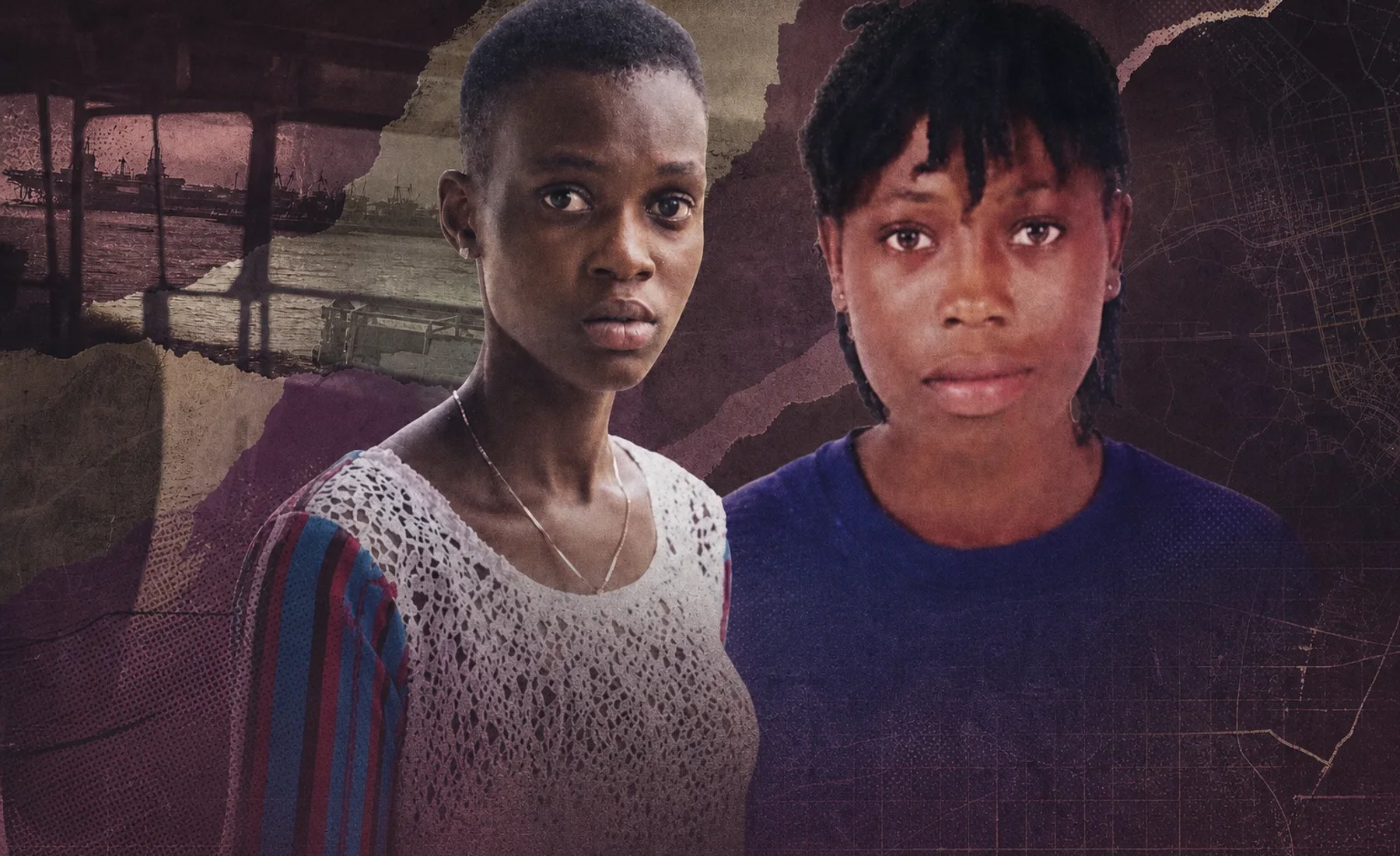
The story of the Takoradi Missing Girls, as the case came to be known, unfolds in a city usually known for its peaceful neighborhoods and busy port life. Sekondi-Takoradi (often just called Takoradi) is a vibrant coastal metropolis in Ghana's Western Region – a place where parents typically feel safe letting their daughters walk to church or visit friends. In mid-2018, however, young women began disappearing without a trace.
Daughters Who Never Came Home
Parents would say goodbye in the morning, never to see their daughters return home in the evening. The first to vanish was 19-year-old Ruth Abakah, on July 29, 2018 . Ruth was last seen attending a Sunday service at Diabene Methodist Church in Takoradi . When she didn't come home, her family grew anxious and began searching the neighborhood. The next day, their phone rang. It was an unfamiliar caller – a man – who chillingly claimed to have Ruth.
He demanded money for her release . They alerted the police and frantically scrambled to gather whatever cash they could, hoping this stranger would keep his word. But even as the Abakah family prayed for Ruth's safe return, fate was setting the stage for more tragedy in Takoradi.
Just a few weeks later, in mid-August 2018, another Takoradi girl disappeared. This time it was 21-year-old Priscilla Blessing Bentum, a university student home on break. Priscilla lived in the Kansaworodo area of Takoradi . On August 17, 2018, she stepped out – possibly to meet someone or run an errand – and never came back .
Her distraught family reported her missing, and before long they too received ominous messages from an unknown captor. Takoradi, a city unaccustomed to kidnappings, suddenly had two young women missing in the span of three weeks. Families whispered fears of a serial kidnapper on the loose. The local police, initially treating Ruth Abakah's case as an isolated incident, now began to suspect a pattern. Two missing girls, both in their late teens, both apparently taken in broad daylight – it was unheard of in Ghana. Law enforcement quietly started working the few leads they had.
They noted that both families had been contacted by someone demanding ransom – a rare occurrence in Ghana, where kidnappers aren't common. It hinted that perhaps the perpetrator was influenced by tactics seen elsewhere, like Nigeria where ransom kidnappings occur more frequently. Indeed, Ghanaian investigators would later learn that these crimes were not purely homegrown – the shadows of a cross-border plot were creeping in . But in those anxious August days, all anyone knew was that Takoradi's daughters were disappearing one by one.
Months passed with no major breakthroughs. For a while, there were no new kidnappings, and some residents dared hope that whoever was behind the abductions had fled or stopped. Ruth Abakah and Priscilla Bentum were still missing, but leads were sparse. Families kept pressure on the police, and local media ran stories, but the trail seemed to have gone cold as autumn approached. Then, as the year neared its end, the kidnapper struck again – not once, but twice – escalating the mystery to a full-blown crisis.
Ruth's Last Phone Call
In the first week of December 2018, Takoradi was thrust back into panic when Ruth Love Quayson, the 18-year-old who phoned her mother from captivity, was reported missing. Ruth Love Quayson had left home on the morning of December 4, telling her family she was headed to an MTN telecom office in town for a job opportunity . She was a recent high school graduate eager to start working, and an advertisement about recruitment at the local MTN branch had caught her attention.
Dressed professionally and full of hope, Ruth left around 9:30 a.m., saying she'd be back later that day . When lunchtime passed with no word from her, Ruth's family grew concerned. Then around 1:30 p.m., their phone rang – it was Ruth's number. A wave of relief hit her sister Nana Quayson as she answered, expecting Ruth to say she was on her way home. But instead, she heard Ruth's voice trembling with terror.
Before her mother or sister could properly respond, a harsh male voice came on the line. The unidentified man barked that Ruth was sick and they'd better cooperate if they wanted her back.
He demanded a ransom for her release – initially GH¢10,000 (about $1,800) – and warned them not to involve the police . In case the family didn't believe he had Ruth, the kidnapper followed up with a text message from Ruth's own phone that evening, taunting them: "Ur daughter is sick u betta pick her so she can come back home" .
This ransom demand set off a desperate scramble to save Ruth Quayson. Her family immediately sought help – they even rushed to the local MTN office that very afternoon, hoping the telecom company could trace the kidnapper's number or the phone's location .
But privacy rules prevented MTN staff from assisting without an official police request, so the family's pleas were initially rebuffed . Precious hours ticked by. By 3:00 p.m. that day, the Quaysons were at the Takoradi Central Police Station filing an official report . The police took the case seriously – by now it was the third mysterious disappearance of a young woman in the city. They instructed the family on how to carefully communicate with the kidnappers.
GH¢100 for Ruth's 'Feeding'
The kidnappers seemed to toy with the family over the next few days, making multiple demands: first a small sum of GH¢100 for Ruth's "feeding" on December 5, which the family paid via mobile transfer . (The police had advised offering only GH¢50, but the captors scoffed that it wasn't enough to feed Ruth .) The following day, December 6, the kidnappers claimed Ruth was ill and demanded another GH¢100 for medicine, which the terrified family also sent . These small payouts were perhaps meant to test the family's compliance – or simply to exploit them further.
All along, the criminals insisted on the larger ransom as well, at one point pushing for GH¢10,000 but later "discounting" it to GH¢8,000 after negotiations . The Quayson family was ready to do anything to save Ruth, but raising thousands of cedis in a short time was no easy task for them. They bought time by pleading for extensions, while Ghana's Bureau of National Investigations (BNI) – roughly equivalent to the FBI – quietly joined the case behind the scenes . BNI agents advised the family to keep the kidnappers engaged and try to draw the process out so investigators could trace the calls .
The Sting Operation
Working with police and BNI, the Quayson family began a carefully planned sting operation. On December 7, 2018, they used a different phone number (so the kidnappers wouldn't recognize it) to send GH¢500 to an account the kidnappers provided – telling them it was an advance toward the ransom .
The idea was to follow the money. In Ghana, mobile money transfers leave digital trails, and sometimes kidnappers use accomplices to withdraw funds. Sure enough, that payment led investigators to a suspect: a young man, an old student of Takoradi Technical Institute, who was picked up by police shortly after the transfer . For a brief moment, it seemed like a breakthrough – but it turned out to be a dead end.
The man was indeed caught withdrawing the money, but upon interrogation he had no connection to the kidnappings; he was a hapless patsy who'd been roped in, perhaps unknowingly, to cash out the mobile transfer . Detectives had to release him for lack of evidence linking him to the girls' disappearance. It was a frustrating setback. The real kidnappers were still at large, and Ruth Quayson's life hung in the balance.
But the investigators and family didn't give up. Within days, they tried again. The kidnappers were still demanding the remainder of the ransom, so the family arranged another GH¢500 transfer during the second week of Ruth's abduction . This time, they coordinated with a trusted local pastor to send the money – possibly to avoid arousing suspicion with the same sender as before .
The Nigerian in Kansaworodo
The strategy worked. The money transfer was traced, and on December 22, 2018, police swooped in and arrested a suspect: a 28-year-old Nigerian man named Samuel Udoetuk Wills . The relief and hope this arrest brought to Takoradi cannot be overstated. At last, the authorities had in custody someone they believed was behind at least one of the kidnappings. Wills had been caught at a quiet hideout in Kansaworodo – the same neighborhood where Priscilla Bentum had vanished months earlier . In fact, when police nabbed Wills, he wasn't alone.
According to one investigator's later testimony, he was found in an uncompleted house in Kansaworodo in the company of a friend nicknamed "Paapa" and some others, including a young woman and a man called "Abaacha" . It appeared Wills was laying low among acquaintances. Officers immediately searched the premises.
In that partially built house, they discovered clothing and personal items that sent shivers through the investigative team: they were later confirmed to belong to the youngest missing girl, 15-year-old Priscilla Mantebea Koranchie . Priscilla's family would identify those clothes as hers – a devastating indication that she had been in that very hideout recently .
Four Girls Gone
Why Priscilla Koranchie's belongings were there became clear: heartbreakingly, she had been kidnapped just one day before Wills's arrest. On December 21, 2018, Priscilla Mantebea Koranchie disappeared on her way home in Takoradi . She was only 15, a first-year high school student at Sekondi College . The news of her abduction made the missing count four.
Four girls gone: Ruth Abakah in July, Priscilla Bentum in August, Ruth Quayson in early December, and now young Priscilla Koranchie right before Christmas . Priscilla's father, Mr. Alexander Koranchie, recalled that his daughter had headed out to a community event that evening and never returned. The kidnappers wasted no time adding psychological torment to this tragedy – they reportedly used Priscilla's phone, just like Ruth Quayson's, to taunt the family.
Later, investigators would reveal that when they searched Samuel Wills's room after his arrest, they found Priscilla Koranchie's mobile phone hidden there, with her photos still on it . Her father confirmed that he had bought that phone for Priscilla, leaving no doubt it was hers . It was chilling proof that Wills had handled the belongings of at least one victim – the 15-year-old girl – tying him directly to her disappearance.
'Can You Kill for Money?'
With Wills in custody and such damning evidence at hand, police in Takoradi expected that answers – and hopefully the safe return of the girls – were imminent. Under interrogation, Samuel Udoetuk Wills initially proved uncooperative. He gave evasive answers and even tried to mislead investigators. Facing mounting pressure, the Ghana Police brought in their top investigators and the national BNI to handle the suspect. Wills soon admitted he wasn't working alone.
He started talking about a kidnapping syndicate – a larger group involved in the abductions . According to Wills, he was just one cog in a criminal operation that extended beyond Ghana's borders. He hinted that the girls were no longer in the country at all, sending police on what would later be described as a "wild goose chase" into neighboring Nigeria . In fact, on Wills's information, Ghanaian officers traveled all the way to Nigeria in late 2018 searching for the missing girls .
The public didn't know it at the time, but Samuel Wills had spun an elaborate tale: he claimed the girls were still alive and had been "shipped" to Nigeria to be sold in a so-called "baby factory" scheme . In March 2019, while in BNI custody, Wills told investigators that three of the girls – Priscilla Blessing Bentum, Ruth Love Quayson, and Priscilla Koranchie – were trafficked to Nigeria in two batches between December 2018 and January 2019 .
He painted a picture of a sinister operation: the girls, he said, were sold for about $5,000 each (roughly 2 million Nigerian Naira) to a woman known only as "Mama" who ran a baby-making criminal ring in the city of Onitsha, Nigeria . There, Wills claimed, the young women would be forced to bear children that would be put up for illegal adoption or sale – a horrific fate, but at least one implying the girls might still be alive. It was a story almost too shocking to believe, yet not entirely implausible – West Africa has seen cases of such "baby factory" trafficking before.
Acting on Wills's confession, Ghana's BNI coordinated with Nigerian security to check out the lead. They did find evidence that such human trafficking rings existed in Onitsha . In fact, Wills named two accomplices in this supposed plot: one "Prince Oji Nweke" – who Ghanaian authorities realized was actually John Oji, the very man they suspected as Wills's partner – and another named Chika Nnodim, a Nigerian associate believed to be part of the ring .
Wills claimed that "Prince Oji" and "Chika" helped transport Priscilla Bentum to Nigeria in December 2018, and then took Quayson and Koranchie across the Ghana-Togo border at Aflao in January 2019 . According to Wills's tale, the girls were heavily sedated during these journeys to avoid detection .
'We Know Where the Girls Are'
For a moment, this dramatic confession gave hope to the families and investigators. If true, it meant the girls were alive in Nigeria, and a rescue operation could be mounted. It was around this time – early April 2019 – that Ghana's police CID Chief, Deputy Commissioner of Police (DCOP) Maame Yaa Tiwaa Addo-Danquah, held a press conference and made a bold announcement: "We know where the girls are," she assured the public and the anxious families .
She urged patience, implying that security forces were working carefully to bring the girls home safely. This statement, delivered on April 2, 2019, was splashed across headlines. It was the first official ray of hope after months of agony. Relieved and jubilant, some family members were moved to tears on hearing the CID boss's confident declaration. The streets of Takoradi buzzed with optimism; citizens imagined the missing girls might soon walk free from some secret hideout and back into their parents' arms.
A Nation's Fury
However, as weeks then months ticked by with no reunion and no further updates, that hopefulness curdled into suspicion and anger. The families began to fear they had been deceived by the authorities, whether intentionally or through incompetence. By late April 2019, frustration boiled over. The families of the girls threatened to storm police headquarters in Accra to demand the truth, accusing the CID of giving them false hope as a stalling tactic .
They issued an ultimatum to Ghana's Inspector General of Police (IGP) and the CID chief to clarify the situation . Facing mounting public pressure, CID Chief Addo-Danquah backtracked in May 2019, in a TV interview that only fanned the flames of public outrage. She claimed that her earlier remark about knowing the girls' whereabouts had been "misunderstood" – that she only made those comments to "give the investigators hope" and encourage her team, not to assert literal certainty .
To the families, this felt like a betrayal. They had clung to her words as a promise, only to learn it was a ploy all along. The reaction was swift and furious: civil society groups like the Concerned Mothers Association and other activists called for DCOP Addo-Danquah's resignation for "lying" about the girls' status . Protests erupted – including a poignant demonstration by a group of mothers carrying placards, demanding action and honesty from the police .
The mothers of Takoradi weren't alone; even ordinary Ghanaians who had followed the saga felt deeply let down. From January through June 2019, vigils were held, street marches organized, and hashtags spread on social media – #BringBackOurTaadiGirls, echoing Nigeria's famous #BringBackOurGirls campaign, became a rallying cry .
The President of Ghana, Nana Akufo-Addo, faced criticism for his silence, prompting local groups to demand he personally intervene or at least speak on the matter .
John Oji Arrested
Amidst this public furor, the investigation continued methodically behind the scenes. The confession from Wills about Nigeria was still being parsed. Perhaps unsurprisingly, John Oji – the "friend" Wills had implicated – had vanished from Takoradi after the last kidnapping.
But he hadn't gone entirely off the radar. Investigators discovered that Oji, also a Nigerian national, had indeed been in Ghana around the time of the crimes. Records showed he came to Ghana in early December 2018 – on December 2, 2018, as one source later revealed – purportedly to "collect money" owed to him .
Some accounts suggest that Oji may have come under the guise of settling a business deal or retrieving a debt, possibly related to Wills. In any case, by the time Wills was in custody, Oji was back on the move. Ghanaian police, working with counterparts in Togo and Nigeria, finally tracked him down. On June 4, 2019, six months after the last abduction, John Oji was arrested at Aflao, the Ghana-Togo border town . He might have been trying to slip out of Ghana or return secretly; instead, he was caught and promptly handed over to Ghanaian authorities.
Oji's arrest was another glimmer of hope: he was the alleged accomplice, the second piece of this puzzle. If Wills's story about a syndicate held any truth, Oji could be the key to finding the girls – or at least to unraveling the truth of what happened to them.
'Samuel Is Framing Me Up'
But once in custody, John Oji vehemently denied everything. He did not present himself as a kidnapper or human trafficker on a mission. According to later court testimony, Oji told investigators that Samuel Wills was framing him out of spite . Oji admitted he knew Wills – in fact, they had a long-standing acquaintance from Port Harcourt, Nigeria – but he swore he had nothing to do with the Takoradi kidnappings .
In a dramatic twist, Oji countered with accusations of his own: he claimed Wills was an experienced kidnapper who had even been arrested in Nigeria once for similar crimes but escaped from jail there . This revelation, if true, was stunning – it suggested that Wills was a fugitive from Nigerian justice, hiding in Ghana and continuing his criminal exploits. Oji explained that he traveled to Ghana because Wills had earlier swindled him.
As Oji's story went, Wills had taken money from him under the pretext of finding Oji a job in Ghana, but never delivered on the promise . Feeling cheated, Oji supposedly came to Ghana to collect his money or confront Wills. In Oji's telling, he got entangled in this case simply because of his unfortunate association with Wills. He flat-out denied belonging to any "cult" or criminal brotherhood as Wills had insinuated, dismissing those claims as lies .
With Wills and Oji each pointing the finger at the other, the truth was murky. But the evidence – gradually being assembled by Ghana's detectives – painted a clearer picture than the suspects' self-serving tales. Digital forensics provided key clues. Investigators recovered Facebook chat logs between the two men dating back to mid-2018, and they were bone-chilling.
In one exchange from July 19, 2018 – just ten days before Ruth Abakah was abducted – Wills asked Oji via Facebook, "Can you kill for money?" Oji responded in the affirmative, to which Wills replied with a thumbs-up emoji . This conversation, revealed later in court, is a disturbing peek into the pair's mindset.
Another piece of evidence: phone records. Detectives discovered that Priscilla Bentum (the second victim) had been in contact with Wills on the day she disappeared . In fact, Wills eventually admitted that Priscilla Bentum was his girlfriend – or at least someone he was friendly enough with to hang out socially . On August 17, 2018, the day Priscilla vanished, she had called Wills to say she was coming over to his house, but Wills wasn't home at that moment .
By coincidence or design, John Oji was visiting Wills that day. Wills later claimed that he told his pal Oji to "entertain" Priscilla until he himself returned. What happened next is the subject of dispute: Wills alleged that Oji kidnapped Priscilla Bentum instead, calling Wills to taunt him that Priscilla was now in his custody and Wills should "forget about her" .
Oji, naturally, denies this occurred. But what's undeniable is that Priscilla Bentum walked into the company of those men and was never seen again. The fact that Wills had Priscilla's phone number and communicated with her that day was corroborated by evidence from his seized phones .
Speaking of phones, the investigation turned up physical evidence during searches as well. Police retrieved four different mobile phones from Samuel Wills – two on his person when he was caught and another two from his room in Takoradi . Wills at first tried to downplay this, claiming only two were his and the others belonged to a girlfriend and a friend, but detectives found he was lying . In fact, at least one of those phones held a crucial clue: it contained the SIM card and number of Priscilla Mantebea Koranchie, the 15-year-old victim .
And on that SIM card was a saved contact labeled "Dada" with a number matching Priscilla's father's phone . This was unmistakable proof that Wills had Priscilla's phone after she went missing.
Investigators also searched Wills's residence and found personal documents hinting at his background. In a surprising twist, among his belongings was a pastoral certificate bearing his name .
Apparently, at one point, Samuel Udoetuk Wills had either studied to become a pastor or obtained some religious credential. This detail spread through Takoradi like wildfire, because there had been rumors all along that the suspected kidnapper was a former pastor or a Sunday school teacher . To many, the idea that a man of God could be behind such heinous crimes was mind-boggling.
While the evidence-gathering progressed, Takoradi's community kept agitating for justice. In early June 2019, a separate incident added insult to injury. Two Canadian volunteer women were kidnapped in a different Ghanaian city (Kumasi), but within just a week, Ghana's security forces mounted a swift operation, storming a hideout and rescuing the Canadians alive .
People in Takoradi watched this with mixed feelings: happiness that the foreigners were saved, but also deep frustration and hurt. The families of the Takoradi girls, having waited for nearly a year with no rescue in sight, questioned why their daughters did not receive the same urgent response. They publicly congratulated the police on the Canadian rescue but pointedly expressed their disappointment that their own case seemed to languish by comparison .
The subtext was clear: are our Ghanaian children less important? This sentiment further galvanized local youth and advocacy groups. In July 2019, as the one-year mark of the first disappearance approached, families of the missing girls even traveled to Accra (the capital) to hold a press conference, threatening to embark on a large-scale demonstration if they didn't get answers by August 2019 . It was a tense time – public trust in the police was eroding, conspiracy theories were swirling, and everyone just wanted closure, one way or another.
Bones in the Backyard
Closure – the grimmest kind – would finally come at the end of summer 2019. On August 2, 2019, acting on fresh leads, Ghana Police investigators descended upon the very property where Samuel Wills had been living before his arrest: a house in Kansaworodo, Takoradi. Specifically, they focused on the backyard septic tank.
There, inside the sewage pit, officers made a gruesome discovery: human remains – skeletal bones – hidden in the muck . Four days later, on August 6, another search in an abandoned well at an uncompleted building (the same structure where Wills had been re-arrested after his escape) yielded more bones . Altogether, the remains of four individuals were recovered from those two sites . The police strongly suspected these were the four missing girls, but they needed proof.
The bones were in a state that suggested they had been decomposing for many months – possibly since around the time of the kidnappings. Investigators carefully retrieved the remains and sent samples for DNA analysis, comparing them to genetic material provided by the four girls' families. As word spread through Takoradi that bodies might have been found, crowds gathered in anguish and anticipation. Many did not want to believe it – after all, the nation had been told months earlier the girls might be alive somewhere.
Could it be that they had been dead all along, buried in the very backyard of the prime suspect? It was a horrifying thought. The families were on edge, and some outright refused to accept the possibility. "We will not accept it," said one grandfather, Emmanuel Anzah Cobbinah, who had raised Ruth Abakah. He insisted that the bones found could not be those of his granddaughter, arguing they looked like they belonged to someone much older – "those bones are over 60 years [old]", he protested . Other parents were in deep denial too.
"People vanish in our society and reappear years later to tell their stories," said Mr. Francis Bentum, Priscilla Bentum's father, holding onto the sliver of hope that perhaps his daughter was still out there somewhere despite all evidence to the contrary . As the families waited for definitive answers, tensions between them and the authorities ran high. Some relatives demanded to observe or even bring independent pathologists to verify the DNA tests, fearing a cover-up or error .
Sensing the distrust, the Inspector General of Police (IGP), James Oppong-Boanuh, assured the public that the police had nothing to hide and even said the families were free to seek an independent second opinion on the DNA results if they wished .
DNA Doesn't Lie
Finally, on September 16, 2019, the verdict everyone dreaded was confirmed. IGP Oppong-Boanuh announced at a press conference that the DNA tests matched all four families – the skeletal remains were those of Ruth Abakah, Priscilla Blessing Bentum, Ruth Love Quayson, and Priscilla Mantebea Koranchie . Ghana's missing girls were, tragically, deceased.
The case was now officially a murder investigation.
The families castigated the police for how the news was delivered.
One family said they heard it on the radio before being personally contacted, which they found deeply insensitive . Some relatives even accused the police of lying earlier about knowing the girls' whereabouts; they felt manipulated and misled throughout the ordeal . Public confidence in the police's transparency was badly shaken. In the media, commentators described the police's communication in the case as "disastrous" .
The Third Suspect
Amid the aftermath, authorities did take one decisive step: ensuring that those in custody – Wills and Oji – would face the full brunt of the law. And there was now a third suspect too. Remember Wills's mention of Chika Nnodim? Ghanaian authorities had not forgotten. In fact, on August 5, 2019 – just after the remains were first found – Nigerian police, acting on Ghana's request, had arrested Chika John Nnodim in Port Harcourt, Nigeria .
It turned out Wills's hint about Chika was genuine in that Chika existed and had perhaps been involved with Wills's past dealings. After weeks of bureaucratic procedures, Chika Nnodim was extradited to Ghana on September 18, 2019 to join the investigation . His arrest brought the number of suspects to three. However, little was publicly revealed about Chika's exact role. We do know that at the time of Chika's handover, police noted he'd been implicated in the kidnapping conspiracy from Wills's confession and was even being investigated in Nigeria for other offenses .
As events unfolded, the focus remained squarely on Wills and Oji – the two men directly tied to Takoradi and in whose possession incriminating evidence was found. When it came time to charge and prosecute, it was Samuel Udoetuk Wills and John Oji who would stand trial for the kidnapping and murder of the four girls.
Chika's case, for reasons not fully clear, did not proceed to a trial alongside them (it's speculated that evidence against him might not have been strong enough, or perhaps he became a witness, or his proceedings were separated). Thus, the stage was set for one of Ghana's most high-profile criminal trials in recent memory.
Trial at Sekondi High Court
The trial began in 2020 at the Sekondi High Court, drawing intense media coverage and public interest. In Ghana's justice system – based on British common law – capital cases like murder are heard with a jury. In this case, a seven-member jury was empaneled to weigh the evidence . The prosecution marshaled a mountain of evidence and witnesses – 23 prosecution witnesses in total – including police officers, forensic experts, and even acquaintances of the accused.
The courtroom was often packed. Family members of the victims attended in somber solidarity, and curious members of the public lined up to witness justice in the making. Each day's testimony painted the picture of how the accused duo preyed on the girls, how they coordinated their acts, and how they were ultimately caught.
In a rather cinematic turn, the prosecution even played a video recording of a joint interrogation of Wills and Oji that had taken place at Police Headquarters in Accra .
This video, over an hour long, was played for the jury and showed both accused men being questioned by a panel of investigators from Ghana and Nigeria . In it, Wills calmly spoke of a "brotherhood" cult in Nigeria that he and Oji supposedly belonged to . He asserted in the video that Oji must know what happened to the girls, alleging Oji was deeply "into the kidnapping business" back home in Nigeria .
Wills claimed Oji had once offered him GH¢50,000 (about $9,000) for each girl Wills could supply – a claim that implied a financial motive and a conspiracy between them . He even alleged that Oji traveled to Ghana's northern regions seeking "juju" (occult spiritual powers) to aid their criminal endeavors . Oji's on-tape response was a strenuous denial of all of this.
In the video, when it was Oji's turn under interrogation, he denied ever kidnapping anyone or knowing the girls' whereabouts, and he refuted any cult involvement . At one dramatic moment, facing Wills in front of the investigators, Oji accused him: "Samuel is framing me up; what he said is not true," he insisted angrily . The two men even got into heated exchanges with each other during these joint questioning sessions – each calling the other a liar while the police cameras rolled .
These courtroom confrontations were intense. Through it all, Wills largely stuck to a narrative that minimized his own role. For example, he claimed in a written statement (which was read in court) that when his friend Oji visited Takoradi in August 2018, he introduced Oji to Priscilla Bentum by falsely saying she was his (Wills's) girlfriend .
Then he described how on the day of her kidnapping, Priscilla phoned him asking for money to do her hair, and since he (Wills) was busy, he dispatched Oji to pick her up – only for Oji to abduct her and tell Wills to "forget" about her . Wills portrayed himself as being shocked by Oji's actions in that account. The jury, however, also heard evidence that cast Wills as anything but a passive participant.
There was the testimony about the conversation between a man named Chinedu (a friend of Wills) and Wills's own sister in Nigeria – where Chinedu informed the sister that her brother had been arrested in Ghana for kidnapping, and the sister coolly replied that she was not surprised because "he is capable" of such acts .
And indeed, through Oji's statements, they learned that Wills had once been arrested in Nigeria for kidnapping and escaped from jail. This painted Wills as a seasoned, unrepentant criminal.
The defense lawyers did what they could to sow doubt. They pointed out, for instance, that no eyewitness ever saw the accused actually kill the girls, and for a long time there were no bodies – implying that the case was largely circumstantial until the DNA evidence emerged.
They cross-examined Detective Asare for six grueling days , pressing on points like whether some evidence could have been tampered or why certain individuals (like that friend "Paapa" found with Wills at arrest) were not treated as suspects . At one point, a defense counsel hammered on what belongings were found with John Oji when he was caught – he had a bag with him and a wedding ring and some cash in Nigerian currency (₦10,000 and ₦4,000 in different stashes) .
Finally, after many months of proceedings, the trial reached its climax in March 2021. By this time, the two accused had been behind bars for over two years since their initial arrests. They appeared in court now subdued, perhaps sensing the weight of evidence against them. On the day of the verdict, security was tight around the Sekondi High Court. The case had attracted so much attention that a large crowd gathered outside. Inside, every seat was taken; observers, journalists, and loved ones filled the gallery by 8:30 a.m., anxiously awaiting justice .
Guilty on All Counts
Samuel Udoetuk Wills and John Oji were brought into the courtroom early. Witnesses later noted that the two men, both in their early 30s by then, sat side by side, looking unusually calm – even chatting with each other occasionally in low tones while the jury finalized its deliberations . It was a surreal sight: these two who had spent much of the trial accusing each other now seemingly at ease in each other's company for the moment. When all was ready, the foreman of the jury rose to deliver the verdict.
Charge by charge, the jury pronounced Guilty. In total, eight counts – four counts of conspiracy (to kidnap and murder) and four counts of murder, one set for each of the four girls – all returned guilty for both Wills and Oji . A ripple of emotion passed through the courtroom. Some family members silently wept; others clenched their fists.
The judge, Justice Richard Adjei-Frimpong, then had the solemn duty of announcing the sentence. For the heinous murder of the four girls, he had only one option under Ghanaian law at the time: death. He ordered that Samuel Udoetuk Wills and John Orji (Oji) be sentenced to death by hanging .
The courtroom erupted in a mix of cheers and tears.
One parent, however, felt no closure at all. Mr. Francis Bentum, father of Priscilla Bentum, stunned reporters by saying he refused to accept that his daughter was no more . To him, the conviction and even the discovery of remains proved nothing. "Let me tell you," he insisted, "people vanish in this our society and reappear years later to tell their stories… I will say, my daughter will come back one day." .
Ghana's government and security agencies conducted internal reviews of the case. The police, stung by criticism, promised to improve how they handle missing person cases and communicate with victims' families . The convicted men, Wills and Oji, were sent back to prison, now as condemned inmates on Ghana's death row.
Death Row Without the Noose
They joined over a hundred others awaiting capital punishment – Ghana had 162 prisoners on death row at that time . However, an important context is that Ghana, while retaining the death penalty in law, had not carried out an execution since 1993 . In fact, just a couple of years after the trial, in 2023, Ghana's parliament voted to abolish the death penalty for ordinary crimes like murder . So it is very likely that Wills and Oji will never actually face the hangman's noose.
Instead, their death sentences will be effectively commuted to life imprisonment, and they will spend the rest of their days behind bars. To many Ghanaians, that is punishment enough – the two men will have decades to contemplate the pain they caused, isolated and removed from society, as Priscilla Koranchie's father had hoped .
Primary reporting and references
- #BringBackOurTaadiGirls: How it all started and current developments
APT News GhanaSep 19, 2019
- TDI missing girls saga: Kidnapper's confession to BNI
Daily Guide Network
- Kidnappers belonged to a cult
- Takoradi kidnapped girls' case adjourned to 2021
GBC Ghana Online
- Death sentences and executions 2020
Amnesty International
- Ghana abolishes death penalty for ordinary crimes
Parliamentarians for Global Action
- Takoradi Girls: Wills, Oji Convicted For Murder
AllAfricaNov 20, 2020
Related episodes
Body in the Metal Drum
The murder of student Evelyne Sincère ignites outrage and a nationwide demand for justice in Haiti.
The Roadside Maniac
A young woman is found tied to a tree, revealing the first victim of a serial killer.
The Serial Killer in Plain Site
Four women are murdered across Antwerp while their suspected serial killer remains hidden.