

A Cold December Evening
It all began quietly on a cold December evening in 2000. In the town of Vievis – a small community about 28 kilometers from Vilnius – 25-year-old Eglė Venskutonytė was finishing up her shift at a local Maxima warehouse store. Eglė often relied on hitchhiking to get home after work. It wasn't unusual; in Lithuania back then, it was common for students and young adults to thumb rides, especially from the outskirts of cities, to save money or time.
Everyone knew it carried risks, but many did it anyway. Eglė's family worried each time, and they had lectured her about the dangers. "Eglute, don't get into cars with strangers," her mother would say. "If you must hitchhike, only ride with older people – like a couple of grandparents. If I see young men, I don't get in – I'm too afraid," Eglė always reassured her. She took the advice to heart, or so her parents believed.
That December day, Eglė left work around 5:30 PM and headed for the roadside near Vilnius's Savanorių Avenue – a spot where drivers often picked up hitchhikers. When she didn't arrive home at the usual time, her mother felt a jolt of panic.
"I can't explain it… my heart just knew something irreparable had happened," she later recalled. By 9:30 that night, Eglė's parents could no longer sit and wait. They jumped into their car and drove the highway route from Vievis to Vilnius and back, headlights scanning the shoulders of the road in desperation. Nothing. No sign of their daughter. They returned home with dread gnawing at their hearts.
In 2000, not everyone had a mobile phone – and Eglė's cell phone, unfortunately, was sitting at home on her dresser that night. So when she vanished, there was no way for her to call for help or for anyone to trace her. After a sleepless night, her parents went straight to the police in the morning to report her missing, carrying a handful of photographs to aid the search. The local Trakai police took the report and the photos. Within days, posters with Eglė's face and description went up, and her story made the rounds of Lithuania's newspapers and TV news.
Four Months of Silence
The next weeks were pure agony for Eglė's family. They called every friend, every acquaintance, every hospital, and even sought out psychics hoping for any clue. At one point, an alleged psychic gave them a grim prediction about their daughter's fate, one so horrifying that Eglė's mother later said, "Some prophecies are better left unfulfilled." But as Christmas passed and the new year 2001 began, hope dwindled. It would be months before they got any answers. Then came the eve of Easter, April 2001, when the knock came at their door.
'Please Let It Not Be Her'
Police officers stood somberly on the porch. They provided almost no details – only that Eglė might have been found, and that her parents needed to come with them to make an identification. Eglė's father, upon hearing this, immediately lost consciousness and collapsed to the floor. "He just fell," Eglė's mother remembered. The officers lifted him onto the sofa while she tried to revive him, pressing heart medication into his hands. When he came to, the anguished question hung in the air: Who will go identify the body? Eglė's mother steeled herself. "I had to go myself. So I went," she said.
The police drove her a short way down the highway toward Vilnius, to a spot not far from the 25th kilometer marker – a patch of sparse birch woods just off the road. That's where a passerby had stumbled upon a corpse hidden among the trees and branches earlier that day. Eglė's mother silently prayed during the car ride: "Dear God, please, let it not be her… I wouldn't wish this on anyone's child, but please let it not be mine."
When they arrived, investigators gently kept her back at first. The scene was horrific. The young woman's body had been decapitated, and it appeared animals had disturbed the remains over the winter. Officers had even covered parts of the victim's face because they were entirely gone. After a few minutes, once they had made the victim as presentable as possible, they allowed the mother to approach.
In the thin spring sunlight, she recognized her daughter. Despite the mutilation, Eglė's clothing and shoes were unmistakable, as was her long dark blond hair. It was her. Eglė's body was taken by forensic examiners, and the shattered family went home to prepare for a funeral. They thought the worst was over. But in a cruel twist, within days of laying Eglė to rest, her grieving parents found themselves treated as suspects in the investigation.
Suspects Under the Same Roof
It's hard to imagine the pain – Eglė's parents had endured four months of not knowing, only to learn their daughter died violently, and then to be asked if they had something to do with it. But investigators have to consider all possibilities, even the unthinkable.
The local prosecutor in Trakai – described as a young man, perhaps inexperienced – questioned Eglė's father pointedly: "Maybe it was you? Are you sure you didn't do it? Was she causing you problems?". Eglė was, in fact, her father's favorite child. The insinuation that he could harm her cut deeply. Her mother later bristled recalling that interrogation: "He flat out asked my husband if our daughter had been a burden to him in some way… She was his his most beloved."
Thankfully, that line of inquiry didn't last long. There was zero evidence against the parents, and the case was soon refocused on finding the real killer. And very soon, there was more evidence that Eglė's death was not an isolated incident.
The Blue Rope
In May 2001, just a few weeks after Eglė's body was found, another discovery shocked the country. Deep in a forest not far from Vievis, the corpse of a second young woman was found tied to a tree with the exact same type of blue rope that had bound Eglė. This victim, investigators learned, was 20-year-old Jurgita Šteinaitė, a student from the town of Jonava.
Jurgita had disappeared about a month earlier, after reportedly hitchhiking along the Vilnius-Kaunas highway – the same general area where Eglė vanished. Like Eglė, Jurgita had been brutally beaten to death; her skull was smashed in, and there were clear signs of sexual assault on her body. Someone had preyed on this young woman in a disturbingly similar fashion, leaving her lifeless and literally tied up in the woods.
Pakelių Maniakas
At this point, police and prosecutors knew they were dealing with something unprecedented in recent memory. Two young women, both hitchhikers, both assaulted and murdered in a similar grisly manner – this was the hallmark of a serial offender. Lithuanian media went into overdrive. Sensational headlines splashed across the front pages: "Maniac on the roads sows fear of death" screamed one paper, Lietuvos Rytas.
Another daily, Respublika, warned, "It's becoming clear that girls would get into the killer's car and vanish." Pictures of the missing and murdered women dominated TV news broadcasts and newspapers nationwide. The unknown predator was quickly nicknamed "Pakelių maniakas" – the Roadside Maniac – because he hunted victims along the roads.
Public fear skyrocketed. Police formally linked Eglė's and Jurgita's cases into a single serial murder investigation, and a special task force was formed at the Vilnius regional prosecutor's office. The lead prosecutor, Justas Laucius, took charge of the case, working closely with veteran homicide detectives like Juozas Dulkė. Their mission was urgent and singular: find this maniac before he kills again. As Laucius later put it, "Our goal was one – identify him and stop him, because the disappearances had already sparked fear and panic in Lithuania."
And indeed, you could measure the fear by simply looking at the roads. In those early summer days of 2001, the number of people hitchhiking plummeted drastically across the country. Women, especially, heeded the warnings on TV and radio: do not hitchhike on the Vilnius–Kaunas route.
At the popular pickup spot at the end of Savanorių Avenue in Vilnius – usually crowded with university students thumbing rides – suddenly there were none. Even young men were thinking twice about accepting rides or picking up strangers. The nation was gripped by a kind of paranoia: somewhere out there, cruising the highways, was a killer who seemed to appear normal enough to earn a victim's trust, only to reveal himself as a monster once they were trapped in his car.
Hunting an Invisible Predator
The investigation faced immense pressure and a scarcity of solid leads. This was happening at a time when Lithuania didn't have decades of experience with serial killers – these crimes were practically unheard of in the country's modern history. In fact, the last time the word "maniakas" had been on Lithuanians' lips was back in 1992, when a young man with an intellectual disability went on a rampage killing elderly people in remote villages.
That perpetrator, Antanas Varnelis, had been caught and actually executed by firing squad – he was one of the last people put to death before Lithuania abolished capital punishment in the late 90s. So by 2001, life in prison was the harshest sentence available, and catching this new "Roadside Maniac" was priority number one.
Investigators threw themselves into profiling the suspect. They consulted psychologists and criminal profilers, scoured databases of known sex offenders, and re-read files on every rapist or violent offender in the region. What did they have to go on? Not much, initially – just the crime scenes and the fact that both victims had voluntarily entered a vehicle with their killer.
From that, Laucius's team drew some logical conclusions. First, the killer was almost certainly male (statistically, stranger serial killers targeting women usually are). Second, he was likely older than the victims, maybe middle-aged or beyond, and probably had a disarming, trustworthy appearance. They reasoned that careful young women like Eglė, who avoided "unsafe" rides, wouldn't willingly get into a car with a bunch of rowdy young guys or a driver who looked visibly creepy or dangerous.
They'd be far more likely to accept a lift from someone who looked like, say, a kindly uncle or a father figure. So the profile forming was of an older man, seemingly benign, perhaps even polite or soft-spoken – the kind of person who could quickly earn a passenger's trust.
Third, the suspect likely lived or worked somewhere between Vilnius and Vievis (the area where both bodies had been found). That stretch covers a lot of ground, including small towns and suburbs along the main highway. But it was a clue: the killer probably knew those woods well and felt comfortable enough to spend time with a victim in those locations without being noticed. Lastly, they strongly suspected he had a criminal record, possibly for sexual crimes or violence. To do something this extreme – binding, raping, decapitating victims – suggested an experienced offender who had escalated over time. He might even have killed before.
Psychologists writing in the newspapers painted a picture of what serial killers are often like: quiet, calm, inconspicuous, able to quickly gain trust. One forensic psychiatrist, Dr. Konstantinas Daškevičius, explained that such a predator is almost impossible to identify at a glance: "Recognizing this kind of person is very hard. You can only catch it in their excitement – if they start breathing faster, face turning red, pupils dilating, sweating or trembling.". Not exactly useful for an unsuspecting hitchhiker sizing up a driver at the curb; by the time you notice the driver is sweating or acting strange, you might already be isolated with him.
Authorities even consulted a well-known psychotherapist, Dr. Eugenijus Laurinaitis, to understand the mind of a killer like this. He posited something interesting on TV: such murderers have a desire to "control death" – by killing others, they gain a twisted sense of power over the fear of their own mortality.
In Laurinaitis's analysis, a serial killer eventually stops seeing victims as human beings at all. "They're just instruments to satisfy his own needs," he said, "to diminish his own fear of death. He kills without thinking about that person's life, their loved ones – nothing. He seeks only his own satisfaction.". In other words, this offender would have no empathy, no remorse, and would likely keep killing until caught.
As this profile solidified, investigators started narrowing down a list of potential suspects: men over 40, living between Vilnius and the mid-point of that highway, with past convictions for violent or sexual crimes. The list was long at first, but they whittled away at it day by day, checking alibis and eliminating those who didn't fit. Then, a new development suddenly expanded the geographic scope of the case and raised the alarming possibility of even more victims.
When Jurgita Šteinaitė had gone missing, she wasn't alone in the world – she had a close friend who actually lived with her in Jonava. And incredibly, investigators discovered that exactly one year before, in 2000, that friend had also vanished while hitchhiking on the same Vilnius–Kaunas road. Two friends, a year apart, both disappear along the same stretch of highway?
It was too much to be coincidence. The friend's name was Gerda Šatraitytė, age 20 – and now police feared that Gerda might have been an earlier victim of the same killer, one whose body simply hadn't been found yet. This meant the "Roadside Maniac" might have started killing earlier than they thought, and perhaps in different areas. They extended the search westward to Gerda's hometown of Jonava and alerted police in that region to look for any unidentified remains or suspicious incidents in the past year.
The Phone That Wouldn't Die
By early June 2001, the manhunt was in full swing, but the killer was still unidentified. Then came the breakthrough – a stroke of investigative luck coupled with the killer's own mistake. Remember how Eglė had left her cell phone at home? Well, it turned out at least one of the other victims had not – she had a mobile phone on her when she was abducted. After the murders, that phone was missing from her belongings, presumably stolen by the killer as a trophy or to resell. Investigators realized if they could track that phone, it might lead them straight to their suspect. They contacted Lithuania's mobile network operators with a special request: if this particular phone's unique ID ever connects to the network – even with a new SIM card – alert us immediately.
They didn't have to wait long. In June 2001, about two months after Eglė's body was found, a signal flared up on the grid. The stolen phone had just been powered on and used briefly on a road between Vilnius and Grigiškės, a suburb southwest of the capital. The phone now had a SIM card registered to a young man who lived in the town of Grigiškės. Investigators raced to track down this lead.
A Killer's Résumé
They found the young man – expecting perhaps a dangerous predator – but soon discovered he was only a teenager. More importantly, he simply didn't match the profile at all: he was much too young (still a minor, in fact), and had no criminal background. It turned out this youth was as baffled as anyone when the police came knocking. And then he mentioned something crucial: the phone wasn't really his. It had been given to him by his stepfather, who asked him to test out this newly acquired second-hand phone to see if it worked.
The stepfather's name? Kazys Jonaitis. That name immediately lit up the radar of the task force. They dug into Kazys Jonaitis's background and what they found was chilling. Jonaitis was a 58-year-old local man living in Grigiškės, right in the target area. He was indeed older than 40, and he had a criminal record – a serious one. In fact, a few years earlier he had been released from prison after serving time for murder. This man wasn't just some petty thief; he was a convicted killer walking free.
Jonaitis had originally been sentenced to 15 years for a contract killing back in Soviet times: in 1984 he'd been paid 8,000 rubles to kill a man who was his friend's wife's lover. He carried out that hit with disturbing brutality – after shooting or incapacitating the victim, he locked the body in a car trunk and burned it in a forest to destroy the evidence. He was caught and imprisoned in 1986, but after 12 years behind bars, the presidential pardon commission inexplicably granted him early release in 1997, three years short of his full sentence.
So by 2001, Kazys Jonaitis was out on the streets, working as a driver for a company in Vilnius – which, interestingly, put him on the road constantly as part of his job. He had even managed to get married for a third time while still in prison, to a Ukrainian woman named Galina. Galina was his peer in age and lived with him in Grigiškės, along with her teenage sons (one of whom was the boy who'd used the phone). Jonaitis basically fit the profile to a T: older, seemingly amicable, a driver by trade, living smack between Vilnius and Vievis, with a violent past. Investigators were electrified – was this their Roadside Maniac?
Prosecutor Laucius later said that from the moment they brought Jonaitis in for questioning, his gut told him they had the right guy. Jonaitis came in voluntarily at first, in mid-June 2001, when police invited him and Galina down to the Vilnius police headquarters "to clarify some issues" about a phone. He played it cool initially, claiming he had simply bought that mobile phone second-hand on the street and had no idea it was stolen.
As he answered questions in the interrogation room, Laucius observed the man closely. He noticed Jonaitis's hands tremble slightly. The suspect's eyes were wide and frightened. He was polite but clearly nervous – like a man cornered. "From the very first moments, the intuition that we were on the right path never left me," Laucius recalled. "Hearing his biography, seeing his prior convictions, and then watching his reactions to my questions – it was clear this was someone backed into a corner."
However, at that point, all they had was a suspicious phone connection and a hunch. If Jonaitis lawyered up and walked out, they might lose their best lead. So the task force decided to move swiftly but carefully. They didn't arrest him on the spot that day. Instead, they quietly arranged for surveillance and put together a plan to catch Jonaitis red-handed with the one piece of evidence they knew tied him to a victim: that cell phone. In cooperation with Lithuanian Telecom, they monitored any activity from the phone.
For two tense weeks, undercover officers camped out near the Soviet-era apartment block in Grigiškės where the Jonaitis family lived. Every day and night, two teams of detectives watched from hidden positions, waiting for a signal from the telecom operator that the phone was connected again. They needed Jonaitis physically in possession of the phone while it was on, so they could grab him and literally catch him with the evidence in hand.
Finally, the trap was sprung. One day in late June 2001, the stolen phone went active once more. Investigators immediately moved in, stopping every car leaving Grigiškės and converging on Jonaitis's vicinity. They caught him and Galina before they even had time to react. Both husband and wife were detained on the spot, separated, and taken in for formal questioning. And there it was: the phone of a murdered girl, found in Jonaitis's possession.
The Hoarder's Garage
Faced with this damning evidence, Jonaitis stuck to his story: Yes, I had the phone, but I bought it off some guy – I didn't know it was stolen. He refused to admit any violence or any connection to the dead women. So officers executed search warrants on every property linked to Jonaitis. That included the apartment in Grigiškės and no fewer than three separate garages he owned around Vilnius. What they found was a hoarder's trove – and a criminal's treasure chest.
Jonaitis had an odd habit: he collected and kept all sorts of junk. When investigators pried open his garage doors, they found spaces crammed floor to ceiling with boxes, old clothes, knick-knacks, auto parts, you name it. It was like walking through a series of personal dump sites. But among the piles of seemingly worthless clutter were chilling items: women's belongings. And not just one or two mementos – loads of them. Shoes, purses, makeup kits, women's jackets and blouses, even jewelry. These were things that clearly did not belong to Jonaitis's 60-year-old wife Galina – they were fashionable items that a young woman in her late teens or twenties would wear.
Seasoned detective Juozas Dulkė shook his head at the scene, later remarking that greed was the killer's downfall. "He would take the victims' things home," Dulkė said. "Part of it he gave to Jonaitienė (his wife), and part he stashed in the garages. From each crime, we ended up with a piece of evidence." Indeed, each victim had contributed something to Jonaitis's grotesque collection – a pair of shoes here, a phone there, a handbag, a piece of jewelry. He kept them all, perhaps as trophies of his conquests, or maybe out of a compulsive urge to hoard. Either way, the physical evidence was overwhelming.
In one of the garages, investigators uncovered what would become the single most critical piece of evidence: a coil of blue nylon rope. It was the very same distinctive type that had been used to tie up Eglė and Jurgita's bodies to trees. Confronted with this discovery – quite literally caught with the rope in his hand – Kazys Jonaitis finally cracked. Cornered at last, he confessed to the murders of both young women whose bodies had been found in the woods near Vievis. In that moment, the Roadside Maniac finally had a name and a face. After months of fear and uncertainty, the authorities had their killer.
Shoes on the Table
But the investigation didn't stop there, because those garages looked like the storage lockers of a serial killer with far more than two victims. The sheer volume of recovered women's items led detectives to suspect there were other young women who had crossed paths with Jonaitis and never been heard from again. Even Jonaitis's confession only covered the two known cases at first – what about the other evidence? Some of the clothes and accessories didn't match Eglė or Jurgita, which meant at least one other unknown victim was represented in that stash.
The officers took a smart approach: they hauled all the recovered female items into prosecutor Laucius's office, turning his workspace into what he described as a "second-hand shop warehouse". Then, one by one, they invited the families of every missing girl who had disappeared hitchhiking along the Vilnius–Kaunas route to come in and look. It was a somber parade of mothers, fathers, siblings – each scanning the piles of shoes, clothing, and trinkets, praying not to find anything they recognized, yet desperate for any answer at all.
One day, as Laucius tells it, the mother of a missing girl stepped into his office. Her eyes swept over the clutter and suddenly fixed on a pair of shoes that had been placed on a table. "What are my Jurgita's shoes doing here?" she asked in a trembling voice. Laucius was taken aback – he hadn't specifically labeled items by name. He looked at the table: which shoes? She pointed, and he realized those shoes had been collected from Jonaitis's garage. The woman identified them as belonging to her daughter Jurgita – and not the Jurgita from Jonava, but another Jurgita entirely. In fact, this mother's revelation introduced investigators to a third murder victim they hadn't definitively identified before: 20-year-old Gerda Šatraitytė.
Now, I need to clarify because the names can be confusing: according to most reports, the third victim's name was Gerda, but in prosecutor Laucius's account, the mother used the name "Jurgita." It's likely that Gerda Šatraitytė had a close nickname or maybe a middle name, or possibly the mother misspoke. But what matters is this: that mother recognized her missing daughter's shoes among Jonaitis's trophies. It confirmed that Gerda – the friend from Jonava who had vanished a year earlier – was indeed one of Jonaitis's victims.
Not long after this, Gerda Šatraitytė's remains were found in the same general area as the others, deepening the tragedy but at least providing her family with closure. The Roadside Maniac's known victim count now stood at three: Eglė, Jurgita, and Gerda – all between 20 and 25 years old, all abducted while hitchhiking, all raped and viciously murdered in the woods.
The Girl Who Survived
But even that wasn't the end of the story. Investigators had also noticed some items from Jonaitis's garage that matched descriptions in another cold case file: a missing 17-year-old girl who had disappeared about a year and a half earlier. This girl wasn't from a typical family home – she was from a children's orphanage.
She had been reported missing in late 1999, and because she was a minor under state care, her case was on record. Among the things found in Jonaitis's hoard were trinkets and pieces of clothing eerily similar to those the orphanage had listed as belonging to this girl. Could it be that she was also a victim, making Jonaitis responsible for four murders?
They decided to pursue this lead delicately. Police traveled to the orphanage with the items in hand. The other girls there immediately recognized them – they belonged to their friend who'd gone missing. Convinced they had evidence of a fourth murder, investigators actually opened a case and went to find the girl's mother, seeking a DNA sample to compare against any unidentified remains that might turn up.
Then came a twist no one expected. As prosecutor Laucius recounted, he was at the police station preparing paperwork when, "I saw a girl walk in – someone I'd never seen in person, only in a photograph. According to our information, this girl was supposed to be dead, likely another victim of Jonaitis. But she walked in and said: yes, I am the one you're looking for." The missing orphanage girl was alive. Alive, but deeply traumatized. She had run away from the orphanage back in 1999 or 2000, and along the way, she encountered Kazys Jonaitis. He had offered her a ride, then beaten and raped her – but somehow, she managed to escape before he could kill her.
Now, more than a year later, hearing that police were investigating her disappearance in connection with this notorious killer, the young woman bravely came forward to tell her story. When she first sat down with investigators, she broke down in tears and tremors, saying, "I don't want to relive that nightmare." It took gentle coaxing and assurances, over a long conversation, before she could recount what happened.
She confirmed that Jonaitis had brutally raped her – she was only 16 or 17 at the time – and that she only survived by a stroke of luck and willpower, managing to slip away (the details of her escape remain private, but one imagines a harrowing fight or flight in those woods). After that ordeal, she hadn't returned to the orphanage out of fear and shame. She essentially dropped off the grid, which is why even the police believed she was likely dead. Her testimony was invaluable. It proved that Jonaitis's depravity had even more victims than the ones found – and it meant that at least one survivor could speak to his crimes.
Jonaitis, confronted with this young woman's account, flatly denied ever seeing her. True to form, he tried to explain away the damning evidence: those items of hers found in his garage? Oh, he claimed he simply bought them at a flea market and it was all a coincidence. Of course, by now nobody believed his lies. His pattern was clear.
Behind Closed Doors
With multiple confessions (partial as they were), eyewitness testimony from a survivor, and heaps of physical evidence, prosecutors built a formidable case against Kazys Jonaitis. Given the lurid nature of the crimes – rape and murder of young women – the court took the rare step of closing the proceedings to the public.
All sessions would be behind closed doors to protect the dignity of the victims and perhaps the privacy of the survivor who was still underage. When the trial commenced in 2002 in Vilnius, not even the press was allowed inside. Journalists could only watch as Jonaitis, flanked by guards, was led into the courtroom; then the doors were shut. It was a trial largely shrouded from public view, which only added to the mystique of the case in the media.
Before the first hearing even began, Jonaitis made an attempt to escape responsibility in the most final way: he attempted suicide in his jail cell. He tried to hang himself, according to later reports, and he came very close to success. When guards found him, he was unresponsive and had to be rushed to intensive care. He spent a long time in a hospital's ICU, hovering between life and death. But he survived, and after recovering, he was deemed fit to stand trial. Some speculated that facing the mountain of evidence and the certainty of a life sentence, Jonaitis wanted to take the coward's way out. Others thought it might have been a ploy for sympathy or delay. Either way, the trial was delayed for a time but eventually resumed once he was medically stable.
Inside those closed court sessions, a harrowing narrative unfolded, piece by piece. Jonaitis's defense was fairly absurd. He admitted that he had picked up the hitchhiking girls and that he had sexual relations with them – but he insisted that it was all consensual and denied raping anyone. According to him, these young women "found him attractive" and "wanted to be with him as a man."
He claimed that after consensual trysts, the girls supposedly tried to blackmail him – and that is why, in a panic, he killed them. In his telling, he was the real victim, driven to murder only to protect himself from false accusations or extortion by these scheming hitchhikers. It was a grotesque inversion of reality – blaming the victims for their own horrific deaths – and it angered everyone from the prosecutors to the victims' families.
To rebut his self-serving narrative, the prosecution presented forensic evidence and eyewitness accounts painting a very different picture. The autopsy reports were stark: each of the murdered women had been beaten in the head with a blunt object (one was even struck with the blunt side of an axe) and showed trauma consistent with rape and violent sexual assault.
These were not gentle encounters by any stretch. The surviving victim's testimony further established Jonaitis's pattern of predatory violence: she certainly hadn't consented to anything – she was a terrified teenager who had been overpowered and barely escaped with her life. Jonaitis's claims of being seduced by hitchhikers were simply ludicrous.
'Tėveli, We Want to Go Home'
One of the most powerful moments in the trial came from an unexpected source: a fellow prison inmate of Jonaitis. Because Jonaitis's jailhouse suicide attempt had made him a pariah among the general prison population (inmates viewed him as both a "maniac" and as someone needing protection), he had spent some time cellmates with a notorious lifelong convict named Antanas Jackus.
Jackus was in his 70s, a weathered career criminal who'd spent 47 years behind bars for various crimes – by all accounts, a tough, unsentimental man known as "Diedukas" (Grandpa) in prison circles. He had 13 convictions on his record – thirteen! – yet even he was sickened by Jonaitis's crimes.
In a highly unusual move, Jackus agreed to testify in court as an incriminating witness against Jonaitis, under the pseudonym "Petras Kurmelis" for his safety. It's almost unheard of in criminal culture to have one inmate testify against another – but as one article noted, even the worst criminals have no tolerance for what Jonaitis did.
Jackus's testimony gave everyone chills. He described how, in their shared cell at Lukiškės prison, he initially tried to treat Jonaitis decently. Other prisoners had been beating Jonaitis up and literally throwing him out of their cells (prison "justice" for rapists and child-killers is notoriously brutal). Jackus, perhaps out of curiosity or pity, told him, "Listen, Kazimierai, let's just talk man to man. I won't kick you out." He even said half-jokingly, "To hell with it, maybe I'll get punched for keeping you here, but I feel sorry for you." He pretended to entertain the possibility that maybe Jonaitis was innocent: "For all I know, maybe you didn't do those crimes, eh?"
That opened the floodgates. Jonaitis, feeling secure with Jackus and two other cellmates listening, started bragging. According to Jackus, Jonaitis recounted his killings in disgusting detail and with a smile on his face. Jackus testified, "Anger rose in me because he was telling it with such satisfaction… with a big grin." One detail in particular horrified everyone in the courtroom: Jonaitis gleefully described how he would slip a noose of rope around a girl's neck and pull it tight.
He enjoyed strangling them slowly, listening to them gag and choke. And as he did, the girls would cry and beg for their lives, reportedly even calling him "tėveli" – "daddy, please leave us alive, we want to go home to our mothers." Hearing this, many in the courtroom wept or were sickened. Jackus himself said he felt a fury unlike anything before – and this from a man who had seen every kind of evil behind bars.
Jackus went on: "I was openly horrified by his story. It struck my heart. Such a killer should never be free. He should die in prison – burn like a candle and go out." And Jackus wasn't just spewing rhetoric; he acted on his disgust. He told the court that as Jonaitis bragged in the cell, he (Jackus) lost his temper. "We sat on the bed, and he started to talk. When I realized he was boasting about strangling those girls, I felt such anger…"
Jackus actually attacked Jonaitis right then. "He told me, 'I'll tear you apart with my bare hands.' So I cleared my throat and bam! – I punched him right in the face and spit on him."
Apparently, this scuffle was later brought up in court (likely to show Jonaitis's behavior and statements). Jackus even noted that the judge presiding over the trial subtly approved of his actions – when he admitted he spat on Jonaitis, the judge lifted his thumb as if to say "bravo". Can you imagine? The usually impartial judge giving a thumbs-up to an assault on the defendant – it shows just how little sympathy anyone in that courtroom had for Kazys Jonaitis.
Life Without Parole
Between the forensic evidence, the survivor's testimony, Jonaitis's own partial admissions, and the chilling inmate testimony, the outcome was never in doubt. In 2003, the Vilnius Regional Court found Kazys Jonaitis guilty of multiple counts of rape and murder, sentencing him to life imprisonment with no possibility of release.
Life in Lithuania means whole life – there's no death penalty, and at the time there was no provision for parole for life sentences (though later laws allowed lifers to request parole after serving many years, more on that soon). Jonaitis, 59 years old at sentencing, was set to spend the rest of his natural life behind bars. He would be incarcerated at Lukiškės Prison in Vilnius initially – the same grim facility where he'd awaited trial – and later transferred to other prisons as needed.
Outside the courtroom, people struggled to comprehend the saga. How had a man like this flown under the radar? Jonaitis's wife Galina initially defended him passionately. During the investigation and trial, she truly could not reconcile the accusations with the man she knew. Galina was an interesting figure: a former law student from Ukraine, twice-widowed (her first husband had died by suicide), who married Jonaitis while he was still in prison for that 1984 murder.
She wore rose-tinted glasses for a long time. In fact, in a bizarre and tragic detail, Galina had been wearing jewelry that belonged to the murdered girls, not realizing their origin. Jonaitis had given her some of the victims' earrings and necklaces as gifts, which she naively wore, even in front of journalists. One can only imagine her horror when she learned the truth – that her adornments were trophies from her husband's crimes.
After the conviction, Galina finally accepted reality. She gave an emotional interview where she said, "I will never forget that mother's face, how she suffered… Why did he kill that girl? She was only 19." Galina admitted that if only prosecutors had been saying it, she wouldn't have believed it, "but he himself confessed to me. After the trial, he admitted it." She revealed something telling about Jonaitis: "He was impotent. Not a fully-fledged man… I can't really explain male instincts. I don't understand." It's unclear if Jonaitis actually was physiologically impotent or if this was Galina's way of rationalizing why he committed sexual violence.
Investigators later cast doubt on that claim – they found that, contrary to being sexually weak, Jonaitis had an extraordinarily high sex drive and had cheated on Galina with dozens of mistresses over the years. They interviewed many of these women who had been his lovers; clearly, Jonaitis had a dark, insatiable side that he hid from his wife. Either way, Galina's world was shattered. She had essentially lived with a monster and never realized it until it was far too late.
Jonaitis's own mother was still alive to see her son exposed as a serial killer. She was around 90 years old, living in a rural part of Kaunas County. A journalist, Laima Lavastė, tracked her down in 2007 and spoke with her about Kazys's childhood. What came out of that conversation was a bleak picture of abuse that perhaps planted the seeds of violence in him. Jonaitis was the eldest of seven children and the first son. According to his mother (and corroborated by one of his sisters, Antanina), Kazys's father hated him with a passion. In fact, the father apparently hated all his sons – as if he doubted they were even his, or resented them for simply being male.
He would regularly beat Kazys mercilessly, starting from when the boy was very small. The beatings were brutal: the father used horse halters, saddle straps, his fists – any implement – and left the house littered with bloody rags from the injuries. "Our whole house would be full of bloody cloths," the mother recalled.
The sister added, "He would beat him so much… and Kazys was his own blood! I don't know why he was like that." This doesn't excuse anything Jonaitis did, of course – plenty of people suffer horrific childhood abuse and don't become murderers. But it does offer a glimpse into the warped formative environment that perhaps shaped his psyche – a childhood steeped in violence, fear, and presumably a deep well of anger.
When asked how she reacted upon learning what her son had done, Jonaitis's elderly mother said quietly, "Prastai… very poorly." She then added something chilling: "If it's true that he did this, it would have been better if someone had killed him, rather than for him to kill so many… If only it had been that way." In essence, even his own mother felt that death was a more just fate for him than life. It's a heartbreaking sentiment – a mother acknowledging that her child has done something so terrible that she'd rather he have died than become what he became.
The aftermath of the trial brought a sense of relief and justice to Lithuania, but also lingering trauma. The families of Eglė, Jurgita, and Gerda carried on as best they could, forever missing their daughters. The case led many in the country to re-evaluate the practice of hitchhiking. While it didn't vanish overnight, people were far more cautious, and parents drilled into their kids the dangers of accepting rides from strangers (something that echoes down to this day in Lithuania – the memory of the Roadside Maniac still serves as a warning).
A Monster Behind Glasses
As for Kazys Jonaitis, he began serving his life sentence in Lithuania's prison system, moving through facilities like Lukiškės and later Alytus or Pravieniškės. And prison life was anything but easy for him. He was ostracized and brutalized by other inmates from the get-go. In the criminal underworld, those who rape and kill women and children are the lowest of the low, and Jonaitis found that out quickly.
Multiple times, cellmates beat him up and threw him out of communal cells (there's a macabre image of this middle-aged, bespectacled man getting physically tossed into the corridor by criminals who didn't want to share space with him). Eventually, for his own protection – and likely because he was disruptive – the prison administration had to place him in solitary confinement permanently. Officials at Lukiškės even labeled him the "most conflict-prone" of all life-sentenced prisoners under their watch. He apparently could not get along with anyone – not surprising, given his narcissistic and violent streaks.
Jonaitis also showed that his violent impulses hadn't exactly been cured by incarceration. In April 2008, he made headlines from behind bars when he attacked a prison guard, attempting to gouge the man's eye out with a sharp object. The guard survived, but it just reinforced how dangerous Jonaitis remained even locked up. He was swiftly disciplined and likely kept under even tighter security after that. (It was reported that this incident occurred at a time when he was awaiting a court hearing – he lashed out at a supervising officer. Clearly, "model prisoner" he was not.)
Over the years, Jonaitis oscillated between obstinate defiance and self-pity. He frequently filed complaints and lawsuits from prison, alleging that his confinement conditions were unfair or overly harsh. Most of these grievances went nowhere – after all, he was being treated no differently than other life prisoners, aside from the solitary status that was for his own safety. However, in 2020, nearly two decades into his sentence, Jonaitis did score a small legal victory of sorts.
Then 77 years old, he filed a complaint about the prison administration keeping him on a special registry of "inclined to attack" inmates, which came with certain restrictions on his movements and privileges. He argued that this status was unjustified and that the authorities had abused their power, causing him emotional distress. He even demanded €10,000 in compensation for non-material damage (pain and suffering) as a result.
A regional administrative court actually agreed with part of his complaint, finding that the prison had not properly reviewed whether he should still be listed as an "assault-prone" inmate and had some procedural lapses. They ordered the prison to fix those procedural issues – essentially a bureaucratic slap on the wrist to the system – but crucially, the court denied Jonaitis any money.
They said he hadn't proven any real harm deserving of monetary compensation, and that simply correcting the record was sufficient justice for him. Jonaitis crowed that this was a "partial victory" – but to outside observers, it was hardly vindication, more like a technicality. Still, it shows that even behind bars, he remained manipulative and self-centered, more concerned with his own perceived slights than the lives he destroyed.
In parallel, Jonaitis also repeatedly tried to argue for his own release as he grew older. He insisted that he was no longer a danger to society – an old man who just wanted to live out his final years in peace. "I'm not dangerous," he would tell any officials who'd listen. Starting around the late 2010s, Lithuania's laws allowed life-term prisoners to apply for a form of parole or commutation after at least 20 years served, though very few have been granted.
Jonaitis made his bids, but unsurprisingly, every request was denied. In one 2019 hearing, a court ruled that he must continue to serve his life sentence in prison conditions (rather than any relaxed regime). And in 2020, when he demanded that impressive compensation and claimed he wasn't a threat, the system again largely shut him down.
Finally, in 2021, a full twenty years after his arrest, something noteworthy happened: Kazys Jonaitis apologized. For the first time, publicly, he expressed remorse for what he had done. At a court session in late 2021 (likely another parole review or a proceeding related to his imprisonment conditions), the now nearly 80-year-old Jonaitis addressed the pain he had caused. "I am sorry for the suffering I caused," he said, or words to that effect – an apology two decades late. As one news outlet put it, "It took 20 years for the 'Roadside Maniac' to apologize for the pain he inflicted."
It's hard to know how genuine his apology was. Victims' families often view such belated remorse with skepticism, suspecting it's only a ploy to gain sympathy and possibly early release. Indeed, right around that time, there was public debate about whether this aging murderer should be considered for parole due to his advanced age – a debate that quickly met fierce opposition from society. One commentator asked rhetorically, "Is he not too old for freedom?", highlighting the discomfort at the idea of ever letting him out. For most, the answer was clear: Jonaitis should die behind bars, as inmate Jackus had insisted years before.
And so far, that is exactly what looks to happen. As of today, Kazys Jonaitis is around 82 years old, still serving his life sentence in a Lithuanian prison. He is one of the longest-serving and most infamous inmates in the country. By all accounts, he remains an isolated, unhappy figure – shunned by other prisoners, watched closely by guards, and haunted, one hopes, by the ghosts of Eglė, Jurgita, Gerda, and the other women he terrorized. He has outlived many of his contemporaries in prison, but he will not walk free again.
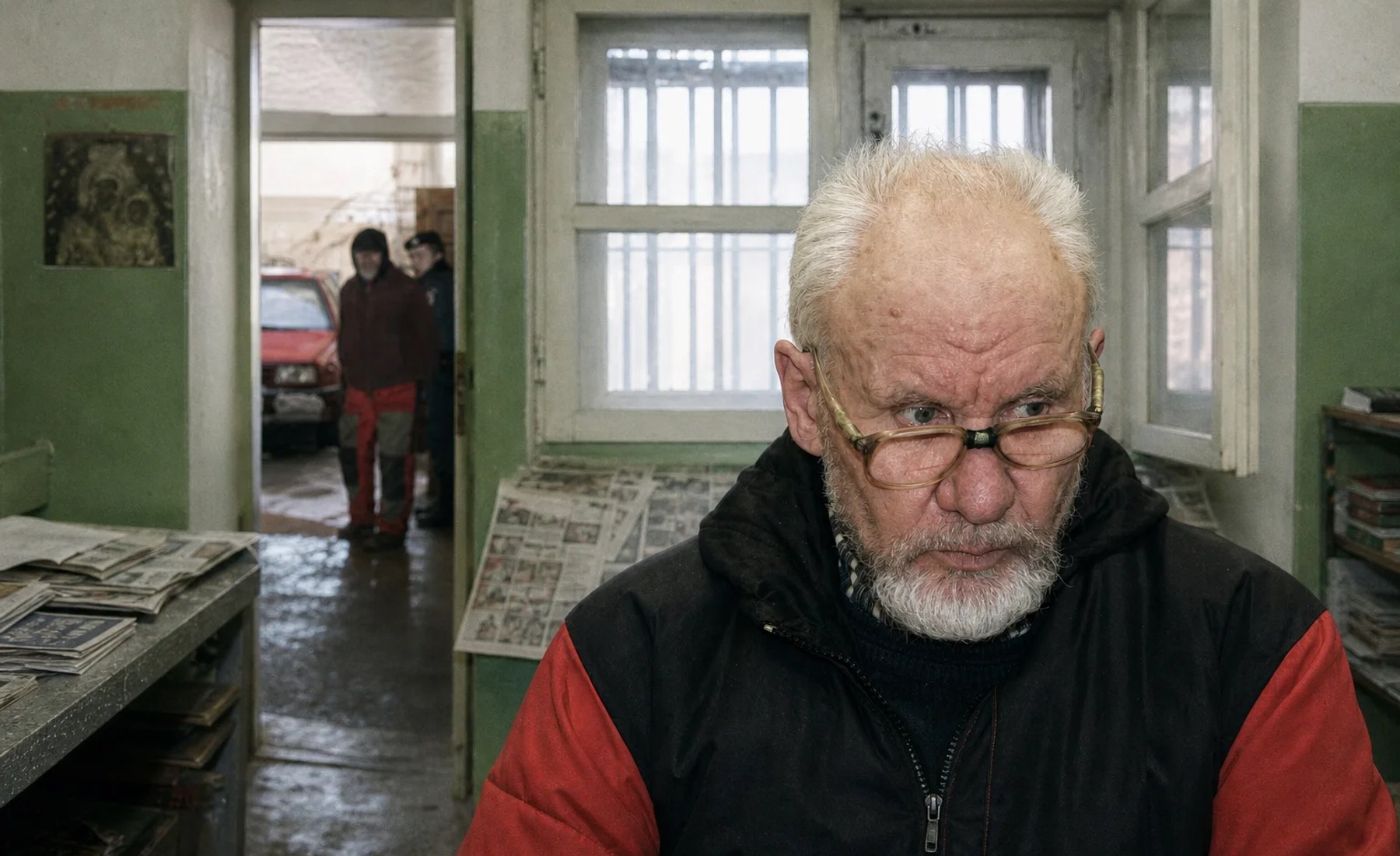
The case of the Roadside Maniac is a stark reminder that monsters don't always look like monsters. Kazys Jonaitis was described by a journalist as looking like " Santa Claus with glasses". If you saw him in a bakery or driving a truck, you'd think he was an ordinary older gentleman, maybe someone's jovial uncle.
That facade is precisely what allowed him to lure unsuspecting victims. But as Dr. Laurinaitis noted after meeting him, "From the first moment you lock eyes with him, you realize – what's in front of you is not really a human being, but something much scarier." Behind the polite smiles and grandfatherly glasses lay cold, grey, lifeless eyes – the eyes of a predator waiting for the right moment to strike.
Primary reporting and references
- Kazys Jonaitis
WikipediaJan 01, 2024
Related episodes
Four Girls Gone
Four young women vanish in Ghana as ransom demands expose a predator in their midst.
Noa's Last Ride
Familial DNA finally identifies the man who murdered teenager Noa Eyal decades earlier.

The Serial Killer in Plain Site
Four women are murdered across Antwerp while their suspected serial killer remains hidden.