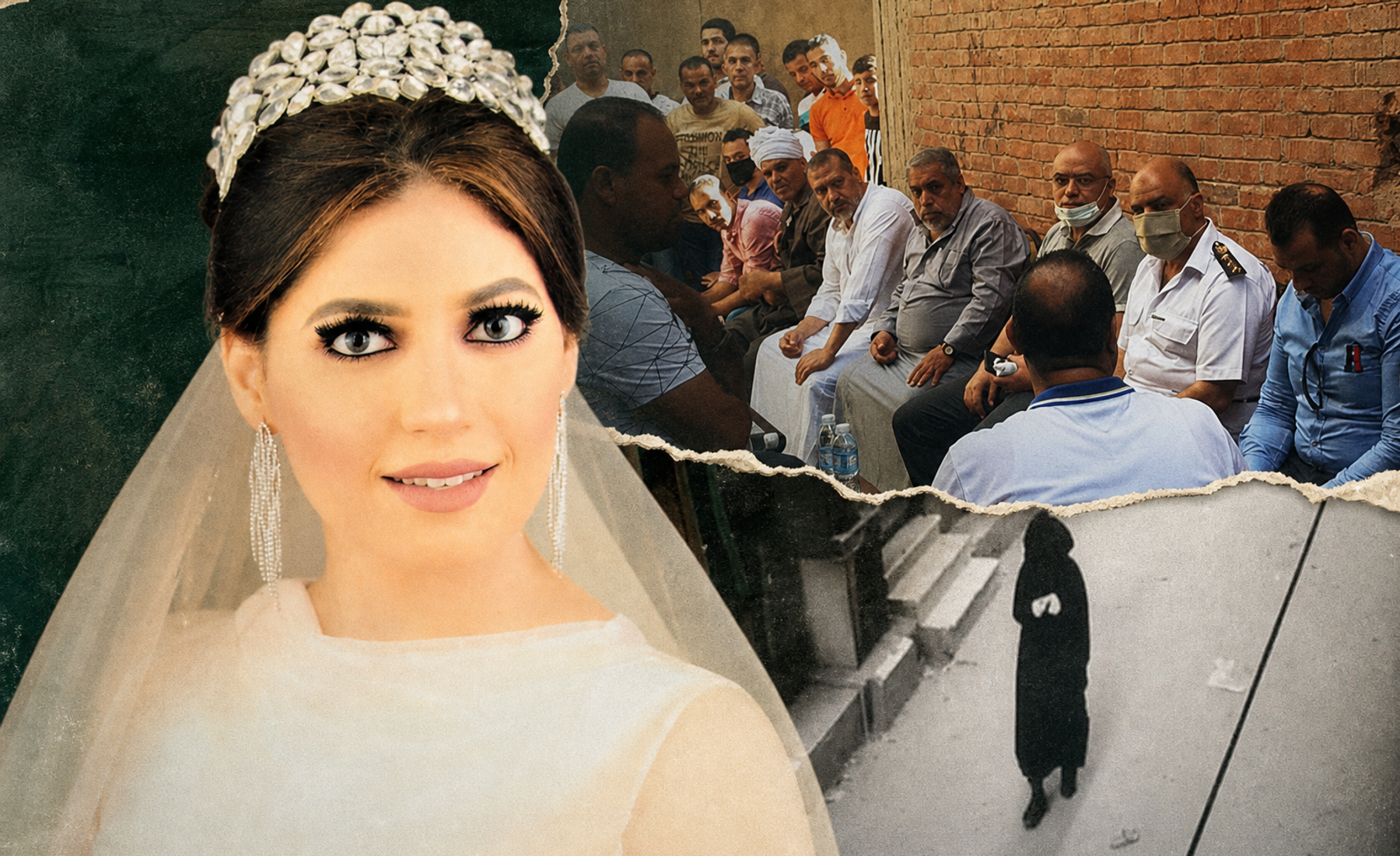


The Girl from Meet Antar
Iman Adel was by all accounts a devoted daughter, a loving mother, and an earnest student. In 2020, at just 21 years old, she was juggling many roles – new motherhood, her third year of college courses, and the duties of a wife in a conservative rural household. Hailing from the village of Meet Antar in the Dakahlia governorate (about 130 km north of Cairo), Iman lived in a close-knit community where everyone knew each other's families and traditions ran deep.
She had married young – not uncommon in her community – and by age 19 she was wed to Hussein, a local young man a few years her senior. Their marriage was an arranged union initially, a traditional match between families. Over time, Iman embraced her role as Hussein's wife and even went above and beyond to support him.
According to her brother, Iman sold all her gold jewelry – likely her marriage dowry – to help fund a clothing shop her husband wanted to open in the village. She poured her savings and effort into helping Hussein start his business, believing it would secure their new family's future.
Those who knew Iman describe her as gentle, shy, and dutiful. "She was known for her high morals," a relative said – a polite, religious young woman who rarely, if ever, complained. In fact, Iman kept any marital troubles to herself. Her brother later remarked that during the nearly two years of her marriage, "she never told us about any family problem with her husband", indicating that Iman preferred to suffer in silence rather than burden others. And suffer she did.
After giving birth to her son in late 2019, Iman's health had been fragile. She was breastfeeding and often weak from postpartum anemia and exhaustion, even fainting at times from the strain. Still, she persisted – continuing her university studies remotely during the COVID-19 pandemic, caring for her infant, and keeping up with housework in their small apartment.
A Marriage Under Strain
For Iman, these months were a challenging blur of late-night feedings and exam deadlines. For Hussein, however, life after his son's birth felt less satisfying. By early 2020, relatives recall that Hussein seemed restless and unhappy in the marriage.
He was 22 and running the clothing store that Iman had helped him establish, but he reportedly grew resentful of how motherhood and college had changed his wife. She was no longer the carefree teenage bride with endless time for him; she was often tired, busy with their baby or her coursework.
Hussein complained that Iman wasn't paying him enough attention – that she was "absorbed by the baby and her studies" and not as available to dote on him. In his eyes, she had "changed after birth" and he wasn't happy about it.
As Iman focused on parenting and finishing her degree, Hussein's discontent festered. He began pressuring her to drop out of college, urging her to abandon her studies to focus solely on being a wife and mother. But Iman, who dreamed of graduating and perhaps building a better future for her child, refused to quit school.
This refusal only widened the rift between them. Meanwhile, Hussein's wandering eye had settled on someone new – "another woman" from the same village. At his clothing shop, a young female customer had caught his attention. Over time, Hussein struck up a flirtation with this woman and the two developed a relationship. In his mind, she was everything he felt Iman could not be at that moment: unattached, carefree, and attentive to him. Buoyed by this prospect, Hussein decided he wanted to marry this new woman as a second wife.
Under Egypt's personal status laws, a Muslim man can legally take a second wife, but such a move is often socially frowned upon – especially if done without the first wife's consent. Iman absolutely refused to accept a polygamous marriage. According to investigators, when Hussein broached the idea of marrying another woman, Iman opposed it vehemently.
She would not agree to him taking another wife, and likely would have sought a divorce if he tried. To complicate matters further, Hussein's own family disapproved of his plans to leave Iman. They liked Iman – she was, in their view, a respectable and well-behaved wife from a "good family". In fact, when Hussein asked his father for permission to divorce Iman and pursue the new woman, his father refused, chastising him.
The elder relatives reportedly told Hussein that Iman was *"a girl of impeccable character, better than you, and you're not living up to your responsibilities". This scolding bruised Hussein's ego. Not only was his wife denying him, but his parents were siding with her. He felt trapped in a marriage he no longer wanted.
For Hussein, divorcing Iman against his family's wishes carried other problems too. In Egypt, divorce can come with financial obligations – a husband may owe his wife deferred dowry payments, alimony, or be expected to return her bridal gifts and furniture (known as her "gahez") that her family provided.
Hussein had no desire to face those costs or the community backlash of being seen as the man who abandoned a devoted wife and infant. In his mind, he needed a way out that made Iman look like the guilty party. If he could disgrace her, or prove some transgression on her part, he might rid himself of her without pity or financial penalty. It was this twisted calculation that gave birth to a diabolical idea: Hussein would engineer a scenario in which it appeared that Iman had committed an unforgivable act of betrayal.
'Help Me Ruin Her Honor'
At some point in the late spring of 2020, Hussein confided his dark plan to an acquaintance – Ahmed Reda al-Shahat, a 33-year-old man who worked at Hussein's clothing shop. Ahmed, often referred to by the nickname "Ahmed al-Ajlaty" (the wheel repairman) in the village, was a local handyman and employee desperate for money. Hussein knew Ahmed could be useful.
He approached him with a proposition that scarcely seemed real: help him ruin Iman's honor so that Hussein could justify divorcing her. Specifically, Hussein asked Ahmed to break into his home and rape Iman – thus creating the appearance that she had been unfaithful – after which Hussein would dramatically "catch" her in the act and use it as grounds to cast her out.
The plan was as elaborate as it was grotesque. Hussein offered Ahmed a hefty reward – later reports indicated a promise of 100,000 Egyptian pounds (over $6,000) in exchange for carrying out the assault. Hussein's idea was that once Ahmed had overpowered Iman, he would call Hussein, who would then rush home, supposedly catch his wife with another man, and summon both families and neighbors to witness this "shameful" scene.
In the conservative social code of their village, a wife's infidelity is a grave dishonor. Hussein wagered that if he exposed Iman as an adulteress (even though she would be a victim of rape, he intended to portray it as her willing affair), she would be rendered defenseless. She would lose any claim to financial rights or custody of their child, and her own family might even disown her. In other words, Iman would be so disgraced that Hussein could divorce her *"without being liable to financial compensation, since she would lose her rights if proven that she cheated". It was a perverse scheme to free himself at the total expense of her reputation and safety.
Ahmed agreed to participate. Perhaps the money lured him; perhaps a twisted loyalty to his boss played a role. In any case, both men set about arranging the trap. They chose a day when they knew Iman would be alone at home with the baby – June 17, 2020, a Wednesday. Hussein made sure to leave the house that morning, heading to his shop as usual, to establish an alibi.
The Trap Is Set
Critically, he also made it easy for Ahmed to enter their home. Their apartment was secured by a heavy door with an electric lock, and no stranger could normally barge in. But Hussein provided Ahmed with a spare key to the building's entrance and even left the door of the apartment unlocked, or the key in the lock, so that Ahmed could slip inside without forcing entry.
To avoid being recognized by any passerby, Ahmed donned a niqab – the full-face veil and gown worn by some conservative Muslim women – effectively disguising himself as a woman from head to toe. In a village where seeing a veiled woman in the street would raise no suspicion, this costume was the perfect cover.
Hussein and Ahmed had coordinated every detail. They believed the odds were in their favor: Iman was physically weak and prone to fainting spells, so she might not put up a fight. And with her husband away at work, she would likely let down her guard if someone appearing to be a neighborhood woman came knocking at the door.
Before leaving that morning, Hussein instructed Iman that a lady from a charity might stop by to collect a donation, or some similar ruse (in one version, he told Ahmed to pretend to be a woman asking for financial help.
This would ensure Iman answered the door. The trap was set. Hussein headed to his shop, periodically checking his watch and probably feeling a mix of anticipation and nerves. He was betting his freedom on this plan – and placing his wife's life in the hands of a man about to commit unspeakable violence.
A Figure in Black
Midday on June 17, 2020, the quiet of Meet Antar was broken by an unusual sight: a figure in full niqab hurried through the narrow lanes, heading toward the building where Iman and Hussein lived. Surveillance cameras mounted on a nearby shop captured this figure – swathed in black, face covered – entering the residence around the time in question.
It was Ahmed, moving with purpose. He used the key to let himself into the building and climbed the stairs to the second-floor apartment. Inside, Iman was likely tending to household chores or soothing her baby for an afternoon nap. When she heard a knock and the muffled voice of a "woman" outside, she answered the door without hesitation.
The moment Iman opened her apartment door, *Ahmed shoved his way inside". One can only imagine Iman's confusion and then horror as this "niqabi woman" quickly revealed himself to be a male attacker. Ahmed perhaps slammed the door behind him, cutting off Iman's escape route. In the small entryway of the apartment, a violent struggle ensued.
According to his later confession, Ahmed immediately attacked Iman, trying to subdue her. Iman was caught completely off-guard, but she fought back with every ounce of strength. Investigators would later find the living room in disarray – furniture knocked over, items strewn about – clear signs that a furious fight had taken place as Iman desperately resisted the assault.
Ahmed hadn't expected such resistance. Hussein had assured him that Iman would be easy prey – that her fainting spells and slight build meant she couldn't put up a fight. But in that critical moment, Iman's survival instincts kicked in.
She scratched and clawed at her assailant; forensic examiners later found skin and DNA under her fingernails, evidence of how fiercely she tried to fend him off. Neighbors did not hear Iman's screams – possibly she couldn't get a scream out, as Ahmed clamped a hand over her mouth from the outset – but they did hear the baby start crying not long after. That infant's cry would echo unanswered for several long minutes.
'She Died a Pure Soul'
Realizing that Iman was not going down quietly, Ahmed changed his grim strategy. His goal had been to carry out a rape as instructed, but her resistance threatened to foil the entire plan. If she broke free or continued to struggle loudly, someone might come to her aid or he might fail in overpowering her. So, Ahmed decided to eliminate his victim's resistance permanently. He forced Iman down and sought something to strangle her with. In the bathroom, he found one of Iman's own garments – the robe tie from her bathrobe – essentially a long thick cord.
Grabbing this makeshift ligature, he looped it around Iman's neck. With brutal strength, Ahmed pulled the robe belt tight around her throat from behind, throttling her. Iman, already weakened from the struggle, began to lose consciousness as the garrote dug in. Not taking any chances, Ahmed also pressed his hands around her neck, doubling the pressure.
The oxygen to Iman's lungs was cut off; within moments, her valiant fight for life was over. Iman Adel was strangled to death on the floor of her own home – killed while her infant son was just a few feet away, wailing in terror.
Iman's final moments were later recounted with sorrow by her grandfather, who took grim solace in one fact: "She defended her honor with all her might and died chaste", he said. *"She fought until he beat her and strangled her… She died a pure soul, like an angel". Indeed, Iman's last act was resisting a rape, protecting herself and, symbolically, her dignity, until her very last breath.
With Iman limp and lifeless before him, Ahmed proceeded to carry out the second part of the plan – or a warped version of it. He now *raped Iman's lifeless body". Later autopsy findings confirmed evidence of sexual assault, and prosecutors stated that the rape occurred after death, once Iman could no longer fight back. This horrific detail underscored the depravity of the crime.
Whether Ahmed did this to simulate the planned "scene" for when Hussein arrived or out of his own perverse impulse is unclear. But it ensured that physical evidence of intercourse – bruising, DNA, etc. – would be present to falsely implicate Iman in "adultery," as Hussein had wanted.
After committing these acts, Ahmed hastily began to stage the aftermath. He rifled through some cabinets and tossed clothes around to make it look like perhaps a robbery or violent struggle had occurred (which, in truth, it had, though not one initiated by the victim. In fact, as he left, Ahmed took several personal items of Iman's with him – possibly jewelry or a phone – which he carried out in a bag as he fled the scene.
This might have been part of the ruse to suggest a burglary, or simply Ahmed helping himself to valuables as compensation. Chillingly, as he exited the apartment, the only sounds in that home were the cries of Iman's baby. The little boy had crawled to his mother's motionless body, perhaps tugging at her, not understanding why she wouldn't get up. Ahmed left him there, alone with his dead mother, and slipped back out onto the street.
The surveillance camera that had recorded Ahmed's entrance also captured him leaving after some time, still in the niqab disguise, carrying what looked like a sack. He vanished down the road, and the building fell silent, save for the infant's continued sobbing. Ahmed did not call Hussein as originally planned – fear seized him.
In his confession, he later admitted that he panicked and failed to inform Hussein "to complete the plan of defaming the victim and claiming that she was killed for her betrayal. Perhaps the murder had not been explicitly ordered by Hussein, and Ahmed worried that communicating now might get him caught. Maybe he simply lost his nerve.
Instead, Ahmed and Hussein quickly agreed that Hussein would proceed as if he knew nothing: he would return home and "discover" the body and call the authorities. The elaborate setup of catching an adulterous wife in the act was abandoned. Now they would gamble that the crime scene itself would tell a misleading story.
The Grieving Husband
That afternoon, Hussein indeed came home, acting out the role of distraught husband to perfection. When the police arrived, they found him hollering in apparent anguish, cradling his infant son, and hovering near Iman's lifeless form. Her body lay in the living room, ligature marks visible around her neck, her clothing in disarray. It was a shocking scene.
Hussein was quick to offer an explanation: he suggested that he had come home from work to find that his wife had been attacked by an intruder in what might have been a burglary or worse. In his initial statement, Hussein feigned ignorance and horror, telling officers that he had no idea who could have done this. He pointed out that some items were missing or out of place.
Iman's body was sent for an immediate autopsy at the regional forensic lab, while crime scene technicians combed the apartment for evidence. They noted signs of a struggle and indications of sexual assault on the victim. This was now a homicide and rape investigation. The village of Meet Antar quickly buzzed with the news: a young mother had been brutally raped and murdered in her own home. Fear and outrage spread – if a woman wasn't safe in her locked house at midday, who was?
Many assumed at first that it was a lone criminal, perhaps a burglar surprised to find the woman home who then attacked her. Iman's family was beyond devastated. They had been at another funeral in town that day when they got the call about Iman.
Rushing to the hospital, they were too late – Iman was already gone, and later that evening her body, after examination, was released for burial. That night, the villagers gathered for Iman's funeral prayer, stunned and grief-stricken. Hussein attended his wife's funeral, weeping convincingly and receiving condolences as a bereaved spouse.
"He was crying at the burial," Iman's brother recounted, *"and my mother even told us, 'Give Hussein some food, he hasn't eaten since morning.' None of us imagined he was involved". In a grim irony, the suspected mastermind of the murder walked in the funeral procession and even helped carry Iman's coffin, ingratiating himself with her mourning relatives.
But while Hussein played the part of grieving widower, the police investigation was rapidly advancing. From the outset, detectives in Talkha (the jurisdiction for the area) found aspects of the case puzzling. There were the obvious questions: Who was the mystery assailant?
Why would a thief also rape the victim in broad daylight? Why had no one seen a stranger entering or leaving? The disarray in the apartment looked real enough, but one officer noted something peculiar: no sign of forced entry. There was no broken lock, no jimmied door or pried window. This hinted that the killer either had a key or was let in by the victim, suggesting the attacker was someone she didn't view as a threat. Investigators quietly began to suspect that the crime may have been an inside job.
As detectives collected statements, a clearer picture began to form. Iman's parents and extended family, while overwhelmed by grief, mentioned to police that Hussein and Iman had marital problems. Her father told officers that Hussein had wanted to marry another woman and that Iman had been resisting that, causing fights between them.
Family members also recalled that Hussein's attitude toward Iman had changed after the baby was born, and that "he was pressuring her to leave school" and seemed frustrated with her. These insights raised a red flag: could Hussein himself have a motive to harm his wife? It was a dreadful thought, but investigators could not ignore it. The lead detective, Col. Ali Khadr, decided to closely question Hussein to account for his movements that da.
During an initial interview, Hussein repeated his story: he had been at his clothing store all day and returned home to find Iman dead. He claimed to have no clue who committed the crime. However, as officers gently probed, Hussein slipped slightly. He acknowledged that he and Iman had arguments about his desire to remarry, but downplayed them. Investigators, already aware of this motive, kept this in mind. They checked Hussein's alibi – indeed several witnesses and customers attested that he was present at his shop that afternoon, which, interestingly, could mean he orchestrated something from afar.
A Key to the Door
The breakthrough came from outside the immediate circle: surveillance footage. Egypt has seen a rise in CCTV installations even in smaller towns, and a camera on a shop front near Iman's building had captured something invaluable. Reviewing the footage from around the time of the murder, police saw exactly what the killer had hoped would go unnoticed: a figure in a black niqab entering and exiting the building around the estimated time of Iman's death.
The footage showed this person arriving not long after Hussein left for work, and leaving before he returned – a window that aligned perfectly with the crime. To the untrained eye, it looked like a woman in conservative dress. But investigators looked closer: the gait and mannerisms seemed off. Could it have been a man in disguise?
They extracted still images of the individual and showed them to a few locals. Someone thought the build resembled that of Ahmed, the shop assistant who worked for Hussein. This was the same Ahmed that some of Iman's relatives quietly mentioned as a possible bad influence on Hussein.
In fact, Iman's grandfather had immediately suspected Ahmed from "the first moment" upon hearing of the niqab-clad intruder, because he knew no outsider could enter that building easily and he had suspicions that *"the crime came from inside the house". To the grandfather, either Hussein or someone close to him must have been involved, and Ahmed fit the bill.
The Confession
Police brought Ahmed in for questioning soon after Iman's funeral, and it didn't take long for the story to crack wide open. Confronted with the video evidence and inconsistencies in his own whereabouts, Ahmed buckled. In a detailed confession, Ahmed admitted to everything: entering the home in disguise, attempting to rape Iman, strangling her, and assaulting her after death.
Crucially, he did not claim it was a solo act of crime. He spilled the conspiracy in full, revealing that he had done this at the behest of Hussein, Iman's own husband, who had promised him money in exchange for committing the rape and (as it tragically turned out) the murder. Ahmed stated that Hussein's intention was to frame Iman for infidelity so he could divorce her without consequences.
He even provided details that only an insider would know: for example, he described how Hussein gave him a copy of the key and told him the door would be left open, and how Hussein had insisted that Iman would likely faint or be unable to resist due to her medical condition.
This confession was explosive. When the news broke on social media that the husband had been arrested along with the killer, the public reaction was one of *astonishment and fury". The idea that a husband would allegedly hire someone to rape his own wife was beyond heinous – it was virtually unheard of. Online, Egyptians expressed outrage with trending hashtags, including #حق_إيمان_عادل ("Iman Adel's right [shall be delivered]"), demanding the harshest punishment for both me.
The case was quickly dubbed the story of "شهيدة الشرف" – "the martyr of honor" – referring to how Iman died essentially because of a fake honor ploy. People empathized deeply with Iman: she was seen as a martyr who lost her life defending her honor against a vile scheme.
Meanwhile, investigators corroborated Ahmed's confession with physical evidence. They found the robe belt used to strangle Iman, and forensic tests matched fibers and DNA to Ahmed. They retrieved CCTV showing Ahmed's movements. They even examined the cell phones of both Ahmed and Hussein – likely finding communication or proof of coordination around the time of the crime.
Additionally, medical examiners confirmed the timeline that aligned with Ahmed's account: the strangulation marks and the evidence that sexual assault occurred post-mortem. Faced with this mounting evidence, Hussein could not maintain his charade for long. When confronted with Ahmed's testimony, Hussein initially tried to split hairs – he admitted to the plot, but *denied that he intended for Iman to be killed. He told prosecutors that he only wanted to "create a scandal" for his wife so that he could end the marriage, and that he *"never agreed to her murder". In his version, the plan was merely to catch her in a compromising position, not to take her life.
But to the authorities, this made little difference. Iman was dead as a direct result of the conspiracy Hussein set in motion. Whether or not he explicitly ordered a killing, he had orchestrated the events that led to her death. As one news headline summarized, Hussein had "plotted a heinous trick to get rid of her – to kill her and rape her to pin a charge of betrayal on her", all so he could be free.
'Martyr of Honor'
Both Hussein and Ahmed were promptly charged with premeditated murder, attempted rape, and conspiracy. The prosecutor's official statement outlined the case starkly: due to "constant marital disputes and the husband's family refusing his wish to divorce," Hussein decided to "fabricate an incident that would dishonor her", enlisting his worker to carry it out.
It detailed how he gave Ahmed the key and left the door open, expecting Ahmed to rape her while he would pretend to catch them, all in exchange for a sum of money. It also noted how Ahmed went beyond the initial plan by choosing to kill Iman when she resisted, strangling her with her robe tie and then raping her after she was dead.
When this statement was made public, the shockwaves were immense. Egyptian media covered the case extensively, both in local press and international outlets. The egregious abuse of "honor" as a justification outraged many.
After all, so-called "honor crimes" – where typically a male family member might harm a female relative over real or perceived sexual misconduct – are a known issue in some societies, but here was a perversion of that concept: a man manufacturing a false scenario of dishonor to facilitate a crime. Women's rights activists pointed out how deeply flawed and dangerous the obsession with female "honor" can be, especially when it intersects with a legal system that, at times, has given leeway to crimes of passion.
In Egypt, for instance, a husband who kills his wife upon catching her in adultery may receive a more lenient sentence under a "fit of rage" provision. It's possible Hussein was aware of such nuances and thought even if something went wrong and he ended up harming Iman, he could claim the heat-of-the-moment excuse. But his meticulous planning removed any possibility of leniency – this was clearly a premeditated act, not a spontaneous burst of anger.
The case against Hussein and Ahmed moved swiftly. The evidence was overwhelming, and public sentiment demanded a strong response. By late 2020, the two accused appeared before the Mansoura Criminal Court (the regional court with jurisdiction over Dakahlia) to face trial for murder and rape.
Court records show that during the trial, the prosecution presented the full narrative of the crime, including the chilling detail that Iman was *"assaulted after being killed", and emphasized the premeditation and conspiracy between the defendants.
Witnesses testified to various pieces of the puzzle: forensic experts confirmed the cause of death (strangulation with a ligature and hands) and the timing of the assault. Neighbors may have recounted hearing the baby's cries. Officers described recovering the CCTV footage and how Ahmed and then Hussein confessed during interrogation.
Iman's family likely sat in the courtroom, hearing the gruesome details of her final moments replayed in evidence. It was an emotional and highly publicized trial. When Ahmed took the stand (or gave statements), he apparently remained consistent that Hussein was the instigator.
For his part, Hussein likely continued to insist that he "only meant to smear her, not kill her", as he had told investigators, possibly hoping for some mercy. But neither the judges nor the Egyptian public were inclined to show mercy for such a calculated crime.
In April 2021, after several months of proceedings, the court announced a major development: it had decided to refer the case to the Grand Mufti of Egypt for a consultative religious opinion on the death penalty for the two men.
This step is a formality in Egyptian law whenever a death sentence is contemplated – the court seeks the Mufti's advisory opinion (mostly a rubber stamp in clear-cut cases) before officially issuing the sentence. The referral of Hussein (identified in court records as Hussein Mohamed Abdullah, 22) and Ahmed (Ahmed Reda al-Shahat, 33) to the Mufti signaled that the judges were convinced of their guilt and intended to impose the maximum penalty.
Death for Two
On June 22, 2021, exactly one year and five days after Iman's murder, justice was delivered. The Mansoura Criminal Court pronounced both Hussein and Ahmed guilty of premeditated murder and related charges, and sentenced each of them to death by hanging.
In its ruling, the court stated that the two men had conspired to concoct a scenario to "tarnish her honor and defame her, and matters escalated to killing her as she resisted. Essentially, the judge recognized that Iman died because she resisted rape – because she fought to preserve her honor.
The verdict was met with applause inside the courtroom. Iman's mother, who had sat through the trial heartbroken but determined, reportedly clutched a photo of her daughter and wept with relief. Outside the courthouse, she gave an impassioned statement: "Your right has come, my daughter… God has brought you justice in this world," she cried out, addressing her deceased child in spirit.
Referring to Hussein, the man she once trusted as a son-in-law, her tone turned to rage: *"I can't wait to see him hanged, just like he strangled you while you were defending your honor". Those words captured the collective sentiment – a desire to see the ultimate punishment carried out for such a betrayal.
Egypt, having capital punishment, meant the death sentences would automatically be appealed. Over the next couple of years, Hussein and Ahmed remained in prison jumpsuits on death row as their case went up to the Court of Cassation, Egypt's highest appeals court, for review.
Throughout this period, the memory of Iman's case stayed alive in the media, often cited alongside other instances of violence against women that spurred calls for legal reform and societal introspection. Finally, in November 2024, the Court of Cassation issued its ruling: it upheld the death sentences for both men, conclusively closing the case with a final stamp of justice.
Justice Delivered
The men, now exhaustively proven guilty at all judicial levels, await their fate. In Egypt, once appeals are exhausted and the sentence is ratified, execution dates are set in coordination with authorities – barring any unforeseen clemency, Hussein and Ahmed will face the gallows for their crimes, a punishment many feel is deserved in this case.
In Meet Antar, villagers were sickened by the treachery that had unfolded in their midst. Thousands had come out for Iman's funeral, flooding the streets in a show of support and grief for the young woman whose life was so cruelly cut short.
Her family, who initially had buried her in Hussein's family plot (as is customary for a wife), could not bear the thought of her resting in the ground of the man who plotted her death. They petitioned to move her body to her own family's cemetery, to sever that final tie with the husband-turned-killer. As her uncle said, "it became a psychological issue that she was buried in the killer's graves", reflecting how deeply the betrayal had scarred them.
Iman's infant son, who miraculously survived the ordeal physically unharmed, was taken in by her parents. The last image of the baby – crying in the arms of his dead mother – remained one of the most heartbreaking details of the case, and it highlighted the innocent lives affected by such violence.
Legally, the swift and harsh punishment for Hussein and Ahmed – the death penalty, upheld through all appeals – sent a strong message that premeditated murder under the guise of "honor" will not be tolerated. The fact that prosecutors and judges treated Iman as the victim of a crime and not as someone who brought shame on herself was, in itself, an important narrative shift in a region where honor crimes have sometimes been met with judicial leniency.
And when the verdict of death for her killers was finally announced, there was a sense that Iman's soul could rest in peace and that her courage in resisting her attackers was honored.
Primary reporting and references
- My Eulogy for Eman Adel: The Woman Who Shares My Name and Face
Daraj MediaApr 18, 2021
- Prosecution Summons Husband of Victim in Mansoura University Student Murder Case
Shorouk NewsApr 18, 2021
- Details of Mansoura University Student Murder Case
El Watan NewsApr 18, 2021
- Egyptian Student Murdered by Husband in Mansoura
Arab NewsApr 18, 2021
- Suspect Admits Murdering Wife After Dispute Over Leaving Work
AssawsanaApr 18, 2021
- Investigation Team Continues Examination of Crime Scene
- Prosecution Orders Detention of Suspect in Mansoura University Student Murder
- Mansoura Criminal Court Sentences Husband to Life Imprisonment
Al-Masry Al-YoumJun 22, 2021
- Mansoura Criminal Court Sentences Husband to Life for Murdering Wife
Related episodes

The Doting Father
An ordinary father hides an unimaginable crime behind the door of his Singapore home.
A Lovers Pact
A body beneath the Alpine peaks exposes a meticulously planned murder.

Body in the Metal Drum
The murder of student Evelyne Sincère ignites outrage and a nationwide demand for justice in Haiti.