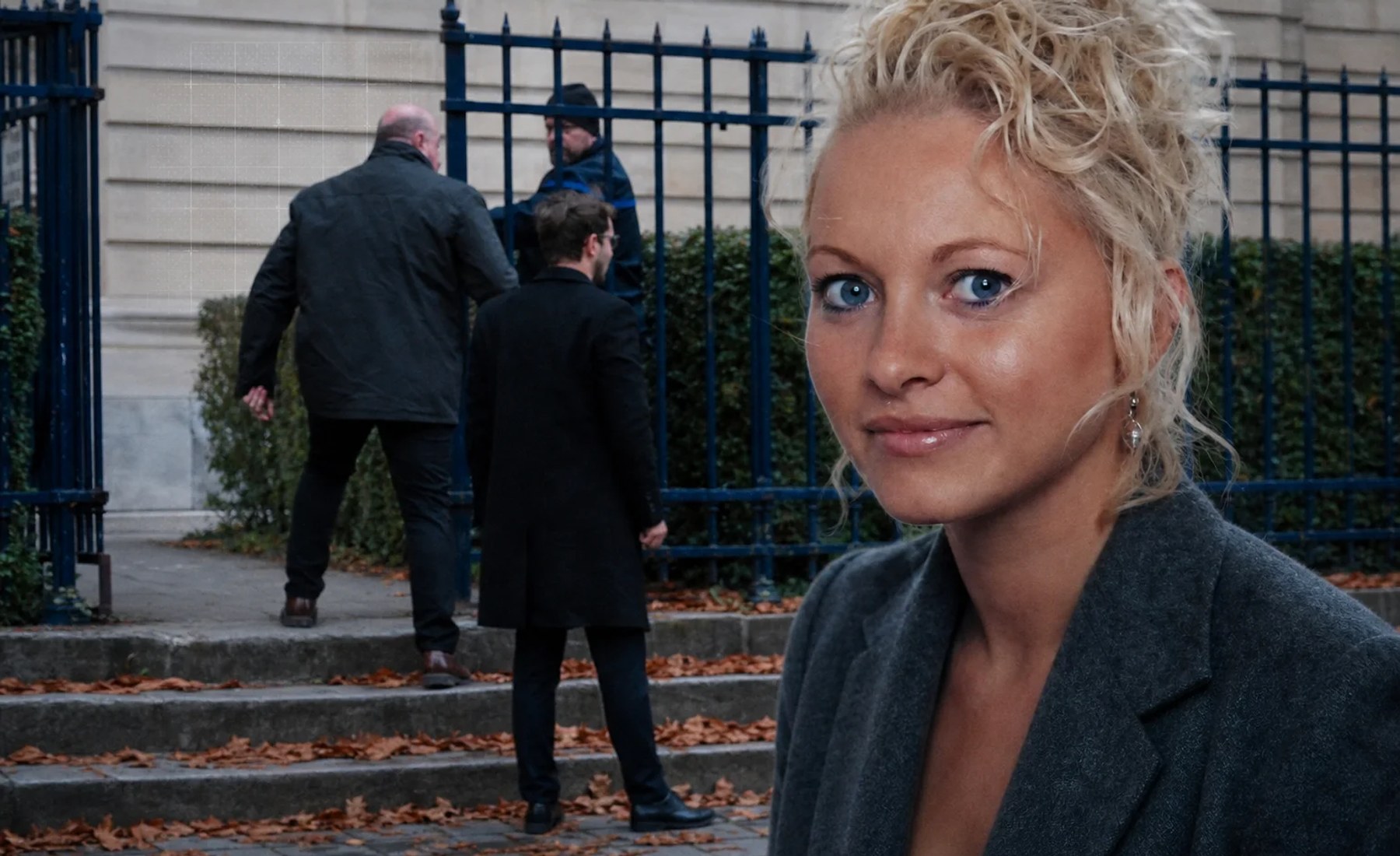


An Evening Drive Through the Fog
Case Timeline
- The 26-Second Call
After her car crashes on a foggy road near Cartigny, Élodie Kulik dials emergency services. The 26-second recording captures her screams and at least two male voices before cutting off.
- Body Discovered
A farmer finds Élodie's partially burned body in a fallow field near Tertry, 4 kilometers from the crash site. DNA evidence is recovered from a discarded condom.
- Mass DNA Dragnet
Police collect DNA from over 5,000 men in the region—one of the largest sweeps in French history—but find no match to the crime scene profile.
Élodie's evening had begun in ordinary fashion. She was a bright, ambitious young woman – at just 24, she had become one of the youngest bank branch managers in France, and she carried herself with confidence and warmth.
On January 10, 2002, after a day's work in the town of Péronne (in the Somme department of Picardy), Élodie decided to have dinner with a close friend, Hervé, in Saint-Quentin, a larger town about a 40-minute drive south in the neighboring Aisne department.
The two friends enjoyed a relaxed meal at a Chinese restaurant, laughing and chatting, and afterward they lingered over tea at Hervé's home. By the time Élodie said goodbye and headed out, it was late – nearing midnight – and a thick winter fog had settled over the countryside.
The temperature had dropped below freezing, coating the rural roads with black ice. Despite the treacherous conditions, Élodie was eager to get home to Péronne, about 25 miles away, where she lived alone. She climbed into her little grey Peugeot 106 and drove carefully into the night, unaware that she was not alone on that road.
As she navigated the D44 departmental road toward Péronne, another vehicle appeared behind her in the haze. What happened next is still partly conjecture, but investigators believe Élodie was followed – and possibly even forced off the road by the trailing car.
Twenty-Six Seconds
Around 12:20 AM, on a lonely stretch of straight road near the village of Cartigny, Élodie's Peugeot suddenly swerved out of control, skidding on the ice. The car tumbled off the pavement and crashed onto the grassy roadside. Dazed but alive, Élodie knew she was in trouble. In that era before smartphones and GPS, her lifeline was her mobile phone. She dialed the emergency number, hoping to summon help to her location.
The operator answered to a chaos of sounds. Élodie's voice came through in a panicked scream – and in the background men's voices barked over the din. "Au secours!…help!" she might have tried to say, but only fragments are audible on the recording.
What is clear is the raw terror in her tone, and the chilling calm of at least two male voices behind her. In the recording, described later as "glaçant" (ice-cold chilling) by those who heard it, one man seems to be issuing orders to another, as Élodie's pleas turn to screams. The 26-second call is abruptly cut off – likely because one of the attackers noticed the phone.
Indeed, the assailants ripped the phone from her hand, yanked out the battery, and tossed the device into a field. The line went dead. On the other end of that line, emergency operators could only alert police that something terrible had happened, but they had scant information – just the shrieks of a woman and unidentified male voices in the night.
A Wrecked Peugeot
By the time responders could triangulate a rough location and reach the area, there was only an empty crash site. About half an hour after Élodie's desperate call, a passing motorist spotted a wrecked Peugeot in a ditch off the D44 near Cartigny and phoned it in.
Police and firefighters converged and found the car's interior smeared with blood and mud. The driver's door hung open. Élodie was nowhere to be found. With sinking hearts, officers feared they had stumbled onto a kidnapping scene – the shattered windshield and deployed airbag suggested a serious accident, but the missing driver and that eerie 112 call pointed to something far more sinister.
A massive search through the foggy fields and woods began in the early hours of January 11. Dozens of gendarmes and volunteers scoured the vicinity around the crash, calling Élodie's name into the darkness. They found nothing that night. Two agonizing days passed.
A Fire in a Fallow Field
Then, on January 12, a farmer in the remote hamlet of Tertry, about 4 kilometers from the crash site, noticed blackened debris in a fallow field that had once been a World War I trench dump. As he drew closer, he realized with horror that he was looking at a partially charred human body. The remains were soon identified as Élodie Kulik.
The young woman had been raped and strangled, and her body had been set on fire in an attempt to destroy evidence. The flames hadn't fully consumed her, though – the killers perhaps fled before the fire did its work, leaving behind a heartbreaking scene. In the ashen grass, investigators noted something else: a used condom discarded near the body, seemingly overlooked by the perpetrators in their haste.
Le Père Courage
For the quiet town of Péronne and the surrounding villages, the news of Élodie's brutal murder was shattering. She had been a beloved figure – bright, compassionate, with a promising career and a close-knit family.
Her father, Jacky Kulik, and her mother, Rose-Marie, were utterly devastated. Élodie was their only surviving child; years earlier, on Christmas 1976, Jacky and Rose-Marie's first two children had died in a tragic car accident, an event from which the family never fully recovered. Now the unthinkable had happened again.
Jacky clutched his wife and wept; Rose-Marie was inconsolable. The trauma proved too much for Rose-Marie to bear – just a few months after Élodie's death, on July 20, 2002, Rose-Marie attempted suicide by ingesting pesticide.
She fell into a coma and lingered, unresponsive, for nine agonizing years. Jacky visited his wife's bedside every single day, watching over her even as he fought for justice for their daughter. Rose-Marie never woke again – she passed away in July 2011, without seeing her daughter's killers brought to answer.
In the span of a decade, Jacky Kulik lost his entire family to tragedy. It's no wonder that locals began to refer to him as "le père courage" – the courageous father – as he channeled unimaginable grief into a relentless quest to see his daughter's murder solved.
Hunting Ghosts
At the outset, however, the investigation into Élodie's case faced daunting obstacles. The crime scene was essentially a burned corpse in an isolated field – not much for detectives to go on. Fortunately, some forensic clues had survived the flames. The discarded condom yielded a full DNA profile from semen inside. Additionally, four partial DNA profiles were obtained from trace evidence on Élodie's body or belongings, and a single fingerprint was lifted from somewhere in the debris.
These clues suggested multiple perpetrators – perhaps two or three men, which aligned with the voices heard on the call. But whose DNA was it? And whose voices? In 2002, DNA databases were still relatively new, and the profile from the condom did not match anyone in France's criminal DNA registry at the time. The fingerprint, too, failed to find a hit. The investigators were left hunting ghosts.
Desperate to find the monsters responsible, the gendarmerie launched a massive manhunt across the region. They first examined whether this could be the work of a serial killer prowling the Somme area. In fact, later in 2002, another murderer named Jean-Paul Leconte was arrested for killing two young women in the same region.
For a moment, investigators wondered if Élodie had been one of Leconte's victims. But Leconte's involvement was quickly ruled out – his crimes, heinous as they were, did not align with the specifics of Élodie's case. This was something else. The brutality inflicted on Élodie – sexual assault, strangulation, burning – suggested perpetrators who were impulsive and cruel, but not necessarily experienced serial killers. Perhaps local men out on the prowl, whose attack escalated beyond anything they'd planned.
The Woman Who Escaped
Leads were scarce. Hervé, the friend who'd had dinner with Élodie, was questioned but he had a solid alibi after she left his house; he was never a serious suspect. Investigators canvassed the route Élodie drove that night and put out appeals for witnesses.
One woman did come forward with a hair-raising story: She claimed that on the very night of Élodie's murder, she had driven past the scene of the crash – and seen two vehicles pulled over, one of them a station wagon, with men standing around. Thinking it was just an accident, she hadn't stopped. But about two months later, this same woman was accosted by a stranger in a car.
A man riding in the front passenger seat of a station wagon tried to attack her and threatened to rape and kill her – frighteningly similar to Élodie's fate. The woman fought back, punching her assailant, and managed to escape. She fled to a highway toll station, where security cameras and attendants were present, and called the police.
By the time help arrived, the would-be attackers had given up waiting for her outside the toll and driven off. Crucially, this brave witness provided a description to police, and a composite sketch was drawn of the man who tried to assault her – a sketch that, unbeknownst to anyone then, closely resembled one of Élodie's future suspected killers. In 2002, however, that sketch did not ring a bell with authorities; it was just one more lead in a case growing colder by the day.
5,000 Swabs
Weeks turned into months, and months into years. The Kulik case became one of France's most perplexing unsolved crimes, but investigators refused to let it go. They formed a special unit of gendarmes dedicated to the case and continued to pursue every avenue.
They even undertook an unprecedented DNA dragnet: by late 2011, police had collected DNA samples from over 5,000 men in the region – one of the largest such sweeps in French history – hoping to find a match to the unknown killer's profile.
Volunteers at factories, farms, and towns around Picardy lined up to have the inside of their cheeks swabbed. It was a testament to how deeply Élodie's murder had shaken the community; thousands of men willingly gave samples to eliminate any doubt and to assist the investigation. Yet, incredibly, not a single one matched the DNA from the crime scene. The killer's profile remained anonymous.
For Élodie's father, Jacky, these years were a nightmare of grief and frustration. While tending to his comatose wife, he also became a familiar figure in police offices, gently pushing the authorities to keep searching for his daughter's killers. He showed up at every memorial, spoke to journalists, and even helped organize a "marche blanche" – a silent white march – in January 2012 to mark the tenth anniversary of Élodie's death. Hundreds of people marched in solidarity through Péronne, holding candles and photos of Élodie, vowing that her memory would not be forgotten and her murder not remain unsolved.
A Father's DNA
As it turned out, the tenth anniversary would mark a dramatic turning point in the case. Unbeknownst to Jacky, behind the scenes a bold new investigative technique was about to crack the mystery wide open. In 2011, a gendarmerie officer named Captain Emmanuel Pham-Hoai, who led the police forensics biology unit, had an idea.
He had been following developments in the United States, where law enforcement occasionally used familial DNA searches – if a crime scene DNA profile doesn't match anyone in the database, you search instead for close but not perfect matches, which might indicate a relative of the perpetrator. Perhaps the killer's own DNA wasn't in the system, but what if his father, brother, or son's DNA was?
It was a long shot, and at that time French law was silent on the use of familial DNA matching. Pham-Hoai approached the examining magistrate on the case, Judge Jordane Duquenne, with the proposal. The judge was intrigued but cautious – was this even legal? After deliberation, Judge Duquenne concluded that nothing in the law forbade it, and in French jurisprudence, that which is not expressly forbidden is allowed.
They had tried everything else; this was unorthodox, but what did they have to lose? With the green light given, the team in late 2011 ran the unknown DNA profile from the condom against the national genetic database (FNAEG) one more time – but this time they looked for partial matches indicative of a familial connection.
In early January 2012, just days after the heartfelt anniversary march, the search hit pay dirt. The crime scene DNA showed a strong partial match to one person in the database: a man named Patrick Wiart. Patrick Wiart was not a suspect in Élodie's case – in fact, he couldn't be, because he was in prison at the time of the murder, serving a sentence for sexual assault on a minor.
But the significance was clear: the DNA found in that condom likely belonged to Patrick Wiart's son. Investigators learned that Patrick had a son named Grégory Wiart, a young man in his early twenties back in 2002. Suddenly, a name had emerged from the DNA soup – a name that had never crossed the investigation's radar in all these years.
Grégory Wiart's Secret
Who was Grégory Wiart? Records showed he had been a plumber, born in 1979 and living in a village not far from the crime scene. Chillingly, investigators also discovered that Grégory had once resided in Monchy-Lagache – the very same small village where Élodie grew up as a child.
It's possible their paths had crossed long ago, though there's no evidence they knew each other personally. As they dug further, more startling news came: they wouldn't be able to interrogate Grégory Wiart, because he was already dead. In fact, he had died in a car crash on November 1, 2003, just a year and a half after Élodie's murder.
The circumstances of that crash were odd – reportedly, on a clear day, Grégory's car had inexplicably sped straight on a direct road and slammed under a oncoming truck, killing him instantly. Some witnesses later whispered that it almost looked deliberate, as if Grégory had committed suicide by driving into the truck. There was no proof of that, but the timing raised haunting questions: had the weight of a terrible secret been bearing down on him?
To be certain that Grégory Wiart was indeed one of Élodie's rapists, prosecutors ordered the exhumation of his body. On January 24, 2012, under winter skies, a team of forensic experts dug up Grégory's coffin from the cemetery of Montescourt-Lizerolles and carefully extracted tissue samples.
The DNA testing confirmed what they suspected – the nuclear DNA from the condom matched Grégory Wiart exactly. After ten long years, Élodie Kulik's case finally had a name attached to it. One of the voices in the fog belonged to 22-year-old Grégory Wiart. But this revelation was bittersweet: they had identified one of Élodie's violators and killers, only to find he was beyond earthly justice.
Grégory would never stand trial or face questioning. And crucially, the evidence from the phone call and the crime itself indicated that he had not acted alone. At least one, perhaps two other men were involved. Élodie's case was far from fully resolved.
Still, the identification of Wiart was a massive breakthrough – the first criminal case in France solved through familial DNA matching. News of the development broke in the media, and the public had mixed reactions. Many hailed the innovative use of science, while others – including privacy advocates – shuddered at the notion of "genetic genealogy" style techniques.
For Jacky Kulik, the father who had kept faith for a decade, it was a moment of hard-won vindication. The police, he felt, were finally on the right track. But justice for Élodie demanded that all her attackers be unmasked. Jacky steeled himself: there was more work to do.
The 4x4 Club
Investigators swiftly turned their attention to Wiart's circle of friends and acquaintances. Who had he been with on the night of January 10, 2002? Did he run with a rough crowd? In small rural communities, people tend to know each other's business, and gossip was that Grégory had fallen in with a bad lot. His parents, when informed of the DNA findings, were stunned; they insisted that while their son had problems, he wasn't capable of such horror alone. Curiously, they mentioned something: Grégory had been bullied and mistreated by certain "friends" on multiple occasions.
Once, he was tied to a tree for two days and humiliated; another time he was locked in a car trunk and beaten – supposedly over some petty money disputes. This aligned with other testimony from locals that a certain older pal of Grégory's was known for aggressive, thuggish behavior – even chasing someone with a van over a nonexistent debt.
These anecdotes painted a picture of Grégory as perhaps not the ringleader type, but rather a troubled young man who might have fallen under the sway of a more dominant personality. If true, it fit with what detectives increasingly suspected: the second voice on that recording may have been the leader, giving commands, while Grégory was the follower.
Phone records, surveillance, and good old-fashioned detective work soon led the gendarmes to focus on a particular group of local men – a tight-knit band of buddies who enjoyed off-road 4x4 driving together in the area. Grégory Wiart had been part of this informal club of four-wheel-drive enthusiasts, and it turned out one of his closest friends in that group was a man named Willy Bardon.
Willy Bardon, age 27 at the time of the murder (seven years older than Grégory), lived in the same village of Montescourt-Lizerolles and had a bit of a reputation. He had run a local bar (cheekily named "Will Bar" after himself) in a nearby town until he was evicted for failing to pay rent. Though Bardon had no criminal record – no entries in the DNA or fingerprint databases – people knew him as a heavy drinker and a rough character.
Investigators discovered something chilling: ten days before Élodie's murder, on New Year's Eve 2001, Bardon and Wiart had spent that holiday evening together at the very same Chinese restaurant in Saint-Quentin where Élodie would dine on January 10. It might be pure coincidence – the restaurant was popular – and there's no indication Élodie encountered them that night. But it was one more eerie connection tying these men to the victim's orbit.
"I Recognize That Voice"
On January 16, 2013 – almost exactly 11 years after the crime – the police made their move. They simultaneously detained seven men from Grégory Wiart's old 4x4 crew for questioning. Among them was Willy Bardon. The men were interrogated for two days straight.
Two were released fairly quickly, their alibis solid and DNA not a match. But by January 18, the investigation zeroed in on one suspect who they believed had been present at the crime: Willy Bardon. That day, Bardon was formally charged (mis en examen, in French legal terms) with kidnapping, false imprisonment, gang rape, and murder of Élodie Kulik. He was promptly remanded into custody to await trial.
The news electrified French media – after a decade of mystery, there was finally a living suspect to answer for Élodie's death.
The case against Bardon was largely circumstantial but compelling. Investigators had placed him in the company of Wiart the night of the murder, and likely in the vicinity of the crime (perhaps driving that second vehicle).
They also knew from the emergency call that at least two perpetrators were involved. But the most damning evidence would come from Bardon's own social circle. When questioned, five of the six other men arrested alongside Bardon – including Bardon's own brother – told police that they recognized Bardon's voice as one of the male voices on Élodie's recorded emergency call.
This was a stunning development: those closest to Bardon, who knew his voice better than anyone, independently pointed to him as the man on the tape. In fact, Willy Bardon himself initially admitted that one of the voices "sounded like" him, according to investigators – only to later retract that admission and vehemently deny having anything to do with the crime.
Perhaps, in that first moment of confrontation, hearing the faint playback of screams and men shouting, he reacted honestly; but he quickly thought better of it and lawyered up. From that moment, Bardon's stance was firm: "I was never there. I'm innocent," he insisted.
The voice recognition evidence was unusual – essentially a form of ear-witness testimony. The actual recording was of poor quality, full of distortion and background noise. It wasn't the sort of crystal-clear clip where a jury could easily discern words or a familiar timbre.
Audio forensic experts who later examined it officially cautioned that it was too degraded to be definitive. But that didn't stop those who knew Bardon from trusting their gut. To them, the way one of the mystery men barked "tais-toi!" or some brief phrase on the tape (reports differ on the exact words) was instantly familiar.
The case against Bardon, then, rested heavily on these witnesses swearing they knew his voice, combined with his association with Wiart and circumstantial evidence of being in the area that night. What it lacked was any physical evidence – none of the DNA or fingerprints from the scene matched Bardon. Prosecutors argued that of course he'd been careful not to leave traces; after all, the perpetrators tried to burn the body to destroy evidence.
The fact that Grégory Wiart's DNA was found and Bardon's was not might simply mean Bardon wore a condom and gloves and "cleaned up" better. "Just because Grégory Wiart didn't take enough precautions doesn't mean Willy Bardon wasn't more careful," one lawyer for the Kulik family pointed out pointedly.
For Jacky Kulik, hearing that one of the suspected attackers was finally in custody was a moment of both relief and torment. Bardon's arrest came one year too late for Jacky to share the news with his wife – Rose-Marie had died just 18 months earlier, still in her coma. Now Jacky stood alone to represent his family's quest for justice.
When reporters asked him for comment, he kept a stoic face. "We have a name now," he said softly. But it was not lost on him that at least one more voice – possibly a third man – remained unidentified. The recording had suggested "two, maybe three" male voices in Élodie's final moments. Who was the third man? Was there a third at all, or had they misheard?
These questions lingered. The authorities quietly continued investigating other members of the group, but no further arrests were made. It seemed that aside from the deceased Wiart, Willy Bardon would be the only person to stand trial for Élodie's rape and murder.
The Recording in the Courtroom
Bardon's lawyers immediately went on the offensive. They proclaimed their client's innocence loudly in the media, emphasizing the lack of DNA evidence tying him to the crime. Over the next few years, as the case inched towards trial, the defense team deployed every legal tactic available. They appealed procedural decisions and tried to get evidence thrown out.
These maneuvers delayed the trial significantly. In mid-2014, after fifteen months behind bars, Bardon was actually released from pre-trial detention by an appeals court, under strict electronic monitoring and house arrest conditions.
The judges reasoned that he had been locked up long enough awaiting trial and could remain free with an ankle bracelet until the courts sorted out the pre-trial disputes. This decision unsettled Jacky Kulik – seeing the man accused of violating and killing his daughter allowed to go home (albeit under supervision) was painful. But he kept faith that a jury would eventually hear the case.
Finally, in November 2019 – nearly 17 years after Élodie's death – the trial of Willy Bardon began at the Cour d'Assises (criminal court) of Amiens. By now, the public was keenly aware of the case's long road and the remarkable DNA story behind it.
The courtroom was packed with journalists and observers, and each day's proceedings made national headlines. At the center of the courtroom sat Jacky Kulik, now in his 60s, quiet but resolute, a portrait of Élodie pinned to his chest. Bardon, then 45 years old, appeared in the defendant's dock, flanked by guards, having shed the electronic bracelet once the trial began. He looked anxious but defiant.
From the outset, Bardon proclaimed his innocence. In a trembling voice, he told the jury, "I was not there. I am innocent… I swear to you," even directly addressing Jacky Kulik with this plea. It was an unusual moment – the accused turning to the victim's father, essentially begging him to believe that he didn't harm Élodie. Jacky gazed back coldly.
He owed this man nothing. Over the course of two weeks, the court was presented with all the evidence painstakingly gathered over the years. The centerpiece, of course, was the 26-second recording of Élodie's emergency call. On the fifth day of trial, the lights were dimmed and the jurors listened to those horrifying seconds that had been etched into so many investigators' minds.
Even through the poor audio quality, the raw fear in Élodie's voice was unmistakable, and hearing it in the courtroom sent chills down everyone's spine. Jacky reportedly shut his eyes tight as his daughter's cry echoed from the speakers. The judges warned the audience to refrain from outbursts. Somewhere on that tape, filtered through layers of noise, were the men who destroyed Élodie's life. The prosecution argued that one of those men was sitting right there in the dock.
Multiple witnesses were called to testify to the voice recognition. One after another, Bardon's acquaintances and friends – including his own brother – took the stand and affirmed that they recognized Willy's voice on the tape. One witness said the intonation and local Picardy accent in the recording were "100% Willy."
Another described feeling sick to his stomach because he instantly knew it was his friend speaking on that tape. The defense attorneys attacked this line of evidence fiercely. They reminded the court that audio experts themselves had concluded the recording was so bad that no formal voice identification analysis could be made.
They suggested the witnesses were influenced by each other or by hearing the tape repeatedly. "It's almost inaudible! The experts all said we cannot be sure who's speaking," Bardon's lawyer Gabriel Dumenil argued, practically shouting. "Even a family member can be mistaken when a clip is that short and distorted. There is a serious chance of error."
Furthermore, the defense hammered on the fact that not a shred of Bardon's DNA or fingerprints was found – nothing tying him scientifically to the scene. They pointed out that Bardon had voluntarily given a DNA sample in 2013, and it did not match any of the partial profiles from the crime. To them, this wasn't a coincidence but proof of innocence.
The prosecution (a combination of the state prosecutor and the Kulik family's lawyers, who under French law can join the case as parties civiles) countered this by walking the jury through the events of that night as they believed they happened.
They painted Bardon as an integral part of a "pacte de sang" – a blood pact between at least two men who set out together and committed an unspeakable crime. Perhaps the men were out driving around in Bardon's 4x4 truck, perhaps they had been drinking, and when they encountered Élodie on that foggy road, a twisted idea took hold.
What are the odds, the prosecutors asked, that Wiart – Bardon's close friend – just happened upon a random woman in distress and that Bardon wasn't with him? They reminded the jurors that Bardon and Wiart were practically inseparable that winter, seen together often. Indeed, evidence showed they had even eaten together on the very evening of the crime.
The suggestion was that Bardon was the older "leader" and Wiart the younger "henchman." On the tape, the men's voices are disturbingly calm compared to Élodie's terror – one voice even seems to reassure or direct the other, as if one man was in charge. Prosecutor Alexandre de Bosschère told the court, "We have two individuals acting in concert. They were confident enough to speak calmly while committing a horrifying act". Bardon, he implied, was the confident one – the one who got away with it for years.
Thirty Years
After two weeks of intense testimony, closing arguments wrapped up. The jurors (three professional magistrates and six citizen jurors, in the French system) retired to deliberate. They had to sift through 17 years of evidence and two starkly different narratives.
Outside, rain pelted the streets of Amiens as night fell on December 6, 2019. In the courthouse corridors, Jacky Kulik paced quietly, clutching a photo of Élodie and a rosary. Willy Bardon sat in a holding room, guarded, his face ashen. He knew that if the jury returned with a guilty verdict, he faced up to life in prison.
Late that evening, everyone was called back into the courtroom. The foreperson announced the verdict: Willy Bardon was found guilty of the kidnapping, sequestration and rape of Élodie Kulik, resulting in her death. However, on the charge of murder, the jury delivered a not-guilty verdict. This split decision was somewhat confusing – essentially they held Bardon responsible for all the acts leading to Élodie's death, but stopped short of saying he intentionally killed her.
In French legal terms, he was convicted of "enlèvement et viol en réunion suivis de mort" (kidnapping and gang-rape followed by death) but acquitted of meurtre (murder). The distinction might have been the jury's way of indicating that perhaps they couldn't be certain who physically strangled her, Bardon or Wiart. Regardless, the outcome was a harsh sentence: 30 years of incarceration – exactly what the prosecutors had asked for.
In France, a 30-year sentence is extremely severe (second only to a life sentence), reflecting the gravity of the crimes. As the verdict was translated for Bardon, he bowed his head. A collective hush fell over the room, followed by the muffled sob of relief from the Kulik family's side.
Jacky Kulik broke down in tears, clutching his relatives in a tight embrace. Justice – or some measure of it – had finally been achieved for his daughter after nearly two decades. "Now justice has been done for Élodie," he said, voice trembling with emotion. "Tomorrow, I will be able to go to her grave and to Rose-Marie's grave and tell them that I did my job."
Those who heard him speak were struck by the profound weight behind those words. Jacky had promised his dying wife he would get justice for their little girl, and he had delivered. Yet it was a bitter victory – nothing could bring Élodie back, and the trial had forced him to relive her suffering in harrowing detail.
Suddenly, a commotion stirred on the defense side. Before anyone could react, Willy Bardon stood up in the defendant's box, swallowed something, and collapsed. His eyes rolled back and foam appeared at his mouth. Gasps and cries erupted in the courtroom.
Guards rushed to restrain him as he convulsed, and someone shouted to call medics. In a shocking turn of events, Bardon had attempted to commit suicide by poisoning himself right there in court, moments after hearing the verdict. Panic ensued – was the convicted man about to die on the spot? It turned out Bardon had somehow smuggled a lethal pesticide into the courtroom, hidden in capsules on his person.
Later investigation suggested he had emptied some medication capsules and refilled them with Temik, a potent insecticide banned in France, and kept them in his pocket or a handkerchief. As the verdict was read, he discreetly popped the poison pills. Bardon had actually told a friend or relative beforehand that he would never go back to prison, no matter what. He meant it – this was a planned, desperate act.
For a tense span of minutes, it was unclear if Bardon would survive. Paramedics arrived and ferried the unconscious man to a hospital under police guard. The courtroom was cleared. Jacky Kulik watched in stunned silence as the man convicted of raping his daughter was wheeled out on a stretcher, fighting for his life – a life that would now continue behind bars if he lived.
The dramatic suicide attempt provoked intense debate. Some wondered if it was the ultimate act of a wrongfully accused man – an innocent who preferred death over injustice – or simply the cowardice of a guilty man who couldn't face the consequences. Bardon's own lawyers, visibly shaken, said he had been overwhelmed by despair: "He repeatedly said he could not bear going back to prison," one attorney told reporters the next day.
On the other hand, Élodie's family and their lawyers remained convinced of Bardon's guilt, and they didn't wish him dead. "We want justice, not the death of a man," said one of the Kulik lawyers, emphasizing that seeing Bardon carried out after poisoning himself was a shock to everyone. Bardon did survive. After a few days in a coma, he regained consciousness in intensive care. Within a week, he was well enough to be transferred to prison, where he was kept under suicide watch.
No Escape
Given the high-profile and emotional nature of the case, it was almost certain there would be an appeal. In France, both the defense and prosecution have the right to appeal a verdict in a criminal case, and an appeal is essentially a new trial at the appellate Cour d'Assises with a different jury. Bardon's team quickly filed an appeal – unsurprising after such an outcome.
In the meantime, in September 2020, Bardon was actually released from prison (for the second time) under strict judicial supervision pending the appeal trial. He had spent about 9 months in custody post-verdict, but the courts allowed him out under conditions until the next trial.
However, he didn't remain free for long – a month before the appeal was set to begin, Bardon violated the terms of his release by attempting to make contact with a witness, and the judge ordered him back into pre-trial detention in May 2021. This incident cast Bardon in a poor light; it hinted at potential intimidation or interference, though details were not made public. It did show, at least, that Bardon was still fighting hard to avoid prison.
In June 2021, the appeal trial commenced in Douai, a city in northern France, before the Cour d'Assises of the Nord department. The change of venue from Amiens to Douai (about 80 km apart) was likely granted to ensure an unbiased jury, given the extensive media coverage in Picardy. Over roughly two weeks, the entire case was relitigated.
Bardon, now recovered and composed, once again took the stand to deny any part in the crime. His lawyers doubled down on the lack of material evidence, reminding jurors that not a single DNA sample or fingerprint tied Bardon to the scene.
They argued that the prosecution's theory was full of holes: Sure, Wiart's DNA was there – no one disputed Wiart's involvement – but that doesn't automatically mean Bardon was with him, they insisted.
They posited alternative scenarios: perhaps Wiart had other buddies, or maybe even the unthinkable – that the voice recognition was mistaken and Bardon truly wasn't there at all. The defense highlighted every ambiguity. "This tape – it's almost impossible to identify anyone from it scientifically," Lawyer Dumenil emphasized to the new jurors, pointing out that multiple audio experts had testified to that effect in the first trial. "If even an expert can't be sure, how can we send a man to prison on this? The whole case is an abyss of doubt," he argued, calling the prosecution's case "une fumisterie" – a sham.
The civil party lawyers (Didier Seban and Corinne Herrmann, representing Jacky Kulik) countered with passion. They had been dogged advocates for solving cold cases in France, and Élodie's case was one they took personally.
They urged jurors to use common sense: Who else could it have been, if not Bardon? Bardon was the one friend of Wiart's who fit all the pieces. He was the one whose voice multiple people independently recognized. He was part of the 4x4 outings and had even been placed near the scene by the earlier witness's account (that ex-restaurateur with the composite sketch).
They reminded the court that Bardon initially all but admitted the voice was his before he changed his story. And they stressed that Élodie's body had been burned specifically to destroy evidence, which showed the perpetrators' consciousness of guilt.
Of course Bardon's DNA wasn't found – he likely wore a condom (hence no semen except Wiart's, who perhaps was less careful or lost the condom) and gloves (hence an unidentified fingerprint was left by maybe a third man, or even by first responders, but not Bardon).
The lack of DNA, they argued, did not equate to lack of guilt. Meanwhile, the prosecutor in the appeal, perhaps mindful of the nuance from the first verdict, pushed the jury not to let Bardon escape the murder charge this time. Even if Bardon hadn't personally strangled Élodie, under French law being a co-author of the kidnapping and rape that led to her death was sufficient for a murder conviction.
They also pointed out Bardon's behavior after the first trial – his suicide attempt – could be seen either way, but they urged jurors not to let sympathy cloud their judgment. "Some took it as an innocent man's despair," Seban said of the poisoning incident, "But our conviction in his guilt has not wavered. We seek justice, not vengeance."
In the end, on July 1, 2021, the appellate jury returned a verdict that was even more severe. They found Willy Bardon guilty on all counts – including the murder of Élodie. The sentence remained 30 years in prison, unchanged, but now Bardon officially bore the label of murderer as well.
For Jacky Kulik, who was present through it all again, this was true justice: the court had unequivocally held Bardon responsible for every aspect of the crime. Outside the courthouse, reporters captured the moment Jacky stepped out into the summer sunlight, tears in his eyes. It had taken 19½ years, but at last, the legal saga was ending. Bardon, who had listened to the second verdict in stony silence, announced through his lawyers that he would continue to fight.
He immediately filed a further appeal to the Cour de Cassation (France's highest court of appeal, which reviews matters of law, not fact). However, in November 2022, the Cour de Cassation rejected his appeal, upholding the conviction and 30-year sentence.
Bardon's guilt was final in the eyes of French justice. Still proclaiming himself wronged, Bardon made a last-ditch appeal to the European Court of Human Rights – an external tribunal in Strasbourg that examines if legal proceedings violated fundamental rights.
In September 2023, the ECHR declined to take up Bardon's case, effectively slamming the door on any further recourse. Willy Bardon, now in his late 40s, will remain in prison until at least the 2030s, and possibly longer if he is not granted early release. By most accounts, he has been a model prisoner – quiet, perhaps humbled – but he still refuses to admit any involvement in Élodie's death.
Le Père Courage's Promise
Today, more than twenty years after that foggy January night, the case of Élodie Kulik stands as a landmark in French criminal history – both for its tragedy and for the investigative innovations that eventually unraveled it. It was the first case in France solved using familial DNA matching, a technique that has since been adopted in other cold cases.
Some mysteries do linger. Who was the third voice on the recording, if there was one? The court officially recognized only Wiart and Bardon as the culprits. It's possible a third man was present but never identified; it's equally possible that the audio distortion made two men sound like more.
The case is considered closed by law enforcement, with no active search for additional suspects publicly known.
Jacky Kulik, now in his seventies, has done what he promised his daughter – he brought the truth to light. "Justice has been done for Élodie," he said, the night of that first verdict in 2019, tears in his eyes. "Tomorrow I will go to their graves and tell them I did my job." One can only hope that, in the quiet of his remaining years, this remarkable father can find some measure of solace in that fact.
Primary reporting and references
- Affaire Élodie Kulik
WikipediaJan 01, 2024
- Affaire Élodie Kulik : Jacky, un père courage
PublicJan 01, 2014
- Rapist who swallowed poison pill after being found guilty of murdering Élodie Kulik dies
The IndependentSep 25, 2020
- Affaire Élodie Kulik : Willy Bardon avait prémédité son geste suicidaire
Le Journal du DimancheDec 07, 2019
- Suspect swallows poison after verdict in French murder case
RFIDec 07, 2019
Related episodes
The Travel Companion
A missing traveler's family receives strange messages from a woman claiming to be his companion.
Noa's Last Ride
Familial DNA finally identifies the man who murdered teenager Noa Eyal decades earlier.
The Emilie Meng Murder Solved
A teenager vanishes after leaving a train, and a second abduction cracks the case seven years later.