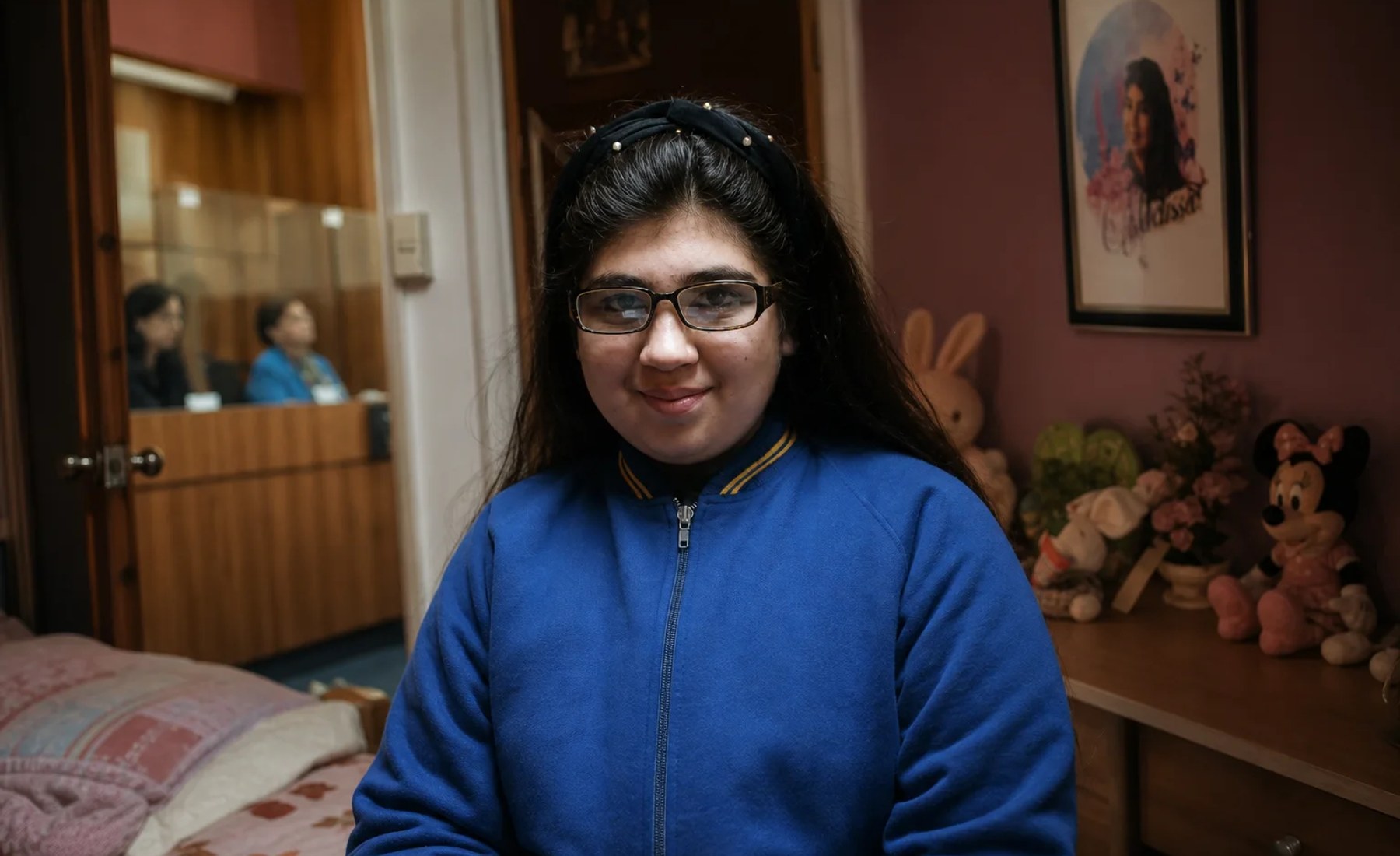


A Morning in Villa Talinay
The morning of Thursday, November 26, 2020 started off ordinarily enough in Villa Talinay, a modest neighborhood in the Coquimbo region of Chile. Melissa Denis Antonella Chávez Ardiles was at home that morning; school was virtual due to the pandemic, and the 7th-grader was enjoying the start of her summer break. She lived with her mother, 35-year-old Mirta Ardiles, her mother's longtime partner Luis Santander, and her little half-brother (Mirta and Luis's son, age 7).
The family rented a simple single-story house on Pasaje Papa San Anacleto, and by all accounts, they kept to themselves. One neighbor later described them as "a common, ordinary family… I never noticed anything strange."
Around 10:30 AM, according to statements Mirta would later give, she left the house to run some errands. By her account, she left both children – Melissa and her brother – at home watching TV. Luis, the children's stepfather (and the boy's biological father), was also out of the house at that time; neighbors say they saw him leave earlier in the morning. For a brief window, the two kids were apparently alone at home. It was during this window that disaster struck.
Smoke Over Pasaje Papa San Anacleto
Sometime after 11:00 AM, thick smoke began pouring from the Chávez residence. Neighbors recall the acrid smell and the sight of black smoke curling out under the eaves. One nearby resident, alarmed by smoke and the thought of children inside, ran to help. He forced his way into the house and found flames spreading in a bedroom. The heat was intense. The neighbor could hear nothing over the roar of the fire, but he knew he had to act fast. He managed to find Melissa's young brother, who was crying and scared, and led the boy outside to safety. But the smoke was too dense to reach Melissa's room.
Within minutes, local firefighters (Bomberos) arrived and took over. They battled the blaze, containing it before it could consume the entire property. As soon as it was safe to enter, firefighters made a grim discovery: Melissa's body was on the top bunk bed in her bedroom. She had no pulse. They carried the 12-year-old out, but it was far too late.
Paramedics could only confirm that Melissa was deceased. In the chaos, Mirta Ardiles returned to the scene – reportedly coming back from her errand to find her home charred and crawling with first responders. One can only imagine the scene: Mirta screaming her daughter's name, being held back as she tried to run into the blackened shell of the house, and collapsing in anguish when told Melissa hadn't survived. Luis Santander also arrived not long after; neighbors say he sprinted back, "desperate as smoke was pouring out," even needing to be restrained by Carabineros (police) from rushing inside.
The immediate assumption in those first hours was that this was an awful accident. Neighbors speculated that an electrical short-circuit or malfunctioning appliance might have sparked the fire. The home was older and likely had aging wiring. In fact, while firefighters were still on scene, police at first indicated Melissa's death was caused by the fire itself – likely smoke inhalation.
The local news that day reported that a 12-year-old had tragically died in a house fire, and initially that was all anyone knew.
White Balloons and Whispered Questions
Melissa's relatives and community were devastated. The Colegio San Luis, where Melissa was a student, organized a memorial to honor her short life. Just one week after the fire, on December 3, 2020, teachers, classmates, and family gathered for Melissa's funeral.
It was an unbearably somber occasion. "Lágrimas, globos blancos, silencio y sollozos," wrote a local newspaper – "Tears, white balloons, silence and sobs set the scene at the funeral." Dozens of Melissa's seventh-grade classmates stood with white balloons, eyes red from crying. Her teacher, Profesora Deisy Aquea, spoke through tears at the school courtyard, recalling Melissa's warm and generous heart.
"Amar y ser amado es el mejor regalo… y así Melissa nos regaló ese sentimiento," she said – "To love and be loved is the greatest gift, and that is what Melissa gave us." She described an enthusiastic girl who could light up the class with her smile, a girl who loved helping others.
The interim school director added that Melissa was extremely caring and dreamed of one day becoming either a social worker or a teacher – dreams now painfully cut short. Friends in attendance remembered how much Melissa adored little children; she often helped look after younger kids at school and in her neighborhood. (In fact, Melissa once mentioned she wanted to become a kindergarten teacher, because "she loved children so much," one of her friend's mothers would later recall.)
As the funeral drew to a close, mourners placed flower petals on Melissa's coffin amid soft applause, a Chilean sign of respect in the face of tragedy. Family members called for justice. Some in the crowd cried out for the authorities to find whoever was responsible for the "accident." At that point, many believed no crime had occurred at all – or if it had, that some outside intruder must have been involved.
The idea that someone in Melissa's own family could have hurt her was too devastating to entertain. In fact, when early rumors surfaced that the police were treating the death as suspicious, Melissa's relatives bristled. They even resented comparisons some strangers made to another high-profile child murder case – the "Caso Ámbar" in 2020, where a mother and her partner had killed a young girl. To them, such comparisons were outrageous and premature. They just wanted the truth of what happened in that burning house.
But the truth, when it came, would send shockwaves through this community and beyond. In the days following the fire, investigators quietly began examining the charred scene and conducting an autopsy on Melissa's body. What they found changed everything.
The Homicide Brigade Arrives
On the afternoon of the fire, while the ashes were still cooling, Chile's Investigative Police (PDI) – specifically the Brigada de Homicidios (Homicide Brigade) from the regional headquarters – took charge of the scene. In Chile, the PDI (Policía de Investigaciones) are the plainclothes detectives responsible for forensic work and criminal investigations, akin to the FBI in the US. Whenever a death is in the least bit suspicious, they get involved alongside the local prosecutor's office (Fiscalía).
The firefighters had already noted that the blaze seemed mostly confined to one bedroom. That was a red flag. In a typical accidental house fire, flames spread more unpredictably. Here, the fire had been concentrated where Melissa was found, charring her bunk bed and part of her room's furniture. Arson was immediately suspected. Investigators began methodically combing through the debris: warped bedframe, scorched walls, melted plastic. They collected samples of ash and debris to test for accelerants (like gasoline or lighter fluid). They mapped burn patterns and noted where the fire damage was most severe.
Meanwhile, the regional medical examiner at the Servicio Médico Legal (SML) performed an autopsy on Melissa. Those results came back within days, and they were startling. Contrary to what one might expect, Melissa did not die from smoke inhalation or burns at all. Soot in her airway was minimal. Instead, the autopsy uncovered signs of blunt force trauma and stab wounds on her body. One severe blow to her head – a traumatic cranial injury – and multiple sharp-force injuries indicated she had been attacked before the fire started. In other words, Melissa was already dead or dying when the flames ignited.
A Body That Spoke
This development transformed the case overnight. What had been handled as a fire fatality was now unquestionably a homicide. As Coquimbo prosecutor Yocelyn Weisser announced on December 1, 2020, "la muerte de Melissa no se produjo por asfixia ni por el fuego, sino que hubo participación de terceras personas" – Melissa's death was not due to the fire or suffocation; there was third-party involvement. The fire, it appeared, was deliberately set to cover up the real cause of death. Investigators now faced two critical questions: Who killed Melissa, and who set the fire?
The small home was secured as a crime scene. Specialists from the PDI's Crime Lab in Santiago were called in to assist, bringing in forensic experts in biochemistry, fire dynamics (electromechanical), and planimetrics (crime scene mapping).
Given that the fire and subsequent water from the firefight had altered evidence, the team needed to reconstruct what had happened step by step. They used 3D scanners to create a digital model of the room, noting the burn patterns on the bunk bed. It was determined that the fire had been ignited on the lower bunk mattress of Melissa's bed. From there, it scorched upward, burning the top bunk where her body lay, but it hadn't spread much beyond the bed and some nearby furniture. This was consistent with a deliberately set, localized fire.
Chemical analyses of the debris detected traces of an accelerant on the mattress – likely some kind of flammable fluid used to ensure the fire caught quickly. The forensic firefighters concluded that the blaze had been started intentionally at one ignition point (Melissa's bed) and had not resulted from an electrical short or appliance malfunction. The earlier theory of an "electrical problem" was definitively ruled out.
At the same time, homicide detectives were interviewing anyone who might have information. They spoke with neighbors, who recounted what they saw that morning. One neighbor's testimony was especially telling: he confirmed that both adults – Mirta (the mother) and Luis (the stepfather) – had left the home that morning, and that the fire erupted while the children were alone. He even described how Luis returned during the fire, distraught and trying to get inside.
Another neighbor vouched that the family seemed normal and she "couldn't imagine the parents having anything to do with the girl's death," suggesting the possibility of an outside intruder. These accounts gave investigators a timeline: the last known people with Melissa before she was killed were her own family.
Naturally, the focus of suspicion narrowed on the two adults who had been in the house that morning. From early on, Mirta Ardiles – Melissa's mother – and Luis Santander – Mirta's partner and Melissa's stepfather – were persons of interest.
Standard procedure in Chile (as elsewhere) is to interview close family in such cases, both to get information and to gauge their behavior. Mirta was interviewed at length shortly after the fire. It's not publicly known exactly what she told police at that point beyond the basics – that she had left to run errands – but investigators later noted inconsistencies in her statements.
For example, Mirta claimed she was only away from the house briefly, but forensic analysis suggested a longer window in which Melissa died and the fire was set. Also, if an intruder had entered the home in that short span, there were no signs of forced entry (aside from the door the neighbor himself had broken during rescue). Nothing was stolen; nothing was out of place except in the burned bedroom. It was hard to imagine a random criminal sneaking in to stab a child and torch a bed in broad daylight with no motive.
As for Luis Santander, at the time of the initial investigation in late 2020, not much was publicly revealed about his account. Luis told police he had left that morning for work or errands (the details are scant) and had no idea what occurred until he returned to find the fire. Investigators noted that Luis's whereabouts during the crucial window (10:30–11:30 AM) needed verification. Did anyone see him away from the scene? Phone records and CCTV from around the area were sought to corroborate both Mirta's and Luis's claims about that morning.
From an outside perspective, by early December the case seemed to be a whodunit with only two realistic suspects: Melissa's mother or her stepfather – or both acting together. Yet, publicly, no names were released and no arrests were made in those first weeks. The authorities kept a tight lid on the details as they built their case. They wanted to be sure before accusing a mother or stepfather of such a heinous act.
Meanwhile, the community's grief turned into impatience. As the year 2020 drew to a close, Melissa's extended family – including her biological father's relatives – began pressing the authorities for answers. "We want concrete proof to find those responsible… we'll cooperate fully," they told the local press. At that point, they still spoke as if the culprit could be an unknown outsider. In truth, investigators were closing in on a very uncomfortable possibility: that Melissa's killer was someone under her own roof.
A History the Courts Had Buried
While forensic work went on, detectives dug into the family's history. What they discovered was an alarming prior case that suddenly cast the present tragedy in a new light. They learned that back in 2014, Mirta Ardiles herself had reported Luis Santander for sexually abusing Melissa. Melissa was only 6 years old in 2014 – a tiny child – and Luis was her stepfather figure. According to family court records, Mirta came forward that October to accuse her partner (Luis) of molesting her daughter. This was not just gossip or hearsay; it was a formal complaint that triggered a full investigation and protective measures. In fact, a Family Court removed Melissa from Mirta's custody in 2014 after the abuse allegations surfaced, to ensure the child's safety.
For a period of about 17 months (late 2014 through early 2016), Melissa did not live with her mother. Instead, she was placed in the temporary care of her paternal aunt, Gina Chávez. (Melissa's biological father, Denis Chávez, was apparently unable to care for her at that time due to personal issues – he was battling depression and alcoholism, as noted in court documents.
So his sister Gina stepped in to take Melissa.) During this time, Mirta Ardiles was allowed limited visitation but was primarily required to complete a parental suitability program and receive counseling. She also, crucially, was expected to cut off all contact with the accused abuser – Luis Santander – if she hoped to regain custody of her daughter.
For over a year, Mirta appeared to comply. She attended therapy sessions, parenting classes, and underwent psychological evaluations as mandated by the family court. Reports from that period indicate she was "an exemplary participant" in the program. She also assured everyone – the court, her own family, and the professionals – that she had ended her relationship with Luis Santander for good. By March 2016, the investigation into the alleged sexual abuse was closed without charges – ostensibly for lack of sufficient evidence, after Mirta suddenly retracted her accusation.
Mirta's Deception
This part is important: Mirta withdrew her claim that Luis abused Melissa, which effectively halted the case. Observers later suggested Mirta did so because she feared if the case proceeded, Melissa might remain in foster care or be sent to a children's home permanently. With the abuse case shelved and Mirta having completed her courses, the Family Court returned Melissa to Mirta's custody in 2016. On paper, it looked like a family reunited after a dark chapter. Mirta had promised that Luis was out of their lives, and professionals found no overt psychological issues with Mirta that would make her unfit.
But Mirta Ardiles had deceived them all. As would later come out, Mirta never truly cut ties with Luis Santander. She had only pretended to end the relationship to satisfy the court. In reality, Mirta and Luis continued to see each other secretly. By the time the protective supervision ended, Mirta brought Luis right back. Essentially, as soon as oversight lapsed, he moved in again. Mirta's own family (and certainly the court) did not realize this at the time – she had lied to them too, insisting she had broken up with him while she in fact had not.
Think about the weight of that: Mirta had once believed (or at least stated) that Luis molested her little girl. She had fought to get Melissa away from him, only to reintroduce him into the home as soon as she could. Why would a mother do that? Some who knew Mirta later speculated that she was deeply emotionally dependent on Luis – that she feared being alone more than anything, even if it meant endangering her daughter. Others suggested Mirta might not have believed Melissa, or convinced herself it was a misunderstanding, in order to reconcile with Luis. We may never fully know her mindset. But this much is clear: by 2020, Mirta Ardiles, Melissa, Luis, and the young son they'd had together were all living under one roof again, as if 2014 had never happened.
Jealousy as Motive
This newly uncovered history was a bombshell for the investigators in 2020. It established a possible motive that was previously unimaginable: could it be that Mirta was jealous of her own daughter? That she resented Melissa because of Luis's sexual interest in the girl? It's an awful, twisted thought – a mother perceiving her 12-year-old as a rival – but the prosecutors would later argue exactly that.
Chilean law has a term for a parent killing their child: parricidio (parricide). It's one of the most serious crimes on the books, historically even punishable by death (though Chile abolished the death penalty in 2001, opting for life imprisonment). If Mirta had indeed murdered Melissa, it would be charged as parricidio. But to convince a court, prosecutors knew they needed solid evidence, not just a general idea of jealousy.
Investigators thus had two parallel tracks: the physical evidence (forensics from the scene and autopsy) and the behavioral evidence (motive and history). By late 2020, the physical evidence strongly indicated Mirta's involvement: after all, she was the last adult with Melissa and had opportunity to commit the crime and start the fire. There was no sign of any unknown intruder or third-party at the scene. And tellingly, the 7-year-old brother was left completely unharmed. If some stranger had broken in to kill Melissa, would they really spare the only witness, a small boy? It seemed unlikely. The scenario made far more sense if the perpetrator was someone who cared about the boy – say, his own parent – and had a specific animus toward Melissa.
The autopsy findings also hinted at the dynamics: Melissa had both old and new injuries consistent with long-term abuse. While details are understandably shrouded to protect the child's dignity, reports confirmed that there were signs of reiterada sexual abuse over a period of time. (Indeed, charges would later reflect abuse happening in 2014 and again in 2020.)
This suggested that Luis had continued abusing Melissa in the years after he returned to the household – possibly right up until the day she died. There was even evidence that Melissa suffered a sexual assault on the very day of her death (November 26, 2020) though Luis would eventually be acquitted of the specific charge of rape due to technical definitions, as we'll see. Nevertheless, those findings underscore what a nightmare Melissa was living: she was being victimized in her own home, and her mother knew it – in fact, her mother had known for years.
All these revelations intensified the urgency of the case for the detectives and prosecutors. They now believed the motive for the murder was twofold: jealousy and silencing. Jealousy, in that Mirta was enraged or resentful of her daughter over the "relationship" (abusive and non-consensual as it was) that the stepfather had with the girl. And silencing, in that perhaps Melissa at 12 was old enough to reveal the ongoing abuse to authorities or others, threatening to send Luis to prison and break apart the family again – something Mirta would not allow.
In the prosecutor's theory, Mirta chose to "solve" this horrific situation not by protecting her daughter, but by protecting her partner. She allegedly decided to eliminate Melissa to both remove the object of Luis's attention and to destroy the evidence of his crimes. As one chilling prosecution remark put it, "Instead of protecting and supporting her daughter, she chose to protect the abuser."
The Mother Who Begged for Justice
By early 2021, the investigation had gathered considerable evidence pointing to Mirta. On February 3, 2021 – a little over two months after Melissa's death – the case took a dramatic turn: Mirta Ardiles was arrested. The Investigative Police detained her in Coquimbo and brought her in for a formal charging hearing (control de detención) at the La Serena courthouse the next day. This news stunned many in the community who had attended the funeral and heard Mirta's pleas for justice. How could the mother, who had wept so convincingly over her child's coffin, now be the prime suspect?
Prosecutor (Fiscal) Adrián Vega and his team presented the initial charges: parricidio (parricide) for the intentional killing of her daughter, and incendio (arson) for setting the house fire to cover it up. In Chile's system, a person can be charged if there is sufficient evidence, and they typically are held in custody during the ensuing trial preparation if considered a danger or flight risk.
In Mirta's case, the judge agreed with the prosecutor that she should be remanded in custody (prisión preventiva) pending trial. The judge noted that Mirta posed a danger to society – strong words for a 35-year-old mother with no prior criminal record, but the nature of the accusations warranted it.
Cameras captured images of Mirta being led by PDI officers, wearing a mask (it was pandemic times) with her hair disheveled, into a police vehicle. The face that the public had seen contorted in grief at the funeral was now stony and downcast. The contrast was, as one TV headline put it, "El día en que la madre pedía justicia… hoy está en prisión preventiva" – "The day the mother begged for justice… today she's in custody for the crime." It was a development as bewildering as it was horrifying.
Yet, not everyone was convinced of Mirta's guilt at first. Interestingly, some of Melissa's family members defended Mirta in the immediate aftermath of her arrest. One of Mirta's older daughters (from a prior relationship), who was 21 in 2021, spoke on a morning TV show to assert her mother's innocence. "I know what my mom was like, what her relationship with my sister was… I never saw anything bad."
She insisted Mirta was a loving, affectionate mother and that her heart told her Mirta "is innocent." This daughter (Mirta's child from a previous marriage) had not lived with them for years, so it's possible she truly had no knowledge of the abuse or the tensions in that household. Her loyalty and disbelief are understandable – it's incredibly hard to accept that someone you love could be capable of such evil. Other relatives were more cautious, adopting a "let's wait for the evidence" stance. But clearly, Mirta had allies who wanted to believe her pleas of innocence, at least early on.
Meanwhile, what about Luis Santander, the stepfather? In February 2021, when Mirta was arrested, Luis was notably not immediately charged alongside her. This raised eyebrows: if the motive was to cover his abuse, was he involved in the murder plot?
Or was Mirta being portrayed as the sole killer? Authorities remained tight-lipped. However, behind the scenes, they were actively investigating Luis as well – particularly the sexual abuse angle. They had reopened the 2014 abuse case formally and were digging into evidence that Luis had been molesting Melissa up until 2020.
For a while, Luis's whereabouts after the fire were uncertain. Family members told media in early 2021 that they hadn't heard from him since the incident. There was speculation that he might have gone on the run, fearing that the spotlight would turn to him next. Indeed, two months after Mirta's arrest, a Chilean TV program posed the question: "Where is Melissa's stepfather?" The community of Coquimbo was on edge that a potential child molester and accomplice to murder could be at large.
Luis Santander's Reckoning
It took until November 2021 – nearly a year after Melissa's death – for the police to finally arrest Luis Santander. The PDI's Homicide Brigade tracked him down and took him into custody on November 18, 2021. He was formally charged with reiterada sexual abuse and rape of Melissa. However, notably, he was not charged with murder or arson. This suggested that prosecutors believed Mirta alone carried out the killing and the fire, whereas Luis's criminal responsibility was "only" for the sexual crimes that led up to it.
Luis's arrest brought a sense of relief to Melissa's relatives – now both of the people closest to the girl were in custody and facing justice. He was ordered held in preventive detention as well, charged with multiple counts of sexual assault dating back to 2014 and including 2020. It had taken a long time, but at last, the wheels were fully in motion to address every facet of this tragedy.
51 Witnesses
As 2022 unfolded, prosecutors prepared for a complex trial. In Chile, major cases like this proceed to a Juicio Oral (oral trial) in front of a panel of three judges who will hear all the evidence. By October 2022, the Fiscalía (prosecutor's office) formally filed its accusation document with the court, outlining the charges and evidence against Mirta Ardiles and Luis Santander.
It was a hefty file – 23 pages long, listing 51 witnesses and 18 expert witnesses that the prosecution intended to call. The charges were: for Mirta, parricide and arson; for Luis, repeated sexual abuse (and initially rape) of a minor. Mirta was also listed as an accomplice to the sexual abuse – essentially accusing her of allowing or facilitating the abuse by not protecting Melissa. (That particular legal nuance would be debated in trial – ultimately, as we'll learn, she was acquitted of being an accomplice to abuse, since the murder and cover-up effectively overshadowed that charge.)
Prosecutors announced they would seek the maximum penalties: presidio perpetuo (life in prison) for Mirta if convicted of parricide, plus additional years for arson, and over 20 years for Luis's crimes. In Chile, presidio perpetuo simple means at least 20 years must be served before any possibility of parole; combined with other sentences, it can effectively mean the person will never live outside prison again. The stage was set for one of the most disturbing trials the region of Coquimbo had ever seen.
The oral trial of Mirta Ardiles and Luis Santander began in early 2023 at the Tribunal de Juicio Oral en Lo Penal de La Serena (the criminal court that handles serious felonies in that province). Because of the sensitivities (a child victim and sexual violence), much of the trial was not open to the public. However, journalists were allowed to cover certain portions, and the prosecution and family representatives spoke to media throughout.
Over several weeks, the panel of judges heard exhaustive testimony from forensic experts, police investigators, neighbors, family members, and even from Mirta and Luis themselves (if only through their police statements, as neither chose to fully testify in open court).
"Her Body Spoke Through the Autopsy"
The forensic evidence presented was damning. Crime lab experts walked the court through the fire scene analysis. They showed photos of Melissa's charred bunk bed and pointed out that the burn patterns proved the fire had been intentionally set and localized.
An accelerant had been detected on the mattress, indicating someone doused it to ensure the flames would consume evidence. The medical examiner then gave the details of Melissa's injuries: multiple stab wounds to her torso and neck, and a significant blunt impact to her head, any of which could have been fatal on their own.
Crucially, the lack of soot in her lungs confirmed she was either dead or unconscious before the fire – she hadn't inhaled the smoke. The examiner's conclusion was that the cause of death was sharp and blunt force injuries (homicide), not the fire. In prosecutor Yocelyn Weisser's poignant words, "Her voice was heard, even in such a terrible way: her body spoke through the autopsy." The evidence from Melissa's own body told the story that she could not: she had been attacked and then someone tried to burn away the truth.
Investigators testified about the timeline. Using cell phone records and security camera footage, they corroborated that Mirta was at a nearby shop around 11:15 AM, roughly when the fire started – which matched the theory that she set the fire and left the house to create an alibi, expecting the flames to erase evidence while she was conveniently away. However, what Mirta perhaps didn't anticipate was the speed of the neighbor's response and the fact that the fire didn't completely destroy Melissa's body. One detective noted that the fire ultimately failed to "erase evidence" of the crime – traces of the assault and even DNA evidence were preserved. (Indeed, if Luis had assaulted Melissa shortly before her death, forensic samples could link that to him, although those specifics were not detailed in open court for privacy reasons.)
A significant portion of the trial focused on witness testimony about the family dynamics and Mirta's possible motive. The court heard from the paternal aunt, Gina Chávez, who recounted the 2014 custody episode. She confirmed that she had cared for Melissa for over a year, and that Mirta had appeared to be desperate to get her daughter back, promising she'd keep Melissa safe from Luis. Gina testified that she was shocked and heartbroken to learn later that Mirta had reunited with Luis, essentially undoing all the efforts to protect Melissa. This established that Mirta was willing to lie and put her relationship with Luis above her daughter's welfare.
Friends and teachers gave insight into Melissa's last months alive. A teacher testified (in a closed session, but statements were later summarized by the press) that in 2020, Melissa's behavior had changed: she became quieter, seemed anxious at times, and once wrote an essay about trust that raised some red flags. There was no direct disclosure of abuse, but in hindsight, those around her sensed something was off.
A close friend of Melissa's revealed that Melissa had confided some discomfort about her stepfather, but was too afraid and ashamed to elaborate. This all painted a picture of a girl who was suffering in silence, possibly trying to signal distress in indirect ways. It underscored the prosecution's point about societal failure: multiple "red flags" had been missed or not acted upon.
Crucially, the court also watched a video recording of Mirta Ardiles's initial statements right after the incident. In that footage, Mirta described finding the fire and her daughter dead, and insisted she had no idea how it happened.
The prosecution highlighted inconsistencies and a lack of genuine emotion in Mirta's account. This was contrasted with TV news footage of her at the funeral, crying and demanding justice – the prosecution subtly implied her demeanor in each context was performative when it suited her. It was a risky tactic to suggest a mother's grief was fake, but given the evidence, it likely rang true to the judges.
The defense teams, of course, fought vigorously. Mirta Ardiles's defense lawyer, Nicolás Pávez, maintained her innocence from start to finish. They advanced an alternate theory: perhaps an unknown intruder had indeed entered the home in that brief window and committed the murder. The defense suggested that a third party could have had some twisted motive or that Melissa might have been targeted for some reason unrelated to the family.
They pointed out that Mirta had no history of violent behavior and by all accounts loved her children. The defense also tried to create reasonable doubt with the forensic evidence. For example, they questioned whether the knife identified by police was truly the murder weapon.
Perhaps, they argued, the real killer had taken the weapon with them, and the prosecutors were just assuming Mirta used a kitchen knife found in the home. They also noted that no one witnessed Mirta attacking Melissa – all evidence was circumstantial or expert-driven, leaving room (they hoped) for doubt.
For Luis Santander, his defense had a slightly different approach. Since he was not accused of physically killing Melissa, his lawyers focused on the sexual abuse charges. They tried to poke holes in the timeline of abuse, arguing there was no forensic proof of rape (which did succeed, as the rape charge did not stick, only the molestation did).
They also leaned on the fact that in 2014 the case had been dropped – implying that those old allegations were unproven and shouldn't be treated as fact now. But given that poor Melissa was dead and can't speak, the court had to rely on other evidence to establish the abuse – and there was indeed evidence.
The prosecution had diary entries, perhaps, or prior statements; and the forensic examination of Melissa's body in 2020 indicated sexual trauma consistent with abuse occurring over a long period. Furthermore, the prosecutors argued that Luis's guilt was indirectly evidenced by Mirta's motive: if Mirta killed Melissa out of jealous rage and to cover up abuse, it's logical that the abuse was real and committed by Luis.
Luis did not take the stand to testify in his own defense (doing so would have opened him up to cross-examination about very incriminating topics). Mirta also exercised her right to remain mostly silent during trial, aside from proclaiming "I'm innocent" when prompted. The judges, therefore, had to rely on the mountain of evidence and witness testimonies presented by the prosecution, weighed against the defense's arguments of reasonable doubt.
The Verdict
After several weeks of proceedings, the trial concluded in May 2023. The three-judge panel withdrew to deliberate on a verdict. One can imagine the tension – for Melissa's family, who had been waiting two and a half years for justice, and for the accused, whose lives hung in the balance. Mirta, during a break before the verdict, appeared pale and trembling, according to journalists in the courtroom. Luis stared down at his hands.
Finally, on May 16, 2023, the court reconvened to deliver the verdict. In Chilean trials, the verdict is often read by the presiding judge, and it can be quite detailed. Here, the judges announced a double conviction: Mirta Ardiles was found guilty of parricide and arson, and Luis Santander was found guilty of repeated sexual abuse of a minor. The charge of rape against Luis was not proven to the court's satisfaction (likely due to lack of a specific instance of penetration being definitively established), so he was acquitted on rape but convicted on the multiple counts of sexual abuse.
Mirta was also acquitted on the technical charge of being an accomplice to the sexual abuse (perhaps because she was not prosecuted for failing to report earlier; instead her crime was the murder itself which "encubrió las agresiones"). But those acquittals did not change the core outcome: both defendants were held responsible for their devastating actions toward Melissa.
In their ruling, the judges stated they were convinced beyond a reasonable doubt that on the morning of November 26, 2020, Mirta Ardiles entered her daughter's bedroom, stabbed her multiple times while she lay in bed, and then set fire to the mattress to destroy evidence. They accepted the prosecution's argument about the motive: Mirta's actions were driven by jealousy of the attention her partner gave to Melissa, and by a desire to conceal the sexual abuse that had been occurring. "the motive for the act was jealousy" over the repeated abuse by the stepfather.
The judges noted that every piece of evidence pointed to Mirta as the sole perpetrator of the homicide and arson. No unknown intruder had been in that house; no one else could have committed the crime in that narrow time frame. And notably, they said, Mirta's 7-year-old son was deliberately spared, reinforcing that this was not a random act but a targeted killing of Melissa.
As for Luis Santander, the verdict confirmed that he had sexually abused Melissa repeatedly, both in 2014 and in 2020. The judges found the testimony from the prior family court case, combined with physical evidence from 2020 and even statements Melissa had made to a trusted adult, to be credible and compelling.
While he might not have wielded the knife, his actions set the tragic events in motion. The court stopped short of saying Luis conspirated in the murder – there wasn't evidence he actively helped plan or carry it out (and indeed, if the neighbor's account of him trying to rush into the burning house is true, he may not have known Mirta was going to kill Melissa that day). However, the cover-up was in his interest, and Mirta had clearly aligned herself with him over her daughter.
When the guilty verdict was pronounced, Mirta Ardiles bowed her head and wept quietly. For a moment, those in the courtroom saw a flash of the grieving mother from the funeral – but now her tears were for herself. Luis closed his eyes, absorbing the reality that he was now a convicted child molester, facing a lengthy imprisonment.
In Chile, the conviction is announced first, and sentencing is determined a short time later in a separate hearing. The prosecutors, satisfied with the verdict, immediately stated they would push for the maximum penalties allowed by law.
Outside the courthouse, members of Melissa's family and community who had gathered let out a sigh of relief. María José Duarte, the attorney representing Melissa's biological father and family, expressed gratitude: "We had confidence from the beginning that justice would convict beyond a reasonable doubt with the maximum penalties… and so it has been," she told the press. There was no joy in her voice, just a sense of resolve – as she said, the verdict "brings a measure of peace to the victims, who had been waiting for so long."
Prosecutor Adrián Vega spoke somberly, noting it was "a sad day for children's rights" because it underlined the horrific violations that still happen to the most vulnerable. Another prosecutor, Yocelyn Weisser, who had worked tirelessly on the case, reflected that nobody can truly be happy in a case like this, but there was tranquility in having clarified the facts and achieved justice. She called it a "complex puzzle" – that they had managed to piece together despite the fire's attempt to scatter the pieces.
33 Years
Later in May 2023, the court reconvened for the sentencing phase. The judges handed down the punishment that matched the gravity of the crimes. Mirta Ardiles was sentenced to 18 years in prison for parricide plus an additional 15 years for arson, to be served consecutively – effectively 33 years of imprisonment with no chance of early release. Under Chilean law, that's just shy of qualified life imprisonment, but in practical terms, 33 years was tantamount to a life sentence for the 37-year-old Mirta.
The judges stipulated that these sentences must be served in full (integra), meaning Mirta cannot have them reduced or served concurrently. This was a point of satisfaction for the prosecution – earlier they had indicated they wanted her locked up for at least 38 years before any benefits, and the court's sentence came very close to that mark.
Luis Santander was sentenced to 10 years and 1 day in prison for the repeated sexual abuse of Melissa. (The odd "one day" addition is a quirk of Chilean sentencing to denote the next grade of penalty – essentially 10 years in a certain level of prison term.)
The 10-year sentence was actually a bit lighter than the 17 or 20 years prosecutors had initially mentioned seeking, likely because the most serious charge (rape) was not upheld and they possibly took into account that he was not involved in the murder itself. Still, a decade behind bars for a man in his 40s is significant. The court also declared that both convicts would have to serve their sentences fully – implying no parole until the terms are done.
After sentencing, there was one final emotional moment. Melissa's father, Denis Chávez, who had struggled with personal demons in the past, spoke through his representatives. He had not been very publicly present during the trial (perhaps out of grief or regret), but through the Victims' Support Program lawyer, he conveyed that he was satisfied that his daughter's voice was finally heard.
The tweet by the Defensoría de la Niñez (Children's Ombudsman's office), which had participated in the trial as co-plaintiff, put it movingly: ""The voice of the little girl was heard, even in this terrible way, through the crime scene and the autopsy." It emphasized that although Melissa could not testify, the evidence spoke on her behalf to deliver justice.
The community of Coquimbo reacted with a mix of sorrow and relief. Outside the courthouse, a small crowd had gathered every day of the trial, many of them wearing shirts with Melissa's photo – the same ones from her funeral. When the sentence was announced, some people clapped, while others cried softly. There were no victors here – a child was still gone, and her mother had been unmasked as her killer. But there was a sense that a weight had been lifted: the truth was acknowledged, and the perpetrators held accountable.
A System That Failed Melissa
In the aftermath, local media reflected on what lessons could be learned from this case. One glaring issue was the failure of the child protection system. How was it that Melissa had been returned to such a dangerous environment? The fact that Mirta Ardiles managed to regain custody despite the abuse allegations, only to allow the abuse to continue, and ultimately to commit murder, led to public outrage.
The Chilean Ministry of Justice and family court authorities faced criticism for not monitoring the family after 2016. In response, officials promised to review protocols for custody cases involving abuse – perhaps to extend follow-ups or impose unannounced check-ins in cases where a parent was previously implicated. It was an uncomfortable soul-searching: multiple opportunities to save Melissa had been missed.
Children's advocates pointed out that Melissa had effectively been failed by every adult around her except those who tried to help back in 2014 – and even those efforts were circumvented. "We must always be vigilant regarding our children," one official said. If a child like Melissa says (or shows) that something is wrong, every effort must be made to protect her, even if it's from her own parent. Perhaps if the system and community had rallied around Melissa more decisively after 2016, we would be telling a different story – one of a survivor, not a victim.
In the end, the case of Melissa Chávez stands as a chilling example of how the most unexpected perpetrator can hide behind a façade of grief. The image of Mirta Ardiles crying for cameras at her daughter's funeral, then later being led away in handcuffs, will remain etched in Chile's collective memory. It is a stark reminder that evil can wear many masks – even that of a sobbing mother.
Yet amidst the darkness of this tale, we can find some light in the dedication of those who sought justice: the neighbors who sprang into action, the detectives who painstakingly solved the puzzle, the prosecutors who refused to let Melissa's voice be silenced, and the community that mourned her. In their memory, Melissa's story will continue to be told – not to sensationalize, but to educate and to urge vigilance so that no child's plea for help goes unheard.
"I can only say that the truth, though attacked by malice and mocked by ignorance, in the end is always there," Melissa's teacher said at the funeral. In this case, the truth did come out. It came out through forensic science, through brave testimony, and through the relentless pursuit of justice. The truth ensured that Melissa Chávez, an innocent 12-year-old girl, finally has justice. And it is the truth of her story that will hopefully prevent another such tragedy in the future.
Primary reporting and references
- Mujer fue condenada por asesinar a su hija e incendiar su habitación
CooperativaMay 16, 2023
- Vuelco en muerte de niña Melissa Chávez durante incendio: su mamá será formalizada
- Caso Melissa Chávez: mujer mató a su hija celosa por abusos sexuales
- Caso Melissa Chávez
Chilevisión
- No es el arma homicida: las pruebas que buscarán exculpar a madre de Melissa Chávez
Diario El DíaFeb 22, 2023
Related episodes

The Morning Cristina Disappeared
Cristina Siekavizza vanishes from an affluent enclave as the investigation turns toward home.

The Lover's Gamble
Deleted messages and security footage expose the lies surrounding a woman's disappearance in Bhutan.
Bloodbath on the Sixth Floor
Three people are stabbed inside a locked Brasília apartment with no sign of the killer.