

'Things Like This Don't Happen Here'
Sal, one of ten tiny islands of Cabo Verde off the West African coast, is a place often described as peaceful and idyllic. In early 2007 it was known for its pristine white beaches, steady warm winds, and a growing reputation as a surfer's paradise. Tourists, especially from Europe, flocked there for winter sun and water sports. Violent crime was virtually unheard of.
So when news broke in February 2007 that two Italian women had been found murdered and half-buried in the sands of Sal, the entire archipelago was stunned. Local residents could not believe such horror had visited their shores.
"Things like this don't happen here," people murmured to each other in shock. Murder? Never. And these weren't anonymous tourists, either – the victims were well-known and well-liked on the island, practically part of the local community. To many Cape Verdeans, it felt like someone in their own family had been killed.
The Italian Women of Sal
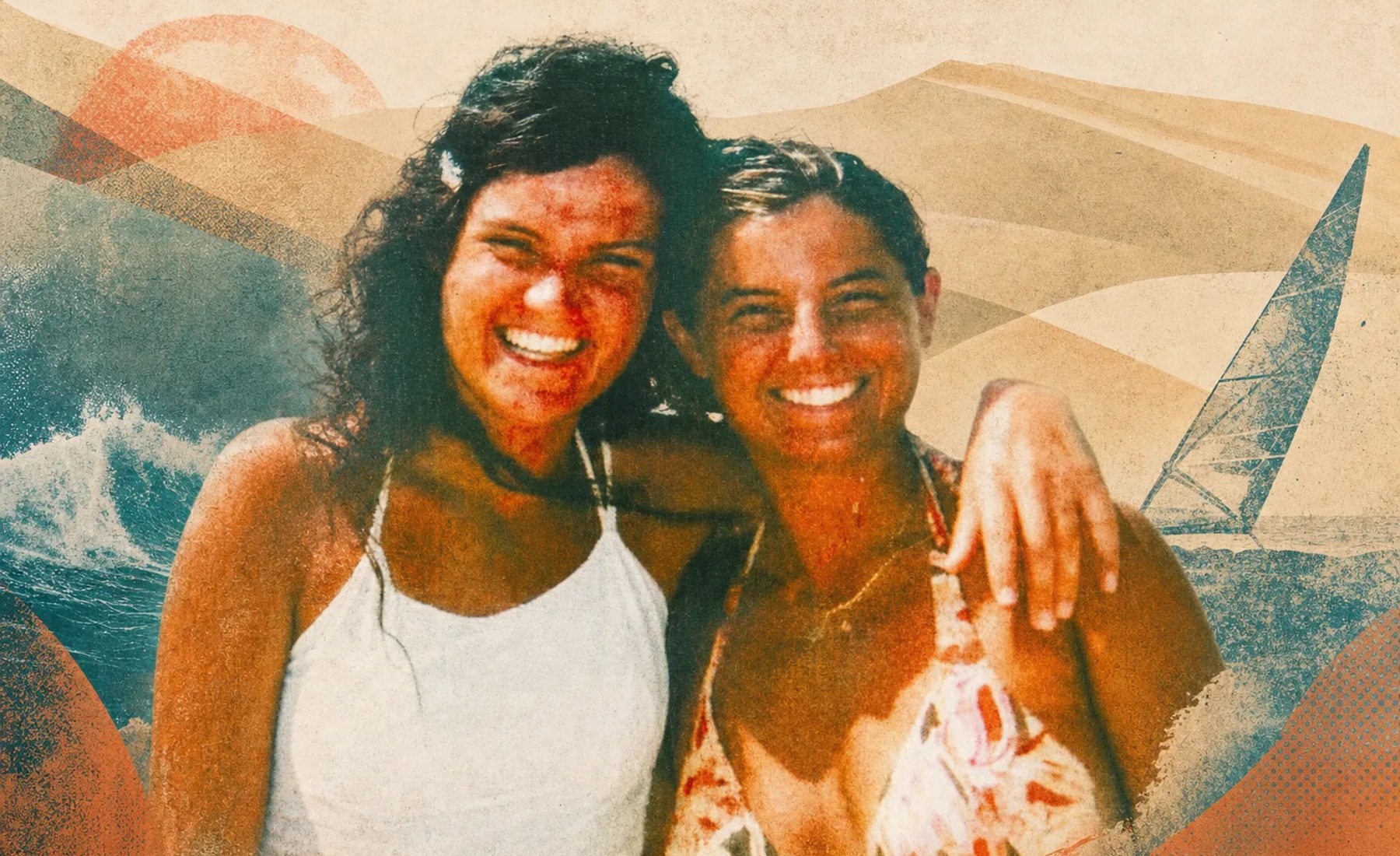
The two women were 33-year-old Dália Saiani and 28-year-old Giorgia Busato, both from Italy. They weren't just casual tourists passing through – they loved Cape Verde. Dália, originally from Ravenna in northern Italy, was a passionate windsurfer. In her teens she'd even been a junior windsurfing champion, and in her twenties she discovered the incredible waves off Sal's shores.
For years, Dália spent every spare holiday in Cape Verde, chasing the wind and the waves. She had fallen in love with the place – the culture, the people, the laid-back island life. Eventually she bought a little house by the beach on Sal so she could return often and stay for longer stretches. That winter of 2007, she had traveled to Sal yet again for an extended holiday of sun and surf.
Giorgia, from Verona, shared that love of the islands. She worked as a travel agent back in Italy, and like many young Italians she had been drawn to Cape Verde's charm and beauty. Giorgia too visited frequently and had even purchased a small home on Sal. Over time, she and Dália became close friends on the island, bonding over their mutual affection for the place.
By 2007, both women were practically locals – familiar faces around the town of Santa Maria in the south of Sal, fluent enough in the local language to chat with Cape Verdean friends. They were what one condolence note later called "ideal tourists and guests – the sort every nation would desire, because they loved our islands and showed it by coming often."
Agnese's First Trip Abroad
In late January 2007, Dália and Giorgia arrived on Sal from Italy once more, ready to enjoy another season of windsurfing and island life. This time they brought along a younger friend: Agnese Paci, just 17 years old, who was about to celebrate her 18th birthday.
Agnese was from Dália's hometown in Italy. This trip was Agnese's first ever vacation abroad without her parents – a big adventure. Dália had invited the teenager to experience the "blissful world" of Sal Island, instead of spending winter break in Italy's cold. For Agnese, it was supposed to be an exciting introduction to a tropical paradise.
In the first days of February, the three friends settled into the easy rhythm of island life. By day, they hit the beaches – Dália out windsurfing the famous waves, while Giorgia and Agnese soaked up the sun or explored the little shops and cafés. In the evenings, they mingled with a tight-knit community of expats and locals in Santa Maria's bars and restaurants.
Cape Verde, with its warm Creole culture, music, and hospitality, must have felt like a second home to Dália and Giorgia, and young Agnese was quickly falling under its spell as well. None of them could have imagined that, within a week, this happy holiday would turn into an unfathomable tragedy.
The Man with the White Streak
The seeds of that tragedy had actually been planted on an earlier trip. During a previous stay on Sal, Dália Saiani had a brief romantic fling with a local man named Sandro Santos do Rosário. Sandro was a 21-year-old Cape Verdean who worked as a tour guide at one of the island's resorts.
He was a familiar figure around Santa Maria – known for a distinctive white streak in his dark hair and a friendly, outgoing manner with tourists. For Dália, the relationship was nothing serious, just a light vacation romance that quickly fizzled out. But for Sandro, it meant much more. He became infatuated with Dália and refused to let go after she tried to end things.
By the time Dália returned to Sal in 2007, she considered Sandro an ex-boyfriend – and an annoying one at that. He pestered her incessantly. He would call her constantly, show up uninvited, and beg her to see him. Dália confided to friends that Sandro simply wouldn't leave her alone. She tried to brush it off as a youthful obsession, a crush gone too far, but as the days went by his behavior bordered on stalking. She grew uneasy about how fixated he was.
A New Love, A Jealous Rage
To complicate matters, Dália had a new love interest on the horizon. She'd recently met another man – ironically, another Cape Verdean, though one who lived abroad in Brazil – who shared her passion for windsurfing. In fact, this new boyfriend was due to arrive on Sal soon for an upcoming international windsurfing competition that was to be held on the islands.
Dália was excited for him to join her; it was the beginning of a promising new relationship. But word of this new boyfriend got around the small island quickly (as almost every bit of gossip does in a community that size). It inevitably reached Sandro. And it drove him into a jealous frenzy.
Sandro Rosário became more insistent than ever. He desperately demanded Dália's attention, calling and pleading for her to meet with him. According to those who later heard the story, he hounded her until, exasperated and hoping to finally put an end to it, Dália agreed to see him one more time – on one strict condition: she would not meet him alone. She would bring her two girlfriends, Giorgia and Agnese, along for company.
The Dinner Invitation
Sandro invited them to dinner at his family's home in Espargos, the main town in the center of Sal Island, on the evening of February 8, 2007. It was a Thursday night. One can imagine that Dália and Giorgia were not particularly excited about this dinner date – in fact, they probably felt a sense of duty and a bit of dread. The way one friend later described it, it was "something that had to be gotten over with," not a fun social outing. Still, they prepared to go, hoping it would finally get Sandro off Dália's back.
That evening, as the tropical sun set around 7 p.m., Sandro Rosário arrived to pick up Dália, Giorgia, and Agnese. He did not come alone. Riding along with him was another young local man, Admilson "Néné" Teixeira Santos, a friend of Sandro's around the same age.
It wasn't unusual for Cape Verdeans to bring a buddy along to a gathering – so the women probably didn't think much of it. They all squeezed into a borrowed car, with Sandro driving. The plan, as Sandro had said, was to drive to his parents' house in Espargos where his mother would cook them a nice dinner.
Into the Darkness
At first, nothing seemed amiss. The three women made small talk with the two young men as the car headed north toward Espargos. The roads on Sal are mostly simple two-lane routes; Santa Maria in the south to Espargos in the middle is maybe a 20-minute drive.
However, as they neared Espargos, Sandro took an unexpected turn. He steered the car westward, saying he needed to swing by the coastal village of Palmeira to drop off Admilson (the friend) before dinner. But then Sandro veered off the main paved road and onto a rough dirt track. The surroundings grew dark and desolate. Instead of heading into a village, they were driving into open, empty terrain.
The women's intuition flared – something was wrong. From the back seat, Dália, Giorgia, and Agnese demanded to know where Sandro was taking them. Why were they suddenly in the middle of nowhere on a sand road?
The only thing out in this direction was Fontona, an isolated area known for its small oasis of palm trees and sparse vegetation amidst the otherwise arid landscape. Before any of the women could react further, Sandro slammed on the brakes. The car jolted to a stop on the lonely sandy path.
Pepper Spray and Sand
In a flash, Sandro reached under his seat and pulled out a canister. He turned and sprayed an aerosol of pepper spray directly at the three women in the back. The attack was so sudden and so vicious that they had no time to escape. The inside of the car filled with the choking, burning mist. Dália and Giorgia, seated on either side, caught the brunt of it.
They cried out in pain and confusion as their eyes and throats burned. Admilson helped his friend subdue the panicked victims. The two men yanked the car doors open and dragged Dália and Giorgia – half-blinded and coughing – out of the vehicle and onto the sand.
Agnese, the youngest, was left in the back seat, dazed and terrified. One of the attackers snarled at her to stay put if she wanted to live. Through watering eyes, Agnese watched in helpless horror at what unfolded next just a few meters away on the dunes. Sandro and Admilson were upon Dália and Giorgia, who were utterly overpowered by the pepper spray and by the men's greater strength.
'I Closed My Eyes'
The night was pitch dark, with only starlight and the car's headlights casting an eerie glow on the sand. Agnese could hear her friends screaming and pleading as the men tore at their clothes. It didn't take long for the attack to turn into a brutal sexual assault. The two Cape Verdean men raped Dália and Giorgia there on the cold sand, taking turns, while the third friend sat powerless in the car, listening to her friends' cries.
Later, when Agnese would recount those awful moments, she said she eventually squeezed her eyes shut, trying to block out the nightmare playing out in front of her. "I saw what they did… I heard their cries," she remembered, "Then I couldn't take any more. I closed my eyes… I was paralyzed with fear." The teenage girl curled up on the back seat, trembling and praying it would end. She dared not run – the men had threatened to kill her if she tried – so she played dead, hoping they might spare her life.
Buried Before They Were Dead
After the two attackers had finished sexually assaulting Dália and Giorgia, they weren't done with their victims. In fact, the night's violence was only just beginning. One can only imagine the terror Dália and Giorgia felt, injured and half-blinded, in the clutches of men they had once considered casual acquaintances. Sandro Rosário's long-suppressed rage was now fully unleashed. This was no longer about unrequited love or jealousy – it was something far more cold-blooded.
On that remote beach at Fontona, the men decided to eliminate all three women. Perhaps this had been their plan from the start. Evidence would later suggest the attack was premeditated: they had come prepared with pepper spray, and the location was not randomly chosen.
Fontona's dunes were secluded, devoid of houses or passersby, and even had some ready-made pits in the sand (left by construction crews digging out sand or stone). It was an ideal spot to commit a crime in secret. Sandro and Admilson were about to turn those sand pits into makeshift graves.
According to what police later pieced together (some of it from the perpetrators' own admissions), Sandro grabbed Giorgia first and strangled her with his hands until she went limp. Then he and Admilson together attacked Dália. Dália fought desperately, but she too was overpowered and strangled into unconsciousness.
The men likely believed both women were dead or close to it. They dragged Dália and Giorgia's inert bodies to a shallow pit in the ground – one of the holes in the area previously dug for roadwork or construction materials. The attackers heaved the two women into the pit.
At some point, to make certain their victims wouldn't survive, they found a large, jagged rock and smashed it down onto the women's heads. This "finishing" blow was vicious. Whether they were already dead from strangulation or not, the blunt trauma to their skulls ensured they would not come back alive.
Throughout this grisly execution, Agnese remained in the car, cowering. She couldn't see clearly into the darkness, but she heard enough – the sickening thuds, her friends' final whimpers. She heard one of her friends crying out in desperation at one point: "I'll give you money, just leave me alone!" It was a plea for mercy. But it fell on deaf ears. The men did not stop.
For a moment, silence fell over the dunes. Dália and Giorgia were no longer screaming. The men stood over the shallow pit, catching their breath. At this point they noticed something unnerving: Dália was still moving, still breathing faintly.
Despite the strangling and the savage blows, she clung to life. Sandro and Admilson, not about to be merciful, began quickly shoveling sand over the two women's bodies. They dumped sand and dirt onto Dália and Giorgia, burying them right there in that shallow grave. Dália was likely unconscious but not yet dead as the sand covered her face. In her final moments, she literally inhaled sand.
This ghastly fact would only come to light later during the autopsy – a Cape Verdean pathologist would find fine sand in Dália's lungs, proof that she had been buried alive and suffocated to death under the sand. It's a detail that still horrifies everyone who hears it: a 33-year-old woman, a beloved daughter and friend, slowly asphyxiating beneath the sand in paradise.
The Lone Survivor
With the two primary victims now buried and presumably deceased, Sandro turned his attention to Agnese, the lone remaining witness. He must have realized he couldn't leave the teenager alive to tell the tale. Agnese had been trying to remain unnoticed, but Sandro wasn't about to forget her. He opened the car door and roughly pulled Agnese out, dragging her a short distance away into a small grove of acacia trees (Fontona's oasis had a few clumps of trees – one reason it was a notable spot on treeless Sal).
There, away from the half-buried bodies of her friends, Sandro Rosário assaulted Agnese. The terrified girl was beaten and sexually assaulted, her head slammed against something hard. She felt a sharp impact and then everything went black.
Satisfied that Agnese was as good as dead (or at least incapacitated), Sandro left her lying in the brush. The two killers then returned to the grim task of covering up their crime. Admilson continued to pile more sand over the pit containing Dália and Giorgia, trying to better conceal the grave. They wanted to erase any obvious trace of what happened. Time was creeping toward midnight by now – the island night silent except for the wind rustling the palms.
Daniel Refuses
However, when Sandro and Admilson went back to deal with Agnese's body… she was gone. To their shock, the spot where they had left the teenager was now empty. Agnese Paci had somehow regained consciousness after they departed, and seeing her chance, she gathered what strength she had and fled into the darkness.
With severe head injuries and no shoes, she had managed to slip away into the scrub. Now, in a panic, the two men started searching for her in the area, calling out or scouring the brush with whatever light they had.
But Agnese, despite bleeding from a gash on her head (she would later need 18 stitches), had clever instincts. She was hiding, crawling low through the scrub vegetation, determined to survive. In the dark, the attackers couldn't locate her.
Frustrated and fearful that Agnese might get away to report them, Sandro and Admilson decided to enlist help. They drove back towards Espargos and found another friend of theirs, a young man named Daniel (his full name would later be given as Danielson, but often just Daniel in reports). Daniel was not involved in the initial crime, but now, after midnight, Sandro and Admilson evidently told him some version of events and asked for his assistance.
The exact story they fed him is unknown. But they convinced Daniel to accompany them back out to Fontona to look for the missing girl (Agnese) and to make sure the burial of the other two was fully hidden.
So the two murderers returned to the crime scene with Daniel in tow. But when Daniel realized the true horror of what had happened – seeing the blood, glimpsing the bodies in the sand – he refused to participate further.
He balked at helping them dig or cover anything up. It was just too monstrous. In fact, according to later police reports, Daniel flat-out refused when they urged him to assist burying the victims more completely. At that point, there was little Sandro and Admilson could do; Daniel would not join their conspiracy.
One can imagine an argument breaking out among the three men under the swaying palm trees: Daniel cursing them for what they'd done and maybe fleeing, and the other two realizing they'd just exposed a third person to their secret. Whatever the case, Daniel left – but fear or loyalty kept him silent until he was later questioned. Still, Daniel would later become an important witness, confirming key details of the aftermath.
With no sign of Agnese after combing the area, and their recruit Daniel now gone, Sandro and Admilson had a decision to make. They might have thought Agnese, badly wounded, would not get far if she was even alive. Believing their tracks were covered for the moment, the two men did something truly chilling: they went back to their normal lives, as if nothing had happened.
In the early hours of Friday, February 9, 2007, while Dália and Giorgia lay hidden under the sand and Agnese wandered injured and alone, Sandro Rosário and Admilson Santos tried to establish alibis by returning to routine. In fact, later reports revealed that the very next morning after the murders, Sandro showed up for work at the resort hotel as usual, greeting tourists with a smile and preparing to lead sightseers around the island.
Barefoot at Dawn
But if Sandro and his friend thought their victims' voices had been silenced, they were sorely mistaken. Agnese Paci was very much alive. That courageous teen managed to survive the longest night of her life. After escaping the killers, she had hidden quietly among the sparse bushes until she was sure they had left for good.
Then, in the pre-dawn darkness, Agnese began stumbling her way in the general direction of safety. She didn't know the island well, but she knew she had to find other people and get help. With the first light of morning, she oriented herself and trudged toward what she hoped was the road to Santa Maria, the main tourist town.
Picture this: A 17-year-old girl, alone at dawn in the middle of nowhere on an island, barefoot, clothes torn and stained with her friends' blood and her own, her head throbbing from a serious wound, eyes burning from pepper spray. She is miles from any settlement. Yet Agnese kept going, driven by sheer will and the desperate need to save her friends if possible. She followed tire tracks and the coastline until she eventually hit the paved road connecting Espargos to Santa Maria.
By that time, the sun had risen. A local taxi driver on his morning route spotted an alarming sight – a young woman, waving frantically in the road, covered in blood and sand. Agnese, crying and half-collapsing, told him in a mix of Italian and basic Portuguese what had happened: she and her two friends had been attacked in the night out by Fontona. Her friends were still out there in the sands – she didn't know if they were alive or dead, only that they had been buried by the attackers.
One can imagine the driver's disbelief and horror. But seeing Agnese's condition – the gash on her head, the genuine terror in her eyes – he knew this was no drunken accident or hallucination. Something awful had indeed occurred. The taxi driver rushed Agnese to Santa Maria, where he got her to the medical clinic (or the local hotel where her other Italian friends were staying, by some accounts) and notified the police.
Searchers in the Sand
At the small police post in Santa Maria, officers found themselves face-to-face with an unprecedented situation. Cabo Verdean police on Sal had dealt with minor tourist incidents before – the occasional theft, maybe a bar fight – but a possible double murder and assault was beyond their experience. Initially, some officers had a hard time believing the delirious-sounding story of a teenage girl about pepper spray, rape, and buried bodies in an oasis.
Agnese was in shock and physically hurt; as she was treated at a local hospital for her head wound, she kept insisting her friends were out there and needed help. She was the sole witness and she was adamant about what she'd seen.
A couple of police officers did drive Agnese around that morning, trying to locate the exact site she described, but early on there was a sense of skepticism. One officer responded to her account with something along the lines of, "Alright, we'll have a look," but he seemed vague and not urgent. To them, it was just so far-fetched – violent crime of this sort "never happens" on Sal.
Thankfully, Santa Maria had a tight-knit expat and tourist community – and they believed Agnese right away. Word spread quickly among Dália and Giorgia's circle of friends on the island that the women had gone missing and that Agnese had turned up injured with a terrifying tale.
A group of Dália and Giorgia's fellow Italian friends, along with some local residents, didn't wait for the slow gears of police bureaucracy. They hopped into their jeeps and pickups and drove out to Fontona themselves to search.
Sure enough, by that very same afternoon (February 9), the volunteer searchers found a disturbed patch of sand near the palm oasis at Fontona – exactly where Agnese had described. They started digging, and soon the gruesome truth was confirmed. In a shallow sandy grave lay the bodies of two women. The remains were identified as Dália Saiani and Giorgia Busato.
It was a heart-wrenching scene. The women's bodies bore the signs of horrific violence – their clothing torn, their skulls battered. Gently, their friends uncovered them from the sand. Any faint hope that they might have somehow survived was dashed. The nightmare was real.
Swift Arrests
When police were alerted that the bodies had been found, the case shifted into high gear. Now law enforcement knew they had a double homicide on their hands – the first anyone could remember on Sal Island. The crime scene itself offered immediate clues. Investigators noted the obvious signs of sexual assault and the head injuries.
A police pathologist examined the victims and, chillingly, found fine sand inside Dália's lungs, indicating she had been alive at the time of burial. That detail would haunt even the hardiest of detectives.
But amid the horror, there was a major break: they had a living witness. Agnese Paci, the survivor, could identify the attackers. As she recovered in the hospital from her concussion and shock, Agnese revealed the name of the man who had invited them out that night: Sandro.
She might not have known his full surname, but on an island as small as Sal, a young tour guide named Sandro with a white streak in his hair was not hard to find. She also described his friend and accomplice – someone roughly Sandro's age who had been with him. She may not have known Admilson's name, but by describing his appearance and nickname (locals knew Admilson Santos by the nickname "Titã"), the police had enough to go on.
Cape Verdean authorities acted swiftly. The local police, likely with help from the judicial police (a kind of detective force in Cabo Verde), put out alerts for Sandro Santos do Rosário and Admilson Teixeira Santos. It didn't take long – within hours, both men were located and arrested. Sandro was picked up at the resort where he worked, allegedly going about business as usual.
Admilson was caught soon after. This rapid capture was thanks in large part to Agnese's immediate identification of her attackers.
A Nation in White
News of the murders and the arrests spread like wildfire across Cabo Verde and back in Italy. The shock was palpable. In Sal's tourist areas, foreign visitors were horrified and locals felt deeply ashamed that guests who loved their country had met such a fate there.
Within days, memorials were being organized. The following Monday, just a few days after the tragedy, nearly 1,000 people – both Cape Verdeans and foreigners – held a candlelight vigil in Santa Maria to honor Dália and Giorgia.
The mourners dressed in white (a color symbolizing purity and peace) and walked silently down the main street of town, holding candles and praying for the victims. From the nearby shore, the soft sound of drums could be heard and strains of morna music – the soulful Cape Verdean melodies – drifted in the background. But the procession itself was quiet and somber. One of the vigil's organizers spoke on local radio, saying their aim was to pay homage to the two women and show solidarity with the grieving families back in Italy.
The entire archipelago was in mourning, trying to come to terms with what many called the "lost innocence" of their islands. As one message of condolence put it, "These deaths have shocked all of us with their cruelty." People were incredulous that something so brutal could happen on their peaceful isle.
Back in Italy, the murders of Dália and Giorgia made national headlines. Italian media labeled it "un delitto brutale in paradiso" – a brutal crime in paradise. The fact that the women were violated, stoned, and buried alive in a far-off holiday destination horrified the public. Photos of the two friends – smiling and sun-kissed on Sal's beaches – were splashed across newspapers, making the contrast between those happy images and their cruel fate all the more heartbreaking.
Italy's government took a keen interest in the case, pressuring Cabo Verde to ensure justice would be done. The Italian Embassy (which oversaw Cape Verde through the consulate in nearby Senegal) was in close contact with Cape Verdean authorities.
These were Italian citizens killed abroad; there would be no letting this slide or quiet cover-ups. But truth be told, Cape Verdean authorities had no intention of covering it up – they were determined to bring the culprits to justice, if only to prove that this kind of barbarity would not be tolerated on their soil.
Confessions and Evidence
With Sandro and Admilson in custody, investigators in Cabo Verde began building a detailed case. Evidence from the crime scene was gathered – including the pepper spray canister, the rock used, fibers and personal items left behind. The shallow grave itself spoke volumes, as did the injuries documented by the coroner. Police also had confessions of a sort: in the immediate aftermath, under questioning, at least one of the suspects started talking.
In fact, it emerged that Admilson "Titã" Santos admitted quite a bit to police early on, perhaps trying to minimize his own role. According to police sources later quoted in the press, Admilson (Titã) recounted how the events transpired: how Sandro had diverted the car, used the spray, and how they attacked the women.
He chillingly told the police commissioner that he and Sandro noticed Dália was still breathing even after they'd strangled and bludgeoned her, but they went ahead and poured sand over her anyway. The forensic finding of sand in the lungs backed this up.
Admilson's statements also corroborated the detail that after leaving Agnese for dead, when they came back and couldn't find her, they went for a drink at a bar in Espargos and then returned with their friend Daniel to search for her and better hide the evidence.
Daniel, the reluctant accomplice who had refused to bury the bodies, was also interviewed by police. He confirmed that he was called out to Fontona after the murders had been committed. Though Daniel did not participate in the killings or the rapes, the mere fact he knew and didn't immediately report it put him in a dubious light.
Ultimately, however, authorities saw that Daniel had actually tried not to be involved and he had even refrained from helping cover up the crime. So they decided to treat him as a witness, not a defendant. Daniel was never charged with the murders – instead, he was slated to testify about what he witnessed of Sandro and Admilson's actions that night.
As the investigation unfolded, some puzzling angles emerged. Initially, the narrative was simple: a jealous ex-boyfriend couldn't handle rejection and, in a fit of rage, lured his former lover and her friends out and killed them – a crime of passion taken to unthinkable extremes. Indeed, early Italian headlines speculated about a "vendetta per amore" – revenge for love – given Sandro's obsession with Dália. And that certainly was part of the story. But investigators digging deeper found an additional motive that explained the level of premeditation and the involvement of Admilson: robbery.
It turned out that Sandro and Admilson's plan wasn't just to assault the women out of jealousy. They had intended to kill them and then burglarize Dália's house back in Santa Maria while she was out of the way. The idea was that if the women were dead, the men could slip into Dália's beach house and steal valuables or cash without anyone noticing until it was too late. In other words, this wasn't a spontaneous crime of passion – it was a calculated double murder with the aim of financial gain.
Dália was relatively well-off (by local standards) and might have had money or expensive sports equipment in her home. Perhaps Sandro knew she kept cash or something valuable there. By eliminating her (and any friends with her), he and his pal thought they'd have free rein to ransack the place.
However, their plan didn't quite pan out. Because Agnese escaped so quickly and raised the alarm, the police were onto them before they could raid Dália's house. If they did manage to steal anything that night, it wasn't significant – the authorities never reported any large theft from Dália's home, because the culprits never got the chance to follow through.
Nonetheless, the intent to rob was there, and it became a key part of the prosecution's case. In fact, when formal charges were brought, they included aggravated murder, attempted murder, for the attack on Agnese, rape, concealment of corpses, and theft. There was even a charge of damage, possibly relating to property damage during an attempted break-in or the borrowed car.
The Drug-Lord Defense
Cabo Verde's justice system, being influenced by Portuguese civil law, moves deliberately. The suspects were held in preventive detention while the case was investigated and prepared for trial. This meant Sandro and Admilson sat in jail throughout 2007 as the authorities in Sal Island gathered all evidence and witness statements.
Cabo Verde doesn't have jury trials; cases are heard by a judge (or panel of judges) who will also render the verdict. The trial for this case was highly anticipated both in Cape Verde and in Italy. Given the international attention, the judiciary took care to get everything right.
Finally, after about a year, the trial was scheduled. On April 10, 2008, in the modest courthouse of Espargos (Sal's main town), the proceedings began. The case was so notorious that the court decided to make it an open trial, meaning the public and press could attend.
Families of the victims flew in from Italy to be present – among them Dália's father, Giulio Saiani, and Giorgia's father, Renzo Busato, who were determined to see justice done firsthand. Italian diplomats from their embassy (operating out of Dakar, Senegal) were also on hand to observe, underscoring how seriously Italy took this matter.
Inside the courtroom, two young Cape Verdean men – Sandro do Rosário and Admilson Teixeira Santos – sat in the dock as defendants. At around 22 and 23 years old by then, they appeared outwardly calm, even impassive. But the evidence against them was overwhelming. Over the course of several days, the judge heard testimony from multiple witnesses. Agnese Paci, now 18, took the stand and bravely recounted in detail the harrowing events of that night.
It was undoubtedly an emotional testimony – the key firsthand account that placed the defendants squarely at the scene and in the act.
Other witnesses followed. The prosecution presented forensic evidence too. The medical examiner's report detailed how Dália and Giorgia died: by strangulation and blunt force trauma, with the heartbreaking addendum of sand in the lungs.
Facing such damning evidence, one might expect the accused to perhaps show remorse or at least offer some explanation or plea for mercy. Instead, Sandro do Rosário's defense team put forth an astonishing and convoluted alternative theory. What Sandro claimed in court was nothing short of bizarre – a sensational story that painted himself not as a jealous killer, but as a minor pawn in a grand criminal conspiracy.
According to Sandro's tale (which he delivered with a straight face during the trial), the murders of Dália and Giorgia were not a simple robbery or crime of passion at all, but the result of an international drug trafficking feud. He alleged that Dália's new boyfriend – the very windsurfer from Brazil who was arriving for the competition – was actually an Italian drug kingpin.
In Sandro's version, this man (described as an ex-partner and ex-boyfriend of Dália, though in reality he was neither – just a convenient scapegoat) ran a narcotics smuggling ring moving drugs from South America to Europe, and Dália and Giorgia were somehow involved in the ring. The women, Sandro claimed, had double-crossed this imaginary drug syndicate by stealing a large sum of money from the last shipment and using it to buy their houses on Sal. Therefore, the drug boss supposedly "decreed their death."
Sandro went on to say that he had been approached by this mysterious organization and instructed merely to incapacitate Dália and Giorgia (hence the pepper spray) and deliver them alive to a couple of Nigerian hitmen who would then take care of the actual killing as retribution for the stolen drug money. In other words, Sandro tried to spin the yarn that he was an unwitting accessory – that he only meant to kidnap the women under orders and that it was really shadowy mafiosi who wanted them dead.
If this story sounds far-fetched and straight out of a cheap crime novel, that's because it was. There was zero evidence of any drug ring, no "two Nigerians" lurking in the Cape Verdean bushes, no secret life of Dália and Giorgia as cartel associates. It was all an elaborate, desperate lie.
In fact, the seeds of this lie had been planted over a year earlier: just weeks after his arrest in 2007, Sandro's defense lawyer had floated this very theory to a Cape Verdean newspaper, trying to cast doubt that Sandro was the mastermind. That move infuriated the victims' families – Dália's father even filed a defamation complaint against that newspaper for printing such unfounded accusations about his daughter.
By the time of the trial, Sandro apparently decided to double down on this wild narrative, thinking it could confuse the picture or at least absolve him of being the principal culprit. But the judge and everyone in the courtroom saw it for what it was: a fabrication. The prosecutor easily dismantled these claims – pointing out how all evidence contradicted it, how conveniently self-serving Sandro's story was, and how it slandered the dead in an attempt to save himself.
Indeed, observers noted that Sandro's defense was extremely slanderous towards not only the victims but other innocent people (like the Italian surfers who regularly visited Sal, whom Sandro maligned as drug traffickers in his tale).
Meanwhile, Admilson's defense was less theatrical. He did not concoct a grand conspiracy. Still, Admilson was deeply complicit in the kidnapping, rape of the other two, and murders, so his culpability was not in doubt.
'25 Years to Think'
After a couple of weeks of testimony and arguments, the trial concluded. On April 25, 2008, final arguments were made. Then, per Cape Verdean procedure, the judge adjourned to consider the verdict and sentence, announcing that a decision would be delivered in about a month. The waiting period was tense, especially for the families who had traveled so far for justice.
Finally, on May 22, 2008, the verdict was read in the Tribunal of Sal. It was quite late in the evening – around 8 p.m. local time (which was 10 p.m. back in Italy). The courtroom was packed with family members, local community representatives, and media. The judge first went through an explanation of the case and his findings.
The judge completely rejected the drug-traffic story, calling it baseless. He affirmed that the true motive was the one the prosecution had demonstrated: robbery, coupled with personal obsession, leading to coldly premeditated murder. Then came the final words everyone was waiting for: guilty as charged.
Sandro do Rosário and Admilson Teixeira Santos were each convicted of multiple counts – double homicide with aggravating circumstances (premeditation and cruel means), attempted homicide (for the attack on Agnese), sexual violence (in Sandro's case), theft, and concealment of corpses. Given the heinousness of the crime, the public prosecutor had urged the maximum penalty. And the judge agreed.
Cape Verdean law at that time did not allow life imprisonment or the death penalty. In fact, the toughest sentence available was 25 years in prison – that's the absolute maximum for any crime, even a double murder. This case was so horrific that the judge decided nothing less would suffice. He handed down 25-year prison sentences to both Sandro and Admilson – a rare instance of the maximum penalty being used.
In doing so, the judge made a statement: even in a country known for leniency, this crime deserved the harshest punishment within the law. (It was noted that this was the first time a Cape Verde court had ever given the full 25 years under the democratic penal code.)
As the sentence was pronounced, emotion overflowed in the courtroom. Dália's father, Giulio, was overcome with tears. He had sat through the slander of his daughter, the gruesome details of her final moments, and months of waiting – now at last he felt some relief. Speaking to reporters through his sobs, he said, "Finally the verdict has arrived and now the two assassins will have 25 years to think about the horrendous crime they committed."
He expressed satisfaction that the judge had "definitively dismantled those other [false] motives not related to the true one – the brutal theft." In other words, he was grateful the court saw through the lies and recognized that greed and cruelty, not mafia fantasies, were behind his daughter's murder.
Giorgia's family likewise expressed gratitude that justice had been done. Yet, there was also frustration – 25 years felt too short for two lives taken so violently. But within Cape Verde's system, 25 years was as high as it could go.
Some observers pointed out that in many other countries, a double homicide of this savagery might have earned life imprisonment or even capital punishment. Still, 25 years in a Cape Verdean prison is no light sentence; it meant the men would be locked away until they were middle-aged, at least. And crucially, a message was sent that even tourists and foreigners would get justice in Cape Verde's courts.
During the sentencing, according to those present, the two convicted men showed little to no emotion. They stood impassively, not offering any apology or visible remorse. It was as if the gravity of what they'd done – or the pain they'd caused – never penetrated. That cold indifference only deepened the revulsion felt by everyone around them.
The Technicality
With the trial over, the case entered its next phase: the appeals process. Cabo Verde's legal system provides for one appeal to the Supreme Court of Justice. Both convicts filed appeals, as expected. However, what happened next turned into a bit of a fiasco that briefly threatened to undermine the hard-won justice.
As months passed in late 2008, bureaucratic delays postponed the appeal hearing. Cape Verde, being a small nation, sometimes struggled with slow court calendars. Because of these delays, Admilson's custody status became a technical issue – the law had a limit on how long a defendant could be held in pre-trial (or pre-appeal) detention without a final resolution.
Astonishingly, as the end of 2008 neared, Admilson "Néné" Santos had to be released from prison due to these procedural time limits, even though he was a convicted murderer. It was a legal loophole: since his appeal hadn't been heard within the required timeframe, they could not lawfully keep him locked up pending that appeal. So, in December 2008, one of the two killers of Dália and Giorgia walked out of custody, technically still convicted but free until the appeal could be concluded.
This news caused an uproar both in Cape Verde and in Italy. The idea that a man guilty of such a heinous crime was out on the streets (even temporarily) because of a "vizio di forma" – a technicality – was unacceptable to many.
Cape Verde's media and public reacted strongly. Local headlines expressed indignation, and questions were raised about judicial efficiency. The outrage was amplified by an unrelated but concurrent scandal in Cape Verde: around the same time, some police officers who had been involved in a big drug theft case were also released on a similar technicality.
For the public, it looked like the justice system was fumbling, letting bad guys walk free. The government and judicial authorities felt the heat. In response, they moved with uncharacteristic speed: the Supreme Court appeal for Sandro and Admilson was scheduled and held in a rush in late December 2008 or very early January 2009 – essentially convened in emergency mode to fix the situation.
Italy wasn't quiet about it either. The families of the victims, along with officials from Verona and Ravenna, pressed the Italian Foreign Ministry to intervene. In January 2009, a delegation from Giorgia's hometown met with Italy's Foreign Minister to voice their concerns and ensure that the diplomatic channels were fully engaged.
Italy's Foreign Minister at the time, Franco Frattini, personally phoned the Italian Embassy covering Cape Verde and got updates. The message to the Cape Verdean government was clear: we expect these murderers to serve their full sentence in proper custody.
Final Justice
Thankfully, the appeals court convened and delivered a decision promptly. The convictions of Sandro and Admilson were upheld – there was never really any doubt, given the overwhelming evidence. However, the Supreme Court made one minor tweak: it slightly reduced the sentences of both men. Sandro's 25-year sentence was reduced by a mere six months, and Admilson's sentence was adjusted to 23 years and 8 months (effectively shaving about a year and change off his original 25).
Most importantly, right after the appeal decision, the Cape Verdean police rearrested Admilson Santos, who had been out on that technicality. He was found and returned to custody to begin serving his now-final sentence alongside Sandro.
The Italian authorities were promptly informed, and Italy's diplomats continued to monitor the situation to ensure there were no more slip-ups. Verona's mayor announced with relief that Frattini confirmed the re-arrest and that the case was now definitively resolved. They also got assurances that the two men would serve their time in a secure facility appropriate for such criminals (Cape Verde's main prison is in Praia, the capital, on another island, and that's where the convicts were transferred).
With that, justice – though imperfect in the sense that no amount of prison time could equal the value of the lives lost – was formally achieved. Sandro and Admilson would spend their prime years behind bars, left to contemplate their terrible deeds. There's little record of them expressing any remorse.
As for Agnese Paci, the young survivor – her life was undoubtedly changed forever. But she displayed extraordinary strength and courage, not only in surviving that night but in facing her attackers in court and making sure they could never do anything like this again. Without her, this crime might have remained unsolved or at least drawn out much longer.
Thanks to Agnese, justice was swift. One can only hope that in the years after, she found healing and peace, carrying on with the life that her friends Dália and Giorgia were denied. Agnese's survival was almost miraculous, and her testimony ensured that her friends' killers were held accountable.
Primary reporting and references
- Dark Side of Paradise: The Islands That Lost Their Innocence
The Independent
- Sandro Santos Rosario Adilson Teixeira sono stati condannati venticinque anni
Il Resto del CarlinoMay 23, 2008
- Condannati a 25 anni gli assassini di Dalia Saiani
Ravenna NotizieMay 22, 2008
- Capo Verde: uccise due italiane
Wikinews
- Sono state lievemente ridotte pene assassini Dalia Giorgio
- Ufficio Stampa Comune di Verona
Comune di Verona
Related episodes
The Lusaka Strangler
Young women vanish from Lusaka bus stations as a serial killer drives the city into fear.

Barrels by the Black Sea
A woman's disappearance in Burgas takes a darker turn when a second person vanishes.

The Wrong Car
A pregnant teenager enters the wrong car at a bus stop and disappears into the night.