

September 17, 2020
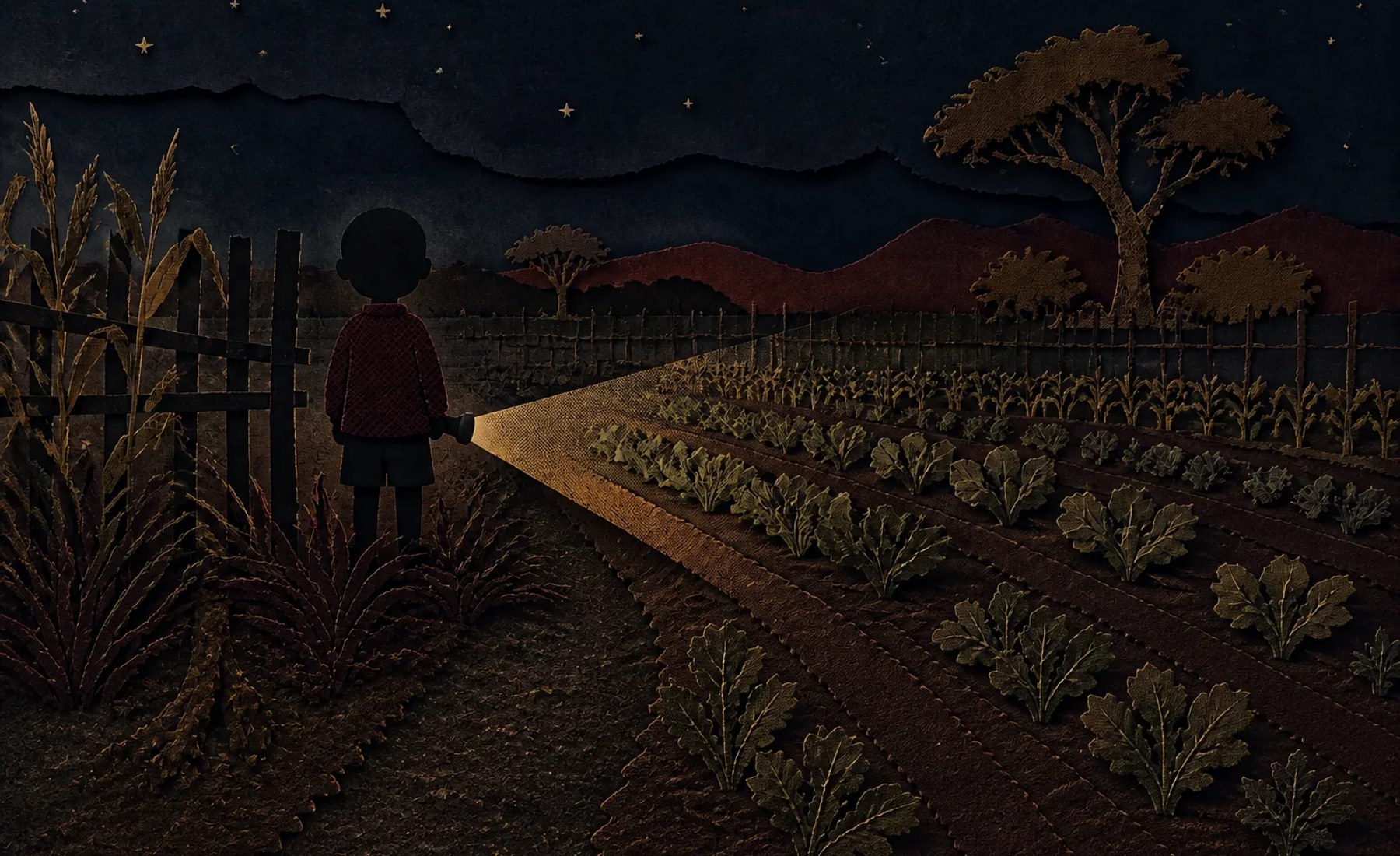
The tragic story of little Tapiwa Makore Jr. began on September 17, 2020, as an otherwise ordinary day in his village. Tapiwa was a happy seven-year-old who lived with his parents, Munyaradzi Makore and Linda Munyori, in a close-knit rural community under Chief Mangwende in Murehwa District. That afternoon, his mother sent him on a small errand: to guard the family's vegetable garden and keep stray cattle away from their precious crops.
It was a chore the responsible Grade One student had done before. With schools closed during the COVID-19 lockdown, Tapiwa often helped his parents around the homestead. He dutifully headed out, wearing his maroon shorts and a white striped jersey, determined to shoo away any cows that wandered near the vegetables.
Flashlights in the Dark
As daylight faded into evening, Tapiwa's family grew concerned. He hadn't returned home from the garden. The village was safe and quiet, not the kind of place where a child simply disappears. Tapiwa's mother, Linda, sensed something was wrong when dusk fell with no sign of her son. By nightfall, worry had escalated into panic. The Makore family sounded the alarm, and neighbors rallied to help search for the missing boy in the darkness of the rural night.
Flashlights and lanterns bobbed through the fields and pathways as villagers called out Tapiwa's name. Among the search party was a concerned older relative, Tapiwa's namesake uncle – known in the village as "Tapiwa Makore Senior" – who appeared eager to assist in finding the boy.
Unknown to the frantic parents, this very relative would later be unmasked as one of the orchestrators of the crime. For now, though, he played the part of the worried uncle perfectly. The search continued for hours, combing through maize fields, around the well, and along dirt roads. At one point, Tapiwa's uncle suggested that maybe the child had wandered off farther than expected, subtly sowing doubts and urging others to pause the search.
Finally, around midnight, with heavy hearts and dimming hope, the villagers halted their search for the night. The boy's father, Munyaradzi, returned home distraught, accompanied by his supposedly sympathetic elder cousin, Tapiwa Sr. They would resume at first light, they decided.
Unknown to them, that very pause in the search was exactly what the killers needed. In hindsight, Tapiwa's mother would recall how her uncle-in-law had curiously "interfered a lot" during the search – discouraging them and effectively buying time.
At the time, however, no one could imagine that this trusted family member was leading a double life of deceit that night.
What the Dog Dragged In
At dawn on September 18, villagers rose early to continue looking for young Tapiwa. But before the Makore family could even organize, a chilling message arrived: everyone was told to stop searching and return home. Word spread that a body – or rather, part of a body – had been found.
Tapiwa's mother immediately sensed the worst. "I started crying, I knew that my son was dead," she later said. She imagined perhaps her boy had drowned or suffered a terrible accident. Nothing could prepare her for the reality.
The discovery was straight out of a nightmare. A local villager's dog had trotted into its owner's compound carrying what turned out to be the torso of a child. The limbs and head were missing. The mauled remains were soon identified by the distressed father, Munyaradzi, as belonging to his son – little Tapiwa Jr..
The boy's distinctive clothes were nowhere to be found, aside from his shoes, which were recovered by the garden where he'd last been seen. It was as if monsters had struck in the night, dismembering an innocent child and scattering his body parts like refuse. Villagers stood in shock and horror as police from Murehwa station were summoned to the scene.
Seasoned officers who arrived that morning struggled to maintain composure at the brutality of the crime. The torso, headless and limbless, showed signs of precise and cold-blooded mutilation. Not far away, another grim find surfaced: one of Tapiwa's arms – or at least his palm – was discovered being gnawed on by a dog in the bush nearby.
It was a scene of pure horror that left even hardened investigators shaken. The community descended into grief and panic. A ritual killing was immediately suspected, as some body parts (the head and possibly others) were clearly removed and missing, a pattern disturbingly consistent with occult or "muti" murders in the region.
Blood on the Trousers
Police secured the area, treating it as a crime scene, and began an intensive search for the remaining parts of Tapiwa's body and any clues to the perpetrators. Villagers were instructed to cooperate fully. In a rather dramatic move, officers had all local men line up with their wives, and systematically searched every household around the village for evidence. No stone was left unturned that day. What they found during those searches would crack the case open.
At the homestead of Tapiwa Makore Sr. – the very uncle who had joined the search – police discovered suspicious items that raised immediate red flags. In a spare room where a farmhand named Tafadzwa Shamba slept, investigators found a pair of trousers stained with blood. In another room, they recovered a white vest also speckled in what looked like blood.
The garments were quickly recognized: the trousers belonged to Shamba, a 40-year-old herdsman who worked for Tapiwa Sr., and the vest was his as well. The discovery of bloodied clothes in the Makore Sr. homestead immediately put both the farmhand and the uncle under intense scrutiny.
Chickens and Virgins
Confronted with the bloody evidence, the two men offered strange excuses. The 60-year-old Tapiwa Makore Sr. calmly claimed that the blood on Shamba's trousers was from a chicken he had instructed his worker to slaughter for food a few days prior.
Shamba, on the other hand, spun a lurid tale to explain the blood on his vest – he initially mumbled that it came from sleeping with a virgin girl (a clumsy reference to a folk belief that a virgin's first sexual encounter might produce blood).
When officers tracked down the girl he named, she flatly denied any such encounter, blowing apart Shamba's fabricated alibi. Shamba then embarrassingly shifted his story, claiming the stains were actually from his friend's girlfriend's menstrual blood that had accidentally soiled his shirt during an intimate encounter. These absurd explanations did little to deter the police; in fact, they strengthened suspicions that the men were hiding something far more sinister.
The Lure
By now, leads were rapidly developing. Investigators learned that Tapiwa Jr. had not simply vanished from the garden; he was lured away. Rumors swirled that one of the boy's own cousins – a young child – might have unwittingly been used as a pawn in the plot to abduct him. Indeed, during the investigation a story emerged that on the day of Tapiwa's disappearance, Shamba had approached a minor cousin of the boy and offered him a small reward to fetch Tapiwa from the garden and bring him over.
According to an initial police statement, this young cousin was allegedly given US$5 and a green T-shirt by Tapiwa Sr. as thanks for delivering the boy into Shamba's hands. Such a betrayal of trust – using one child to trap another – sent chills through everyone who heard it.
However, this detail would later become contentious in court, as the family member who recounted it withdrew her claim amid allegations of police coercion. True or not, the very possibility that a relative was involved in luring Tapiwa Jr. only deepened the community's sense of shock and outrage.
'I Killed Him'
With mounting evidence and witness reports coalescing, the Zimbabwe Republic Police swiftly arrested Tafadzwa Shamba, the herdsman, within days of the murder. The net soon closed around Tapiwa Makore Sr., the boy's great-uncle (a cousin to Tapiwa's father, but called "Sekuru" or uncle out of respect) who owned the homestead where key evidence was found.
The news that a family elder was implicated in the heinous killing of his own namesake shook villagers to the bone. How could a man who had shared beers with them and even searched for the child side-by-side now be suspected of such an atrocity?
Yet, as details emerged, it became evident this was a carefully planned ritual murder. Under intense interrogation, 40-year-old Tafadzwa Shamba broke down and confessed to the role he played. What he revealed was almost too horrifying to believe.
Investigators took Shamba back to the crime scenes for a formal "inspection in loco," where he openly re-enacted the crime and led police step-by-step through the gruesome events of that night. In front of detectives – and captured in photographs by press who were present – Shamba demonstrated how he had kidnapped, drugged, and butchered the boy, while implicating Tapiwa Sr. as the mastermind and accomplice.
Sadza Before the Slaughter
According to Shamba's chilling account (later confirmed in court testimony), the plot unfolded as follows: On the afternoon of September 17, as little Tapiwa was guarding the garden, Shamba lay in wait under instructions from the boy's uncle. Seizing an opportunity when the child was momentarily alone, Shamba approached and snatched Tapiwa Jr. away from the fields.
He spirited the boy to Tapiwa Sr.'s homestead, which was nearby, effectively hiding him right under the community's nose. The unsuspecting child likely recognized his great-uncle's property and saw familiar faces, so he didn't scream – he had no idea of the danger he was in.
At the Makore homestead, Shamba tried to put the boy at ease. He later recounted that he fed Tapiwa Jr. sadza and dried fish for supper, even kindly washing the child's hands before the meal. The poor boy must have sensed nothing amiss; one can imagine him eating his dinner, perhaps feeling relieved in his childlike way that an adult he knew was taking care of him.
But unknown to Tapiwa Jr., his food was merely a prop in the killers' sinister plan. After the boy ate, Shamba left him briefly, going out to procure kachasu, a potent locally brewed alcohol.
He purchased a five-liter container of the illicit brew at a nearby homestead (from a woman known as Mrs. Katsande) and even added sugar to sweeten it. In his own words, Shamba admitted, "I drank the beer to gather courage. I also put a bit of sugar into the brew and offered it to the boy". Trustingly, little Tapiwa drank the spiked beverage. The strong moonshine did its work: soon the seven-year-old became groggy and slipped into a deep, unnatural sleep.
With the child incapacitated, Shamba locked Tapiwa Jr. in a room at the house to keep him hidden for the next several hours. Outside, oblivious villagers continued to search for the "missing" boy. Shamba himself brazenly rejoined the ongoing village beer gathering at the Katsande homestead, pretending nothing was wrong.
Meanwhile, as night deepened, Tapiwa Sr. – the uncle – played the role of concerned family member, actively participating in the search party alongside the boy's father until they called it off at midnight. The cruel irony is not lost: the man who helped lead the frantic search was the same man who had orchestrated the child's abduction.
On the Hill
Around midnight, with villagers finally off the trails, it was time for the killers to complete their dark ritual. Under cover of darkness, Shamba met up with Tapiwa Sr., who was now free from the gaze of neighbors. They retrieved the groggy, half-unconscious child from the locked room.
Tapiwa Jr. was likely still in a stupor as Shamba hoisted him up. The two men carried the boy away from the homestead, heading towards a nearby remote hill (mountain) within the village outskirts. There, on that lonely rise under the cold night sky, the gruesome deed was done.
Shamba later described the murder in shocking detail, almost step by step, to the police and in court. In the stillness of that early hour, he laid the boy down on the ground. "I pressed the boy to the ground," Shamba recounted, "and cut off his head with a sharp knife, while his uncle was holding a torch for lighting".
With one merciless slash, the child's life was ended. But the horror did not stop there. Shamba proceeded to chop off the boy's arms and legs methodically. The two murderers had brought along knives and black plastic bags for this very purpose. Working like some macabre butcher, Shamba placed the severed head and torso into one bag and the limbs (arms and legs) into another.
Blood pooled on the grass, and even the hardened killer felt a surge of panic at the mess. Investigators later found signs that Shamba tried to clean the scene – he claimed he burned the blood-soaked grass to destroy evidence and even noticed the child had soiled himself in terror or as a bodily reflex in death.
The men also performed a quick ritual at the murder site: Shamba said they used a small animal's tail as part of witchcraft rites intended to prevent the child's spirit (known as ngozi in Shona culture) from coming back to haunt its killers. This chilling detail revealed the depth of their belief in the power of what they were doing – even in the act of pure evil, they were afraid of supernatural revenge.
The Missing Head
With their grim task completed and body parts secured, the pair hastened to leave the scene. Shamba hefted the heavier sack containing the boy's head and torso, while Tapiwa Sr. carried the bag with the limbs.
The plan was to hide the remains and deliver certain parts to the person who had allegedly commissioned the ritual killing – a witchdoctor who promised them something in return. As the two trudged through the darkness back towards the village, an eerie silence must have hung between them, broken only by the shuffle of their feet and perhaps the muffled clink of the knife.
Then, partway home, Shamba began to falter. He later admitted that the bag he was carrying "was becoming heavier" and that nearby dogs were barking, as if sensing the blood. Afraid of drawing attention with the weight and the smell of death, Shamba made a snap decision: by an area near a graveyard, he dumped the torso (still inside the bag) to lighten his load.
He figured they could recover it later, but for now, escaping was paramount. The two murderers hurried on, now with Shamba carrying only the severed head while the uncle still had the limbs.
When they arrived back at Tapiwa Sr.'s homestead in the middle of the night, Shamba said the uncle told him to store the head in one of the houses on the property. Shamba obeyed, placing the boy's head in a dark room – a horrifying secret hidden on the very grounds where family members lived and innocently slept. The limbs were dealt with the next day. With police investigators already buzzing around the area after the torso's discovery, Shamba grew nervous.
On the morning of September 18, as law enforcement activity intensified, he took the bag containing the arms and legs and dumped it in an old disused pit latrine (outhouse) not far from the Makore homestead. It was a desperate attempt to hide evidence, but ultimately futile. Guided by Shamba's later "indications" (a technique where the suspect shows police where evidence is hidden), authorities would recover those remains from the pit toilet and from other spots Shamba had scattered them.
The single most valuable – and tragically elusive – piece of evidence was Tapiwa's head. That was the trophy presumably needed for whatever ritual had motivated this crime. By the time police closed in, the head was no longer at Tapiwa Sr.'s house; the uncle and his accomplice had reportedly passed it off to a certain witchdoctor, as planned. In fact, as news of the murder spread, it came to light that a traditional healer was suspected to be the shadowy figure behind the scenes.
Community members pointed fingers at a relative of the Makore family named Tinei Makore, a known n'anga (witchdoctor or witch-hunter) who had been visiting the village that very week. Tinei – also called Marvelous Muchedzi – was a cousin of Tapiwa Sr. and had spent a few nights at the uncle's homestead just days before the murder. He left the village one day before little Tapiwa disappeared.
To villagers, this timing was beyond suspicious; many believed Tinei had come to orchestrate the ritual killing and then slipped away. Police confirmed that Tinei was indeed a wanted suspect in connection with the case, but frustratingly, they could not locate him immediately.
A reporter from the state-run Sunday Mail actually managed to track Tinei down in a town called Mvurwi, where he flatly denied involvement and chalked up his visit as pure coincidence. "It's happenstance that I visited the village that week," he insisted, claiming he was only there to see family after a long time away.
Despite his protests of innocence, the convergence of events – the uncle's failing cabbage project (more on that soon), the witchdoctor cousin's timely visit, and the gruesome murder – was hard for people to accept as mere coincidence. Many villagers truly believed this n'anga had "fixed" Tapiwa Sr.'s problems by ordering a human sacrifice.
A Cabbage Farm Curse
Indeed, as investigators dug deeper, a motive began to crystallize: greed and superstition. It turned out that Tapiwa Makore Sr., the 57-year-old uncle, had been trying to start a commercial cabbage farm on his plot of land after returning to the village from the capital city, Harare. He had boasted of "investors" and big plans, but things weren't going well – water was scarce, the seedlings were wilting, and his backers had lost interest.
Facing failure, it appears Tapiwa Sr. sought a shortcut to success: a magical ritual to boost his farming fortune. In parts of Zimbabwe (and across Africa), there are age-old occult beliefs that sacrificing a person – especially an innocent child – and using their body parts in certain rites can bring wealth, luck, or prosperity. This is sometimes referred to as "muti" murders (muti meaning traditional medicine), where human body parts become ingredients for witchcraft potions or charms.
In this case, evidence strongly suggested that Tapiwa Sr. had arranged for his nephew's murder in hopes of using the boy's body parts to enhance his cabbage business – either through direct ritual burial in the field or by selling them to a witchdoctor for a spell.
Shockingly, during the trial, both Makore Sr. and Shamba confessed that they had killed Tapiwa Jr. for a ritual intended to "enhance a cabbage farming business," confirming everyone's worst suspicions about the motive. Greed and misguided belief in dark magic had driven them to one of the most horrific crimes imaginable.
Four Arrested, Two Walk Free
With Shamba's confession and cooperation, the physical evidence, and mounting witness testimony, the case against the two men was substantial. Police ultimately arrested four individuals in connection with Tapiwa's murder: the primary culprits Tafadzwa Shamba and Tapiwa Makore Sr., as well as two others suspected of facilitating the crime – Thanks Makore and Maud (Moud) Hunidzarira. Thanks Makore was another uncle of the slain boy (a brother to Tapiwa Sr., or possibly another cousin-uncle), and Maud was a female relative from the village.
Early reports labeled Thanks and Maud as "prime suspects" who might have helped plan or cover up the ritual killing. Both of them were alleged to have had some knowledge of the plot – for instance, the story about bribing the young cousin with $5 and a T-shirt implicated that Maud (the child's aunt) and Thanks were somehow involved in arranging the handoff of the boy.
However, as the legal process unfolded, the cases against Maud and Thanks did not hold up. A key witness, Julia (the boy's aunt and mother of the young cousin), who had given a damning statement to police, recanted her testimony in court a year later, claiming she had lied under duress.
She said police had coerced her family – even allegedly threatening her 11-year-old son with being fed to crocodiles – until they concocted a story to satisfy the investigators. Whether that retraction was true or motivated by fear or family loyalty, it introduced enough doubt that the judge tossed out that part of the evidence.
In October 2022, at the close of the State's case, the High Court withdrew charges against Thanks Makore and Maud Hunidzarira due to lack of solid evidence linking them to the murder. They were acquitted and freed, walking out of court back into the community.
For Tapiwa's grieving family, seeing two suspects – relatives they suspected in their hearts – walk free was a bitter pill. The boy's grandmother, 73-year-old Mrs. Alice Makore, voiced her anguish in late 2021, saying, "What pains me most is that those suspected to have lured my grandson… are back in the community. We see them walking around freely as if nothing happened.".
The Makore family felt a sense of injustice that some culpable individuals might never be held accountable. But at least the two principal culprits, Shamba and Tapiwa Sr., remained in custody awaiting their day in court.
The Trial
The long wait for justice was agonizing. Due to the gruesome nature of the crime and the involvement of multiple suspects, investigations and legal proceedings took time. It wasn't until late 2022 – two years after the murder – that the trial in the Harare High Court really gained momentum. The trial was heard by Justice Munamato Mutevedzi, and the prosecution lined up around ten witnesses to testify.
Among them were police officers, villagers, and even medical examiners. The evidence presented painted a harrowing picture, much of which we have already traced: the discovery of the torso, the recovery of limbs from a pit latrine, the blood-stained clothing, and the detailed confession and reenactment by Shamba.
Throughout the trial, both Shamba and Makore Sr. pleaded not guilty, despite Shamba's earlier cooperation. By then, Shamba had retracted his confession, claiming he only admitted involvement after being beaten by police. In court, he stuck to the far-fetched story that the blood on his clothes came from a chicken and a girlfriend's menstruation, insisting that his detailed confession was "scripted" by investigators under torture.
Makore Sr., for his part, continued to deny everything, offering no credible explanation for why the murder happened on his property or why incriminating items were found in his home. He tried to cast himself as an innocent man wrongly implicated by his employee.
In essence, each man attempted to save his own skin: Shamba implied he was coerced into false confession, and the uncle tried to suggest that if Shamba did it, he (the uncle) knew nothing and that Shamba might have acted alone or even "planted" evidence to frame him.
But the High Court wasn't swayed by these denials. The material evidence was simply too strong. For one, Shamba's confirmed confession – given freely to a magistrate soon after his arrest – was admissible and extremely detailed, matching the crime scene in ways only the killer could know. The police had followed Shamba's directions to recover body parts and even the container inscribed "Topoto" (Makore Sr.'s nickname) used to drug the boy.
Shamba's confession also independently led to the discovery of the black plastic bags and the animal tail used in the ritual, all hidden at Makore Sr.'s house. None of this evidence could be explained away by coincidence. Furthermore, a neighbor testified that when a dog was seen dragging the child's severed hand, Tapiwa Sr. had urged that neighbor to quickly bury the hand to hide it. Why would an innocent uncle suggest concealing a critical piece of evidence like that? The court noted this as consciousness of guilt.
'No Morality, No Conscience'
By June 2023, nearly three years after the murder, the High Court reached a verdict. Justice Mutevedzi found Tafadzwa Shamba guilty of murder and Tapiwa Makore Sr. guilty as an accomplice to murder. The judge concluded that while the uncle might not have wielded the knife himself, he was integrally involved – he provided the location (his home) and tools (the alcohol and storage materials) for the killing, and he actively participated by restraining the boy and illuminating the crime with a torch.
The court reasoned that it was "inconceivable" that Makore Sr. didn't know a child was locked in his house for eight hours and then didn't notice when Shamba returned with bags of body parts. All circumstantial evidence pointed to Makore Sr. being the instigator who "supplied the means" and had the motive of a ritual benefit. In sum, both men were fully responsible for the atrocity.
When it came time for sentencing, even the veteran jurist appeared horrified by what he had heard. In a judgment later published, Justice Mutevedzi described the killers as inherently wicked men who showed "no morality, no sentiment and no conscience" as they went about their acts "with the fixation of a predator". The murder was committed in aggravating circumstances – a defenseless child, a premeditated ritual killing, extreme mutilation – truly the worst of the worst. Zimbabwe's law still allowed the death penalty for such heinous murders.
Though the country had an unofficial moratorium on executions (no prisoner had been executed in Zimbabwe since around 2005), capital punishment remained on the books for extreme cases. Justice Mutevedzi lamented that his hands were tied by how egregious the crime was. In July 2023, he sentenced both men to death – by hanging – which is the form of execution in Zimbabwe's statutes.
'Let His Spirit Avenge'
The High Court's sentencing on July 12, 2023, brought an emotional climax to the trial. In the courtroom, Tapiwa's mother Linda Munyori broke down in tears as the judgment was delivered. It was described as a heart-wrenching scene: Linda sobbed quietly, and tears streamed down her cheeks – a mix of sorrow for her lost child and relief that justice, at long last, was being done. Outside the courthouse, she told reporters that she felt the punishment was appropriate for the crime.
"I am satisfied with the judgment… They have been sentenced in equal proportion to the crime that they committed," the grieving mother said resolutely. Her one lingering wish was a haunting one: she called upon her son's spirit to avenge his death. In Shona culture, there is a belief that the restless spirit of a murder victim (ngozi) can torment the perpetrators.
Through tears, Linda said, "If there is anyone who can make his spirit haunt his murderers, they should help me… Tapiwa's spirit should avenge on its own". It was a chilling statement – a mother invoking supernatural justice – but it underscored the depth of her pain and the betrayal she felt.
She also firmly believed that more people were involved in her son's killing than just the two convicted, saying "there are many people involved… it was not a mistake that some names were dropped", a pointed reference to those suspects who had been acquitted or never caught (like the elusive witchdoctor).
As the dust settled from the verdict and death sentence, an outpouring of public reaction followed. This case, since the day it broke, had captured Zimbabwe's attention more than any crime in recent memory. The phrase often repeated in media was that Tapiwa's murder "shook the nation".
Back in 2020, in the immediate aftermath, ordinary citizens and leaders alike expressed outrage and sorrow. The country's First Lady and officials from the ruling party's Women's League traveled to Murehwa to console the Makore family, bringing donations and condolences.
President Emmerson Mnangagwa himself publicly decried the killing as an "evil act" and vowed that those responsible would face justice. Churches held prayer vigils, and villagers, terrified by what had happened in their midst, started to keep a closer eye on their children. "Driving to Makore Village… children no longer talk to strangers no matter any amount of cajoling. The message has sunk: don't talk to strangers lest you meet Tapiwa's fate," one report noted of the changed atmosphere.
The case also sparked a broader conversation about eradicating superstition-fueled crimes. Groups demanded crackdowns on witchdoctors who peddle get-rich-quick spells involving human body parts. "Witchdoctors who are promoting murder should be arrested, shamed and exposed," a women's leader proclaimed in the wake of the murder. The phrase "the evil men do" headlined opinion pieces, reflecting on how greed and witchcraft beliefs led to this tragedy.
Life Behind Bars
Yet, amidst the national furor and calls for harsher penalties, Zimbabwe's justice system proceeded with deliberate care. And though the High Court imposed the ultimate punishment on the killers, it was understood that, realistically, Zimbabwe was not going to carry out any executions.
By 2023, Zimbabwe had had an unofficial moratorium on the death penalty for nearly two decades, and its 2013 Constitution had started moving the country away from capital punishment (for example, prohibiting it for women and younger men). In fact, in a significant turn of events, by 2025 Zimbabwe went a step further and abolished the death penalty in law for ordinary crimes like murder.
As a result, the death sentences for Tapiwa's killers could not stand. Their case triggered an automatic appeal to the Supreme Court (as all death sentences do). Before that appeal could even be heard, the legal landscape changed.
On May 12, 2025, the Supreme Court of Zimbabwe vacated the death sentences of Tafadzwa Shamba and Tapiwa Makore Sr., substituting life imprisonment for each of them. The highest court noted that under the new law, it could not confirm a capital sentence, effectively commuting the punishment to life behind bars.
Thus, the two men will spend the rest of their lives in prison cells, rather than face the hangman's noose. For some observers, this was a welcome affirmation of the right to life even for killers; for others – especially many in the outraged public – it felt like a letdown that these "inherently wicked" men would be allowed to live after what they had done.
Human rights groups like Amnesty International had, predictably, called for the commutation, emphasizing that justice can be served without executions. And indeed, justice of a sort was served: Shamba and Makore Sr. will never walk free again.
A Grave Without a Head
Aftermath and Reflections: While the legal case has concluded, the story of Tapiwa Makore Jr. continues to haunt those who followed it. The boy's family finally laid him to rest on March 27, 2021 – more than six months after his murder – in a heart-rending funeral that had to proceed without his head and some other parts.
Local tradition, guided by Chief Mangwende, had initially forbidden burial of an incomplete body, but as weeks turned to months with no breakthrough on finding the head, compassion prevailed. They could wait no longer. Hundreds attended the burial to pay respects to the little boy whose life was so cruelly taken.
Tapiwa's tiny coffin was interred in the family's fenced graveyard, only a stone's throw from his grandmother's doorstep. The community wept with the family, mourning not just the child but the loss of innocence in their village.
To this day, Tapiwa's head has never been conclusively found. There was a moment when police thought they'd recovered a skull matching his, about three days after the murder, but the Makore family rejected it – it looked too "old" to be their son's, and DNA tests were inconclusive by their account.
They even sent samples to South Africa hoping for a definitive answer, clinging to the faint hope that maybe the head was not Tapiwa's and their boy's spirit might yet be at peace if the real head were found and buried with his body. That closure never came. Somewhere out there, perhaps lost forever, are the missing pieces of Tapiwa Jr., a cruel reminder of the barbarity he suffered.
For the Makore family, life will never return to normal. Munyaradzi and Linda struggle with grief and trauma. It is said that Munyaradzi, the father, has needed counseling to cope with replaying his son's gruesome end "over and over" in his mind. The family grew divided with suspicions after learning some of their own kin were involved in the murder plot.
Trust within the extended family has been shattered. "We feel robbed of justice… a lot is still amiss," Munyaradzi said at one point, frustrated at the slow pace of the case and the fact that some accused persons walked free. The grandmother, Alice, now 75, says she looks at the little grave every day and "wilts inside" with sorrow. She cannot comprehend how someone in their family line could perpetrate such cruelty on their beloved boy.
The Makores also worry that as long as the truth isn't fully known – for instance, who exactly possesses Tapiwa's head or who all was involved – spiritual unrest may plague their family. In Zimbabwean culture, unresolved murders are believed to invite avenging spirits that trouble the living until justice or compensation is rendered. In fact, some community members have whispered that the restless spirit of Tapiwa Jr. will not rest until all responsible are brought to light.
The Evil Men Do
Nationally, Tapiwa's case has left an indelible mark. It forced Zimbabweans to confront the dark underbelly of ritualistic practices that persist beneath the veneer of modern society. Authorities have since pledged to be more vigilant against such crimes. Police campaigns were initiated to educate communities that superstitious beliefs in wealth-through-murder are not only criminal but utterly futile – nothing good comes from spilling innocent blood.
Traditional leaders and genuine spiritual healers (as opposed to self-proclaimed witchdoctors) also spoke out, condemning the misuse of African traditions for selfish and evil ends. Yet, despite all the outrage, one can't ignore that the belief in "get-rich-quick" witchcraft remains embedded for some.
Cases of ritual killings for body parts, though rare, continue to be reported from time to time across Africa, driven by the same toxic mix of greed, desperation, and superstition. Tapiwa's murder became a cautionary tale – a stark reminder of how far astray these beliefs can lead people.
In the end, the story of Tapiwa Makore Jr. is a tale of betrayal and heartbreak. A little boy was betrayed by those who should have protected him most. His great-uncle – his own namesake – viewed him not as kin to love, but as a commodity to be butchered for a chance at riches.
A hired hand who had worked for Tapiwa's father repaid that family's kindness with unimaginable cruelty. The community's trust was betrayed, and an entire nation's conscience was violated. Yet, through the tireless efforts of investigators and the eventual determination of the courts, justice caught up with the perpetrators, albeit in a courtroom rather than through the supernatural means some had hoped for.
As she left the courthouse on that fateful day in July 2023, having witnessed the men who killed her son receive their punishment, Linda Munyori was asked what she felt. With tears in her eyes, she expressed a mother's love and longing for her lost child, and a hope that his spirit could now perhaps find some peace.
The sorrow in Murehwa will never fully fade, but the legacy of little Tapiwa may be that his death opened society's eyes to the urgent need to root out the ignorance and superstition that led to his killing. His story, as painful as it is to recount, will not be forgotten in Zimbabwe. May Tapiwa Makore Jr. finally rest in peace, and may we never forget the lesson his case has taught: that the value of a child's life far, far outweighs any promised riches of ritual magic.
Primary reporting and references
- High Court of Zimbabwe Judgment, State v. Tafadzwa Shamba & Tapiwa Makore
High Court of Zimbabwe (via ZimLII)Jun 29, 2023
- Prime suspects in Tapiwa Makore's murder found not guilty, freed
Nehanda RadioOct 13, 2022
- Slain Tapiwa's family seeks closure
The Herald (via Zimbabwe Situation)Oct 09, 2021
- Tapiwa Makore murder trial drama as key witness recants statement
ZimLiveOct 04, 2022
- Murehwa boy's killer describes grisly murder
- Makore Murder Convicts Resentenced to Life Imprisonment
ZimNowMay 16, 2025
- Heart-Wrenching Scenes at Tapiwa Makore Judgment as Mother Calls for His Spirit to Avenge
New Zimbabwe (via AllAfrica)Jul 13, 2023
- Zimbabwe: Commute death sentence to prison terms in Tapiwa Makore case
Amnesty InternationalJul 14, 2023