

Sia Jued and the Politician
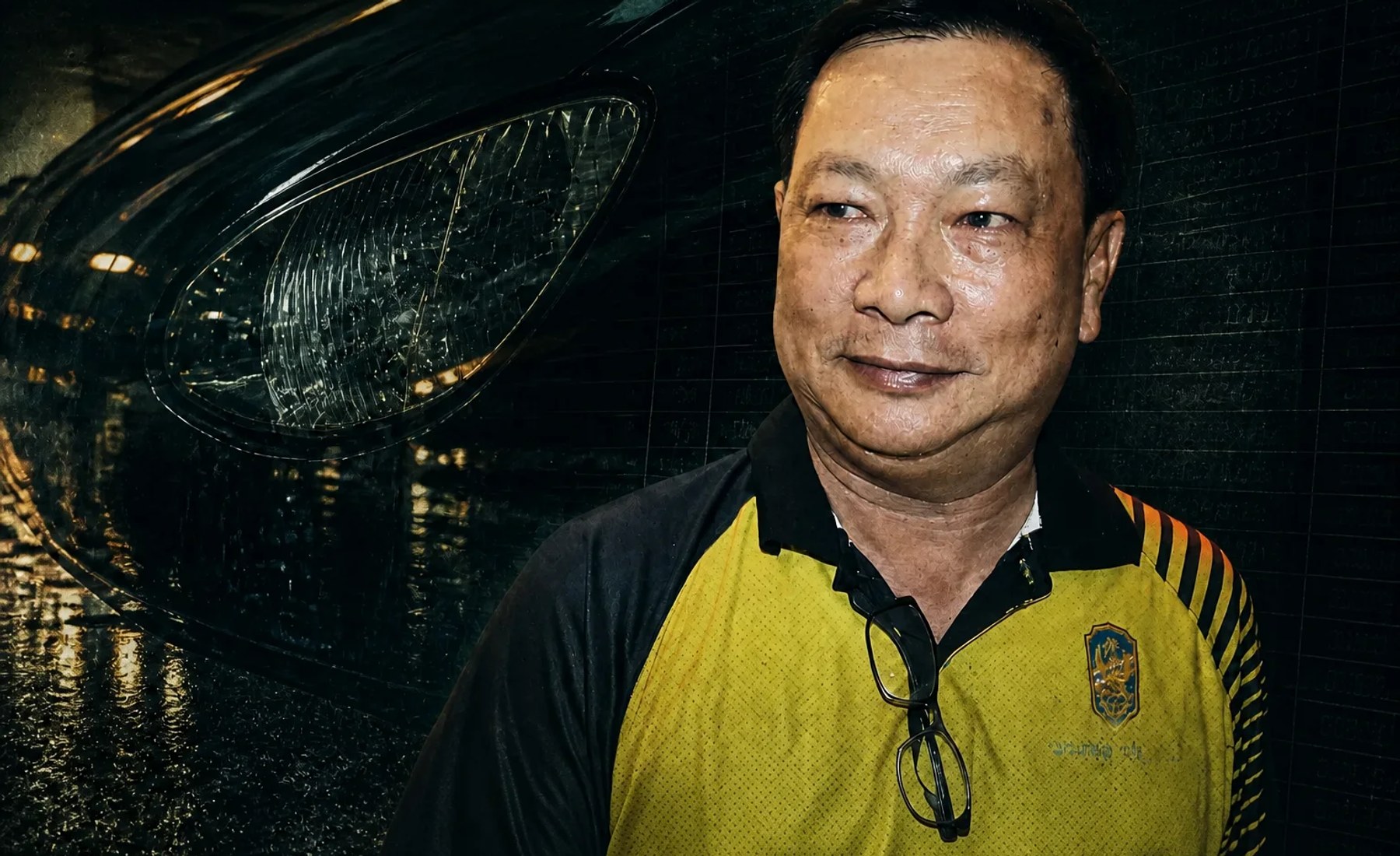
Chuwong Sae Tang was a self-made billionaire contractor, known in Thailand as a high-profile construction mogul. He had built his company, a firm called Standard Performance, into a thriving enterprise, and by his 50s he was enjoying the fruits of success. Affable yet hardworking, Chuwong moved comfortably among Thailand's elite.
He was nicknamed "Sia Jued" (meaning "Elder Jued"), the kind of honorific Thais give to wealthy businessmen, and he provided well for his wife Sirirat and their children. Despite his fortune, those close to him say he was down-to-earth and careful in his habits – even a stickler for safety, the type who always buckled his seat belt on the road.
His friend that night, Banyin Tangpakorn, traveled in the same circles. Banyin, 52, had once been a police lieutenant colonel and later a multi-term Member of Parliament from Nakhon Sawan province. In 2008, he briefly served as a Deputy Commerce Minister in the national government. Charming and well-connected, Banyin easily mingled with business tycoons like Chuwong.
The two men met years earlier during an executive leadership course at Thailand's National Defence College – a networking hub for the country's movers and shakers. They became fast friends, golfing buddies, and even explored some business deals together. To the outside world, Banyin's pedigree as an ex-cop and politician made him seem like a trustworthy ally for a businessman of Chuwong's stature.
A Round of Golf
By mid-2015, their friendship seemed solid. So when Banyin invited Chuwong for a day of golf on June 26, 2015, nothing appeared out of the ordinary. It was a Friday. Perhaps they discussed deals on the fairway or shared laughs at the clubhouse.
That evening, Banyin offered to drive his friend home, and they set off in Chuwong's own black Lexus SUV after dinner. Bangkok's traffic can be maddening even at night, but these were two men in no particular rush – or so it appeared.
Just before 10:30 pm, Banyin's Lexus ended up off the road in Bangkok's Prawet district, planted nose-first against a tree. When police finally arrived, Banyin recounted a tale of a freak accident. They had been cruising along Chalerm Phrakiat Rama 9 Road when, according to Banyin, a vehicle in the opposite lane suddenly cut in front of them. He swerved at around 80 km/h to avoid a collision, and the Lexus careened into the tree.
The crash, he insisted, was entirely accidental. Tragically, he said, his dear friend Chuwong – riding in the front passenger seat – must have been killed on impact. Banyin himself emerged with only scrapes and bruises. It was a wild story, but Banyin delivered it with the confidence of a man used to being believed.
CCTV Tells a Different Story
However, from the very start, pieces of Banyin's story didn't line up. For one, CCTV security cameras in the area told a different tale. Footage showed no other car crossing into Banyin's lane at the time he claimed to have swerved. In fact, the Lexus was captured traveling abnormally slowly – roughly 30 km/h, practically a crawl – in the moments before it gently bumped the tree.
The vehicle wasn't speeding at all. And the supposed "accident" happened at about 10:21 pm – much later than Banyin initially indicated. He had told police the crash occurred closer to 9:00 pm, as if they had gone straight from dinner to disaster. But cell phone records and traffic cameras traced their journey and revealed a suspicious time gap.
The two friends left the golf course at 8:11 pm, yet somehow didn't reach the crash site, only 37 kilometers away, until after 10:20 pm. Covering that distance should have taken, at most, an hour in late-night traffic. So what had they been doing during those missing two hours?
Why Wasn't He Dead?
At the scene, investigators took a hard look at the Lexus. Its front end was crumpled but the cabin was mostly intact. Notably, the airbags hadn't deployed, suggesting the impact was too low-speed to trigger them. The damage just didn't seem severe enough to kill a healthy adult in the passenger seat.
Photographs of the wreck show a moderately dented hood and a broken windshield – the kind of damage that might cause minor injuries, but not usually a fatal blow. And yet Chuwong was dead. It was baffling. One first responder on the scene quietly remarked that it looked "more like a staged accident than a real one," an observation that would soon prove prophetic.
Banyin, for his part, was behaving in ways that raised eyebrows. According to Chuwong's family lawyer, by the time the family got there, Banyin hadn't even unbuckled his seat belt to check on his friend. He just sat there, claiming he was dazed. No police or rescue workers had been called before the family's arrival.
If Banyin truly lost control of the car in a genuine accident, why hadn't he immediately called for an ambulance? Why wasn't he pulling Chuwong out or screaming for help? His nonchalance was unnerving. In fact, Banyin only phoned the police after Chuwong's relatives showed up at the scene – a timing that struck the family as deliberate. It was as if Banyin needed those extra minutes before authorities arrived. To do what? Nobody yet knew.
Chuwong's relatives were distraught, but their shock quickly turned into suspicion. That night, under the flashing red lights of police cruisers, Chuwong's elder sister Wanpen and his wife Sirirat pressed the officers to investigate rigorously.
This was no ordinary car wreck, they insisted – something was off. The police on scene noted their concerns. Yes, a former cabinet minister's reputation loomed large, but the circumstances cried out for closer scrutiny. Within hours, the Thai media got wind of the odd situation: a billionaire dead in a minor crash, in a car driven by a well-known ex-minister. The public too began whispering – could it have been foul play?
Undigested Dinner
The day after the crash, an autopsy was performed on Chuwong's body, and its findings deepened the mystery. The medical examiner found no signs of a struggle on Chuwong – no defensive wounds, no bruises on his arms or legs.
In other words, if Chuwong had been attacked, he hadn't seen it coming or been able to fight back. The cause of death was determined to be a severe brain injury: bleeding under the dura (subdural hematoma) and a swollen brain caused by the head striking a hard object.
Chuwong had a deep 8.6 cm bruise on the back left side of his head, as well as an abrasion on his chin. Strangely, two vertebrae in his neck (C6 and C7) were fractured – a devastating injury not commonly seen in low-speed crashes. Meanwhile, his arms and legs were unbroken. He did have multiple broken ribs, but the pathologist noted those could have come from desperate CPR efforts by paramedics at the scene.
One detail especially caught the forensic team's attention. The Lexus had adjustable headrests on the seats. In a typical crash at moderate speed, a front passenger's head would snap back into the cushioned headrest, preventing severe whiplash or head trauma. Yet Chuwong's neck was broken and he'd suffered a catastrophic blow to the back of his skull.
How could that happen in a gentle collision with a tree? As the official autopsy report later stated, the injuries that caused Chuwong's death simply "did not match the nature of the accident." A headrest and seatbelt (had he been wearing one) should have protected him from the kind of trauma he sustained. It looked more like he'd been hit on the head with something hard – after which the car was made to crash as a cover-up. This was precisely the scenario Chuwong's family feared.
Then there was the matter of timing. Forensic doctors examined the contents of Chuwong's stomach and found it was full of partially digested food – chunks of meat and vegetables from his last meal. In general, a person's stomach empties over a couple of hours after eating.
The fact that Chuwong's dinner was still sitting in his stomach suggested he had died quite soon – perhaps 30 minutes to an hour – after his final meal. Investigators knew Chuwong and Banyin had finished dinner around 8 pm.
If Chuwong died by 8:30 or 9 pm as the stomach contents implied, it meant he was likely dead long before the Lexus ever hit that tree at 10:21 pm.
260 Million Baht
For the police team, that changed everything. What started as a routine accident inquiry was now a full-blown criminal investigation. The Crime Suppression Division (CSD) – an elite police unit – joined local detectives to comb through evidence. They measured skid marks (interestingly, there were few, indicating minimal braking).
They downloaded data from the Lexus's airbag control module, hoping to see if there had been any sudden deceleration or deployment signals – none were found. They also obtained Banyin's and Chuwong's cell phone records.
One crucial find: Banyin's mobile phone pinged cell towers along an odd route that night. It hit a tower near Bangna-Trad Road KM16 around 8:30 pm, suggesting Banyin took a detour far off the direct path to Chuwong's home. This was a remote area with dark, quiet roads – perhaps a convenient place to carry out foul play without witnesses. Why go that way at all? Banyin had no good answer.
Within weeks, suspicions around Banyin were mounting publicly. Sensing the scrutiny, Banyin grew defensive. He spoke to reporters and doubled down on his innocence. "I did not want Chuwong dead. Why would I? He was my friend," he insisted at a press appearance, calling the allegations of murder a smear against him. He suggested that the police were under pressure to find a scapegoat and that he was the easy target.
At one bizarre press conference, Banyin even waved around a collection of pens to demonstrate how Chuwong might have signed documents with a special pen that had an erasable ink tip – a tangent that puzzled onlookers at the time. It would only make sense later, when investigators realized Banyin was laying groundwork to explain away something much bigger than a car crash.
As the forensic evidence of murder piled up, detectives turned to a possible motive. Why would Banyin – a friend and former cop – kill Chuwong? The answer emerged from a paper trail of financial transactions, one that Chuwong's grieving family helped expose almost immediately.
In the chaotic days after the crash, Chuwong's relatives reviewed his business affairs and discovered something astonishing: just days before his death, over 260 million baht (about $8 million USD) in Chuwong's stock holdings had been transferred out of his name. The recipients of these valuable shares were two women that Chuwong's family had never heard of – and neither was his wife.
One transfer, on June 22, 2015 (only four days before the crash), involved 9.5 million shares of Energy Absolute Plc – a major Thai energy company – worth approximately 228 million baht. Those shares had been moved into the account of a 26-year-old woman named Kanthana "Namtan" Siwathanapol. Kanthana was not a relative, not a business partner, not anyone with an obvious connection to Chuwong.
The other transfer, a bit earlier on June 8, sent roughly 40 million baht in shares (various energy and real estate stocks) to an account owned by Srithara Promma. Srithara, it turned out, was the mother of Uracha "PK" Wachirakulton, a young stockbroker who managed Chuwong's trading account.
Uracha herself was just 25 and had been handling some of Chuwong's investments. On paper, these transactions looked like Chuwong had gifted a fortune to two women he barely knew, for no clear reason, right before he died. It was an eerie coincidence – too eerie to accept at face value.
The Pregnant Mistress
Chuwong's family immediately alerted the police about the suspicious share transfers, and investigators began digging. The media got wind, splashing headlines about the "mysterious share transfer" angle of the case. Banyin had to respond, and respond he did. He admitted he was aware of the transactions. In fact, he claimed, he had helped arrange them at Chuwong's behest.
According to Banyin, Chuwong had confided that he wanted to secretly provide for two mistresses – women with whom he was romantically involved – without his wife or family finding out. One of these women, Banyin said, was seven months pregnant with Chuwong's child at the time. This was a bombshell assertion: Chuwong, a married man, expecting a baby with a mistress, and transferring her a huge chunk of his wealth as hush-hush support.
The pregnant woman in question was identified as Kanthana Siwathanapol, the very same 26-year-old who had received the 228-million-baht windfall. Kanthana was a former golf caddie and part-time model, often working as a pretty promotional girl at upscale events and golf clubs. Not coincidentally, it was at a golf course that Kanthana had met Banyin in the past.
Banyin told police (and anyone who would listen) that Chuwong had been having a secret affair with Kanthana, and that he, Banyin, was merely the go-between helping his friend cover up this indiscretion. He portrayed himself as almost chivalrous – aiding Chuwong in taking care of his pregnant lover, protecting Chuwong's family from the truth.
And what about the other transfer? Banyin's story there was vaguer. He implied that Chuwong also wanted to reward or quietly pay off someone connected to his stock trading – perhaps out of gratitude or a personal relationship. The 40 million baht in shares had gone to the mother of broker Uracha. Uracha was, notably, another attractive young woman in Chuwong's orbit.
Rumors swirled that Uracha, too, might have been more than just Chuwong's broker. Indeed, when pressed by journalists, Uracha herself claimed she had a "special relationship" with Chuwong and that he had "voluntarily" transferred those shares to her mother as a gift.
In other words, Uracha suggested she was also a sort of mistress to the tycoon, and that the money was a token of his affection. She flatly denied any wrongdoing, insisting the share documents were genuine and properly signed by Chuwong.
To many, this sounded like a soap opera plot: a wealthy man juggling two secret lovers, showering them with stocks in the days before his untimely death. But Chuwong's real inner circle didn't buy it. His wife Sirirat was incredulous; not once in their marriage had she heard of a "Khun Namtan" or a young broker in his life.
Chuwong's sister and friends also found it out of character. Chuwong, for all his business cunning, wasn't known as a playboy. And even if he had discreet romances, would he really sign away millions in stock right before a golf outing, without any of his advisers or family knowing? It smelled fishy. The transfers looked more like theft than love gifts, and the women's convenient mistress claims felt like a coordinated story.
Theft, Forgery, Murder
The police thought so too. By late August 2015, two months after Chuwong's death, investigators had gathered enough evidence to accuse Banyin and his alleged female accomplices of fraud. On August 25, 2015, Banyin Tangpakorn turned himself in to the Crime Suppression Division to acknowledge charges related to the stolen shares. He was promptly charged with theft, forgery, and using forged documents in connection with Chuwong's stock transfers.
The very next day, Uracha Wachirakulton and her mother Srithara Promma surrendered to police as well, denying the theft charges but facing them nonetheless. Uracha was hit with charges of theft, document forgery, and using forged documents; her mother was charged with receiving stolen property. A court quickly released Uracha and her mother on bail (3 million baht each) with orders not to flee. Banyin, thanks to his clout, also managed to secure bail from the court (after initially being denied by police) with a hefty 5 million baht bond.
Interestingly, the fourth suspect, Kanthana (the "pregnant mistress") also eventually came in to hear fraud charges. Photographs from August 27, 2015 show Kanthana, visibly pregnant at about eight months, arriving at CSD headquarters with a shawl draped over her and a lawyer at her side. She, too, denied any wrongdoing. It's worth noting that Kanthana's pregnancy was real – she did give birth later that year. However, whether the child was truly Chuwong's remains dubious.
No DNA test results have ever been publicized, and many suspect the pregnancy was cynically used as part of Banyin's cover story. After all, if Chuwong's family believed he was supporting a secret pregnant girlfriend, maybe they'd accept his death as a tragic accident rather than dig into finances. If that was Banyin's plan, it didn't work – the family dug in harder.
As the fraud investigation progressed, more truth surfaced. Brokerage records and witness testimony painted a damning picture: Chuwong's signature on the share transfer forms had been forged. In fact, evidence later showed that Banyin himself orchestrated the entire scheme – he falsified documents to transfer Chuwong's shares to these women.
There were indications that someone (likely Uracha, the broker) had even called Chuwong's brokerage pretending to be him, to "confirm" the transfers to a supposed relative, which convinced the firm to process the paperwork. The real Chuwong, it appeared, had no idea his stock portfolio was being ransacked. And why June? Perhaps because Chuwong had entrusted Banyin to help manage his investments shortly before – a huge mistake in hindsight.
Investigators learned that Chuwong had multiple trading accounts with substantial funds, and he'd allowed Banyin some oversight, likely as a friend helping with investments. Banyin abused that trust spectacularly. By mid-June, when the forged transfers were nearly complete, Banyin had a serious problem: if Chuwong found out about the missing shares, the jig was up.
The veteran policeman in him surely knew he faced prison if charged with financial crimes of that scale. Chuwong's death, therefore, was the grisly solution to Banyin's problem. As a court would later put it, Banyin and his co-conspirators killed Chuwong to prevent him from discovering the fraud they had committed.
Staging a Crash
With financial motive established – a multi-million-dollar one – and forensic evidence of foul play, Thai authorities moved to build a murder case against Banyin Tangpakorn. It wouldn't be easy; there were no direct eyewitnesses to Chuwong's actual killing. Banyin continued to insist the death was an accident, forcing investigators to play a game of forensic whodunit.
But the Crime Suppression Division officers were methodical. They essentially had to recreate the crime to prove it was staged. In late September 2015, forensic experts and engineers conducted a highly publicized crash simulation on the very same stretch of road in Prawet district.
Using a similar Lexus SUV and a crash dummy the size of Chuwong, they rammed the car into a tree under controlled conditions, with cameras capturing everything from multiple angles. The dummy was outfitted with sensors and paper to mark impact points. The idea was to compare the dummy's injuries and impact marks with Chuwong's real injuries.
Reporters flocked to the scene as the simulation was carried out around midday. In a peculiar twist, Banyin's own son showed up to observe the test. The younger man filmed the experiment and commented to media that the simulation could never exactly replicate the "accident," subtly suggesting it wouldn't prove anything conclusively. Chuwong's son, Kan Sae Tang, also came to watch quietly, alongside the family's lawyer. Tension hung in the air.
While the results of that particular simulation haven't been fully disclosed, the overall forensic analysis strongly backed the murder theory. By comparing autopsy data with crash dynamics, experts could say with confidence that Chuwong's fatal blows were inflicted outside of a normal crash scenario.
The broken neck, the specific head contusion, the lack of certain typical seatbelt bruising – all pointed to Chuwong being violently attacked, then belted (or placed) back into the car.
Investigators surmised the following likely chain of events: After leaving the golf club and dinner, Banyin lured Chuwong into a detour – perhaps suggesting a stop or a longer route "to talk" or to avoid traffic. At some secluded point, Banyin (possibly with accomplices aiding him) incapacitated Chuwong. The deep bruise on the back of Chuwong's head implies he may have been struck from behind with a blunt object, perhaps while seated in the car.
This blow or series of blows likely rendered Chuwong unconscious or killed him swiftly (hence no struggle). It might have even broken his neck on the spot. With Chuwong limp or dead, Banyin then staged the crash. The evidence suggests he buckled himself in, left Chuwong either unbelted or loosely restrained, and then drove the Lexus at a slow speed (around 30 km/h) and steered deliberately into a tree.
In the final moments, Banyin likely used one hand on the wheel and with his other hand shoved Chuwong's lifeless body forward to ensure the corpse's head hit the dashboard or windshield upon impact. This could create injuries consistent with a crash without needing high speed.
Furthermore, Banyin's claim of an oncoming car was a complete fabrication. CCTV and witness accounts proved no vehicle was near them at the time. He had simply needed an excuse for losing control of the car.
To top it off, the delay in calling authorities gave Banyin precious minutes at the scene. There is speculation he used that time to arrange Chuwong's body or plant false evidence. At minimum, it's clear he was in no hurry for medics to arrive.
Sadly for him, Chuwong's relatives showed up sooner than he expected, thwarting any further cover-up moves. (It later emerged that the family might have been tipped off by an associate of Banyin's who got cold feet, or they tracked Chuwong's phone via GPS – the exact reason is unclear, but they arrived startlingly fast.)
Science Speaks
By late 2016, the murder investigation had progressed far enough that police formally charged Banyin with premeditated murder of Chuwong. The former minister now stood accused in two intertwined cases – the share theft case and the homicide case. The Thai justice system can be slow, especially for complex crimes, and Banyin used every tactic to delay and obfuscate.
He hired teams of lawyers and spun conspiracy theories. At one point, he even threatened to sue the police investigators for allegedly framing him and mishandling evidence. But behind the scenes, the evidence against Banyin only grew.
The authorities froze the assets of those involved – a court injunction in October 2016 locked down Kanthana's stock accounts and properties, noting that she had already resold some of the stolen shares (over 3.7 million of the Energy Absolute shares) in the weeks after Chuwong's death. It seemed every move Banyin and his accomplices made left a trail.
One particularly incriminating piece of evidence was the discovery that the phone number used to authorize some of Chuwong's stock trades in June was registered to a company closely linked to Banyin. It was as if Banyin's fingerprints were all over the fraud, no matter how he tried to wash them off.
By the time the case went to trial, prosecutors had a robust narrative backed by forensics, financial records, and circumstantial evidence. Even without eyewitnesses, science was about to speak loud and clear in court.
The criminal trial for Chuwong's murder finally began in Bangkok, and it became one of Thailand's most watched court cases. Here was a former government minister and police officer, a man who had once walked the halls of power, now sitting in the defendant's chair accused of murdering his billionaire buddy for money. The proceedings stretched over a couple of years with Banyin's legal team mounting an ardent defense.
They tried to poke holes in the forensic evidence – arguing, for instance, that Chuwong's head injuries could have come from an unlucky angle in a car crash, or that the time gap might have been due to a leisurely drive. But each argument was met with firm expert testimony. Forensic doctors testified that the broken neck and specific head bruise were "not consistent with the kind of accident described." Traffic specialists testified about the lack of skid marks and low speed.
The broker, Uracha, and others testified under immunity deals, shedding light on how the share transfers were manipulated. Piece by piece, the prosecution built a damning picture: Banyin Tangpakorn had meticulously planned and executed the murder of Chuwong Sae Tang to cover up a massive stock swindle.
A dramatic moment came when Chuwong's sister, Wanpen Thanathamsiri, took the stand. Voice trembling with emotion, she recounted how their family had never believed Chuwong's death was an accident. She spoke of racing to the crash site that night and the unsettling calm of Banyin.
She also described the seven-year ordeal of fighting for justice – an ordeal that included being ridiculed by some for suspecting an "honorable ex-cabinet minister" and even facing intimidation.
Wanpen revealed that in the early stages of the case, unknown individuals had attempted to dissuade the family from pressing charges, hinting at threats.
They persisted regardless. Wanpen thanked the forensic investigators "for working very hard to gather the evidence" against a man who was highly skilled in covering his tracks. "Although there were no witnesses, the injuries became forensic evidence accepted by the court," she said, crediting the scientific proof for cracking the case. Indeed, it was one of Thailand's clearest examples of forensic science overcoming lies.
Death for the Ex-Minister
In January 2021, the Bangkok Criminal Court delivered its verdict. Banyin Tangpakorn was found guilty of premeditated murder and of concealing the crime to avoid prosecution.
Banyin, the court observed, showed no remorse for his actions, maintaining his innocence despite the facts. Because of this lack of remorse and the cold-blooded nature of the crime, the court saw no reason to grant him any leniency.
The sentence: death. It's worth noting that Thailand still has the death penalty, typically carried out by lethal injection. While actual executions are rare, a death sentence is a powerful statement of the gravity of a crime.
The civil lawsuit by Chuwong's estate to recover the shares was also underway, But the murder was the most heinous piece of the saga, and it drew the heaviest penalty. For the record, Banyin's death sentence in 2021 was initially symbolic – in Thailand, all death sentences undergo appeals, and convicts often seek royal clemency. Yet the swiftness and severity of the conviction sent shockwaves: a prominent ex-minister was now a condemned murderer.
The Judge's Brother
However, the story didn't end there. In a twist almost too wild for fiction, while Banyin was out on bail during the murder trial (prior to the verdict), he attempted one more desperate act that truly sealed his fate. In early 2020, as the evidence against him was piling up, Banyin tried to leverage his old police playbook in a dangerously misguided way. The judge presiding over the stock fraud case – Judge Panida Sakuntaprasert – was not bending to any of Banyin's legal maneuverings.
So Banyin decided to threaten her by targeting someone she loved. On February 4, 2020, in broad daylight outside the Bangkok South Criminal Court, a group of men kidnapped 70-year-old Wirachai Sakuntaprasert, who happened to be Judge Panida's elder brother.
The brazen abduction shocked the Thai public. The kidnappers shoved Wirachai into a vehicle and sped away, evidently hoping to use him as a hostage to force Judge Panida to drop the case against Banyin. This was an unprecedented attack on the justice system.
Within days, the horrifying truth emerged: the kidnapping plot had gone horribly wrong – or perhaps it went exactly as Banyin planned. Wirachai, the judge's brother, was murdered soon after being abducted. His captors killed the elderly man, burned his body, and dumped his remains in a river in Nakhon Sawan province. The motive was clear intimidation, but all it did was galvanize the authorities. Police quickly cracked the case, arresting multiple suspects.
Among them, unsurprisingly, was Banyin Tangpakorn himself. One of the henchmen confessed and revealed Banyin's involvement as the mastermind. Banyin had personally driven Wirachai out of Bangkok toward the remote site where he was killed.
This was jaw-dropping – while out on bail for one murder, Banyin committed another murder, all in an attempt to escape accountability for the first. If there had been any lingering doubt about Banyin's capacity for violence and deceit, it evaporated with that atrocity.
Naturally, Banyin was immediately detained after the February 2020 incident and would never taste freedom again. In 2021, as we saw, he got the death penalty for Chuwong's murder. Then in 2022, for the kidnapping-murder of the judge's brother, he received another death sentence in a separate trial.
The Appeals Court in July 2022 actually upgraded his punishment in the judge's brother case from an initial life term (given due to a partial confession) to a full death sentence, citing the gravity of intimidating the judiciary. By that point, Banyin had become perhaps the most notorious criminal in Thailand – a symbol of absolute corruption and moral bankruptcy.
A Condemned Man
With that, all legal avenues were nearly exhausted. Banyin Tangpakorn, once a polished politician, now sits on death row at Bang Kwang Central Prison – Thailand's "Bangkok Hilton" – awaiting an almost certain fate. He is 59 years old as of the last court decision, and he spends his days in a harsh cell.
Banyin Tangpakorn wanted what Chuwong had – immense wealth – and was willing to kill and deceive to get it. But he underestimated the tenacity of Chuwong's loved ones and the diligence of honest police officers who refused to let a fishy story slide.
Primary reporting and references
- No sign of struggle in tycoon death
Bangkok PostJul 23, 2015
- Supreme Court upholds death penalty for ex-minister
- Stockbroker, mother charged in Chuwong case
- Appeals Court upholds death sentences for ex-minister Banyin
The Nation ThailandAug 25, 2022
- Man jailed for Chuwong murder 'lies'
- ประหาร "บรรยิน" ปิดฉากคดีฆาตกรรมอำพราง "เสี่ยชูวงษ์"
Thai PBSJun 28, 2024
- Chuwong murder case shares frozen
- Banyin charged in Chuwong shares case
- Banyin gets death penalty
- Police conduct simulation of Chuwong's crash